
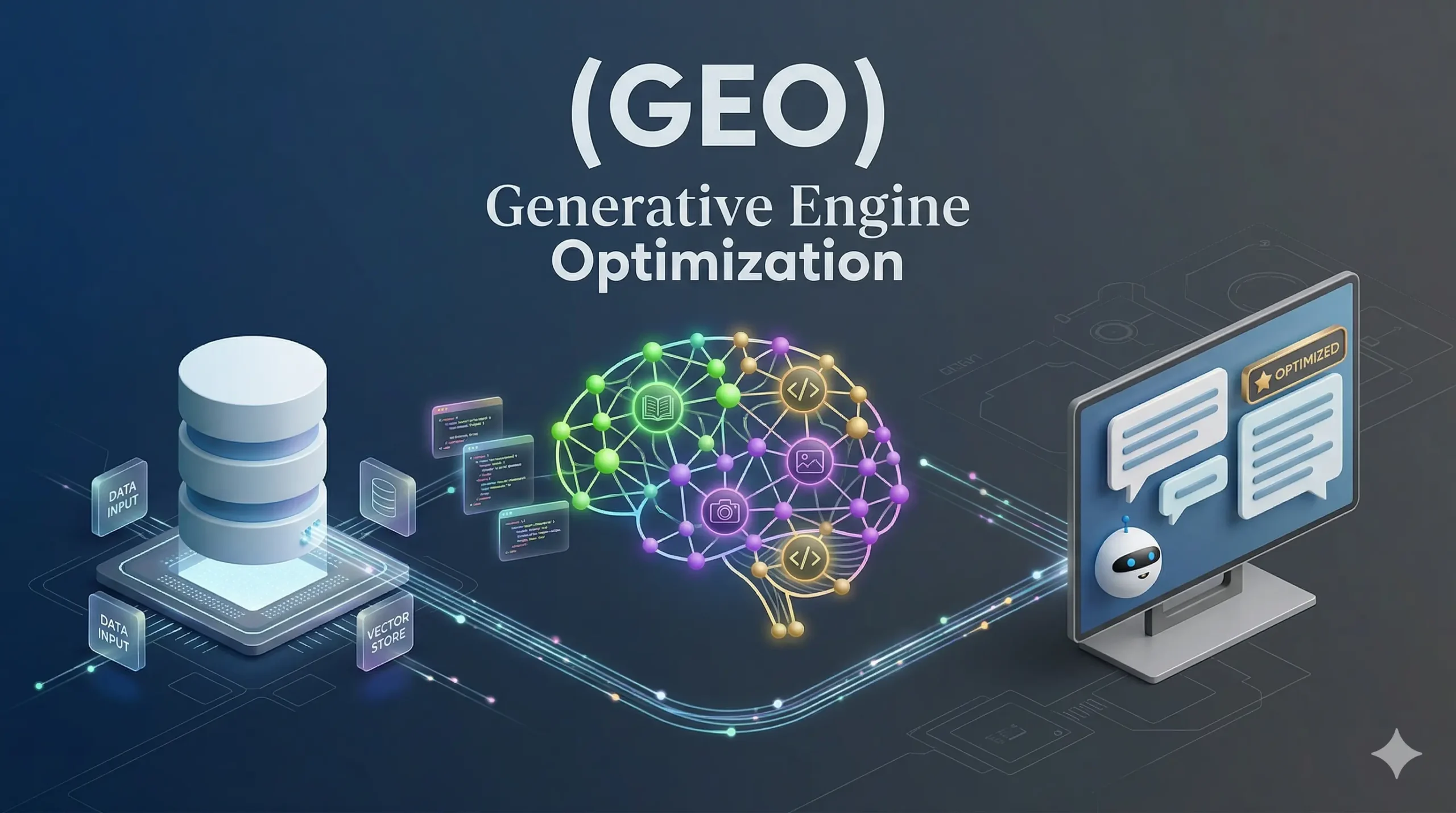
Search has changed fundamentally. Millions of users today turn to AI-powered platforms like ChatGPT, Perplexity, and Google AI Overviews to get direct answers rather than scrolling through a list of links. Brands that want to stay visible in this environment need a sharper strategy. Generative Engine Optimization (GEO) is exactly that strategy.
It focuses on structuring content so that AI platforms can retrieve, understand, and cite it when synthesizing answers for users. For digital marketers and content creators, GEO has become a core pillar of any serious, future-ready visibility strategy.
What Is Generative Engine Optimization and How Does It Use RAG?
Generative Engine Optimization (GEO) is the practice of creating and structuring content so that AI-driven platforms can surface and cite it within their generated responses. The goal is not a ranking position but inclusion in the AI’s authored answer.
Most AI search platforms rely on a process called Retrieval-Augmented Generation, or RAG. The system first retrieves relevant documents from an index or the live web, then passes those documents to a Large Language Model (LLM) to generate a synthesized, coherent response for the user.
Content that is authoritative, clearly structured, and information-rich scores higher during that retrieval stage. This means a brand does not need to hold the top organic ranking, it needs to be credible and useful enough for an AI system to select it as a trusted reference source.
Why Is GEO Important for Your Digital Presence?
AI search platforms are permanently reshaping how audiences discover brands, and businesses that do not adapt stand to lose meaningful visibility across the channels that matter most.
- It creates reach beyond traditional search results: AI platforms like ChatGPT now serve hundreds of millions of users every week. A brand that gets cited in AI-generated responses gains exposure to audiences who may never interact with a conventional search results page, opening entirely new discovery channels.
- It attracts high-intent, conversion-ready audiences: Visitors who arrive through AI referrals tend to convert at significantly higher rates than standard organic traffic. These users have already received a recommendation from a trusted AI system, which means they arrive with a much stronger intent to engage or purchase.
- It strengthens brand authority across platforms: When AI systems consistently cite a brand as a reliable source, that pattern compounds over time. It reinforces the brand’s authority with audiences across multiple platforms and positions it as a recognized expert in its category.
- It future-proofs content marketing investments: As AI-generated summaries replace traditional search results for a growing share of queries, brands with a strong GEO foundation will maintain their visibility. Brands that delay this transition risk watching their organic reach erode with limited options to recover it quickly.
What Are the Key Components of Generative Engine Optimization (GEO)?
GEO is a system of interconnected signals that, together, tell AI platforms whether a brand is worth citing. Here are the key components of Generative Engine Optimization:
- Content authority and information gain: AI platforms prioritize sources that offer original, verifiable insights. Proprietary data, expert perspectives, cited statistics, and first-hand analysis give an AI system a specific, citable reason to reference a particular source over a competitor that publishes only generic information.
- Semantic clarity and logical structure: Content must be written in direct, natural language with well-organized formatting. Clear headings, concise paragraphs, and specific answers enable AI systems to accurately extract and reassemble information during synthesis without distortion.
- Entity and sentiment accuracy: AI platforms build associations between brands, products, and attributes based on how content is written across the web. Ensuring that a brand’s content reinforces accurate, positive attributes helps AI systems characterize the brand correctly in generated responses.
- Technical accessibility for AI crawlers: GEO cannot function if AI systems cannot access a website’s content. Clean site architecture, proper robots.txt configuration, schema markup, and fast page load times all contribute to a site’s retrievability by AI-powered crawlers and indexing systems.
- Multi-platform brand presence: AI models draw from a wide range of sources — websites, review platforms, forums, social media, and third-party publications. A consistent, authoritative brand presence across all of these channels strengthens the overall signal that an AI system uses to evaluate credibility.
How Does Generative Engine Optimization (GEO) Work in Digital Marketing?
Generative Engine Optimization follows a retrieve-then-synthesize workflow that is fundamentally different from that of traditional search engines. Understanding this process is what separates a well-executed GEO strategy from one that simply borrows SEO tactics and relabels them.
When a user poses a question to an AI platform, the system scans its index or the live web for the most semantically relevant documents. This is not keyword matching; it is concept matching. A piece of content about content strategy for SaaS brands may surface in a response about B2B digital marketing even if that exact phrase does not appear in the article. Relevance is determined by meaning, not by a specific string of words.
Once the AI retrieves its candidate sources, it evaluates each one for authority, recency, factual accuracy, and structural quality. Sources that are clear, well-cited, and information-dense score higher in this evaluation. This is the stage where optimized content earns its advantage: it gets selected, while generic, thin, or poorly structured content is excluded from the synthesis pool entirely.
In the final stage, the AI generates a unified response and attributes portions of it to specific sources via citations or footnotes. Brands whose content is structured for extraction with strong opening statements, clear entity definitions, and original data points are likely to receive an explicit citation in that final response, which is the primary visibility goal of an effective GEO strategy.
What Are the Benefits and Challenges of GEO in Content Marketing?
GEO presents a significant opportunity for brands willing to invest in it, though the path forward comes with real challenges that require careful navigation. Here are the key benefits of GEO in content marketing:
Benefits
- Brands cited in AI-generated responses gain visibility in a discovery channel that now reaches hundreds of millions of users every week.
- AI referral traffic consistently shows higher conversion rates because users arrive with a pre-existing recommendation from a trusted AI system.
- A strong GEO presence builds durable brand authority that compounds over time as AI models continue to reference credible sources.
- Effective GEO strategies align closely with quality content marketing, thereby strengthening the overall digital presence.
Challenges
- AI platforms do not disclose their retrieval algorithms. This makes GEO a strategic discipline that requires ongoing testing, auditing, and refinement rather than a one-time setup.
- Measuring GEO performance requires tracking AI mentions and citation frequency. This is fundamentally different from the standard click-and-ranking metrics most marketing teams are accustomed to.
- Content that earns AI citations needs to be genuinely original and information-rich. It demands a higher level of research, expertise, and strategic writing than typical SEO content production.
- The GEO landscape is evolving rapidly across multiple AI platforms, each with its own synthesis behavior. This means strategies must be adapted platform by platform rather than applied universally.
What Is the Difference Between Generative Engine Optimization (GEO) and Answer Engine Optimization (AEO)?
GEO and AEO are closely related strategies that address different layers of AI-driven search. Here is a detailed comparison betwen generative Engine Optimization and Answer Engine Optimization (AEO):
- Origin and scope: Answer Engine Optimization (AEO) originated with Google’s featured snippets and knowledge panels, targeting concise, extractable answers in traditional search. GEO expands that concept into the broader AI era, covering generative platforms like ChatGPT, Perplexity, and Google AI Overviews, where responses are synthesized rather than extracted.
- Content format requirements: AEO favors short, structured, directly answerable content such as FAQs, definitions, and clear factual statements. GEO calls for comprehensive, in-depth content that provides an AI model with sufficient substance to generate a meaningful, multi-dimensional response to complex user queries.
- Target platform: AEO primarily targets traditional search engines that display direct answer features on standard results pages. GEO targets AI-native platforms and generative search experiences where the entire output is a synthesized, conversational answer rather than a ranked list of links.
- Measurement approach: AEO success is measured through featured snippet wins, rich result appearances, and zero-click search data. GEO success is measured through brand mention frequency, citation sentiment, and share of voice within AI-generated responses across multiple platforms.
Essentially, AEO and GEO are not competing strategies; they are complementary. AEO captures high-intent moments in traditional search while GEO ensures the brand is present and positively represented in the AI-generated discovery experiences that are rapidly becoming the dominant way users find trusted information.
What Are the Key Generative Engine Optimization Strategies That Actually Work?
A strong GEO strategy depends on actions that improve a brand’s credibility, structure, and retrievability in the eyes of AI synthesis systems. Here are the key GEO strategies you can use:
- Build original, citable content assets: Publishing proprietary research, original statistics, and first-hand expert perspectives gives AI models a specific, unique reason to reference a brand. Generic content that restates publicly available information offers no citation advantage over the dozens of other sources.
- Optimize content structure for AI extraction: Leading with a direct answer, using clear headings, and organizing information in concise paragraphs makes it easier for AI systems to retrieve and accurately represent content during synthesis. Comparison tables, structured lists, and schema markup further improve extractability.
- Strengthen entity and sentiment signals: AI models build associations between a brand and specific attributes based on patterns across many sources. Publishing consistent, authoritative content that reinforces accurate brand associations and earning third-party mentions from credible sources helps ensure AI platforms characterize the brand correctly and favorably.
- Build a multi-platform brand presence: AI systems pull from websites, review platforms, social media, forums, and third-party publications. A brand that is consistently present, accurately represented, and discussed positively across all these surfaces sends a stronger credibility signal.
- Audit and update content for accuracy and recency: AI platforms favor fresh, factually accurate content during retrieval. Regular content audits that update statistics, correct outdated claims, and add new original insights maintain a brand’s relevance in the retrieval pool and reduce the risk of AI systems surfacing incorrect or stale information about the brand.
At Scribblers India, our team combines GEO services, content marketing, and thought-leadership content writing to help brands build the authority and original insights that AI platforms reward with consistent citations.
Get in touch with our team to start building your AI-era visibility.
FAQs
How long does it typically take to see results from a GEO strategy?
GEO results typically develop over weeks or months, not days. AI platforms continuously update retrieval pools as they index new content. Brands that publish authoritative, well-structured content gradually increase citation frequency over time. The timeline depends on the brand’s existing authority and the category’s competitiveness.
Does GEO replace the need for traditional SEO entirely?
GEO and traditional SEO work together rather than compete. Content that performs well in traditional search has a high chance of retrieval by AI systems. AI platforms often rely on authoritative web sources for retrieval. A strong GEO strategy builds on a solid SEO foundation instead of replacing it.
Which AI platforms should a brand prioritize when building a GEO strategy?
The most widely used platforms for optimization include ChatGPT, Google AI Overviews, Perplexity, and Microsoft Copilot. The right prioritization depends on where a brand’s target audience is most active. B2B and SaaS audiences, for example, tend to be heavy users of ChatGPT and Perplexity for research and vendor evaluation purposes.
How does personal branding connect with Generative Engine Optimization for executives?
Personal branding and GEO have close linkages at individual level. When a founder or executive consistently publishes original, expert-led content, AI systems begin associating that person’s name with specific areas of authority. This personal entity signal strengthens the overall brand’s credibility in AI-generated responses about the company’s industry.
Can smaller brands with limited content budgets benefit from Generative Engine Optimization?
Yes, smaller brands can make meaningful progress by focusing their GEO efforts on a narrow set of high-value topics where they hold genuine expertise. Publishing a smaller volume of deeply researched, original content that no competitor can replicate is more effective for GEO than producing a large volume of generic content across broad subject areas.