

You might have clean audits, exceptional EBITDA margins, and a solid balance sheet for the fiscal year. However, without incorporating storytelling in annual reports, you likely notice that your investors are skimming past page five of your annual report without engaging with the content. You might be wondering why your robust financial health is failing to generate the excitement it deserves among your key stakeholders.
Data without context is often just white noise in the crowded corporate reporting landscape. In the competitive Indian market, numbers tell stakeholders what happened, yet storytelling in annual reports tells them why it matters. A narrative transforms cold statistics into actionable insight that drives investment decisions.
In this guide, you will learn how to turn your dry financial tables into a communication powerhouse. We will show you how to write an annual report to keep your stakeholders reading from cover to cover.
Why Do You Need Storytelling in a Compliance Document?
You need storytelling because compliance ensures legality while a narrative ensures meaningful engagement with your audience. It bridges the gap between mandatory statutory filings and marketing tools to help you stand out in a crowded market. Furthermore, effective storytelling converts passive readers into active believers in your brand vision and long-term potential.
Does Storytelling Create an Emotional Hook?
Investors invest their capital in people and vision rather than just investing in spreadsheets and margins. Storytelling in annual reports provides the emotional context required to make your company relatable to a diverse audience. It transforms a faceless entity into a living organization with ambitious goals, real struggles, and significant triumphs.
Does Storytelling Offer Differentiation?
There are thousands of listed companies in India competing for the same pool of investor capital. A unique narrative makes you stand out from the competition by highlighting your specific value proposition. Using storytelling in annual reports allows you to define your specific market position clearly and memorably.
Does Storytelling Build Trust?
A clear story explains dips in revenue or operational risks honestly without hiding behind jargon. This transparency builds long-term credibility because investors prefer companies that own their narrative. Storytelling in annual reports allows you to control the context around negative data rather than letting the market guess.
What Do Investors Actually Want to See in Your Report?
Investors expect a clear explanation of your long-term value creation strategy rather than just historical financial data. They look for transparency regarding risks, a solid roadmap for future growth, and evidence of sustainable business practices.
In a 2025 survey on investor communications and priorities, 69% of investor relations teams reported that effective storytelling and narrative development is a top strategic priority within their IR strategy.
- Strategic Clarity: They want to know your 5-year plan to understand the long-term direction. You must use storytelling in annual reports to explain where the company is going rather than focusing solely on last year’s receipts.
- ESG Integration: Investors need to see how you handle sustainability issues alongside profits. You should link your narrative to your BRSR filings to show that your corporate reporting best practices are authentic and integrated.
- Risk Management: Investors prefer a company that admits challenges and explains the solution. Storytelling in annual reports helps you explain the solution to a problem over hiding the issue completely.
- Capital Allocation: You must explain how you spend money to generate future returns. A strong investor communication strategy clarifies why you reinvested profits into new machinery instead of declaring higher dividends.
How Can You Turn Boring Data Into Engaging Stories?
You can transform dry numbers by contextualizing them within your broader business strategy and humanizing the impact. Use frameworks that position your company as a problem solver and support every financial claim with real-world case studies.
Here is how you blend hard data with a soft narrative effectively.
Use the Hero Framework
Yes, you should treat your fiscal year as a journey similar to a classic story. In this approach to storytelling in annual reports, your company is the hero, the market challenge is the villain, and your strategy is the weapon.
Humanize the Numbers
Do not simply state that employee costs rose by 10% in the financial highlights. Instead, use storytelling in annual reports to say you invested in upskilling 500 engineers to drive future R&D innovation.
Add Case Studies
Case studies provide proof of your operational success and validate your strategic claims. You should use box-outs or sidebars for specific client success stories to make storytelling in annual reports tangible and relatable.
Employ Visual Storytelling
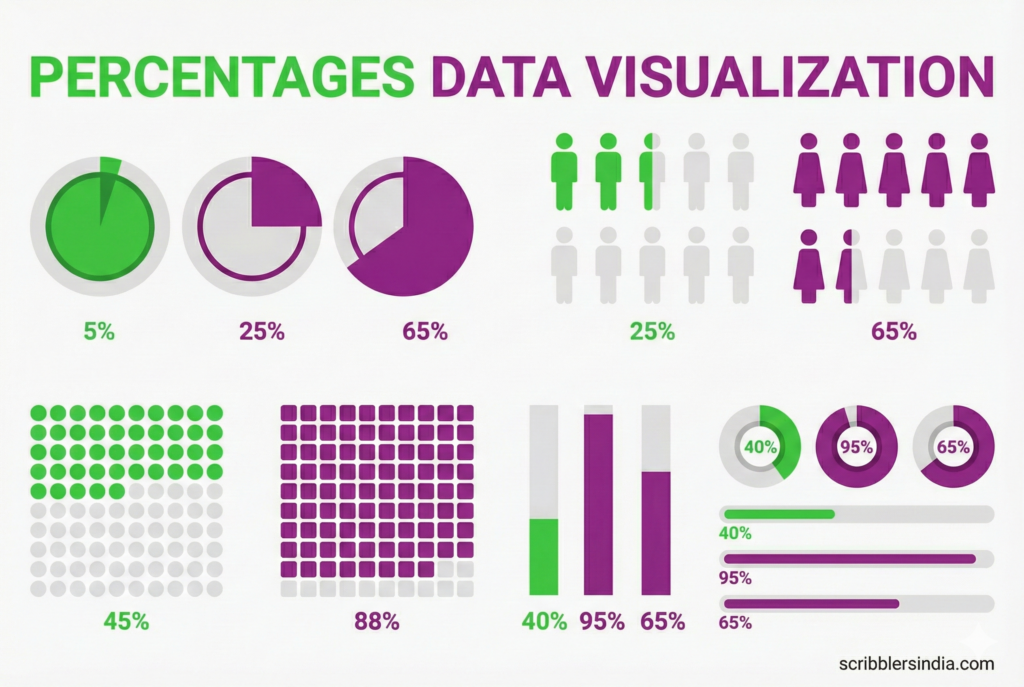
Infographics should replace dense tables where possible to aid retention and understanding. Data storytelling for business relies on visuals to simplify complex trends so your investors can grasp the growth trajectory instantly.
Is There a Standard Structure for a Narrative Report?
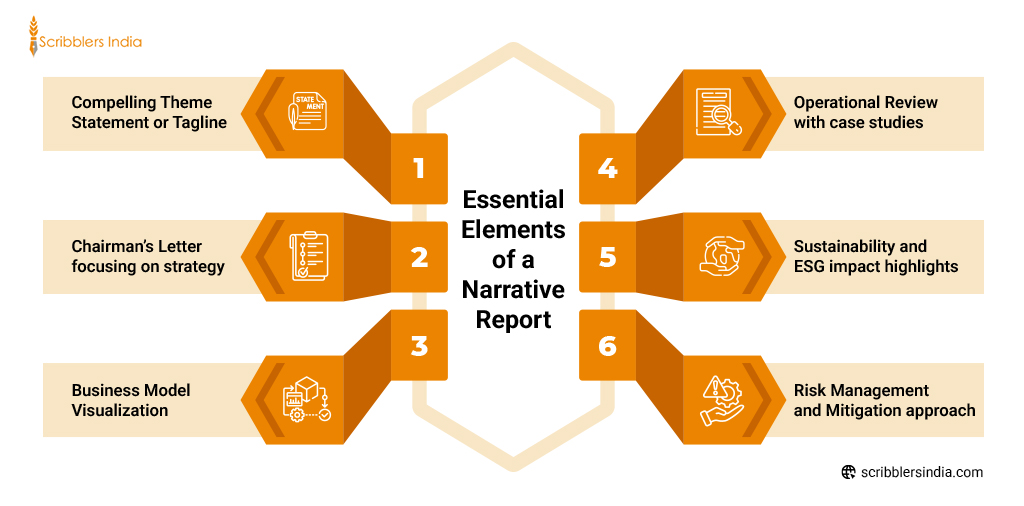
There is no legal standard for the narrative section, unlike the financial statements, which follow specific schedules. However, most successful reports follow a flow that starts with a theme introduction, then leadership messages, and concludes with an operational review.
A structured flow ensures your annual report narrative structure remains logical and easy to navigate.
- Theme Introduction: You should start with the “Big Idea” for the year to hook the reader. This theme sets the tone for storytelling in annual reports and anchors every subsequent chapter.
- Chairman’s Message: This is the strategic anchor that connects the company to the economy. A well-written letter uses storytelling in annual reports to connect macroeconomic trends to micro-level company performance.
- Operational Review: This is the boots-on-the-ground story detailing specific divisional performance. Here, you detail how each division contributed to the whole, reinforcing the effectiveness of your storytelling in annual reports.
- Sustainability Report: This is the impact story regarding your environmental and social footprint. You must use this section to show the human and environmental benefits of your operations beyond profit.
How Does Storytelling Improve Your Investor Communication Strategy?
Storytelling transforms your investor communication from a one-way data dump into a strategic dialogue that builds confidence. It allows you to control the narrative around market challenges and demonstrates proactive leadership rather than reactive management.
Effective communication creates a loyal shareholder base that sticks with you during volatility.
- Controlling the Narrative: You get to define the context before the market defines it for you. Storytelling in annual reports prevents rumors or analysts from creating their own potentially incorrect reasons for your performance.
- Demonstrating Resilience: You show how you handle crises by detailing your recovery strategies. A strong investor communication strategy highlights your adaptability during tough economic cycles through clear examples.
- Simplifying Complexity: You make your business easy to understand for the layperson. Storytelling in annual reports breaks down complex business models so retail investors can appreciate your value proposition.
- Highlighting Intangibles: You showcase value not found on the balance sheet, such as culture. Brand equity and culture are best explained through storytelling in annual reports rather than financial metrics.
What Are the Top Storytelling Trends for Annual Reports in 2026?
The top trends include digital-first interactive formats and hyper-transparency regarding business failures. Companies are moving toward bite-sized content for easier consumption and integrating sustainability directly into the core narrative.
Staying ahead of these trends keeps your brand relevant and modern.
- Digital-First Formats: Companies are building interactive microsites to host their annual reviews. These allow the CEO to speak directly to the user through video, enhancing the impact of storytelling in annual reports.
- Bite-Sized Content: You should create snackable stats for social media distribution. Annual report design trends 2026 favor short, shareable content pieces that work well on platforms like LinkedIn.
- Hyper-Transparency: Being open about failures is growing in popularity among transparent firms. Global trends show that honest storytelling in annual reports regarding setbacks actually increases investor trust ratings.
- Integrated Thinking: You link capitals together to show holistic value creation. Modern storytelling in annual reports connects financial capital with human and social capital to show the bigger picture.
- Expert Services: Creating compelling annual reports is a considerable challenge. An increasing number of companies are working with expert annual report writing services to craft interesting narratives.
Why You Need Annual Report Writing Services in India?
Crafting a narrative that satisfies SEBI regulations while engaging sophisticated investors is a tightrope walk. You need a team that understands the art of writing and the science of compliance to deliver a perfect report.
At Scribblers India, we specialize in storytelling in annual reports that delivers results.
- Strategic Theme Ideation: We do not just write content for the sake of it. We brainstorm a central “Big Idea” that aligns your financial performance with your future vision to enhance storytelling in annual reports.
- Investor-Centric Content: Our writers are trained to speak the language of CFOs and analysts. We ensure your strategy lands correctly and meets the highest corporate reporting best practices in the industry.
- Visual Collaboration: We work hand-in-hand with design teams to create a cohesive document. We ensure your text and infographics tell one seamless story to maximize the impact of storytelling in annual reports.
- Regulatory Awareness: Our expert annual report content writers and designers ensure your creative storytelling never crosses the line into non-compliance. We maintain strict compliance with the Companies Act and MCA norms while crafting your unique story.
- End-to-End Execution: From the initial stakeholder interviews to the final proofreading of the draft. We manage the entire editorial lifecycle of your storytelling in annual reports to save you time.
Transform your data into a story with Scribblers India. Get in touch with our team to learn more about our annual report writing and designing services.
Final Thoughts: Your Story is Your Best Asset
In a sea of data, stories are what people remember most. Effective storytelling in annual reports distinguishes a good company from a great investment opportunity in the eyes of the market. It turns paper compliance into a strategic asset.
The numbers show where you have been in the past year. The story shows where you are going in the future. Make sure you are telling the right one.
Frequently Asked Questions (FAQs)
Does storytelling in annual reports compromise its seriousness?
Not at all as it simply adds context to the raw data. You still present the audited financials exactly as required by law while storytelling in annual reports happens in the Management Discussion and Corporate Overview sections.
Can we use storytelling in annual reports for the financial statements section?
No, the financial statements must follow the strict Schedule III format mandated by law. However, you can use “Notes to Accounts” to add brief clarifications while reserving storytelling in annual reports for the front section.
How long should the narrative section be?
There is no fixed rule for this in the Companies Act. A good balance is 30-40% narrative and 60-70% statutory data, ensuring that storytelling in annual reports sets the stage for the numbers.
What if our financial performance was bad this year?
Storytelling in annual reports is even more important when performance is down. You use the narrative to explain the external factors like market crashes and your strategy to bounce back to prevent investor panic.
Do we need a professional writer for the annual report?
Yes, because internal teams often suffer from the curse of knowledge regarding their own operations. A professional agency bridges the gap between internal jargon and external investor understanding using effective storytelling in annual reports.