
logo

Scribblers India

Home
Contact
Contact

Let's Talk

501, Vinca Block, Amravati Enclave, Panchkula, Haryana

Call +91 8818073118
SCRIBBLERS*INDIA*
  • Home
  • Resources
  • Contact
  • Privacy Policy
  • Blog
  • Glossary
  • Cookies Policy
  • Terms of Service
  • Visual Content Creating
  • Whitepaper & Case Study Writing
  • Newsletter Writing
  • Academic Content Writing
  • Generative Engine Optimization
  • Annual Report Writing
  • Content Strategy
  • Content Marketing
  • Personal Branding
  • Answer Engine Optimization
  • Digital PR
  • Ghostwriting
  • Ebook Writing
  • Thought Leadership Content Writing
  • Digital PR
  • Copywriting
  • Website Content Writing
  • Bulk Content Writing
  • Social Media Marketing
  • AI Content Editing
PrivacyTermsSitemap

© 2026 Scribblers India. All Rights Reserved.

logo

Scribblers India

Home
Contact
Contact

Let's Talk

501, Vinca Block, Amravati Enclave, Panchkula, Haryana

Call +91 8818073118
SCRIBBLERS*INDIA*
  • Home
  • Resources
  • Contact
  • Privacy Policy
  • Blog
  • Glossary
  • Cookies Policy
  • Terms of Service
  • Visual Content Creating
  • Whitepaper & Case Study Writing
  • Newsletter Writing
  • Academic Content Writing
  • Generative Engine Optimization
  • Annual Report Writing
  • Content Strategy
  • Content Marketing
  • Personal Branding
  • Answer Engine Optimization
  • Digital PR
  • Ghostwriting
  • Ebook Writing
  • Thought Leadership Content Writing
  • Digital PR
  • Copywriting
  • Website Content Writing
  • Bulk Content Writing
  • Social Media Marketing
  • AI Content Editing
PrivacyTermsSitemap

© 2026 Scribblers India. All Rights Reserved.

HomeGlossaryPersonal Brand Statement

Personal Brand Statement

Personal Brand Statement

Every professional leaves an impression before they speak a single word. A personal brand statement deliberately shapes that impression. It communicates who a person is and what unique value they bring to their audience.

For executives, founders, and creative professionals alike, a well-crafted personal brand statement anchors every public-facing message. Moreover, it informs how a person writes their LinkedIn bio and introduces themselves at industry events. It also positions their work across digital platforms.

What Is a Personal Brand Statement and Why Does It Matter?

A personal brand statement is a short, powerful declaration of who a professional is, what they do, and what makes them distinctly valuable. Most effective statements run between 1 and 3 sentences. In fact, they appear on LinkedIn profiles, resumes, website bios, and speaking introductions.

The statement works as a professional filter. It helps the right clients, employers, and collaborators quickly recognize the right person. In crowded markets and algorithm-driven feeds, a clear and confident personal branding statement removes ambiguity and builds immediate recognition.

Without a defined statement, professionals leave their reputation to interpretation. A strong personal brand statement ensures that others consistently perceive a professional the way that professional intends to be seen.

What Are the Core Elements of a Strong Personal Brand Statement?

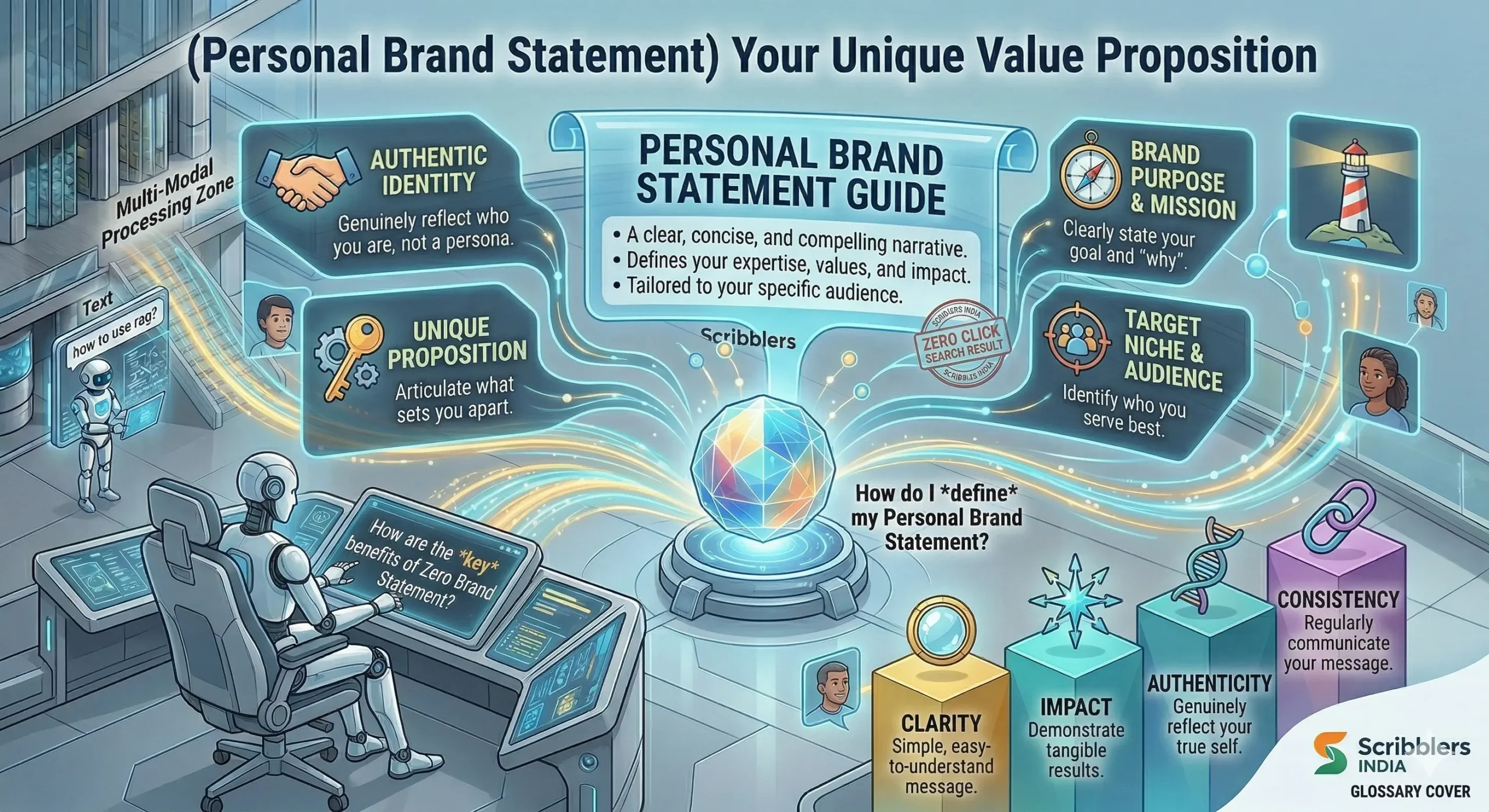
A strong personal brand statement answers three essential questions for the reader. It tells them who the person is, what they do, and what measurable or meaningful value they deliver to their specific audience.

These three elements combine to create a professional tagline that travels with a person across every channel and context. When all three are present and precise, the statement becomes the thread connecting a person’s content, presence, and reputation.

  • Professional identity defines the role clearly and specifically, going beyond a generic job title to describe how the person wants their expertise perceived by their target audience.
  • Target audience clarity identifies exactly who the professional serves, whether that means a specific industry, seniority level, company size, or type of problem.
  • Unique value proposition states the tangible outcome or distinct perspective the professional delivers that no generic description could capture.
  • Tone and personality ensure the statement feels authentic and memorable, reflecting whether a person is analytical, creative, empathetic, or visionary in their approach.

How Does a Personal Brand Statement Support a Broader Branding Strategy?

A personal brand statement does not exist in isolation. Instead, it functions as the foundation for every other element of a professional’s personal branding strategy, from their LinkedIn headline and About section to their thought leadership content and speaking biography.

When a professional publishes consistent content, the brand statement provides the strategic direction that keeps each piece of content aligned with their core positioning. This consistency builds audience trust over time, making the professional more recognizable and more sought after in their field.

  • LinkedIn profile alignment: The personal brand statement shapes the headline, the summary section, and the featured content that a professional’s audience sees first on the platform.
  • Content strategy direction: Every article, post, and thought leadership content a professional publishes should reinforce the core message that their brand statement establishes.
  • Event and speaking introductions: Conference organizers, podcast hosts, and media professionals use the personal brand statement as the basis for introducing the person to their audiences.
  • Business development conversations: A clear personal brand statement gives professionals a confident, repeatable answer to the question “What do you do?” that creates curiosity and opens conversations naturally.

How to Write an Effective Personal Brand Statement?

Writing an effective brand statement for a thought leader begins with self-assessment rather than with a blank page. A professional must first define what they want to be known for and who they serve. Then, they should clarify what specific outcome they reliably deliver before writing a single word.

The most effective statements avoid generic language. Phrases like “results-driven professional” or “passionate leader” appear in millions of profiles and fail to differentiate anyone. Instead, specific roles, named audiences, and measurable outcomes create statements that stand apart and stick in the reader’s memory.

  • Start with strengths inventory: A professional should list their top skills, the problems they solve best, and the outcomes their work consistently produces for the people they serve.
  • Define the target audience precisely: A statement designed for “marketing leaders at SaaS companies” communicates more sharply than one written for “businesses” or “organizations.”
  • Draft multiple versions: Writing three to five versions of the statement and testing each one in different contexts reveals which phrasing resonates most naturally and clearly.
  • Test for specificity and recall: If a stranger cannot explain what the person does after reading the statement once, the statement needs simplification and sharpening before publication.

Where Should a Personal Brand Statement Appear for Maximum Impact?

A personal brand statement creates maximum impact when it appears consistently across every platform and touchpoint where a professional is discoverable. In addition, consistency across channels reinforces the professional’s positioning with every new interaction.

  • LinkedIn headline and About section give the personal brand statement its highest-visibility placement, reaching recruiters, potential clients, and collaborators who discover the profile through search.
  • Personal website homepage positions the statement as the first thing a visitor reads, setting the tone for every other piece of thought leadership content on the site.
  • Resume and portfolio introductions give hiring managers and prospective clients an immediate understanding of the professional’s identity and value before reviewing credentials.
  • Speaker bios and media profiles help event organizers, journalists, and podcast hosts accurately and memorably introduce professionals to new audiences.
  • Email signatures and digital business cards extend the branding statement into every professional communication the person sends, reinforcing recognition at every touchpoint.

What Are Common Mistakes Professionals Make with Personal Brand Statements?

Many professionals write personal brand statements that are either too generic to differentiate themselves or too complex to be memorable. Both errors undermine the purpose of having a statement at all.

The most common mistake is using inflated language that sounds impressive but communicates nothing specific. Words like “innovative,” “dynamic,” and “visionary” appear so frequently that they fail to create any meaningful distinction in a reader’s mind.

  • Overusing vague superlatives: Describing oneself as a “passionate” or “driven” professional tells an audience nothing about what the person actually does or how they create value for others.
  • Targeting everyone simultaneously: A personal brand statement that tries to appeal to all possible audiences ends up resonating with none of them, diluting the professional’s positioning and recall value.
  • Forgetting to update the statement: A statement written for a previous role or career stage can actively mislead an audience and direct the wrong opportunities toward the professional.
  • Ignoring platform context: A statement suitable for a resume introduction may need rewriting for a LinkedIn headline or a conference bio, as each context has different length and tone expectations.

How Does a Personal Brand Statement Connect to Personal Branding for Executives?

For founders, CEOs, and senior leaders, a personal brand statement carries additional weight. This is because it reflects not only on the individual but on the organization they represent. In fact, research shows that up to 44% of a company’s market value ties directly to its leadership’s reputation.

An executive’s personal brand statement sets the tone for how investors, clients, and industry peers perceive the entire organization. When an executive’s statement is clear and consistent, it humanizes the company. Furthermore, it builds trust with every stakeholder who encounters it.

Scribblers India helps executives and professionals develop compelling personal brand statements as part of a complete personal branding approach.

Reach out today to position your professional identity with clarity and intent.

FAQs

How long should a branding statement typically be for professionals?

This statement typically runs between one and three sentences, covering approximately 50 to 100 words. Shorter versions work best for LinkedIn headlines and social media bios. On the other hand, longer versions suit website About pages and speaking introductions. This is because there is more space to communicate expertise and audience clearly.

Can a professional have multiple personal branding statements for different audiences?

Yes. A professional can maintain one core personal brand statement and create context-specific variations for different audiences or channels. However, the core value proposition should remain consistent across all versions. For example, a consultant might emphasize client results for a business audience. Meanwhile, they might highlight methodology and expertise for an industry peer audience.

How often should a professional update their brand statement?

A professional should review their branding statement every 6 to 12 months and after any significant career change, new achievement, or shift in professional focus. Otherwise, a statement that no longer reflects current work, audience, or goals can misdirect opportunities. It can also create a confusing impression among new contacts discovering the profile for the first time.

What is the difference between a personal branding statement and an elevator pitch?

A branding statement for a professional is a written positioning tool that defines professional identity concisely for online and printed materials. In contrast, an elevator pitch is a spoken, conversational version designed for live networking and introductions. The two draw from the same core positioning but differ in length, tone, and delivery format depending on the context.

RELATED ARTICLES

Zero-Click Search

Glossary

Zero-Click Search
Retrieval-Augmented Generation (RAG)

Glossary

Retrieval-Augmented Generation (RAG)
Answer Engine Optimization (AEO)

Glossary

Answer Engine Optimization (AEO)
cta

Ready to Elevate Your Digital Presence?

Partner with Scribblers India to craft compelling stories and data-driven strategies that drive real growth for your brand.

Start Your Project
HomeGlossaryPersonal Brand Statement

Personal Brand Statement

Personal Brand Statement

Every professional leaves an impression before they speak a single word. A personal brand statement deliberately shapes that impression. It communicates who a person is and what unique value they bring to their audience.

For executives, founders, and creative professionals alike, a well-crafted personal brand statement anchors every public-facing message. Moreover, it informs how a person writes their LinkedIn bio and introduces themselves at industry events. It also positions their work across digital platforms.

What Is a Personal Brand Statement and Why Does It Matter?

A personal brand statement is a short, powerful declaration of who a professional is, what they do, and what makes them distinctly valuable. Most effective statements run between 1 and 3 sentences. In fact, they appear on LinkedIn profiles, resumes, website bios, and speaking introductions.

The statement works as a professional filter. It helps the right clients, employers, and collaborators quickly recognize the right person. In crowded markets and algorithm-driven feeds, a clear and confident personal branding statement removes ambiguity and builds immediate recognition.

Without a defined statement, professionals leave their reputation to interpretation. A strong personal brand statement ensures that others consistently perceive a professional the way that professional intends to be seen.

What Are the Core Elements of a Strong Personal Brand Statement?

A strong personal brand statement answers three essential questions for the reader. It tells them who the person is, what they do, and what measurable or meaningful value they deliver to their specific audience.

These three elements combine to create a professional tagline that travels with a person across every channel and context. When all three are present and precise, the statement becomes the thread connecting a person’s content, presence, and reputation.

  • Professional identity defines the role clearly and specifically, going beyond a generic job title to describe how the person wants their expertise perceived by their target audience.
  • Target audience clarity identifies exactly who the professional serves, whether that means a specific industry, seniority level, company size, or type of problem.
  • Unique value proposition states the tangible outcome or distinct perspective the professional delivers that no generic description could capture.
  • Tone and personality ensure the statement feels authentic and memorable, reflecting whether a person is analytical, creative, empathetic, or visionary in their approach.

How Does a Personal Brand Statement Support a Broader Branding Strategy?

A personal brand statement does not exist in isolation. Instead, it functions as the foundation for every other element of a professional’s personal branding strategy, from their LinkedIn headline and About section to their thought leadership content and speaking biography.

When a professional publishes consistent content, the brand statement provides the strategic direction that keeps each piece of content aligned with their core positioning. This consistency builds audience trust over time, making the professional more recognizable and more sought after in their field.

  • LinkedIn profile alignment: The personal brand statement shapes the headline, the summary section, and the featured content that a professional’s audience sees first on the platform.
  • Content strategy direction: Every article, post, and thought leadership content a professional publishes should reinforce the core message that their brand statement establishes.
  • Event and speaking introductions: Conference organizers, podcast hosts, and media professionals use the personal brand statement as the basis for introducing the person to their audiences.
  • Business development conversations: A clear personal brand statement gives professionals a confident, repeatable answer to the question “What do you do?” that creates curiosity and opens conversations naturally.

How to Write an Effective Personal Brand Statement?

Writing an effective brand statement for a thought leader begins with self-assessment rather than with a blank page. A professional must first define what they want to be known for and who they serve. Then, they should clarify what specific outcome they reliably deliver before writing a single word.

The most effective statements avoid generic language. Phrases like “results-driven professional” or “passionate leader” appear in millions of profiles and fail to differentiate anyone. Instead, specific roles, named audiences, and measurable outcomes create statements that stand apart and stick in the reader’s memory.

  • Start with strengths inventory: A professional should list their top skills, the problems they solve best, and the outcomes their work consistently produces for the people they serve.
  • Define the target audience precisely: A statement designed for “marketing leaders at SaaS companies” communicates more sharply than one written for “businesses” or “organizations.”
  • Draft multiple versions: Writing three to five versions of the statement and testing each one in different contexts reveals which phrasing resonates most naturally and clearly.
  • Test for specificity and recall: If a stranger cannot explain what the person does after reading the statement once, the statement needs simplification and sharpening before publication.

Where Should a Personal Brand Statement Appear for Maximum Impact?

A personal brand statement creates maximum impact when it appears consistently across every platform and touchpoint where a professional is discoverable. In addition, consistency across channels reinforces the professional’s positioning with every new interaction.

  • LinkedIn headline and About section give the personal brand statement its highest-visibility placement, reaching recruiters, potential clients, and collaborators who discover the profile through search.
  • Personal website homepage positions the statement as the first thing a visitor reads, setting the tone for every other piece of thought leadership content on the site.
  • Resume and portfolio introductions give hiring managers and prospective clients an immediate understanding of the professional’s identity and value before reviewing credentials.
  • Speaker bios and media profiles help event organizers, journalists, and podcast hosts accurately and memorably introduce professionals to new audiences.
  • Email signatures and digital business cards extend the branding statement into every professional communication the person sends, reinforcing recognition at every touchpoint.

What Are Common Mistakes Professionals Make with Personal Brand Statements?

Many professionals write personal brand statements that are either too generic to differentiate themselves or too complex to be memorable. Both errors undermine the purpose of having a statement at all.

The most common mistake is using inflated language that sounds impressive but communicates nothing specific. Words like “innovative,” “dynamic,” and “visionary” appear so frequently that they fail to create any meaningful distinction in a reader’s mind.

  • Overusing vague superlatives: Describing oneself as a “passionate” or “driven” professional tells an audience nothing about what the person actually does or how they create value for others.
  • Targeting everyone simultaneously: A personal brand statement that tries to appeal to all possible audiences ends up resonating with none of them, diluting the professional’s positioning and recall value.
  • Forgetting to update the statement: A statement written for a previous role or career stage can actively mislead an audience and direct the wrong opportunities toward the professional.
  • Ignoring platform context: A statement suitable for a resume introduction may need rewriting for a LinkedIn headline or a conference bio, as each context has different length and tone expectations.

How Does a Personal Brand Statement Connect to Personal Branding for Executives?

For founders, CEOs, and senior leaders, a personal brand statement carries additional weight. This is because it reflects not only on the individual but on the organization they represent. In fact, research shows that up to 44% of a company’s market value ties directly to its leadership’s reputation.

An executive’s personal brand statement sets the tone for how investors, clients, and industry peers perceive the entire organization. When an executive’s statement is clear and consistent, it humanizes the company. Furthermore, it builds trust with every stakeholder who encounters it.

Scribblers India helps executives and professionals develop compelling personal brand statements as part of a complete personal branding approach.

Reach out today to position your professional identity with clarity and intent.

FAQs

How long should a branding statement typically be for professionals?

This statement typically runs between one and three sentences, covering approximately 50 to 100 words. Shorter versions work best for LinkedIn headlines and social media bios. On the other hand, longer versions suit website About pages and speaking introductions. This is because there is more space to communicate expertise and audience clearly.

Can a professional have multiple personal branding statements for different audiences?

Yes. A professional can maintain one core personal brand statement and create context-specific variations for different audiences or channels. However, the core value proposition should remain consistent across all versions. For example, a consultant might emphasize client results for a business audience. Meanwhile, they might highlight methodology and expertise for an industry peer audience.

How often should a professional update their brand statement?

A professional should review their branding statement every 6 to 12 months and after any significant career change, new achievement, or shift in professional focus. Otherwise, a statement that no longer reflects current work, audience, or goals can misdirect opportunities. It can also create a confusing impression among new contacts discovering the profile for the first time.

What is the difference between a personal branding statement and an elevator pitch?

A branding statement for a professional is a written positioning tool that defines professional identity concisely for online and printed materials. In contrast, an elevator pitch is a spoken, conversational version designed for live networking and introductions. The two draw from the same core positioning but differ in length, tone, and delivery format depending on the context.
RELATED ARTICLES

Zero-Click Search

Glossary

Zero-Click Search
Retrieval-Augmented Generation (RAG)

Glossary

Retrieval-Augmented Generation (RAG)
Answer Engine Optimization (AEO)

Glossary

Answer Engine Optimization (AEO)
cta

Ready to Elevate Your Digital Presence?

Partner with Scribblers India to craft compelling stories and data-driven strategies that drive real growth for your brand.

Start Your Project