̦

Digital Marketing India Posts

What are the Differences Between AEO vs SEO? (or Do You Need Both?)
blog

What are the Differences Between AEO vs SEO? (or Do You Need Both?)

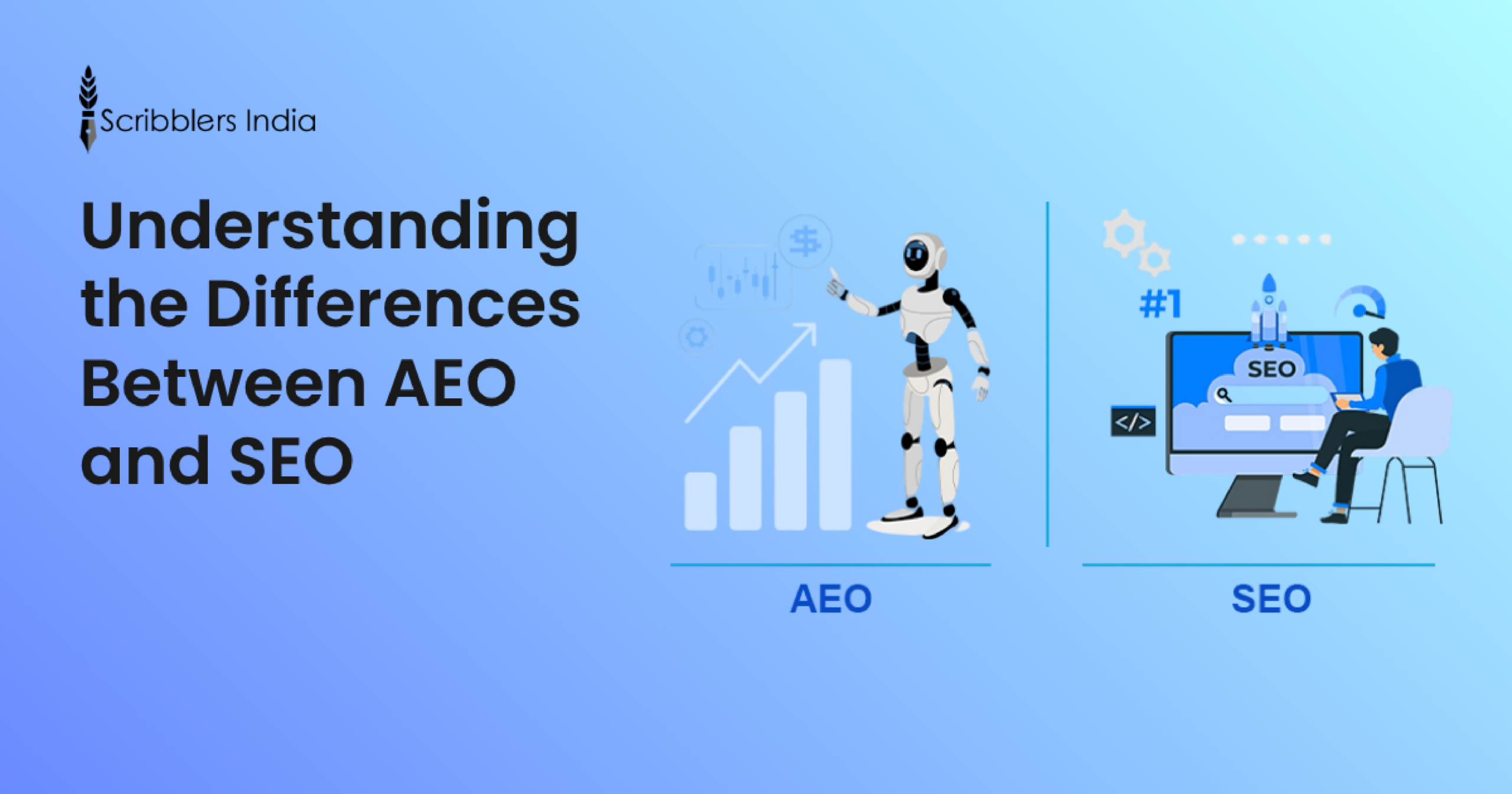
Your website ranks on page one of Google. Traffic is solid. Then something shifts. Rankings hold, yet organic clicks drop. You investigate and find that Google is answering your audience’s questions before they ever reach your site. This scenario is playing out across industries in 2026, and it describes why the AEO vs SEO conversation has moved from theoretical to urgent. According to industry reports, 69% of Google searches now end without a click, up from 56% just 12 months earlier. This 13-point jump correlates directly with the expansion of Google AI Overviews, which extracts answers from multiple sources and delivers them at the top of the results page. For every 1,000 searches, only 360 clicks reach the open web. Traditional search engine optimization gets your content into the index. Answer engine optimization helps your content appear in the answer. The difference between AEO vs SEO is not about choosing one over the other. It is about understanding how each works, where they overlap, and how to run both to capture visibility across every layer of modern search.   What Is AEO and What Does It Mean in Digital Marketing? Answer Engine Optimization (AEO) refers to the practice of structuring content so that AI-powered platforms, voice assistants, and AI-generated search features can extract, synthesize, and deliver it as a direct response to a user’s query. AEO in digital marketing emerged as a direct response to the rise of platforms like Google AI Overviews, ChatGPT, Perplexity, and voice assistants that answer user questions without displaying a ranked list of links. Rather than competing for a position on a results page, brands optimizing for AEO compete to become the cited, trusted source within the answer itself. The core objective of answer engine optimization vs search engine optimization comes down to this distinction: SEO optimizes for being found through a link. AEO optimizes for being used as the answer. Both forms of visibility have commercial value, but they operate through fundamentally different mechanisms and require different content structures to achieve.   What Is the Difference Between AEO and SEO in Practice? The difference between AEO and SEO lies in their target output, success metrics, content format requirements, and the platforms they optimize for. SEO aims to rank a page. AEO aims to become the answer that a platform generates when a user asks a relevant question. Here is how the AEO vs SEO distinction plays out across the five dimensions that matter most to a content strategy: Target Platform and Output SEO targets traditional search engines, primarily Google and Bing, where the output is a ranked list of links that users browse and click. AEO vs SEO in terms of platform: AEO targets AI-powered answer surfaces, including Google AI Overviews, ChatGPT, Perplexity, Amazon Alexa, and Apple Siri.  Here, the output is a synthesized response that may or may not include a clickable attribution. A business that appears in an AI Overview earns visibility even when the user never clicks through to the site. Success Metrics SEO success is measured through ranking positions, organic traffic volume, click-through rates, and keyword visibility scores. AEO success is measured through:  Featured snippet wins AI Overview citation frequency Voice search answer inclusion People Also Ask appearances Brand mention volume across AI-generated responses Businesses moving into AEO need a measurement framework that captures answer-layer visibility rather than relying on website traffic as the sole indicator of search performance. Content Format Requirements SEO rewards comprehensive, keyword-rich, long-form content that covers a topic with enough depth and breadth to satisfy a range of search queries. The difference between AEO and SEO in content format is significant. AEO rewards concise, direct, question-answering paragraphs of 40 to 60 words that allow an AI system to extract a complete answer from a single content block.  The structure that works best for AEO uses question-based headings followed immediately by a complete, standalone answer. This is the exact format that AI Overviews and voice assistants extract and deliver. Optimization Signals SEO optimization relies on keyword research, backlink building, metadata refinement, internal linking, site speed, and Core Web Vitals. The answer engine optimization vs search engine optimization comparison on signals indicates that AEO optimization relies on: Structured data markup (FAQPage, HowTo, Organization schema) E-E-A-T signals, including author credentials and citing original research Entity clarity that allows AI systems to understand exactly what a brand is, what it does, and who it serves. Relationship to Click-Through Traffic SEO is fundamentally traffic-oriented. Its commercial logic depends on users clicking through to the website where conversion opportunities exist. When it comes to AEO vs SEO on traffic indicates that AEO operates partly outside the click economy.  When a brand’s content is cited in an AI Overview or read aloud by a voice assistant, it earns brand awareness and authority with an audience that may never visit the site during that session. This awareness-level visibility influences direct search behavior, branded queries, and offline purchase decisions in ways that click-based analytics do not capture.   How Does SEO Work in 2026? SEO helps search engines discover, index, and rank your content for relevant queries. It remains essential in 2026 because the majority of commercial, transactional, and navigational queries continue to drive website clicks, and because strong SEO is the technical foundation AEO builds on. SEO operates across three interconnected disciplines.  Technical SEO ensures that search engines can crawl, index, and understand your site structure. It is done through fast load times, clean URL architecture, proper robots.txt configuration, and schema markup.  On-page SEO aligns your content with the specific queries your audience uses through keyword research, heading structure, meta descriptions, and internal linking.  Off-page SEO builds domain authority, which signals to search engines that your site is a credible, trusted source through backlink acquisition and brand mentions across the web. Is SEO Still Relevant in 2026? The commercial case for continued SEO investment is clear. According to a recent analysis, 36% of searches still result in clicks. For transactional queries, where someone

admin|12 May 2026
What are the Benefits of a Wikipedia Page: Does it Help with Personal and Business Branding?
blog

What are the Benefits of a Wikipedia Page: Does it Help with Personal and Business Branding?

In a digital landscape where over 900 million Indians are now online, establishing trust is more critical than ever. Every day, your customers, partners, and competitors are searching for you online. What they find determines their perception of your brand. While you control your website and social media, there is one platform that stands out as a beacon of neutral and authoritative information: Wikipedia. It is often the first result on Google and the go-to source for millions seeking unbiased facts. This blog examines the numerous benefits of a Wikipedia page for both businesses and individuals seeking to enhance their online presence. We will move beyond simple visibility to uncover the deep strategic advantages it offers. Keep reading to learn more How Does a Wikipedia Page Differ from Other Online Profiles for Businesses? A Wikipedia page is extremely different from any other online platform. Its power comes from rigorous, community-enforced guidelines that prioritize neutrality and verifiable facts over promotion, making it a uniquely trusted digital asset for your brand. Strict Editorial Guidelines: Wikipedia operates on core principles like a Neutral Point of View (NPOV), meaning content must be unbiased. This ensures that the information presented is fair and represents all significant viewpoints on a subject. Verifiable Sources Policy: Every statement of fact on Wikipedia must be backed by a citation from a reliable, independent source. This policy is the bedrock of its Wikipedia page credibility, ensuring accuracy and preventing original research or unverified claims. Lack of Direct Control: Unlike a business directory or a social media profile, you do not control your Wikipedia page. This lack of direct control is precisely what gives it authority and makes it a powerful third-party endorsement. Open-Source Peer Review: The platform’s open-source nature means articles are constantly reviewed and refined by a global community of volunteer editors. This continuous peer review process helps maintain accuracy and neutrality over time. High Public Trust: Because of its strict adherence to neutrality and factual accuracy, Wikipedia has earned immense public trust. For many, if it’s on Wikipedia, it’s considered a verified fact, lending instant legitimacy to any subject. What are the Key Benefits of a Wikipedia Page for Businesses? For a company operating in highly competitive markets, a Wikipedia page is a strategic tool. It provides a foundational layer of credibility that directly influences partners, investors, customers, and even prospective employees, setting you apart from the competition. Let’s have a look at the key benefits of a Wikipedia page for your organization: Enhance Business Credibility and Trust In a marketplace filled with marketing claims, a Wikipedia page offers a neutral, fact-based overview of your company. This third-party validation is invaluable for building the deep-seated trust that fosters long-term business relationships and a strong public image in India. Instant Authority & Legitimacy: A Wikipedia page acts as a powerful signal of notability. It tells the world, including potential B2B partners and investors, that your company is established, significant, and recognized by independent sources. Enhanced Brand Reputation: It provides a credible, centralized source of information that shapes public perception. This helps in building a positive and authoritative brand image, managed by facts rather than just marketing narratives. Crisis Management & Information Control: During challenging times or when misinformation spreads, your Wikipedia page can serve as a source of truth. It allows for the presentation of accurate, verified information to counter inaccuracies (within Wikipedia’s strict guidelines). Third-Party Endorsement: The page itself is an unbiased endorsement. Its existence confirms that your business has garnered enough significant media coverage and attention to be deemed “notable,” a powerful statement in any industry. Impact the SEO Performance The impact of a Wikipedia page on SEO in India is significant and multifaceted. While its links are “nofollow,” the indirect benefits of a Wikipedia page for your search engine presence are immense, directly influencing how visibly and authoritatively you appear on Google. High Domain Authority Backlinks: While Wikipedia links are no-follow (meaning they don’t pass SEO equity directly), they are still immensely valuable. They drive referral traffic and are seen by search engines as strong indicators of authority and trustworthiness. Enhanced Google Knowledge Panel: A Wikipedia entry is a primary source for Google’s Knowledge Panel—the prominent box that appears on the right side of search results. This provides searchers with quick, authoritative information, including your logo and key facts. Dominating Search Results: Having a Wikipedia page helps you control more of the valuable real estate on the first page of Google. It pushes down other, potentially less favorable, results, giving you greater command over your brand’s online narrative. Increased User Trust Signals: When users see a Wikipedia result, they are more likely to trust the brand. This increased trust can lead to higher click-through rates on your official website and other digital properties, indirectly boosting SEO performance. Boost Online Visibility and Reach One of the key benefits of a Wikipedia page is that it exponentially increases your visibility by placing your brand on one of the world’s most visited websites. This exposure goes far beyond your existing audience, reaching researchers, journalists, potential employees, and new customers across India and the globe. Reach a vast global and local audience who use Wikipedia for research. Attract top talent and investors looking for established and credible companies. Gain a significant competitive advantage over rivals without a Wikipedia presence. Increase citations and mentions as media outlets and researchers use it as a source. Drive highly relevant and organic referral traffic to your official website.   Is Wikipedia Useful for Personal Branding: Strategic Benefits for Individuals For an individual, creating a Wikipedia page for personal branding can be a powerful career asset. It serves as a definitive record of your achievements and contributions, solidifying your status as an expert and thought leader in your field, accessible to a global audience. How Does a Wikipedia Page Strengthen Personal Branding Online? It transforms your professional narrative from self-promotion to recognized achievement. A Wikipedia page provides an independent, verified account of your career, building

Hemant Jain|15 Jul 2025