
Personal Branding Services Posts
Which Are the Best Personal Branding Agencies in India for 2026
Personal branding agencies help professionals turn expertise into trust, visibility, and business opportunity. The 2025 Edelman-LinkedIn B2B Thought Leadership Impact Report, based on insights from nearly 2,000 global professionals, shows how thought leadership builds trust and opens doors where traditional sales methods fall short. That is why personal branding has moved from a nice-to-have activity to a serious growth lever. Founders, consultants, doctors, lawyers, executives, coaches, and educators now use personal visibility to earn trust before a sales call, investor conversation, referral, or hiring discussion begins. LinkedIn is the loudest channel for many professionals today, but personal branding is broader than posting on one platform. Real authority comes from clear positioning, consistent voice, thought leadership writing, content quality, and proof that connects to actual business outcomes. Scribblers India works as a strategy-led personal branding agency for founders, consultants, executives, and service professionals. This blog compares leading personal branding agencies in India, explains how to evaluate them, and shows what separates real brand-building work from generic ghostwriting or viral content packages. TL;DR Personal branding builds visible trust with professionals. Founders need sharper positioning before posting. LinkedIn is one of several important channels. Thought leadership strengthens authority and brand recall. Strategy matters more than content volume alone. Agencies should shape voice and core narrative. Pricing depends on scope and posting cadence. Scribblers India builds founder-led content systems. Why Do Startup Founders and Business Leaders Need to Work with Personal Branding Agencies? Personal branding agencies help founders, consultants, executives, and professionals build visibility through positioning, voice, narrative, and consistent content. The work can cover personal branding strategy, ghostwriting, thought leadership writing, profile optimization, and channel execution. The goal is durable authority, not vanity engagement numbers. Brand Positioning: The agency helps the founder define a sharp position, target audience, point of view, and core narrative before publishing anything externally. Clear brand positioning prevents content from sounding like every other LinkedIn account in the same category. Founder Voice Development: Strong agencies invest in voice discovery through interviews, writing samples, story extraction, and editorial calibration. This work ensures ghostwritten content sounds like the founder, not a generic LinkedIn thought-leader template applied across every client. LinkedIn Content Strategy: The agency builds content pillars, posting cadence, audience hooks, and engagement plans tailored to LinkedIn algorithms and B2B buying behavior. Each pillar should map to a business outcome rather than chasing reach metrics in isolation. Thought Leadership Writing: Writers produce long-form articles, original analysis pieces, opinion essays, and case-led posts that build category authority over time. This work earns trust from buyers, partners, journalists, hiring talent, and professional networks. Visual and Content Consistency: A capable personal branding agency aligns profile design, post visuals, headline copy, featured assets, and bio messaging. This consistency strengthens recall and signals professionalism across LinkedIn, podcasts, media features, newsletters, and event stages. Who Should Work With Personal Branding Agencies in India? Personal branding agencies in India are best suited to professionals whose growth depends on trust, expertise, and visibility. Founders, consultants, executives, doctors, lawyers, accountants, and educators can use personal branding to build authority, attract better opportunities, and create stronger inbound conversations. Founders and Entrepreneurs: Early-stage and growth-stage founders use personal branding to attract investors, hire senior talent, shape category conversations, and influence buying decisions. Strong founder visibility can support fundraising, partnerships, inbound conversations, and media visibility over time. Consultants and Coaches: Independent consultants and coaches rely on personal authority to win clients without constant paid acquisition. A capable agency turns expertise into clear content pillars, signature frameworks, case studies, and articles that reach decision-makers through LinkedIn and adjacent professional channels. C-Suite Leaders: CEOs, CFOs, CMOs, CTOs, and other senior leaders use personal branding to build organizational credibility and shape industry conversations. Visible executives can improve hiring strength, customer trust, partnership credibility, and business recall. Doctors, Lawyers, Accountants, and Specialists: Regulated professionals use personal branding to build patient trust, client confidence, referral pipelines, and category authority through educational content. The work must focus on clarity, accuracy, authority, and compliance within the rules each profession follows. Creators and Professional Educators: Trainers, course creators, professional educators, and subject matter experts use personal branding to attract students, partners, speaking invitations, and licensing opportunities. Strategic positioning separates serious educators from generic content creators. How Should You Evaluate Personal Branding Agencies Before Hiring One? The best personal branding agencies in India should help you build trust, not just publish more posts. A strong partner will define your positioning, capture your voice, shape your LinkedIn presence, and turn your expertise into thought leadership. These areas determine whether visibility translates into business value. Instead of reviewing personal branding agencies only by samples or packages, use the following evaluation framework. What to Check Why It Matters Red Flag Content strategy experience It connects visibility with business outcomes. They start with posting frequency. Founder voice development It makes content sound authentic. Every client sounds similar. LinkedIn positioning It improves first impressions and discovery. Profile work feels cosmetic. Thought leadership writing It builds authority beyond daily posts. Content repeats common advice. Measurement approach It connects content with business relevance. Reports focus only on likes. 1. Content Strategy Experience A capable personal branding agency should start with strategy before any posting calendar. The team must understand your audience, business goals, content pillars, platform role, and conversion path. This decides whether your content attracts the right people over time. For example, a SaaS founder needs a different content system from a doctor, consultant, or executive coach. The audience, proof points, tone, and content formats will change in each case. A good agency should show how these decisions are made before writing begins. Ask the agency: Who is the content meant to influence? What business outcome should it support? Which content pillars will build authority? What role will LinkedIn play? How will performance be reviewed? Personal branding agencies that jumps straight to templates may create activity, but not authority. Likes may rise for a few weeks, but trust rarely lasts without strategic depth.
Personal branding agencies help professionals turn expertise into trust, visibility, and business opportunity. The 2025 Edelman-LinkedIn B2B Thought Leadership Impact Report, based on insights from nearly 2,000 global professionals, shows how thought leadership builds trust and opens doors where traditional sales methods fall short. That is why personal branding has moved from a nice-to-have activity to a serious growth lever. Founders, consultants, doctors, lawyers, executives, coaches, and educators now use personal visibility to earn trust before a sales call, investor conversation, referral, or hiring discussion begins. LinkedIn is the loudest channel for many professionals today, but personal branding is broader than posting on one platform. Real authority comes from clear positioning, consistent voice, thought leadership writing, content quality, and proof that connects to actual business outcomes. Scribblers India works as a strategy-led personal branding agency for founders, consultants, executives, and service professionals. This blog compares leading personal branding agencies in India, explains how to evaluate them, and shows what separates real brand-building work from generic ghostwriting or viral content packages. TL;DR Personal branding builds visible trust with professionals. Founders need sharper positioning before posting. LinkedIn is one of several important channels. Thought leadership strengthens authority and brand recall. Strategy matters more than content volume alone. Agencies should shape voice and core narrative. Pricing depends on scope and posting cadence. Scribblers India builds founder-led content systems. Why Do Startup Founders and Business Leaders Need to Work with Personal Branding Agencies? Personal branding agencies help founders, consultants, executives, and professionals build visibility through positioning, voice, narrative, and consistent content. The work can cover personal branding strategy, ghostwriting, thought leadership writing, profile optimization, and channel execution. The goal is durable authority, not vanity engagement numbers. Brand Positioning: The agency helps the founder define a sharp position, target audience, point of view, and core narrative before publishing anything externally. Clear brand positioning prevents content from sounding like every other LinkedIn account in the same category. Founder Voice Development: Strong agencies invest in voice discovery through interviews, writing samples, story extraction, and editorial calibration. This work ensures ghostwritten content sounds like the founder, not a generic LinkedIn thought-leader template applied across every client. LinkedIn Content Strategy: The agency builds content pillars, posting cadence, audience hooks, and engagement plans tailored to LinkedIn algorithms and B2B buying behavior. Each pillar should map to a business outcome rather than chasing reach metrics in isolation. Thought Leadership Writing: Writers produce long-form articles, original analysis pieces, opinion essays, and case-led posts that build category authority over time. This work earns trust from buyers, partners, journalists, hiring talent, and professional networks. Visual and Content Consistency: A capable personal branding agency aligns profile design, post visuals, headline copy, featured assets, and bio messaging. This consistency strengthens recall and signals professionalism across LinkedIn, podcasts, media features, newsletters, and event stages. Who Should Work With Personal Branding Agencies in India? Personal branding agencies in India are best suited to professionals whose growth depends on trust, expertise, and visibility. Founders, consultants, executives, doctors, lawyers, accountants, and educators can use personal branding to build authority, attract better opportunities, and create stronger inbound conversations. Founders and Entrepreneurs: Early-stage and growth-stage founders use personal branding to attract investors, hire senior talent, shape category conversations, and influence buying decisions. Strong founder visibility can support fundraising, partnerships, inbound conversations, and media visibility over time. Consultants and Coaches: Independent consultants and coaches rely on personal authority to win clients without constant paid acquisition. A capable agency turns expertise into clear content pillars, signature frameworks, case studies, and articles that reach decision-makers through LinkedIn and adjacent professional channels. C-Suite Leaders: CEOs, CFOs, CMOs, CTOs, and other senior leaders use personal branding to build organizational credibility and shape industry conversations. Visible executives can improve hiring strength, customer trust, partnership credibility, and business recall. Doctors, Lawyers, Accountants, and Specialists: Regulated professionals use personal branding to build patient trust, client confidence, referral pipelines, and category authority through educational content. The work must focus on clarity, accuracy, authority, and compliance within the rules each profession follows. Creators and Professional Educators: Trainers, course creators, professional educators, and subject matter experts use personal branding to attract students, partners, speaking invitations, and licensing opportunities. Strategic positioning separates serious educators from generic content creators. How Should You Evaluate Personal Branding Agencies Before Hiring One? The best personal branding agencies in India should help you build trust, not just publish more posts. A strong partner will define your positioning, capture your voice, shape your LinkedIn presence, and turn your expertise into thought leadership. These areas determine whether visibility translates into business value. Instead of reviewing personal branding agencies only by samples or packages, use the following evaluation framework. What to Check Why It Matters Red Flag Content strategy experience It connects visibility with business outcomes. They start with posting frequency. Founder voice development It makes content sound authentic. Every client sounds similar. LinkedIn positioning It improves first impressions and discovery. Profile work feels cosmetic. Thought leadership writing It builds authority beyond daily posts. Content repeats common advice. Measurement approach It connects content with business relevance. Reports focus only on likes. 1. Content Strategy Experience A capable personal branding agency should start with strategy before any posting calendar. The team must understand your audience, business goals, content pillars, platform role, and conversion path. This decides whether your content attracts the right people over time. For example, a SaaS founder needs a different content system from a doctor, consultant, or executive coach. The audience, proof points, tone, and content formats will change in each case. A good agency should show how these decisions are made before writing begins. Ask the agency: Who is the content meant to influence? What business outcome should it support? Which content pillars will build authority? What role will LinkedIn play? How will performance be reviewed? Personal branding agencies that jumps straight to templates may create activity, but not authority. Likes may rise for a few weeks, but trust rarely lasts without strategic depth.
How Personal Branding Turned a Quiet Profile Into a Discovery Engine
A study abroad consultant had a strong placement record and deep expertise in postgraduate applications. The challenge was visibility. This personal branding case study shows how our team at Scribblers India helped turn that expertise into a stronger discovery engine. The market made this harder. Generic agencies dominated the category with broad promises, free counseling offers, and attention-led messaging. Standing out required a clearer personal brand built around trust, specificity, and student-first guidance. Scribblers India built the personal branding strategy from the ground up. We created a positioning framework, platform-specific content system, and publishing engine designed for discovery. The client identity and performance details have been anonymized for confidentiality. What Challenges Did the Study Abroad Consultant Face? The consultant had strong experience, deep counseling insight, and proven student outcomes. Her online presence, however, did not clearly convey that authority. As a result, students rarely discovered her while comparing study abroad counselors. Students are no longer choosing advisors only for university names. They now compare career outcomes, ROI, job prospects, and practical guidance before making study abroad decisions. Students usually make this decision during a short, sensitive window. They research programs, compare costs, review outcomes, and choose one advisor. Trust shapes the conversation before pricing or process becomes important. The consultant needed content that felt like mentorship instead of marketing. It had to simplify decisions, reduce anxiety, and reach students beyond the existing follower base. The personal brand had to become a discovery channel for the right audience. Trust Gap: The consultant had strong advisory experience, yet the public profile did not show enough authority. Students needed practical guidance and proof of expertise before starting a serious conversation. Discovery Gap: The small existing audience limited organic reach. Instagram needed to attract new students with high study-abroad intent, rather than serving only current followers. Positioning Gap: The consultant needed a sharper voice that felt warm, direct, and informed. The brand had to sound like a trusted mentor, rather than another brochure-style advisory page. How Did Scribblers India Build the Personal Branding Strategy? Scribblers India treated this as a positioning challenge before a publishing challenge. We first defined who the consultant was on the page and how she should sound. This gave every post a clearer role. The voice needed to feel direct and warm. The consultant had to sound like a knowledgeable mentor who tells students what generic agencies avoid explaining. Specificity replaced broad motivational advice. We then mapped content to the study abroad calendar. Application deadlines, results season, and scholarship windows became active content pillars. This helped posts appear when students already had questions. Positioning Document: We defined the consultant’s core identity, unique angle, voice, and differentiation from volume-driven agencies. This gave the brand a strong strategic base before content production began. Voice Framework: The content used a direct, warm, and mentor-led tone. It focused on practical guidance, honest student advice, and clear decision support. Calendar-Led Content: We mapped themes to moments when student anxiety peaks. Deadlines, scholarship windows, and application decisions became timely content opportunities. Platform-Specific Goals: Instagram handled top-funnel discovery through reels. LinkedIn supported mid-funnel trust with advisory posts and a structured publishing cadence. Content Engine: We built multiple content series and a prompt bank for long-term publishing. This gave the consultant enough direction for months of consistent content. What Results Did the Personal Branding Campaign Achieve? This personal branding case study shows how a focused content system improved discovery, audience quality, and profile-level interest. The results below cover a single 30-day reporting window. Metric Result Account reach Grew by over 640% compared to the prior month Content views from non-followers Over 92% of all views Interactions from non-followers Nearly 80% of all interactions Follower growth Increased by nearly 27% with zero unfollows Profile visits Increased by over 135% Profile activity Rose by over 140% Reel share of views Nearly 90% of all content views Breakout reel Over 5,700% more plays than the previous five reels combined The discovery signal was clear. The content reached new prospective students rather than recycling visibility among existing followers. Audience geography confirmed that top engagement came from major metro cities in the consultant’s target market. What Made This Personal Branding Strategy Work? The strategy worked because it treated personal branding as a funnel, not a posting habit. Instagram created discovery, while LinkedIn supported considered decisions. Every content asset played a defined role within the larger system. Positioning Before Publishing: Our team first clarified the consultant’s identity, voice, and audience promise. This helped the content sound distinct and recognizable. Reel-Led Discovery: Instagram Reels served as the top-of-funnel discovery channel. Reels were a logical discovery format as they account for 46% of time spent on Instagram and are shared more than 4.5 billion times daily. Calendar-Led Relevance: Content themes followed the study abroad cycle. Scholarship windows, admissions anxiety, and results season shaped timely topics. Mentor-Led Voice: The consultant sounded direct, warm, and specific. This positioned the brand as a knowledgeable guide in a crowded advisory market. Funnel-Based Thinking: Instagram and LinkedIn had separate jobs. Instagram expanded reach, while LinkedIn personal branding supported serious inquiries What Other Professionals Can Learn From This Case Study? This personal branding case study shows that consultants do not need to act like influencers to build visibility. They need a clear voice, useful content, and a system that reaches the right audience. Personal branding for consultants works when expertise becomes easy to discover. Specificity builds more trust than broad advice. Consultants should share decision points, mistakes, timelines, and field-based observations. These details show experience without making the content sound sales-heavy. Channel clarity also matters. One platform can attract attention, while another supports serious inquiries. A strong system separates discovery from conversion and measures both with the right signals. How Can Scribblers India Help with Personal Branding Services? Scribblers India helps consultants and service professionals turn expertise into a clear personal brand. Our personal branding services combine positioning, content strategy, LinkedIn ghostwriting, and thought leadership content. We focus
A study abroad consultant had a strong placement record and deep expertise in postgraduate applications. The challenge was visibility. This personal branding case study shows how our team at Scribblers India helped turn that expertise into a stronger discovery engine. The market made this harder. Generic agencies dominated the category with broad promises, free counseling offers, and attention-led messaging. Standing out required a clearer personal brand built around trust, specificity, and student-first guidance. Scribblers India built the personal branding strategy from the ground up. We created a positioning framework, platform-specific content system, and publishing engine designed for discovery. The client identity and performance details have been anonymized for confidentiality. What Challenges Did the Study Abroad Consultant Face? The consultant had strong experience, deep counseling insight, and proven student outcomes. Her online presence, however, did not clearly convey that authority. As a result, students rarely discovered her while comparing study abroad counselors. Students are no longer choosing advisors only for university names. They now compare career outcomes, ROI, job prospects, and practical guidance before making study abroad decisions. Students usually make this decision during a short, sensitive window. They research programs, compare costs, review outcomes, and choose one advisor. Trust shapes the conversation before pricing or process becomes important. The consultant needed content that felt like mentorship instead of marketing. It had to simplify decisions, reduce anxiety, and reach students beyond the existing follower base. The personal brand had to become a discovery channel for the right audience. Trust Gap: The consultant had strong advisory experience, yet the public profile did not show enough authority. Students needed practical guidance and proof of expertise before starting a serious conversation. Discovery Gap: The small existing audience limited organic reach. Instagram needed to attract new students with high study-abroad intent, rather than serving only current followers. Positioning Gap: The consultant needed a sharper voice that felt warm, direct, and informed. The brand had to sound like a trusted mentor, rather than another brochure-style advisory page. How Did Scribblers India Build the Personal Branding Strategy? Scribblers India treated this as a positioning challenge before a publishing challenge. We first defined who the consultant was on the page and how she should sound. This gave every post a clearer role. The voice needed to feel direct and warm. The consultant had to sound like a knowledgeable mentor who tells students what generic agencies avoid explaining. Specificity replaced broad motivational advice. We then mapped content to the study abroad calendar. Application deadlines, results season, and scholarship windows became active content pillars. This helped posts appear when students already had questions. Positioning Document: We defined the consultant’s core identity, unique angle, voice, and differentiation from volume-driven agencies. This gave the brand a strong strategic base before content production began. Voice Framework: The content used a direct, warm, and mentor-led tone. It focused on practical guidance, honest student advice, and clear decision support. Calendar-Led Content: We mapped themes to moments when student anxiety peaks. Deadlines, scholarship windows, and application decisions became timely content opportunities. Platform-Specific Goals: Instagram handled top-funnel discovery through reels. LinkedIn supported mid-funnel trust with advisory posts and a structured publishing cadence. Content Engine: We built multiple content series and a prompt bank for long-term publishing. This gave the consultant enough direction for months of consistent content. What Results Did the Personal Branding Campaign Achieve? This personal branding case study shows how a focused content system improved discovery, audience quality, and profile-level interest. The results below cover a single 30-day reporting window. Metric Result Account reach Grew by over 640% compared to the prior month Content views from non-followers Over 92% of all views Interactions from non-followers Nearly 80% of all interactions Follower growth Increased by nearly 27% with zero unfollows Profile visits Increased by over 135% Profile activity Rose by over 140% Reel share of views Nearly 90% of all content views Breakout reel Over 5,700% more plays than the previous five reels combined The discovery signal was clear. The content reached new prospective students rather than recycling visibility among existing followers. Audience geography confirmed that top engagement came from major metro cities in the consultant’s target market. What Made This Personal Branding Strategy Work? The strategy worked because it treated personal branding as a funnel, not a posting habit. Instagram created discovery, while LinkedIn supported considered decisions. Every content asset played a defined role within the larger system. Positioning Before Publishing: Our team first clarified the consultant’s identity, voice, and audience promise. This helped the content sound distinct and recognizable. Reel-Led Discovery: Instagram Reels served as the top-of-funnel discovery channel. Reels were a logical discovery format as they account for 46% of time spent on Instagram and are shared more than 4.5 billion times daily. Calendar-Led Relevance: Content themes followed the study abroad cycle. Scholarship windows, admissions anxiety, and results season shaped timely topics. Mentor-Led Voice: The consultant sounded direct, warm, and specific. This positioned the brand as a knowledgeable guide in a crowded advisory market. Funnel-Based Thinking: Instagram and LinkedIn had separate jobs. Instagram expanded reach, while LinkedIn personal branding supported serious inquiries What Other Professionals Can Learn From This Case Study? This personal branding case study shows that consultants do not need to act like influencers to build visibility. They need a clear voice, useful content, and a system that reaches the right audience. Personal branding for consultants works when expertise becomes easy to discover. Specificity builds more trust than broad advice. Consultants should share decision points, mistakes, timelines, and field-based observations. These details show experience without making the content sound sales-heavy. Channel clarity also matters. One platform can attract attention, while another supports serious inquiries. A strong system separates discovery from conversion and measures both with the right signals. How Can Scribblers India Help with Personal Branding Services? Scribblers India helps consultants and service professionals turn expertise into a clear personal brand. Our personal branding services combine positioning, content strategy, LinkedIn ghostwriting, and thought leadership content. We focus
Personal Branding vs. Company Branding: Which One is More Effective?
Is Elon Musk’s brand Tesla’s brand, or is it his own? When you think of Virgin, do you picture the logo or Richard Branson’s adventurous smile? This brings up a common point of confusion in our digital-first world. Many people mix up personal branding and company branding, yet they are two distinct and powerful tools in your strategic arsenal. A personal brand is the unique story and reputation of an individual. A company brand represents the collective identity of an organization. Understanding the difference between a personal and corporate brand is crucial for success. This blog will demystify the personal branding vs company branding debate. We will explore the unique power of each, their symbiotic relationship, and how you can use both strategically. This is especially vital for entrepreneurs, freelancers, and experts who are often both the face of their work and the business itself. What is the Real Difference Between Personal Branding vs Company Branding? The fundamental difference between personal branding vs company branding is focus. A personal brand centers on an individual’s unique identity, skills, and values. In contrast, a company brand is built around the organization’s collective mission, its products or services, and its overall corporate identity, designed to exist beyond any one person. Defining Personal Branding Your personal brand is the intentional cultivation of your public reputation. It is how the world perceives your unique combination of skills, experiences, and personality. Your personal brand is your story, expertise, and values rolled into one authentic package. Individual Focus: It is fundamentally about you as a distinct professional entity. Your name is the brand name. Showcases Expertise: It highlights your specific knowledge and authority within a niche. Builds Relationships: It leverages your personality to build direct connections and a loyal following. Prime Examples: This is the realm of thought leaders, coaches, artists, and specialized freelancers. Defining Company Branding A company brand, or corporate brand, is the identity of a business. It encompasses the organization’s mission, vision, and core values. It is communicated through its name, logo, customer service, and the entire customer experience. Organizational Focus: It represents the collective, not a single person’s identity. Promotes Offerings: It is built around the products or services the business provides to the market. Creates Consistency: It ensures a uniform and predictable experience for all customers and stakeholders. Prime Examples: Think of large corporations like Apple, startups like Notion, or any e-commerce business. Key Distinctions at a Glance: Comparing Personal Branding vs Company Branding Distinction Personal Brand Company Brand Primary Focus Individual identity, expertise, and relationships Organizational identity, products/services, and market positioning Target Audience Professional network, followers, and direct clients Customers, investors, partners, and the broader market Communication Style Often more authentic, conversational, and personality-driven Typically more consistent, professional, and strategically crafted Flexibility Can pivot quickly based on individual growth and interests Changes require more strategic planning and stakeholder buy-in Longevity Usually tied to your career lifespan or personal presence Designed for long-term scalability and potential transition of ownership Why Do People Trust Personal Brands More Than Company Brands? People fundamentally trust other people more than they trust faceless corporations. A personal brand cuts through the noise of corporate advertising by creating a genuine, human-to-human connection that feels more authentic and relatable, fostering a deeper level of trust and loyalty. This preference for the personal touch is backed by data. A recent report highlights that 88% of consumers trust recommendations from individuals over branded content, even if they do not know them personally. This statistic reveals a powerful truth about modern consumer psychology. Authenticity and Relatability: Personal brands can share real stories, including struggles and successes. This vulnerability makes them more relatable than a polished corporate message. Direct Engagement: It is easier to have a one-on-one conversation with an individual on social media than it is with a large company, building real relationships. Overcoming Skepticism: In an era saturated with ads, consumers are skeptical. A recommendation from a trusted individual carries more weight than a corporate promise. The Human Connection: We are wired to connect with faces, voices, and stories. A strong personal brand provides a human anchor in a digital world. What are the Main Benefits of Having a Strong Personal Brand? A strong personal brand creates immense opportunities for both individuals and the businesses they lead. Individuals can establish authority and attract better career prospects. Businesses can humanize their company by building a bridge of trust and loyalty with customers through personal connections. For Individuals: Building Your Professional Equity Developing your personal brand is an investment in your own professional future. It separates you from the competition and makes you a magnet for new opportunities. Boosts Visibility: A clear brand makes you more recognizable and memorable in your field. Establishes Authority: You become the go-to expert, building credibility and trust. Attracts Opportunities: This leads to speaking gigs, media features, and collaborations. Enhances Networking: Your brand acts as a conversation starter, drawing like-minded professionals to you. For Businesses: The Human-Centered Advantage The benefits of a personal brand for businesses are significant, especially in a market where consumers crave authenticity. The founder’s or CEO’s personal brand can become a powerful asset. Humanizes the Company: It provides a relatable face and a human story behind the logo. Builds Customer Loyalty: Customers who trust you are more likely to be loyal to your company. Acts as a Marketing Channel: A leader’s influential social media presence can drive significant sales. Attracts Top Talent: People want to work for leaders they admire and respect. Is a Company Brand Still Important if I Have a Strong Personal Brand? Absolutely, when you compare personal branding vs company branding, it becomes clear that a company brand is essential for long-term growth, scalability, and creating an entity that can thrive independently of you. While your personal brand can provide the initial spark, a company brand builds the sustainable fire that can outlast any single individual’s involvement. Relying solely on an individual branding vs business
Is Elon Musk’s brand Tesla’s brand, or is it his own? When you think of Virgin, do you picture the logo or Richard Branson’s adventurous smile? This brings up a common point of confusion in our digital-first world. Many people mix up personal branding and company branding, yet they are two distinct and powerful tools in your strategic arsenal. A personal brand is the unique story and reputation of an individual. A company brand represents the collective identity of an organization. Understanding the difference between a personal and corporate brand is crucial for success. This blog will demystify the personal branding vs company branding debate. We will explore the unique power of each, their symbiotic relationship, and how you can use both strategically. This is especially vital for entrepreneurs, freelancers, and experts who are often both the face of their work and the business itself. What is the Real Difference Between Personal Branding vs Company Branding? The fundamental difference between personal branding vs company branding is focus. A personal brand centers on an individual’s unique identity, skills, and values. In contrast, a company brand is built around the organization’s collective mission, its products or services, and its overall corporate identity, designed to exist beyond any one person. Defining Personal Branding Your personal brand is the intentional cultivation of your public reputation. It is how the world perceives your unique combination of skills, experiences, and personality. Your personal brand is your story, expertise, and values rolled into one authentic package. Individual Focus: It is fundamentally about you as a distinct professional entity. Your name is the brand name. Showcases Expertise: It highlights your specific knowledge and authority within a niche. Builds Relationships: It leverages your personality to build direct connections and a loyal following. Prime Examples: This is the realm of thought leaders, coaches, artists, and specialized freelancers. Defining Company Branding A company brand, or corporate brand, is the identity of a business. It encompasses the organization’s mission, vision, and core values. It is communicated through its name, logo, customer service, and the entire customer experience. Organizational Focus: It represents the collective, not a single person’s identity. Promotes Offerings: It is built around the products or services the business provides to the market. Creates Consistency: It ensures a uniform and predictable experience for all customers and stakeholders. Prime Examples: Think of large corporations like Apple, startups like Notion, or any e-commerce business. Key Distinctions at a Glance: Comparing Personal Branding vs Company Branding Distinction Personal Brand Company Brand Primary Focus Individual identity, expertise, and relationships Organizational identity, products/services, and market positioning Target Audience Professional network, followers, and direct clients Customers, investors, partners, and the broader market Communication Style Often more authentic, conversational, and personality-driven Typically more consistent, professional, and strategically crafted Flexibility Can pivot quickly based on individual growth and interests Changes require more strategic planning and stakeholder buy-in Longevity Usually tied to your career lifespan or personal presence Designed for long-term scalability and potential transition of ownership Why Do People Trust Personal Brands More Than Company Brands? People fundamentally trust other people more than they trust faceless corporations. A personal brand cuts through the noise of corporate advertising by creating a genuine, human-to-human connection that feels more authentic and relatable, fostering a deeper level of trust and loyalty. This preference for the personal touch is backed by data. A recent report highlights that 88% of consumers trust recommendations from individuals over branded content, even if they do not know them personally. This statistic reveals a powerful truth about modern consumer psychology. Authenticity and Relatability: Personal brands can share real stories, including struggles and successes. This vulnerability makes them more relatable than a polished corporate message. Direct Engagement: It is easier to have a one-on-one conversation with an individual on social media than it is with a large company, building real relationships. Overcoming Skepticism: In an era saturated with ads, consumers are skeptical. A recommendation from a trusted individual carries more weight than a corporate promise. The Human Connection: We are wired to connect with faces, voices, and stories. A strong personal brand provides a human anchor in a digital world. What are the Main Benefits of Having a Strong Personal Brand? A strong personal brand creates immense opportunities for both individuals and the businesses they lead. Individuals can establish authority and attract better career prospects. Businesses can humanize their company by building a bridge of trust and loyalty with customers through personal connections. For Individuals: Building Your Professional Equity Developing your personal brand is an investment in your own professional future. It separates you from the competition and makes you a magnet for new opportunities. Boosts Visibility: A clear brand makes you more recognizable and memorable in your field. Establishes Authority: You become the go-to expert, building credibility and trust. Attracts Opportunities: This leads to speaking gigs, media features, and collaborations. Enhances Networking: Your brand acts as a conversation starter, drawing like-minded professionals to you. For Businesses: The Human-Centered Advantage The benefits of a personal brand for businesses are significant, especially in a market where consumers crave authenticity. The founder’s or CEO’s personal brand can become a powerful asset. Humanizes the Company: It provides a relatable face and a human story behind the logo. Builds Customer Loyalty: Customers who trust you are more likely to be loyal to your company. Acts as a Marketing Channel: A leader’s influential social media presence can drive significant sales. Attracts Top Talent: People want to work for leaders they admire and respect. Is a Company Brand Still Important if I Have a Strong Personal Brand? Absolutely, when you compare personal branding vs company branding, it becomes clear that a company brand is essential for long-term growth, scalability, and creating an entity that can thrive independently of you. While your personal brand can provide the initial spark, a company brand builds the sustainable fire that can outlast any single individual’s involvement. Relying solely on an individual branding vs business
Can I Use AI for Personal Branding?
Artificial Intelligence is making waves everywhere, and the world of personal branding is no exception. With tools that can write, design, and analyze at superhuman speeds, a compelling question arises: Is the human element of a personal brand becoming obsolete? It is easy to see the appeal of automation, but it is crucial to understand its limitations. The truth is, while technology evolves, the core of what makes a brand influential and trusted remains deeply human. AI will never replace a strong personal brand. Instead, the conversation is shifting toward a more powerful concept: using AI for personal branding as a strategic partner. This approach allows you to harness AI’s efficiency to amplify your most human qualities—your stories, your perspective, and your ability to connect. This blog explores why your humanity is your ultimate asset. We will cover how to use AI for personal branding strategically, the foundational elements AI cannot replicate, and practical ways to build a strong personal brand that is not just relevant but truly irreplaceable in the age of automation. What is AI’s Real Role in Building a Personal Brand? AI is not a replacement for your brand’s soul; it is a powerful engine for its operations. It can significantly enhance your branding efforts by automating repetitive tasks and providing data-driven insights, freeing you to focus on high-impact, human-centric activities. Using AI for personal branding effectively means treating it as a highly capable assistant. In fact, research from Semrush indicates that 65% of companies using AI for content are reporting better ROI. Content Ideation and Drafting: AI tools can brainstorm topics, generate outlines, and write initial drafts, helping you overcome writer’s block and accelerate your content pipeline. Data Analysis and Strategy: AI can analyze market trends and audience engagement data to help you refine your content strategy, ensuring you are creating what your audience wants. Streamlining Operations: From scheduling social media posts to managing email lists, personal branding AI tools can handle the logistical side of your brand, saving you valuable time. Enhancing Visual Content: AI image and video generators can create custom visuals for your brand, providing a cost-effective way to produce high-quality, engaging media. Why a Strong Brand Can’t Be Replaced: Challenges with Using AI for Personal Branding AI falls short where genuine humanity begins; it cannot replicate your unique life experiences, build authentic trust, or show true empathy. These are the cornerstones of a strong personal brand, and they remain exclusively human domains. Lacks Lived Experience AI can access and process information from the internet, but it has not lived your life. It cannot share a story about a lesson learned from a past failure or a moment of personal triumph. This authentic storytelling is the bedrock of a relatable brand. Cannot Build Genuine Trust Trust is built through consistency, vulnerability, and genuine interaction. An audience trusts a person, not an algorithm. The nuances of building relationships are far beyond the current capabilities of AI, making the human element indispensable for a strong personal brand. Has No Real Empathy AI can be programmed to use empathetic language, but it cannot feel empathy. A strong personal brand connects with its audience by understanding their struggles and celebrating their wins on a genuinely emotional level, a core part of human connection. Cannot Possess a Unique Perspective Your worldview is shaped by your unique journey. AI generates content based on existing data, often leading to consensus-driven or generic viewpoints. Your unique, and sometimes unconventional, perspective is what makes your brand stand out. This is why AI for personal branding is a supportive, not a leading, role. Why is Human Connection Necessary for Personal Branding? In a digital world becoming more automated, your humanity is no longer a soft skill, it is your most significant competitive advantage. This is the core of the future of AI and personal branding. Human connection remains the most critical factor in branding because it fosters loyalty, creates community, and drives meaningful engagement in a way that technology alone cannot. People follow people, not just content. An impactful and relevant personal brand is built on this very principle. Authenticity as the Ultimate Differentiator In a sea of polished, AI-generated content, your authentic voice, complete with its quirks and passions, cuts through the noise. This realness is what your audience craves and what builds a lasting, strong personal brand. Storytelling That Resonates Facts inform, but stories connect. Authentic storytelling about your journey—the challenges, the learning moments, the victories—creates an emotional bond that turns casual followers into loyal advocates. This is a skill no AI can master. Building a Real Community A community is not just a list of followers; it is a group of people connected by shared values and interests, led by you. Fostering this requires genuine interaction, active listening, and empathy—all deeply human traits that are central to a strong personal brand. Long-Term Loyalty Over Short-Term Clicks AI might be good at generating content that gets clicks, but human connection is what builds long-term loyalty. When your audience feels genuinely connected to you, they will stick with you far longer than any algorithmically-driven trend. This is the goal of using AI for personal branding smartly. How Can You Use AI to Be More Human, Not Less? You can use AI to become more human by delegating low-level, time-consuming tasks to technology, which frees up your time and energy for high-value human interactions. The strategic use of AI for personal branding is about automation enabling greater authenticity. Automate the Mundane: Use personal branding AI tools to schedule your posts, transcribe your videos, and manage your personal branding analytics. Reinvest Your Time: Take the hours you have saved and pour them into activities that build human connection. Engage More Deeply: Spend more time in your comments section, host live Q&A sessions, or network one-on-one. Think and Create: Use your newfound mental space for deep thinking, developing unique ideas, and crafting the compelling stories that only you can tell. This is the essence
Artificial Intelligence is making waves everywhere, and the world of personal branding is no exception. With tools that can write, design, and analyze at superhuman speeds, a compelling question arises: Is the human element of a personal brand becoming obsolete? It is easy to see the appeal of automation, but it is crucial to understand its limitations. The truth is, while technology evolves, the core of what makes a brand influential and trusted remains deeply human. AI will never replace a strong personal brand. Instead, the conversation is shifting toward a more powerful concept: using AI for personal branding as a strategic partner. This approach allows you to harness AI’s efficiency to amplify your most human qualities—your stories, your perspective, and your ability to connect. This blog explores why your humanity is your ultimate asset. We will cover how to use AI for personal branding strategically, the foundational elements AI cannot replicate, and practical ways to build a strong personal brand that is not just relevant but truly irreplaceable in the age of automation. What is AI’s Real Role in Building a Personal Brand? AI is not a replacement for your brand’s soul; it is a powerful engine for its operations. It can significantly enhance your branding efforts by automating repetitive tasks and providing data-driven insights, freeing you to focus on high-impact, human-centric activities. Using AI for personal branding effectively means treating it as a highly capable assistant. In fact, research from Semrush indicates that 65% of companies using AI for content are reporting better ROI. Content Ideation and Drafting: AI tools can brainstorm topics, generate outlines, and write initial drafts, helping you overcome writer’s block and accelerate your content pipeline. Data Analysis and Strategy: AI can analyze market trends and audience engagement data to help you refine your content strategy, ensuring you are creating what your audience wants. Streamlining Operations: From scheduling social media posts to managing email lists, personal branding AI tools can handle the logistical side of your brand, saving you valuable time. Enhancing Visual Content: AI image and video generators can create custom visuals for your brand, providing a cost-effective way to produce high-quality, engaging media. Why a Strong Brand Can’t Be Replaced: Challenges with Using AI for Personal Branding AI falls short where genuine humanity begins; it cannot replicate your unique life experiences, build authentic trust, or show true empathy. These are the cornerstones of a strong personal brand, and they remain exclusively human domains. Lacks Lived Experience AI can access and process information from the internet, but it has not lived your life. It cannot share a story about a lesson learned from a past failure or a moment of personal triumph. This authentic storytelling is the bedrock of a relatable brand. Cannot Build Genuine Trust Trust is built through consistency, vulnerability, and genuine interaction. An audience trusts a person, not an algorithm. The nuances of building relationships are far beyond the current capabilities of AI, making the human element indispensable for a strong personal brand. Has No Real Empathy AI can be programmed to use empathetic language, but it cannot feel empathy. A strong personal brand connects with its audience by understanding their struggles and celebrating their wins on a genuinely emotional level, a core part of human connection. Cannot Possess a Unique Perspective Your worldview is shaped by your unique journey. AI generates content based on existing data, often leading to consensus-driven or generic viewpoints. Your unique, and sometimes unconventional, perspective is what makes your brand stand out. This is why AI for personal branding is a supportive, not a leading, role. Why is Human Connection Necessary for Personal Branding? In a digital world becoming more automated, your humanity is no longer a soft skill, it is your most significant competitive advantage. This is the core of the future of AI and personal branding. Human connection remains the most critical factor in branding because it fosters loyalty, creates community, and drives meaningful engagement in a way that technology alone cannot. People follow people, not just content. An impactful and relevant personal brand is built on this very principle. Authenticity as the Ultimate Differentiator In a sea of polished, AI-generated content, your authentic voice, complete with its quirks and passions, cuts through the noise. This realness is what your audience craves and what builds a lasting, strong personal brand. Storytelling That Resonates Facts inform, but stories connect. Authentic storytelling about your journey—the challenges, the learning moments, the victories—creates an emotional bond that turns casual followers into loyal advocates. This is a skill no AI can master. Building a Real Community A community is not just a list of followers; it is a group of people connected by shared values and interests, led by you. Fostering this requires genuine interaction, active listening, and empathy—all deeply human traits that are central to a strong personal brand. Long-Term Loyalty Over Short-Term Clicks AI might be good at generating content that gets clicks, but human connection is what builds long-term loyalty. When your audience feels genuinely connected to you, they will stick with you far longer than any algorithmically-driven trend. This is the goal of using AI for personal branding smartly. How Can You Use AI to Be More Human, Not Less? You can use AI to become more human by delegating low-level, time-consuming tasks to technology, which frees up your time and energy for high-value human interactions. The strategic use of AI for personal branding is about automation enabling greater authenticity. Automate the Mundane: Use personal branding AI tools to schedule your posts, transcribe your videos, and manage your personal branding analytics. Reinvest Your Time: Take the hours you have saved and pour them into activities that build human connection. Engage More Deeply: Spend more time in your comments section, host live Q&A sessions, or network one-on-one. Think and Create: Use your newfound mental space for deep thinking, developing unique ideas, and crafting the compelling stories that only you can tell. This is the essence
How To Measure the True ROI of Personal Branding?
You have likely noticed the constant conversation around personal branding. It is no longer a concept reserved for celebrities or CEOs; it is a critical tool for anyone looking to advance their career, grow a business, or build influence in their industry. Its rise is undeniable. In simple terms, your personal brand is your professional reputation. It is the story people tell about your skills, experience, and character when you are not in the room. It is how you are perceived by colleagues, clients, and your industry at large. This all sounds promising, but it leads to a crucial question: “Is the effort really worth it?” You invest significant time and sometimes money into building your presence. How do you know if these actions are actually paying off in a meaningful way? This uncertainty is a common challenge. This guide is designed to demystify this process. We will break down how to measure the ROI of personal branding. We will provide you with a clear framework and actionable metrics to prove the value of your efforts and make smarter strategic decisions for your future. What Does ROI Mean for Your Personal Brand? ROI, or Return on Investment, is the value you receive back from the resources you put in. For a personal brand, your investment includes time spent creating content, money for tools or courses, and consistent networking efforts. The “return,” however, is often more complex than a simple dollar figure. Unlike traditional marketing, where ROI might be a direct sales number, personal branding ROI is a mix of tangible and intangible benefits that unfold over the long term. A strong brand might not lead to a sale today, but it could land you a major promotion or a game-changing client six months from now. According to a recent study, 86% of B2B decision-makers say that thought leadership content has a significant impact on their purchasing decisions, showcasing the indirect but powerful financial return of a strong professional reputation. Why is Measuring ROI of Personal Branding Important? Tracking your progress is not just about numbers; it is about strategy and validation. When you track personal brand metrics, you empower yourself to build a more effective and rewarding professional life. Justify Your Investment: Clearly show yourself, your boss, or your partners that the time and resources you are dedicating are yielding positive results. Optimize Your Strategy: Data reveals what resonates with your audience. You can see which content, platforms, or topics are working and double down on them. Make Smarter Decisions: Your metrics guide your next steps, helping you decide whether to focus on LinkedIn, start a newsletter, or pursue speaking engagements. Attract Better Opportunities: When you can articulate the impact and reach of your brand, you become a more attractive candidate for high-level jobs, clients, and collaborations. What Do You Want Your Personal Brand to Achieve? You cannot measure the ROI of personal branding without first defining what “return” means to you. Your ROI is only meaningful when it is directly connected to clear, specific, and measurable goals. Without a target, you are just collecting data without purpose. Before you look at any metric, you must ask yourself: “What is the primary objective of this effort?” Setting clear personal brand goals transforms your activities from random acts of content into a focused strategy for success. Here are some common goals: Secure a new job, promotion, or career transition. Attract more qualified clients for your freelance or consulting business. Become a recognized thought leader or go-to expert in your niche. Increase your overall earning potential through salary or business revenue. Build a powerful and supportive professional network. Drive sales for a specific product, course, or service you offer. How Do Goals Help Measure Personal Branding Success? Goals provide the context for your metrics. They are the foundation of any effort to measure the ROI of personal branding because they tell you which numbers actually matter. Connect Metrics to Goals: If your goal is to attract more clients, your most important metrics are not just likes and shares, but qualified leads and conversion rates. Tailor Your Measurement: If your goal is to become a thought leader, you will focus more on media mentions, content shares, and speaking invitations rather than direct sales. Different goals require different yardsticks for personal brand success. How Do You Measure Brand Awareness and Visibility of Personal Branding? This is the top of your funnel. It measures how many people know you exist and see your content. Increased brand visibility is the first step toward achieving larger goals and a key indicator of your growing influence. Search Volume for Your Name/Brand: This metric shows how many people are looking for you specifically. You can use tools like Google Trends to see if searches for your name are increasing over time. A rising trend indicates your reputation is growing and people are actively seeking you out. Website Traffic (Organic & Referral): This is the number of visitors to your personal website or blog. Pay close attention to organic traffic (from search engines) and referral traffic (from other sites or social media). An increase shows your content is being discovered and valued. Social Media Reach/Impressions: Reach is the number of unique people who see your content, while impressions are the total number of times it was displayed. Growing reach means you are expanding your audience and getting your message in front of new eyes, which is fundamental to personal branding ROI. Media Mentions & Press: This tracks every time you are featured in articles, quoted by journalists, or appear on podcasts. Each mention acts as a third-party endorsement, significantly boosting your credibility. Set up Google Alerts for your name to track this automatically. Google Search Rankings for Keywords: When you create content, you should target specific keywords related to your expertise. Tracking your rank for these terms (e.g., “B2B marketing consultant”) shows if you are becoming a recognized authority on those topics in the eyes of search engines. How
You have likely noticed the constant conversation around personal branding. It is no longer a concept reserved for celebrities or CEOs; it is a critical tool for anyone looking to advance their career, grow a business, or build influence in their industry. Its rise is undeniable. In simple terms, your personal brand is your professional reputation. It is the story people tell about your skills, experience, and character when you are not in the room. It is how you are perceived by colleagues, clients, and your industry at large. This all sounds promising, but it leads to a crucial question: “Is the effort really worth it?” You invest significant time and sometimes money into building your presence. How do you know if these actions are actually paying off in a meaningful way? This uncertainty is a common challenge. This guide is designed to demystify this process. We will break down how to measure the ROI of personal branding. We will provide you with a clear framework and actionable metrics to prove the value of your efforts and make smarter strategic decisions for your future. What Does ROI Mean for Your Personal Brand? ROI, or Return on Investment, is the value you receive back from the resources you put in. For a personal brand, your investment includes time spent creating content, money for tools or courses, and consistent networking efforts. The “return,” however, is often more complex than a simple dollar figure. Unlike traditional marketing, where ROI might be a direct sales number, personal branding ROI is a mix of tangible and intangible benefits that unfold over the long term. A strong brand might not lead to a sale today, but it could land you a major promotion or a game-changing client six months from now. According to a recent study, 86% of B2B decision-makers say that thought leadership content has a significant impact on their purchasing decisions, showcasing the indirect but powerful financial return of a strong professional reputation. Why is Measuring ROI of Personal Branding Important? Tracking your progress is not just about numbers; it is about strategy and validation. When you track personal brand metrics, you empower yourself to build a more effective and rewarding professional life. Justify Your Investment: Clearly show yourself, your boss, or your partners that the time and resources you are dedicating are yielding positive results. Optimize Your Strategy: Data reveals what resonates with your audience. You can see which content, platforms, or topics are working and double down on them. Make Smarter Decisions: Your metrics guide your next steps, helping you decide whether to focus on LinkedIn, start a newsletter, or pursue speaking engagements. Attract Better Opportunities: When you can articulate the impact and reach of your brand, you become a more attractive candidate for high-level jobs, clients, and collaborations. What Do You Want Your Personal Brand to Achieve? You cannot measure the ROI of personal branding without first defining what “return” means to you. Your ROI is only meaningful when it is directly connected to clear, specific, and measurable goals. Without a target, you are just collecting data without purpose. Before you look at any metric, you must ask yourself: “What is the primary objective of this effort?” Setting clear personal brand goals transforms your activities from random acts of content into a focused strategy for success. Here are some common goals: Secure a new job, promotion, or career transition. Attract more qualified clients for your freelance or consulting business. Become a recognized thought leader or go-to expert in your niche. Increase your overall earning potential through salary or business revenue. Build a powerful and supportive professional network. Drive sales for a specific product, course, or service you offer. How Do Goals Help Measure Personal Branding Success? Goals provide the context for your metrics. They are the foundation of any effort to measure the ROI of personal branding because they tell you which numbers actually matter. Connect Metrics to Goals: If your goal is to attract more clients, your most important metrics are not just likes and shares, but qualified leads and conversion rates. Tailor Your Measurement: If your goal is to become a thought leader, you will focus more on media mentions, content shares, and speaking invitations rather than direct sales. Different goals require different yardsticks for personal brand success. How Do You Measure Brand Awareness and Visibility of Personal Branding? This is the top of your funnel. It measures how many people know you exist and see your content. Increased brand visibility is the first step toward achieving larger goals and a key indicator of your growing influence. Search Volume for Your Name/Brand: This metric shows how many people are looking for you specifically. You can use tools like Google Trends to see if searches for your name are increasing over time. A rising trend indicates your reputation is growing and people are actively seeking you out. Website Traffic (Organic & Referral): This is the number of visitors to your personal website or blog. Pay close attention to organic traffic (from search engines) and referral traffic (from other sites or social media). An increase shows your content is being discovered and valued. Social Media Reach/Impressions: Reach is the number of unique people who see your content, while impressions are the total number of times it was displayed. Growing reach means you are expanding your audience and getting your message in front of new eyes, which is fundamental to personal branding ROI. Media Mentions & Press: This tracks every time you are featured in articles, quoted by journalists, or appear on podcasts. Each mention acts as a third-party endorsement, significantly boosting your credibility. Set up Google Alerts for your name to track this automatically. Google Search Rankings for Keywords: When you create content, you should target specific keywords related to your expertise. Tracking your rank for these terms (e.g., “B2B marketing consultant”) shows if you are becoming a recognized authority on those topics in the eyes of search engines. How
How to Build a Strong Personal Brand Online: A Comprehensive Guide
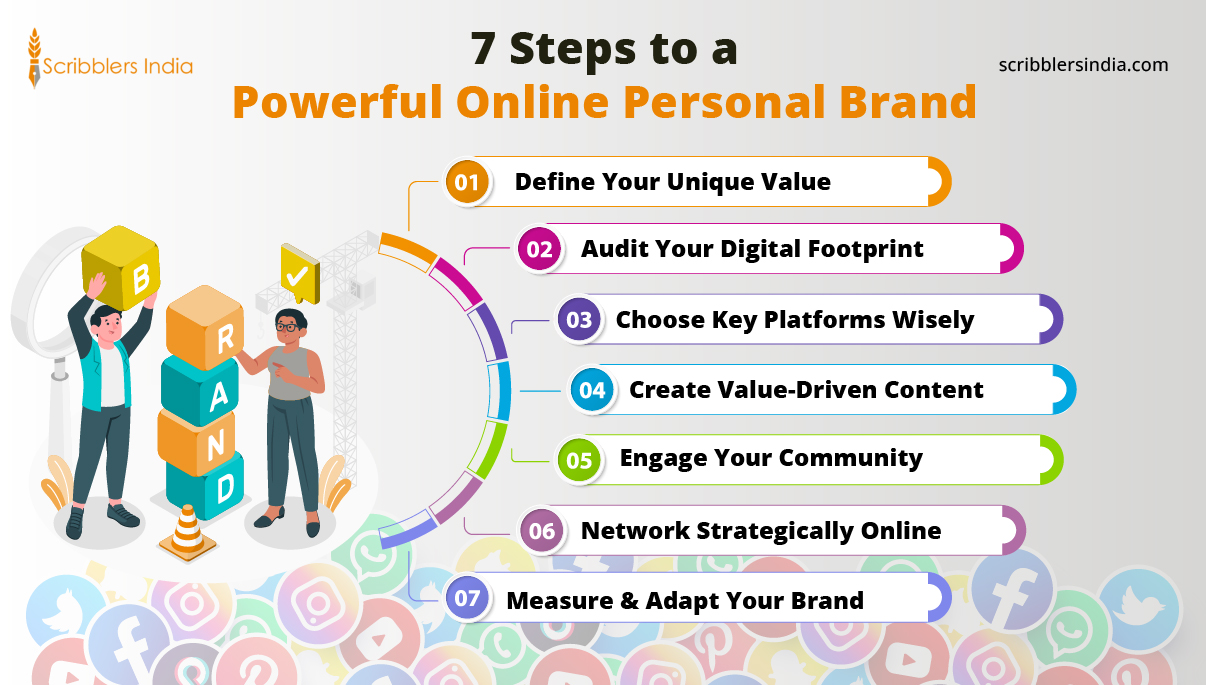
Did you know that 82% of people are more likely to trust a company when its senior executives have a strong personal brand online? This powerful connection between leadership presence and trust highlights the importance of knowing how to build personal brand online. Your personal brand is the unique combination of skills, experiences, and personality traits that you want the world to see. In the digital era, building your personal brand online has become essential for career advancement and professional growth. This guide will walk you through the essential steps on how to build personal brand online, from foundational planning to advanced strategies. This will help you craft an impactful online personal branding strategy that opens doors to new opportunities. What Is a Personal Brand and Why Does It Matter? A personal brand is the intentional representation of your professional identity, values, and expertise across digital channels. It goes beyond a simple social media presence to encompass your overall reputation and the perception others have of you in professional contexts. The concept of how to build a personal brand online has evolved dramatically in the digital age. What once required media connections or industry fame now simply needs strategic online presence. In fact, research indicates that 77% of consumers are more likely to engage with a business when the company leaders are active on social media. Strong online brands deliver tangible results: Professionals with optimized LinkedIn profiles are 40% more likely to receive opportunities through the platform 86% of consumers say authenticity is important when deciding which brands to support Consider figures like Gary Vaynerchuk, Brené Brown, or Mark Cuban. Each has distinct personal branding strategies that amplify their expertise. Without actively managing your online presence, you risk others defining your narrative or, worse, becoming professionally invisible. How to Prepare Before Building Your Online Personal Brand? Beginning your personal brand building journey requires establishing solid foundations before creating content for expanding your reach. Your first step toward understanding how to build personal brand online, is conducting a comprehensive personal brand audit. Search your name online, review your social profiles through an objective lens, and identify content that doesn’t align with your desired brand image. Identifying Your Unique Value Proposition Determine what makes you distinctive in your field. This could be specialized knowledge, unique experiences, or a particular approach to solving industry problems that others don’t offer. Defining Your Target Audience Clarity about whom you’re trying to reach is crucial. Research demographics, professional backgrounds, and online behaviors of your ideal audience to tailor your messaging effectively. Setting Clear Branding Goals Establish specific, measurable objectives for your personal brand. Whether it’s generating speaking opportunities, attracting clients, or positioning for advancement, these goals will guide your strategy. Creating Your Personal Brand Statement Develop a concise statement (1-2 sentences) that articulates who you are professionally, whom you serve, and the unique value you provide. This statement will guide all your online activities. What Are the Steps to Build Your Personal Brand Online? Building your personal brand online requires a systematic approach that moves from planning to execution to optimization. Follow these seven essential steps to create a strong professional presence that resonates with your target audience. Define Your Brand Purpose and Positioning Clarify your professional “why” and identify where you fit within your industry landscape. Your positioning should highlight your unique strengths while addressing specific audience needs. Audit and Clean Up Your Current Online Presence Search your name online and review all social profiles critically. Remove or update outdated content and ensure privacy settings align with your personal branding strategy. Optimize Your Primary Digital Platforms Select 2-3 key platforms based on your audience research. Create comprehensive profiles with professional photos, compelling bios, and consistent visual elements across all channels. Develop Your Content Strategy Create a strategy around what content types will showcase your expertise best. Create a sustainable publishing schedule that balances quality with consistency to build audience expectations. Build Strategic Professional Networks Connect intentionally with peers, industry leaders, and target audience members. Focus on quality over quantity, establishing meaningful relationships rather than collecting connections. Monitor and Manage Your Online Reputation Set up alerts to track mentions of your name and respond promptly to feedback. Address negative comments professionally and amplify positive feedback to strengthen your brand perception. Measure Results and Refine Your Approach Track engagement metrics, audience growth, and professional opportunities generated. Use data insights to adjust your strategy, doubling down on what works and revising what doesn’t. When learning how to build a personal brand online, following a proven framework increases your chances of success. These steps provide a roadmap that professionals across industries can adapt to their specific needs and goals. What Are the Core Elements of a Strong Online Personal Brand Strategy? A successful online personal branding strategy combines several essential elements that work together to create a cohesive professional identity. The foundation of your strategy for how to build personal brand online begins with your brand voice, the distinctive tone and style that reflects your personality while maintaining professionalism. This voice should remain consistent whether you are writing blog posts or responding to comments. Here are the core elements of a robust online personal branding strategy: Visual Branding Elements: Select consistent colors, typography, and imagery that reflect your personal brand attributes. Research shows people remember visual elements 65% more effectively than text alone. Content Pillars: Identify 3-5 core topics that showcase your expertise and align with audience interests. These content pillars will guide your content creation and establish topical authority in your field. Cross-Platform Consistency: Maintain cohesive messaging across platforms while adapting to each platform’s unique strengths. Your LinkedIn profile should connect thematically with your Twitter presence, even with different content formats. Authenticity vs. Curation: Finding the balance between showing your authentic self and maintaining professional standards is crucial. According to Stackla, 86% of consumers say authenticity is important when deciding which brands to support. Which Online Platforms Should You Use to Build Your Personal Brand? Platform
Did you know that 82% of people are more likely to trust a company when its senior executives have a strong personal brand online? This powerful connection between leadership presence and trust highlights the importance of knowing how to build personal brand online. Your personal brand is the unique combination of skills, experiences, and personality traits that you want the world to see. In the digital era, building your personal brand online has become essential for career advancement and professional growth. This guide will walk you through the essential steps on how to build personal brand online, from foundational planning to advanced strategies. This will help you craft an impactful online personal branding strategy that opens doors to new opportunities. What Is a Personal Brand and Why Does It Matter? A personal brand is the intentional representation of your professional identity, values, and expertise across digital channels. It goes beyond a simple social media presence to encompass your overall reputation and the perception others have of you in professional contexts. The concept of how to build a personal brand online has evolved dramatically in the digital age. What once required media connections or industry fame now simply needs strategic online presence. In fact, research indicates that 77% of consumers are more likely to engage with a business when the company leaders are active on social media. Strong online brands deliver tangible results: Professionals with optimized LinkedIn profiles are 40% more likely to receive opportunities through the platform 86% of consumers say authenticity is important when deciding which brands to support Consider figures like Gary Vaynerchuk, Brené Brown, or Mark Cuban. Each has distinct personal branding strategies that amplify their expertise. Without actively managing your online presence, you risk others defining your narrative or, worse, becoming professionally invisible. How to Prepare Before Building Your Online Personal Brand? Beginning your personal brand building journey requires establishing solid foundations before creating content for expanding your reach. Your first step toward understanding how to build personal brand online, is conducting a comprehensive personal brand audit. Search your name online, review your social profiles through an objective lens, and identify content that doesn’t align with your desired brand image. Identifying Your Unique Value Proposition Determine what makes you distinctive in your field. This could be specialized knowledge, unique experiences, or a particular approach to solving industry problems that others don’t offer. Defining Your Target Audience Clarity about whom you’re trying to reach is crucial. Research demographics, professional backgrounds, and online behaviors of your ideal audience to tailor your messaging effectively. Setting Clear Branding Goals Establish specific, measurable objectives for your personal brand. Whether it’s generating speaking opportunities, attracting clients, or positioning for advancement, these goals will guide your strategy. Creating Your Personal Brand Statement Develop a concise statement (1-2 sentences) that articulates who you are professionally, whom you serve, and the unique value you provide. This statement will guide all your online activities. What Are the Steps to Build Your Personal Brand Online? Building your personal brand online requires a systematic approach that moves from planning to execution to optimization. Follow these seven essential steps to create a strong professional presence that resonates with your target audience. Define Your Brand Purpose and Positioning Clarify your professional “why” and identify where you fit within your industry landscape. Your positioning should highlight your unique strengths while addressing specific audience needs. Audit and Clean Up Your Current Online Presence Search your name online and review all social profiles critically. Remove or update outdated content and ensure privacy settings align with your personal branding strategy. Optimize Your Primary Digital Platforms Select 2-3 key platforms based on your audience research. Create comprehensive profiles with professional photos, compelling bios, and consistent visual elements across all channels. Develop Your Content Strategy Create a strategy around what content types will showcase your expertise best. Create a sustainable publishing schedule that balances quality with consistency to build audience expectations. Build Strategic Professional Networks Connect intentionally with peers, industry leaders, and target audience members. Focus on quality over quantity, establishing meaningful relationships rather than collecting connections. Monitor and Manage Your Online Reputation Set up alerts to track mentions of your name and respond promptly to feedback. Address negative comments professionally and amplify positive feedback to strengthen your brand perception. Measure Results and Refine Your Approach Track engagement metrics, audience growth, and professional opportunities generated. Use data insights to adjust your strategy, doubling down on what works and revising what doesn’t. When learning how to build a personal brand online, following a proven framework increases your chances of success. These steps provide a roadmap that professionals across industries can adapt to their specific needs and goals. What Are the Core Elements of a Strong Online Personal Brand Strategy? A successful online personal branding strategy combines several essential elements that work together to create a cohesive professional identity. The foundation of your strategy for how to build personal brand online begins with your brand voice, the distinctive tone and style that reflects your personality while maintaining professionalism. This voice should remain consistent whether you are writing blog posts or responding to comments. Here are the core elements of a robust online personal branding strategy: Visual Branding Elements: Select consistent colors, typography, and imagery that reflect your personal brand attributes. Research shows people remember visual elements 65% more effectively than text alone. Content Pillars: Identify 3-5 core topics that showcase your expertise and align with audience interests. These content pillars will guide your content creation and establish topical authority in your field. Cross-Platform Consistency: Maintain cohesive messaging across platforms while adapting to each platform’s unique strengths. Your LinkedIn profile should connect thematically with your Twitter presence, even with different content formats. Authenticity vs. Curation: Finding the balance between showing your authentic self and maintaining professional standards is crucial. According to Stackla, 86% of consumers say authenticity is important when deciding which brands to support. Which Online Platforms Should You Use to Build Your Personal Brand? Platform