
Zero Click Search Posts
How Are AEO and GEO Changing Content Marketing in the Zero-Click Search Era?
AEO and GEO are becoming essential for brands that want to stay visible as search moves away from traditional clicks. Your content may rank on the first page, your keyword tracking tool may show steady impressions, yet your traffic report may tell a completely different story. This scenario is playing out across industries, and the cause has a specific name: Zero-click search. Zero-click search occurs when users find the answer directly in the search results without visiting a website. Google AI Overviews, featured snippets, knowledge panels, and direct answer widgets now resolve more queries directly in the search interface. A recent industry analysis found that nearly 80% of searches triggering AI Overview results end without a click, showing how AI-led search is accelerating zero-click behavior. For marketers, this changes how search visibility works. Traffic alone no longer reflects content performance. Brands now need AEO and GEO strategies that earn citations, answer visibility, and authority across AI-led search experiences. TL;DR: How AEO and GEO are Leading Transition to Zero-Click Search? Search visibility now extends beyond website clicks. AI answers reshape how audiences discover brands. AEO helps content earn answer-layer visibility. GEO improves citations across generative AI platforms. Question-led headings support direct content extraction. Original insights make content more citation-worthy. Brand mentions now matter alongside organic traffic. A strong content strategy must serve AI search. Why Do AEO and GEO Matter as Zero-Click Search Grows Zero-click search occurs when users get the answer directly in the search results without visiting a website. This no-click search method is becoming popular as search engines now resolve more queries through AI Overviews, featured snippets, knowledge panels, and direct answer boxes before users reach any organic results. Earlier, zero-click behavior was limited to simple queries such as weather updates, currency conversions, definitions, and sports scores. The shift became more disruptive when AI search started handling layered questions. Users can now compare options, understand concepts, review summaries, and gather recommendations directly in the search interface. This changes the value of ranking on page one. A page can still earn impressions, appear below an AI-generated answer, and lose the click because the user already has enough information. According to a 2025 study, AI Overviews reduced clicks to top-ranking pages by 34.5% for informational keywords. For content teams, the real issue is no longer visibility alone. The challenge is earning a place inside the answer layer. Content now needs clear questions, direct answers, expert-backed insights, and original value that search engines can cite rather than summarize without attribution. How Does Zero-Click Search Affect Content Marketing Performance? Zero-click search affects content marketing by separating search exposure from website visits. Your brand may appear in AI Overviews, featured snippets, answer boxes, and People Also Ask results while analytics records fewer sessions. This means performance must be judged through citations, branded demand, assisted conversions, and answer visibility. A focused AEO and GEO strategy helps content teams respond to this shift by treating search visibility as a citation, extraction, and brand recall challenge rather than a traffic-only goal. Traffic Metrics No Longer Capture Full Visibility Most content dashboards still measure what happens after the click. They track sessions, rankings, conversions, and pageviews. Zero-click search shifts much of audience exposure to the search results page, where standard analytics tools capture limited evidence of brand discovery. This creates a measurement blind spot for content teams. A user may read your cited answer, remember your brand, compare you later, and convert through another channel. Search visibility now needs impression analysis, branded search growth, assisted pipeline tracking, and citation monitoring alongside organic traffic. Informational Content Faces the Highest Disruption Risk Informational content carries the highest zero-click risk because it often answers questions that AI systems can summarise inside the results page. Definitions, comparisons, process guides, basic explainers, and FAQ-led pages are easier to compress. Experts found that keywords with AI Overviews had a zero-click rate between 35% and 46%, depending on whether an AI Overview appeared. This does not mean informational content has lost value. It means generic information has become easier to replace. Content needs sharper experience, original examples, practical frameworks, expert input, and brand-owned viewpoints. This is something that AI systems can cite rather than blending into a single summary. Citation Visibility Becomes the New Performance Indicator Citation visibility measures whether your brand appears inside the answer layer, not only below it. This matters because users increasingly treat AI-generated summaries as the first layer of trust. Seer Interactive found that brands cited in AI Overviews earned 35% higher organic CTR than uncited brands. The deeper insight is behavioral. A citation serves as a pre-click trust signal, even when the user does not visit immediately. Content teams should monitor which pages, authors, brand entities, and expert profiles AI systems cite across priority topics. Audience Discovery Shifts to Multi-Platform Behavior Google is still important, yet discovery now happens across ChatGPT, Perplexity, Gemini, Claude, LinkedIn, YouTube, and industry communities. Each platform uses different signals to decide which brands deserve visibility. Traditional rankings alone cannot explain why one brand appears in AI answers while another disappears. This shift changes the content strategy. Publishing on your website is no longer enough for modern search visibility. Brands need consistent entity signals across owned content, expert profiles, third-party publications, social conversations, and digital PR so AI systems can connect the brand with specific areas of authority. How Does AEO Address Zero-Click Search for Content Teams? AEO helps content teams win visibility where users now get answers without clicking. Answer Engine Optimization structures content so search engines can identify, extract, and display the most useful response inside AI Overviews, featured snippets, People Also Ask results, and voice-led search surfaces. In a zero-click environment, the goal is not limited to ranking below the answer. The stronger goal is to become part of the answer itself. When Google cites a brand inside an AI Overview or featured result, that brand earns authority before the user reaches any website. This
AEO and GEO are becoming essential for brands that want to stay visible as search moves away from traditional clicks. Your content may rank on the first page, your keyword tracking tool may show steady impressions, yet your traffic report may tell a completely different story. This scenario is playing out across industries, and the cause has a specific name: Zero-click search. Zero-click search occurs when users find the answer directly in the search results without visiting a website. Google AI Overviews, featured snippets, knowledge panels, and direct answer widgets now resolve more queries directly in the search interface. A recent industry analysis found that nearly 80% of searches triggering AI Overview results end without a click, showing how AI-led search is accelerating zero-click behavior. For marketers, this changes how search visibility works. Traffic alone no longer reflects content performance. Brands now need AEO and GEO strategies that earn citations, answer visibility, and authority across AI-led search experiences. TL;DR: How AEO and GEO are Leading Transition to Zero-Click Search? Search visibility now extends beyond website clicks. AI answers reshape how audiences discover brands. AEO helps content earn answer-layer visibility. GEO improves citations across generative AI platforms. Question-led headings support direct content extraction. Original insights make content more citation-worthy. Brand mentions now matter alongside organic traffic. A strong content strategy must serve AI search. Why Do AEO and GEO Matter as Zero-Click Search Grows Zero-click search occurs when users get the answer directly in the search results without visiting a website. This no-click search method is becoming popular as search engines now resolve more queries through AI Overviews, featured snippets, knowledge panels, and direct answer boxes before users reach any organic results. Earlier, zero-click behavior was limited to simple queries such as weather updates, currency conversions, definitions, and sports scores. The shift became more disruptive when AI search started handling layered questions. Users can now compare options, understand concepts, review summaries, and gather recommendations directly in the search interface. This changes the value of ranking on page one. A page can still earn impressions, appear below an AI-generated answer, and lose the click because the user already has enough information. According to a 2025 study, AI Overviews reduced clicks to top-ranking pages by 34.5% for informational keywords. For content teams, the real issue is no longer visibility alone. The challenge is earning a place inside the answer layer. Content now needs clear questions, direct answers, expert-backed insights, and original value that search engines can cite rather than summarize without attribution. How Does Zero-Click Search Affect Content Marketing Performance? Zero-click search affects content marketing by separating search exposure from website visits. Your brand may appear in AI Overviews, featured snippets, answer boxes, and People Also Ask results while analytics records fewer sessions. This means performance must be judged through citations, branded demand, assisted conversions, and answer visibility. A focused AEO and GEO strategy helps content teams respond to this shift by treating search visibility as a citation, extraction, and brand recall challenge rather than a traffic-only goal. Traffic Metrics No Longer Capture Full Visibility Most content dashboards still measure what happens after the click. They track sessions, rankings, conversions, and pageviews. Zero-click search shifts much of audience exposure to the search results page, where standard analytics tools capture limited evidence of brand discovery. This creates a measurement blind spot for content teams. A user may read your cited answer, remember your brand, compare you later, and convert through another channel. Search visibility now needs impression analysis, branded search growth, assisted pipeline tracking, and citation monitoring alongside organic traffic. Informational Content Faces the Highest Disruption Risk Informational content carries the highest zero-click risk because it often answers questions that AI systems can summarise inside the results page. Definitions, comparisons, process guides, basic explainers, and FAQ-led pages are easier to compress. Experts found that keywords with AI Overviews had a zero-click rate between 35% and 46%, depending on whether an AI Overview appeared. This does not mean informational content has lost value. It means generic information has become easier to replace. Content needs sharper experience, original examples, practical frameworks, expert input, and brand-owned viewpoints. This is something that AI systems can cite rather than blending into a single summary. Citation Visibility Becomes the New Performance Indicator Citation visibility measures whether your brand appears inside the answer layer, not only below it. This matters because users increasingly treat AI-generated summaries as the first layer of trust. Seer Interactive found that brands cited in AI Overviews earned 35% higher organic CTR than uncited brands. The deeper insight is behavioral. A citation serves as a pre-click trust signal, even when the user does not visit immediately. Content teams should monitor which pages, authors, brand entities, and expert profiles AI systems cite across priority topics. Audience Discovery Shifts to Multi-Platform Behavior Google is still important, yet discovery now happens across ChatGPT, Perplexity, Gemini, Claude, LinkedIn, YouTube, and industry communities. Each platform uses different signals to decide which brands deserve visibility. Traditional rankings alone cannot explain why one brand appears in AI answers while another disappears. This shift changes the content strategy. Publishing on your website is no longer enough for modern search visibility. Brands need consistent entity signals across owned content, expert profiles, third-party publications, social conversations, and digital PR so AI systems can connect the brand with specific areas of authority. How Does AEO Address Zero-Click Search for Content Teams? AEO helps content teams win visibility where users now get answers without clicking. Answer Engine Optimization structures content so search engines can identify, extract, and display the most useful response inside AI Overviews, featured snippets, People Also Ask results, and voice-led search surfaces. In a zero-click environment, the goal is not limited to ranking below the answer. The stronger goal is to become part of the answer itself. When Google cites a brand inside an AI Overview or featured result, that brand earns authority before the user reaches any website. This
What Is the Difference Between GEO, SEO, and AEO?
Online search has now transitioned into three disciplines, each targeting a different layer of how people now discover information. Ranking on Google is no longer the only form of search visibility that drives business outcomes. The GEO vs AEO vs SEO comparison represents three separate optimization strategies that together cover the full scope of modern search. Search Engine Optimization (SEO) gets your content ranked in traditional search results. Answer Engine Optimization (AEO) gets your content surfaced as a direct answer in structured features like featured snippets. Generative Engine Optimization (GEO) gets your content cited inside the synthesized responses that AI platforms like ChatGPT, Perplexity, and Google AI Overviews generate for users. Each discipline targets a different output, platform, and user behavior. Understanding all three is how modern content teams build search visibility that does not collapse when one layer shifts. TL;DR: Understanding Core Differences Between GEO vs AEO vs SEO SEO targets traditional search rankings and drives organic website clicks. AEO optimizes for direct answers in structured search features and voice. GEO ensures AI platforms cite your content in synthesized generated responses. ChatGPT processes over one billion queries daily as of 2026. The GEO market is projected to reach $33.7 billion by 2034. Statistics in content improve AI citation rates by up to 41 percent. All three strategies share the same authority and accuracy signals at base. GEO requires earned media, original data, and entity clarity above all. Strong SEO is the technical prerequisite that enables effective GEO performance. Running all three together captures the full spectrum of modern search visibility. What is the Importance of GEO in Digital Marketing: Why Is It Growing So Fast? Generative Engine Optimization (GEO) is the practice of structuring content so that AI-powered platforms like ChatGPT, Perplexity, Gemini, and Google AI Overviews retrieve and cite it within the responses they generate for users. The growth of this discipline reflects a key shift in search behavior. ChatGPT now processes over one billion queries daily and has reached 900 million weekly active users globally. That scale makes AI platforms a discovery channel that brands can no longer treat as secondary. The GEO market was valued at $848 million in 2026 and is projected to reach $33.7 billion by 2034, growing at a 50.5% CAGR. These numbers reflect how rapidly organizations are recognizing that appearing inside AI-generated answers carries commercial value comparable to appearing on the first page of traditional search results. When GEO is compared to traditional SEO, it operates on a fundamentally different principle. Traditional SEO competes for a ranked position that a user clicks. GEO competes to become the trusted source that an AI system selects when synthesizing a response. The user may never visit the site, yet the brand earns authority and recognition with every citation. For businesses investing in content marketing, GEO represents the next layer of return on that investment. What Is the Core Difference Between GEO and SEO? The difference between GEO vs SEO comes down to target output and optimization signals. SEO optimizes content so that search engines rank it highly. In practice, GEO vs SEO means one targets click-through traffic, while the other targets AI citation authority. Here is how the GEO vs AEO vs SEO framework distinguishes the three disciplines across the dimensions that content strategy depends on: Target Output and Platform SEO targets a ranked link on Google or Bing that users click to reach a website. AEO targets a direct answer extracted from a single source and displayed in a featured snippet, People Also Ask box, or voice search response. GEO targets inclusion in a synthesized, multi-source response that an AI platform generates for a user who may never see a traditional list of links. Content Format and Structure SEO rewards comprehensive, keyword-rich content that covers a topic with enough depth to satisfy a range of related queries. AEO rewards concise, directly answerable paragraphs of 40 to 60 words positioned immediately after a question-based heading. GEO vs AEO comparison at the content level reveals that GEO additionally rewards original data, expert citations, and earned media mentions. These are signals that go well beyond format and structure into genuine information authority. Authority Signals SEO authority is built through backlinks, domain rating, internal linking, and on-page optimization signals. AEO authority is built through E-E-A-T signals of Experience, Expertise, Authoritativeness, and Trustworthiness that signal to Google that a source is credible enough to surface as a direct answer. GEO authority additionally depends on how frequently a brand is cited across third-party, authoritative publications. Research shows that brands are 6.5 times more likely to be cited by AI platforms via third-party sources than on their own domains. This means earned media and thought leadership content placements are direct GEO investments. Success Metrics SEO success is measured through keyword rankings, organic traffic volume, and click-through rates. On comparing SEO vs AEO, you will understand that AEO success is measured through featured snippet wins, voice search inclusion, and People Also Ask appearances. GEO vs AEO comparison on measurement reveals that GEO success is measured through AI citation frequency, brand mention volume across AI platforms, share of voice in generated responses, and the downstream branded search volume that AI citations produce over time. Relationship to Click Traffic SEO and AEO both produce measurable website traffic, though AEO increasingly operates in a zero-click environment where the answer resolves the query without a visit. GEO operates almost entirely outside the click economy. A brand cited inside a ChatGPT or Perplexity response earns authority and audience recognition without generating a trackable click in most cases. The value accumulates in brand trust, direct search behavior, and the purchasing decisions that AI recommendations influence before a user ever visits any website. Comparing GEO vs AEO vs SEO Here is a comparative analysis of GEO vs AEO vs SEO strategies for informed decision making: Category SEO AEO GEO Primary Target Targets ranked links and clicks Targets direct structured answer features Targets AI-generated synthesized citations
Online search has now transitioned into three disciplines, each targeting a different layer of how people now discover information. Ranking on Google is no longer the only form of search visibility that drives business outcomes. The GEO vs AEO vs SEO comparison represents three separate optimization strategies that together cover the full scope of modern search. Search Engine Optimization (SEO) gets your content ranked in traditional search results. Answer Engine Optimization (AEO) gets your content surfaced as a direct answer in structured features like featured snippets. Generative Engine Optimization (GEO) gets your content cited inside the synthesized responses that AI platforms like ChatGPT, Perplexity, and Google AI Overviews generate for users. Each discipline targets a different output, platform, and user behavior. Understanding all three is how modern content teams build search visibility that does not collapse when one layer shifts. TL;DR: Understanding Core Differences Between GEO vs AEO vs SEO SEO targets traditional search rankings and drives organic website clicks. AEO optimizes for direct answers in structured search features and voice. GEO ensures AI platforms cite your content in synthesized generated responses. ChatGPT processes over one billion queries daily as of 2026. The GEO market is projected to reach $33.7 billion by 2034. Statistics in content improve AI citation rates by up to 41 percent. All three strategies share the same authority and accuracy signals at base. GEO requires earned media, original data, and entity clarity above all. Strong SEO is the technical prerequisite that enables effective GEO performance. Running all three together captures the full spectrum of modern search visibility. What is the Importance of GEO in Digital Marketing: Why Is It Growing So Fast? Generative Engine Optimization (GEO) is the practice of structuring content so that AI-powered platforms like ChatGPT, Perplexity, Gemini, and Google AI Overviews retrieve and cite it within the responses they generate for users. The growth of this discipline reflects a key shift in search behavior. ChatGPT now processes over one billion queries daily and has reached 900 million weekly active users globally. That scale makes AI platforms a discovery channel that brands can no longer treat as secondary. The GEO market was valued at $848 million in 2026 and is projected to reach $33.7 billion by 2034, growing at a 50.5% CAGR. These numbers reflect how rapidly organizations are recognizing that appearing inside AI-generated answers carries commercial value comparable to appearing on the first page of traditional search results. When GEO is compared to traditional SEO, it operates on a fundamentally different principle. Traditional SEO competes for a ranked position that a user clicks. GEO competes to become the trusted source that an AI system selects when synthesizing a response. The user may never visit the site, yet the brand earns authority and recognition with every citation. For businesses investing in content marketing, GEO represents the next layer of return on that investment. What Is the Core Difference Between GEO and SEO? The difference between GEO vs SEO comes down to target output and optimization signals. SEO optimizes content so that search engines rank it highly. In practice, GEO vs SEO means one targets click-through traffic, while the other targets AI citation authority. Here is how the GEO vs AEO vs SEO framework distinguishes the three disciplines across the dimensions that content strategy depends on: Target Output and Platform SEO targets a ranked link on Google or Bing that users click to reach a website. AEO targets a direct answer extracted from a single source and displayed in a featured snippet, People Also Ask box, or voice search response. GEO targets inclusion in a synthesized, multi-source response that an AI platform generates for a user who may never see a traditional list of links. Content Format and Structure SEO rewards comprehensive, keyword-rich content that covers a topic with enough depth to satisfy a range of related queries. AEO rewards concise, directly answerable paragraphs of 40 to 60 words positioned immediately after a question-based heading. GEO vs AEO comparison at the content level reveals that GEO additionally rewards original data, expert citations, and earned media mentions. These are signals that go well beyond format and structure into genuine information authority. Authority Signals SEO authority is built through backlinks, domain rating, internal linking, and on-page optimization signals. AEO authority is built through E-E-A-T signals of Experience, Expertise, Authoritativeness, and Trustworthiness that signal to Google that a source is credible enough to surface as a direct answer. GEO authority additionally depends on how frequently a brand is cited across third-party, authoritative publications. Research shows that brands are 6.5 times more likely to be cited by AI platforms via third-party sources than on their own domains. This means earned media and thought leadership content placements are direct GEO investments. Success Metrics SEO success is measured through keyword rankings, organic traffic volume, and click-through rates. On comparing SEO vs AEO, you will understand that AEO success is measured through featured snippet wins, voice search inclusion, and People Also Ask appearances. GEO vs AEO comparison on measurement reveals that GEO success is measured through AI citation frequency, brand mention volume across AI platforms, share of voice in generated responses, and the downstream branded search volume that AI citations produce over time. Relationship to Click Traffic SEO and AEO both produce measurable website traffic, though AEO increasingly operates in a zero-click environment where the answer resolves the query without a visit. GEO operates almost entirely outside the click economy. A brand cited inside a ChatGPT or Perplexity response earns authority and audience recognition without generating a trackable click in most cases. The value accumulates in brand trust, direct search behavior, and the purchasing decisions that AI recommendations influence before a user ever visits any website. Comparing GEO vs AEO vs SEO Here is a comparative analysis of GEO vs AEO vs SEO strategies for informed decision making: Category SEO AEO GEO Primary Target Targets ranked links and clicks Targets direct structured answer features Targets AI-generated synthesized citations
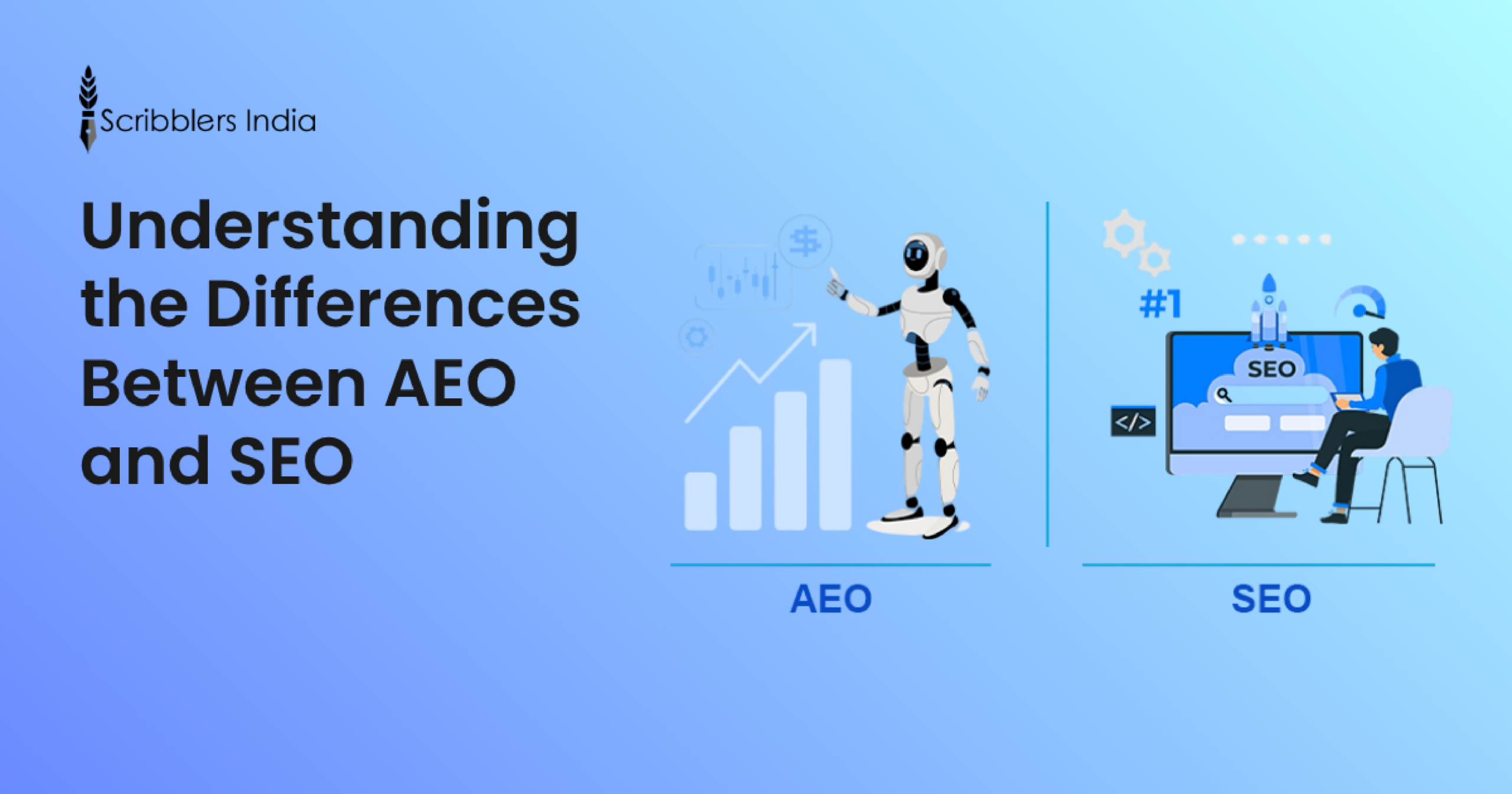
What are the Differences Between AEO vs SEO? (or Do You Need Both?)
Your website ranks on page one of Google. Traffic is solid. Then something shifts. Rankings hold, yet organic clicks drop. You investigate and find that Google is answering your audience’s questions before they ever reach your site. This scenario is playing out across industries in 2026, and it describes why the AEO vs SEO conversation has moved from theoretical to urgent. According to industry reports, 69% of Google searches now end without a click, up from 56% just 12 months earlier. This 13-point jump correlates directly with the expansion of Google AI Overviews, which extracts answers from multiple sources and delivers them at the top of the results page. For every 1,000 searches, only 360 clicks reach the open web. Traditional search engine optimization gets your content into the index. Answer engine optimization helps your content appear in the answer. The difference between AEO vs SEO is not about choosing one over the other. It is about understanding how each works, where they overlap, and how to run both to capture visibility across every layer of modern search. What Is AEO and What Does It Mean in Digital Marketing? Answer Engine Optimization (AEO) refers to the practice of structuring content so that AI-powered platforms, voice assistants, and AI-generated search features can extract, synthesize, and deliver it as a direct response to a user’s query. AEO in digital marketing emerged as a direct response to the rise of platforms like Google AI Overviews, ChatGPT, Perplexity, and voice assistants that answer user questions without displaying a ranked list of links. Rather than competing for a position on a results page, brands optimizing for AEO compete to become the cited, trusted source within the answer itself. The core objective of answer engine optimization vs search engine optimization comes down to this distinction: SEO optimizes for being found through a link. AEO optimizes for being used as the answer. Both forms of visibility have commercial value, but they operate through fundamentally different mechanisms and require different content structures to achieve. What Is the Difference Between AEO and SEO in Practice? The difference between AEO and SEO lies in their target output, success metrics, content format requirements, and the platforms they optimize for. SEO aims to rank a page. AEO aims to become the answer that a platform generates when a user asks a relevant question. Here is how the AEO vs SEO distinction plays out across the five dimensions that matter most to a content strategy: Target Platform and Output SEO targets traditional search engines, primarily Google and Bing, where the output is a ranked list of links that users browse and click. AEO vs SEO in terms of platform: AEO targets AI-powered answer surfaces, including Google AI Overviews, ChatGPT, Perplexity, Amazon Alexa, and Apple Siri. Here, the output is a synthesized response that may or may not include a clickable attribution. A business that appears in an AI Overview earns visibility even when the user never clicks through to the site. Success Metrics SEO success is measured through ranking positions, organic traffic volume, click-through rates, and keyword visibility scores. AEO success is measured through: Featured snippet wins AI Overview citation frequency Voice search answer inclusion People Also Ask appearances Brand mention volume across AI-generated responses Businesses moving into AEO need a measurement framework that captures answer-layer visibility rather than relying on website traffic as the sole indicator of search performance. Content Format Requirements SEO rewards comprehensive, keyword-rich, long-form content that covers a topic with enough depth and breadth to satisfy a range of search queries. The difference between AEO and SEO in content format is significant. AEO rewards concise, direct, question-answering paragraphs of 40 to 60 words that allow an AI system to extract a complete answer from a single content block. The structure that works best for AEO uses question-based headings followed immediately by a complete, standalone answer. This is the exact format that AI Overviews and voice assistants extract and deliver. Optimization Signals SEO optimization relies on keyword research, backlink building, metadata refinement, internal linking, site speed, and Core Web Vitals. The answer engine optimization vs search engine optimization comparison on signals indicates that AEO optimization relies on: Structured data markup (FAQPage, HowTo, Organization schema) E-E-A-T signals, including author credentials and citing original research Entity clarity that allows AI systems to understand exactly what a brand is, what it does, and who it serves. Relationship to Click-Through Traffic SEO is fundamentally traffic-oriented. Its commercial logic depends on users clicking through to the website where conversion opportunities exist. When it comes to AEO vs SEO on traffic indicates that AEO operates partly outside the click economy. When a brand’s content is cited in an AI Overview or read aloud by a voice assistant, it earns brand awareness and authority with an audience that may never visit the site during that session. This awareness-level visibility influences direct search behavior, branded queries, and offline purchase decisions in ways that click-based analytics do not capture. How Does SEO Work in 2026? SEO helps search engines discover, index, and rank your content for relevant queries. It remains essential in 2026 because the majority of commercial, transactional, and navigational queries continue to drive website clicks, and because strong SEO is the technical foundation AEO builds on. SEO operates across three interconnected disciplines. Technical SEO ensures that search engines can crawl, index, and understand your site structure. It is done through fast load times, clean URL architecture, proper robots.txt configuration, and schema markup. On-page SEO aligns your content with the specific queries your audience uses through keyword research, heading structure, meta descriptions, and internal linking. Off-page SEO builds domain authority, which signals to search engines that your site is a credible, trusted source through backlink acquisition and brand mentions across the web. Is SEO Still Relevant in 2026? The commercial case for continued SEO investment is clear. According to a recent analysis, 36% of searches still result in clicks. For transactional queries, where someone
Your website ranks on page one of Google. Traffic is solid. Then something shifts. Rankings hold, yet organic clicks drop. You investigate and find that Google is answering your audience’s questions before they ever reach your site. This scenario is playing out across industries in 2026, and it describes why the AEO vs SEO conversation has moved from theoretical to urgent. According to industry reports, 69% of Google searches now end without a click, up from 56% just 12 months earlier. This 13-point jump correlates directly with the expansion of Google AI Overviews, which extracts answers from multiple sources and delivers them at the top of the results page. For every 1,000 searches, only 360 clicks reach the open web. Traditional search engine optimization gets your content into the index. Answer engine optimization helps your content appear in the answer. The difference between AEO vs SEO is not about choosing one over the other. It is about understanding how each works, where they overlap, and how to run both to capture visibility across every layer of modern search. What Is AEO and What Does It Mean in Digital Marketing? Answer Engine Optimization (AEO) refers to the practice of structuring content so that AI-powered platforms, voice assistants, and AI-generated search features can extract, synthesize, and deliver it as a direct response to a user’s query. AEO in digital marketing emerged as a direct response to the rise of platforms like Google AI Overviews, ChatGPT, Perplexity, and voice assistants that answer user questions without displaying a ranked list of links. Rather than competing for a position on a results page, brands optimizing for AEO compete to become the cited, trusted source within the answer itself. The core objective of answer engine optimization vs search engine optimization comes down to this distinction: SEO optimizes for being found through a link. AEO optimizes for being used as the answer. Both forms of visibility have commercial value, but they operate through fundamentally different mechanisms and require different content structures to achieve. What Is the Difference Between AEO and SEO in Practice? The difference between AEO and SEO lies in their target output, success metrics, content format requirements, and the platforms they optimize for. SEO aims to rank a page. AEO aims to become the answer that a platform generates when a user asks a relevant question. Here is how the AEO vs SEO distinction plays out across the five dimensions that matter most to a content strategy: Target Platform and Output SEO targets traditional search engines, primarily Google and Bing, where the output is a ranked list of links that users browse and click. AEO vs SEO in terms of platform: AEO targets AI-powered answer surfaces, including Google AI Overviews, ChatGPT, Perplexity, Amazon Alexa, and Apple Siri. Here, the output is a synthesized response that may or may not include a clickable attribution. A business that appears in an AI Overview earns visibility even when the user never clicks through to the site. Success Metrics SEO success is measured through ranking positions, organic traffic volume, click-through rates, and keyword visibility scores. AEO success is measured through: Featured snippet wins AI Overview citation frequency Voice search answer inclusion People Also Ask appearances Brand mention volume across AI-generated responses Businesses moving into AEO need a measurement framework that captures answer-layer visibility rather than relying on website traffic as the sole indicator of search performance. Content Format Requirements SEO rewards comprehensive, keyword-rich, long-form content that covers a topic with enough depth and breadth to satisfy a range of search queries. The difference between AEO and SEO in content format is significant. AEO rewards concise, direct, question-answering paragraphs of 40 to 60 words that allow an AI system to extract a complete answer from a single content block. The structure that works best for AEO uses question-based headings followed immediately by a complete, standalone answer. This is the exact format that AI Overviews and voice assistants extract and deliver. Optimization Signals SEO optimization relies on keyword research, backlink building, metadata refinement, internal linking, site speed, and Core Web Vitals. The answer engine optimization vs search engine optimization comparison on signals indicates that AEO optimization relies on: Structured data markup (FAQPage, HowTo, Organization schema) E-E-A-T signals, including author credentials and citing original research Entity clarity that allows AI systems to understand exactly what a brand is, what it does, and who it serves. Relationship to Click-Through Traffic SEO is fundamentally traffic-oriented. Its commercial logic depends on users clicking through to the website where conversion opportunities exist. When it comes to AEO vs SEO on traffic indicates that AEO operates partly outside the click economy. When a brand’s content is cited in an AI Overview or read aloud by a voice assistant, it earns brand awareness and authority with an audience that may never visit the site during that session. This awareness-level visibility influences direct search behavior, branded queries, and offline purchase decisions in ways that click-based analytics do not capture. How Does SEO Work in 2026? SEO helps search engines discover, index, and rank your content for relevant queries. It remains essential in 2026 because the majority of commercial, transactional, and navigational queries continue to drive website clicks, and because strong SEO is the technical foundation AEO builds on. SEO operates across three interconnected disciplines. Technical SEO ensures that search engines can crawl, index, and understand your site structure. It is done through fast load times, clean URL architecture, proper robots.txt configuration, and schema markup. On-page SEO aligns your content with the specific queries your audience uses through keyword research, heading structure, meta descriptions, and internal linking. Off-page SEO builds domain authority, which signals to search engines that your site is a credible, trusted source through backlink acquisition and brand mentions across the web. Is SEO Still Relevant in 2026? The commercial case for continued SEO investment is clear. According to a recent analysis, 36% of searches still result in clicks. For transactional queries, where someone
Zero-Click Search
Search engines used to function as directories, pointing users to websites that held the answer. Today, they increasingly function as answer machines. This shift has led to what is known as Zero-Click Search, where users type a question, the search engine delivers the answer directly on the results page, and the user leaves without visiting a single website. This behavior defines zero-click search, and it is reshaping how brands measure visibility, plan content, and approach digital marketing altogether. According to research, around 60% of all Google searches in 2025 end without a click. On mobile devices, that figure climbs to 77%. For brands that depend on organic search as a primary traffic channel, this represents one of the most significant structural shifts in the history of digital marketing. What is a Zero-Click Search and What Causes It? A zero-click search occurs when a user finds the information they need directly on the search results page, without clicking through to any external website. The search engine resolves the query within its own interface, making a website visit unnecessary for the user to complete their information need. Several search features drive this behavior. Google’s AI Overviews synthesize answers from multiple sources and display them at the top of results. Featured snippets present a highlighted block of text extracted directly from a web page. Knowledge panels surface structured information about entities: brands, people, and locations, without requiring the user to visit any individual source website. Local packs, weather cards, calculator tools, and conversion widgets resolve informational and transactional queries entirely within the search environment. Voice search accelerates this trend significantly. When a user asks a smart speaker or mobile assistant a question, the device reads a single answer aloud, with no link provided, making the concept of a click entirely irrelevant to how the content is discovered and consumed. How Does Zero-Click Search Affect Organic Traffic and Content Marketing? Zero-click search creates a direct tension between traditional content marketing goals and the reality of how modern search now works. Brands that built their traffic models on organic clicks from informational content report measurable declines even when their search rankings remain strong. The impact is not uniform across all content types. Informational content — definitions, how-to guides, conversion tools, and factual queries — faces the heaviest disruption because these query types are precisely what AI Overviews and featured snippets are designed to resolve. Transactional, commercial, and navigational queries that require a website visit to complete an action are far less disrupted, which is why a diversified content strategy that covers multiple intent types performs more resiliently in a zero-click environment. Impression share grows while click share shrinks: A brand’s content can appear at the top of a search results page and earn significantly fewer clicks than it would have two years ago, because the AI Overview or featured snippet above it already answered the user’s question before they considered clicking. Brand awareness benefits remain substantial: When a brand’s content is cited in an AI Overview or featured snippet, it gains exposure at the exact moment the user is asking a relevant question. This awareness-level visibility influences brand recall, direct search behavior, and downstream conversions even when no click occurs during the session. Content authority becomes the primary competitive advantage: Zero-click search rewards brands whose content is trusted enough to be selected as the source for a displayed answer. Building that trust through thought leadership content writing and original research delivers compounding brand authority that benefits both zero-click visibility and traditional organic performance simultaneously. What Is the Difference Between Zero-Click Search and AI-Powered Search? Zero-click search is a behavioral outcome: the user gets the answer without clicking. AI-powered search is the mechanism increasingly responsible for producing that outcome, through features like AI Overviews, synthesized Perplexity responses, and ChatGPT direct answers. The two terms are related but not interchangeable in a content strategy context. Scope of the concept: Zero-click search predates AI-powered search by several years. Featured snippets, knowledge panels, local packs, and weather widgets all produced zero-click outcomes long before AI Overviews launched. AI-powered search has dramatically accelerated the zero-click rate, but the trend itself began well before generative AI entered the search experience. Source attribution patterns: Traditional zero-click features, such as featured snippets, typically attribute the answer to a single source and display the URL clearly below the extracted text. AI-powered search responses may synthesize content from multiple sources simultaneously, citing several or none, making attribution more complex for brands trying to accurately measure their zero-click visibility. Query complexity coverage: Traditional zero-click features resolved simple, factual queries most effectively. AI-powered search extends zero-click behavior into more complex, multi-part, and conversational queries that previously required users to visit multiple websites to fully satisfy their information needs. Optimization approach required: Featured snippets and knowledge panels respond to structured data, concise answer paragraphs, and schema markup. AI-powered search also responds to entity authority, original information gain, and multi-platform brand credibility, which is why AEO and GEO strategies extend the optimization framework well beyond traditional zero-click tactics. Measurement framework differences: Zero-click search performance has traditionally been measured through featured snippet wins and impression share in Google Search Console. AI-powered zero-click visibility additionally requires tracking brand mentions in AI-generated responses, citation frequency across platforms, share of voice in AI-mediated discovery, and downstream branded search volume lift as indirect indicators. How Can Brands Adapt Their Content Strategy to Zero-Click Search? Adapting to zero-click search does not mean abandoning organic content investment. It means restructuring how content gets created, measured, and distributed to capture visibility at the answer layer rather than relying solely on click-through traffic as the primary measure of success. The most effective brands in a zero-click environment take a visibility-first approach. They optimize for citation, brand mentions, and authority signals rather than for clicks. A strong content marketing strategy for the zero-click era integrates traditional SEO with AEO and GEO principles, ensuring the brand performs across all layers of the modern search experience
Search engines used to function as directories, pointing users to websites that held the answer. Today, they increasingly function as answer machines. This shift has led to what is known as Zero-Click Search, where users type a question, the search engine delivers the answer directly on the results page, and the user leaves without visiting a single website. This behavior defines zero-click search, and it is reshaping how brands measure visibility, plan content, and approach digital marketing altogether. According to research, around 60% of all Google searches in 2025 end without a click. On mobile devices, that figure climbs to 77%. For brands that depend on organic search as a primary traffic channel, this represents one of the most significant structural shifts in the history of digital marketing. What is a Zero-Click Search and What Causes It? A zero-click search occurs when a user finds the information they need directly on the search results page, without clicking through to any external website. The search engine resolves the query within its own interface, making a website visit unnecessary for the user to complete their information need. Several search features drive this behavior. Google’s AI Overviews synthesize answers from multiple sources and display them at the top of results. Featured snippets present a highlighted block of text extracted directly from a web page. Knowledge panels surface structured information about entities: brands, people, and locations, without requiring the user to visit any individual source website. Local packs, weather cards, calculator tools, and conversion widgets resolve informational and transactional queries entirely within the search environment. Voice search accelerates this trend significantly. When a user asks a smart speaker or mobile assistant a question, the device reads a single answer aloud, with no link provided, making the concept of a click entirely irrelevant to how the content is discovered and consumed. How Does Zero-Click Search Affect Organic Traffic and Content Marketing? Zero-click search creates a direct tension between traditional content marketing goals and the reality of how modern search now works. Brands that built their traffic models on organic clicks from informational content report measurable declines even when their search rankings remain strong. The impact is not uniform across all content types. Informational content — definitions, how-to guides, conversion tools, and factual queries — faces the heaviest disruption because these query types are precisely what AI Overviews and featured snippets are designed to resolve. Transactional, commercial, and navigational queries that require a website visit to complete an action are far less disrupted, which is why a diversified content strategy that covers multiple intent types performs more resiliently in a zero-click environment. Impression share grows while click share shrinks: A brand’s content can appear at the top of a search results page and earn significantly fewer clicks than it would have two years ago, because the AI Overview or featured snippet above it already answered the user’s question before they considered clicking. Brand awareness benefits remain substantial: When a brand’s content is cited in an AI Overview or featured snippet, it gains exposure at the exact moment the user is asking a relevant question. This awareness-level visibility influences brand recall, direct search behavior, and downstream conversions even when no click occurs during the session. Content authority becomes the primary competitive advantage: Zero-click search rewards brands whose content is trusted enough to be selected as the source for a displayed answer. Building that trust through thought leadership content writing and original research delivers compounding brand authority that benefits both zero-click visibility and traditional organic performance simultaneously. What Is the Difference Between Zero-Click Search and AI-Powered Search? Zero-click search is a behavioral outcome: the user gets the answer without clicking. AI-powered search is the mechanism increasingly responsible for producing that outcome, through features like AI Overviews, synthesized Perplexity responses, and ChatGPT direct answers. The two terms are related but not interchangeable in a content strategy context. Scope of the concept: Zero-click search predates AI-powered search by several years. Featured snippets, knowledge panels, local packs, and weather widgets all produced zero-click outcomes long before AI Overviews launched. AI-powered search has dramatically accelerated the zero-click rate, but the trend itself began well before generative AI entered the search experience. Source attribution patterns: Traditional zero-click features, such as featured snippets, typically attribute the answer to a single source and display the URL clearly below the extracted text. AI-powered search responses may synthesize content from multiple sources simultaneously, citing several or none, making attribution more complex for brands trying to accurately measure their zero-click visibility. Query complexity coverage: Traditional zero-click features resolved simple, factual queries most effectively. AI-powered search extends zero-click behavior into more complex, multi-part, and conversational queries that previously required users to visit multiple websites to fully satisfy their information needs. Optimization approach required: Featured snippets and knowledge panels respond to structured data, concise answer paragraphs, and schema markup. AI-powered search also responds to entity authority, original information gain, and multi-platform brand credibility, which is why AEO and GEO strategies extend the optimization framework well beyond traditional zero-click tactics. Measurement framework differences: Zero-click search performance has traditionally been measured through featured snippet wins and impression share in Google Search Console. AI-powered zero-click visibility additionally requires tracking brand mentions in AI-generated responses, citation frequency across platforms, share of voice in AI-mediated discovery, and downstream branded search volume lift as indirect indicators. How Can Brands Adapt Their Content Strategy to Zero-Click Search? Adapting to zero-click search does not mean abandoning organic content investment. It means restructuring how content gets created, measured, and distributed to capture visibility at the answer layer rather than relying solely on click-through traffic as the primary measure of success. The most effective brands in a zero-click environment take a visibility-first approach. They optimize for citation, brand mentions, and authority signals rather than for clicks. A strong content marketing strategy for the zero-click era integrates traditional SEO with AEO and GEO principles, ensuring the brand performs across all layers of the modern search experience
Answer Engine Optimization (AEO)
Search behavior has changed in ways that traditional SEO alone cannot address. Over 60% of Google searches now end without a single click, and platforms like ChatGPT serve more than 800 million users every week. Brands that want to stay visible in this environment need a sharper strategy. Answer Engine Optimization (AEO) is that strategy. It focuses on structuring content so that AI-powered platforms deliver it as a direct answer to user queries, rather than as a link in a results list. For content marketers and digital brands, AEO has become a measurable, high-priority discipline that determines where and how a brand gets discovered. What is AEO and Why Does It Matter Today? Answer Engine Optimization (AEO) is the practice of structuring content so that AI-driven platforms can extract and surface it as a direct, cited answer to a user query. Platforms like Google AI Overviews, ChatGPT, Perplexity, and voice assistants all operate as answer engines. Unlike traditional SEO, which targets ranking positions and website clicks, AEO targets the answer itself. The goal is for a brand’s content to become the source that an AI platform cites, summarizes, or reads aloud when a user asks a relevant question. This shift matters because users today expect instant, trustworthy answers. Voice assistants, AI chatbots, and AI Overviews deliver exactly that, which means brands that do not optimize for answers risk becoming invisible even when their content holds a strong traditional search ranking. How Does Answer Engine Optimization (AEO) Differ from Traditional SEO? AEO and SEO share the same foundation, yet they target different outcomes, measurement frameworks, and content formats in meaningful ways. AEO prioritizes being the source of an answer over earning a click. Traditional SEO measures success through rankings, traffic, and click-through rates. AEO measures success through citations in AI responses, brand mentions in answer engines, and the share of voice a brand holds across AI-powered platforms. Target platform: Traditional SEO targets Google’s ranked link results. AEO targets AI-generated answer surfaces, including AI Overviews, Perplexity responses, voice search outputs, and featured snippets where answers appear above organic results. Content format requirements: Traditional SEO rewards comprehensive, keyword-rich pages. AEO rewards concise, question-forward content that leads with a direct answer in the first 40 to 60 words. This makes it easy for AI systems to extract, synthesize, and deliver to the user. Intent alignment: Traditional SEO ranks pages for broad keyword clusters. AEO demands content that aligns closely with the specific conversational question a user types or speaks. This requires a deeper understanding of natural-language search intent across every topic area. Authority signal weight: AEO places greater emphasis on E-E-A-T signals: experience, expertise, authoritativeness, and trustworthiness. This is because answer engines actively evaluate whether a source is credible enough to be cited in a response that reaches millions of users at once. What Are the Core Components That Drive AEO Success? AEO builds on a set of interconnected content, technical, and authority signals that, together, tell answer engines that a brand is worth citing in their responses. The question-forward content structure is the most fundamental component. Organizing content around the exact questions an audience asks and using those questions as headings allows AI systems to locate and extract answers efficiently. Direct, answer-first writing in the opening sentences of each section signals that the content exists to inform rather than to sell. Structured data and schema markup: These allow answer engines to parse content meaning with precision. FAQPage, HowTo, Article, and Organization schema types signal the nature of content to AI crawlers, improving the likelihood of inclusion in rich results and AI-generated responses across all major platforms. Concise, extractable paragraphs: Paragraphs in the 40 to 60 word range match the format that AI Overviews and featured snippets consistently pull from. Longer, unbroken text blocks are harder for AI systems to summarize and attribute accurately to the correct source. Multi-platform brand presence: Answer engines draw from review platforms, social content, third-party publications, and discussion forums alongside a brand’s own website, which means consistency of brand representation across all surfaces matters significantly for AEO performance. Why Does E-E-A-T Signal Matter for AEO? E-E-A-T stands for Experience, Expertise, Authoritativeness, and Trustworthiness. These four signals determine whether an answer engine considers a source credible enough to cite in a direct response to a user query. Answer engines do not rank blue links. They recommend sources to users who trust those recommendations completely. For an AI platform to cite a brand’s content, it needs clear evidence that the content comes from a genuinely knowledgeable source with a documented track record. Experience: Content that demonstrates first-hand knowledge through case studies, real outcomes, and practitioner insights signals authenticity that AI systems recognize as more reliable than purely theoretical coverage of a subject. Expertise: Clear author profiles, bylines linked to credible sources, and content that demonstrates depth rather than breadth show answer engines that the content comes from someone with genuine authority in the specific subject area being covered. Authoritativeness and Trustworthiness: Third-party mentions, backlinks from reputable sources, accurate statistics, and consistent publishing history build the entity authority that AI platforms use to assess whether a brand deserves a citation in a generated response delivered to users. What Are the Key AEO Strategies for Digital Marketers? Effective AEO requires a deliberate shift in how content is planned, structured, and distributed across channels. Brands that lead with answers consistently perform better in AI-generated answer surfaces than those that bury the response in long introductions. Placing a direct, complete response to the query in the first paragraph of each content section aligns with how AI platforms retrieve and display information. This approach also signals to the platform that the content immediately resolves the user’s question, rather than requiring them to scroll through multiple paragraphs. Build content hubs around specific questions: Organize service pages, blog posts, and glossary content around the precise natural-language questions an audience asks. Tools like Google’s People Also Ask boxes, search autocomplete, and branded
Search behavior has changed in ways that traditional SEO alone cannot address. Over 60% of Google searches now end without a single click, and platforms like ChatGPT serve more than 800 million users every week. Brands that want to stay visible in this environment need a sharper strategy. Answer Engine Optimization (AEO) is that strategy. It focuses on structuring content so that AI-powered platforms deliver it as a direct answer to user queries, rather than as a link in a results list. For content marketers and digital brands, AEO has become a measurable, high-priority discipline that determines where and how a brand gets discovered. What is AEO and Why Does It Matter Today? Answer Engine Optimization (AEO) is the practice of structuring content so that AI-driven platforms can extract and surface it as a direct, cited answer to a user query. Platforms like Google AI Overviews, ChatGPT, Perplexity, and voice assistants all operate as answer engines. Unlike traditional SEO, which targets ranking positions and website clicks, AEO targets the answer itself. The goal is for a brand’s content to become the source that an AI platform cites, summarizes, or reads aloud when a user asks a relevant question. This shift matters because users today expect instant, trustworthy answers. Voice assistants, AI chatbots, and AI Overviews deliver exactly that, which means brands that do not optimize for answers risk becoming invisible even when their content holds a strong traditional search ranking. How Does Answer Engine Optimization (AEO) Differ from Traditional SEO? AEO and SEO share the same foundation, yet they target different outcomes, measurement frameworks, and content formats in meaningful ways. AEO prioritizes being the source of an answer over earning a click. Traditional SEO measures success through rankings, traffic, and click-through rates. AEO measures success through citations in AI responses, brand mentions in answer engines, and the share of voice a brand holds across AI-powered platforms. Target platform: Traditional SEO targets Google’s ranked link results. AEO targets AI-generated answer surfaces, including AI Overviews, Perplexity responses, voice search outputs, and featured snippets where answers appear above organic results. Content format requirements: Traditional SEO rewards comprehensive, keyword-rich pages. AEO rewards concise, question-forward content that leads with a direct answer in the first 40 to 60 words. This makes it easy for AI systems to extract, synthesize, and deliver to the user. Intent alignment: Traditional SEO ranks pages for broad keyword clusters. AEO demands content that aligns closely with the specific conversational question a user types or speaks. This requires a deeper understanding of natural-language search intent across every topic area. Authority signal weight: AEO places greater emphasis on E-E-A-T signals: experience, expertise, authoritativeness, and trustworthiness. This is because answer engines actively evaluate whether a source is credible enough to be cited in a response that reaches millions of users at once. What Are the Core Components That Drive AEO Success? AEO builds on a set of interconnected content, technical, and authority signals that, together, tell answer engines that a brand is worth citing in their responses. The question-forward content structure is the most fundamental component. Organizing content around the exact questions an audience asks and using those questions as headings allows AI systems to locate and extract answers efficiently. Direct, answer-first writing in the opening sentences of each section signals that the content exists to inform rather than to sell. Structured data and schema markup: These allow answer engines to parse content meaning with precision. FAQPage, HowTo, Article, and Organization schema types signal the nature of content to AI crawlers, improving the likelihood of inclusion in rich results and AI-generated responses across all major platforms. Concise, extractable paragraphs: Paragraphs in the 40 to 60 word range match the format that AI Overviews and featured snippets consistently pull from. Longer, unbroken text blocks are harder for AI systems to summarize and attribute accurately to the correct source. Multi-platform brand presence: Answer engines draw from review platforms, social content, third-party publications, and discussion forums alongside a brand’s own website, which means consistency of brand representation across all surfaces matters significantly for AEO performance. Why Does E-E-A-T Signal Matter for AEO? E-E-A-T stands for Experience, Expertise, Authoritativeness, and Trustworthiness. These four signals determine whether an answer engine considers a source credible enough to cite in a direct response to a user query. Answer engines do not rank blue links. They recommend sources to users who trust those recommendations completely. For an AI platform to cite a brand’s content, it needs clear evidence that the content comes from a genuinely knowledgeable source with a documented track record. Experience: Content that demonstrates first-hand knowledge through case studies, real outcomes, and practitioner insights signals authenticity that AI systems recognize as more reliable than purely theoretical coverage of a subject. Expertise: Clear author profiles, bylines linked to credible sources, and content that demonstrates depth rather than breadth show answer engines that the content comes from someone with genuine authority in the specific subject area being covered. Authoritativeness and Trustworthiness: Third-party mentions, backlinks from reputable sources, accurate statistics, and consistent publishing history build the entity authority that AI platforms use to assess whether a brand deserves a citation in a generated response delivered to users. What Are the Key AEO Strategies for Digital Marketers? Effective AEO requires a deliberate shift in how content is planned, structured, and distributed across channels. Brands that lead with answers consistently perform better in AI-generated answer surfaces than those that bury the response in long introductions. Placing a direct, complete response to the query in the first paragraph of each content section aligns with how AI platforms retrieve and display information. This approach also signals to the platform that the content immediately resolves the user’s question, rather than requiring them to scroll through multiple paragraphs. Build content hubs around specific questions: Organize service pages, blog posts, and glossary content around the precise natural-language questions an audience asks. Tools like Google’s People Also Ask boxes, search autocomplete, and branded

Which Content Marketing Strategy Trends Will Define 2026?
Remember when planning a strategy meant stuffing keywords into a blog post and praying to the search engine gods? Those days are gone. Looking ahead, a successful content marketing strategy in 2026 will likely involve much more than just keywords, especially given the reality that nearly 60% of Google searches now end without a click to another web property. You might feel like the internet is getting crowded and perhaps too robotic. You are not alone in this feeling. While everyone else panics about AI taking over the world, a quieter shift is happening. We are not scrolling anymore, we are seeking connections and are trading blue links for trusted voices and generic influencers for real communities. The robots are here and they are helpful. However, 2026 is shaping up to be the year when humanity strikes back. We have dug through the data and analyzed the death of the click. We looked beyond the AI hype to bring you insights that matter. Here are the trends that will define your content marketing in 2026 and help you survive this shift. 1. Optimize Content Visibility For Zero-Click Search Results Organic traffic is dropping because search engines and AI chatbots now answer questions directly on the results page. You must stop trying to trick people into clicking and start optimizing for visibility. You need to become the source of truth that AI cites to build brand trust without the pageview. The game has changed for your content marketing strategy in 2026. Users get weather updates, sports scores, or software summaries without ever visiting a website. You must adapt your approach to ensure your brand remains visible even when no one clicks. Optimize for Featured Snippets: You must structure your content to answer questions immediately. Search engines prioritize direct answers. If you provide the best summary, you occupy the prime real estate on the screen. This visibility establishes authority even if the user does not visit your site. Target Broad AI Overviews: Large Language Models summarize vast amounts of information. Your content must be factual and easy to read. You want these models to recognize your brand as a primary source. This requires high-quality information that robots can parse easily. Measure Brand Impressions: You cannot rely solely on traffic metrics anymore. You should track how often your brand appears in search summaries. This shift in measurement is crucial for a successful content marketing strategy in 2026. Focus on Value Delivery: You must give the user what they want instantly. Do not bury the lead. If you solve their problem on the search page, they will remember your name. This builds long-term trust which eventually leads to direct visits. 2. Private Community Marketing To Drive Real Sales The most valuable conversations happen in private channels like WhatsApp, Discord, and Slack rather than public feeds. This is Dark Social, and you cannot track it easily. You must create shareable content that people want to copy and paste into their private group chats to drive influence. You cannot run ads in these spaces and have to be invited to join the groups. Community-led branding and growth strategies are essential here. Your content marketing strategy in 2026 must focus on creating assets that penetrate these private circles. Create Shareable Assets: You should build templates, memes, or cheat sheets that provide immense value. People share things that make them look smart or helpful to their peers. Your goal is to be the link dropped in the group chat. Spark Genuine Conversations: You need to move beyond broadcasting messages. Create content that invites debate or discussion. When people argue or agree passionately, they share that content with their private networks to validate their opinions. Leverage Niche Influencers: Identify the leaders within these private communities. You can partner with them to get your message inside. These influencers hold the keys to the gates of Dark Social. Measure Indirect Attribution: You will see spikes in direct traffic that you cannot explain. This is often the result of Dark Social. You must acknowledge this unseen force in your content marketing strategy in 2026. 3. Video Commerce Will Replace Traditional Ecommerce in 2026 Video is no longer just for watching; it is for buying. Platforms like TikTok Shop and YouTube Shopping have normalized the purchase process. Your video content must function as your storefront with embedded checkout links to remove friction and capture impulse buyers immediately. Video commerce trends are reshaping how we sell. The friction between seeing a product and buying it is gone. If you are in e-commerce, your content marketing strategy in 2026 must prioritize shoppable media. Integrate Direct Checkout: You cannot ask users to search for a link in your bio. That is an outdated tactic. You must use platform features that allow users to buy the product with a single tap on the video itself. Create Unboxing Experiences: You should film authentic unboxing and usage videos. These act as virtual demos. When customers see exactly what they get, their confidence increases, and they are more likely to hit the buy button. Utilize Live Shopping Events: You can host live streams where you demonstrate products in real-time. This creates urgency and allows for instant interaction. Viewers can ask questions and buy immediately during the broadcast. Short-Form Product Showcases: You must master the art of the 60-second pitch. You have very little time to grab attention. Show the problem and the solution quickly to drive conversions within the video feed. 4. Optimize Content for Generative Engine Optimization (GEO) SEO is evolving into Generative Engine Optimization (GEO). You are now optimizing for Large Language Models like ChatGPT and Gemini rather than just a search bar. You must use clear headings, data tables, and structured formatting so AI can read, understand, and cite your content. The robots are your new audience. A robust content marketing strategy in 2026 requires you to speak their language. If an AI cannot summarize your article in two seconds,
Remember when planning a strategy meant stuffing keywords into a blog post and praying to the search engine gods? Those days are gone. Looking ahead, a successful content marketing strategy in 2026 will likely involve much more than just keywords, especially given the reality that nearly 60% of Google searches now end without a click to another web property. You might feel like the internet is getting crowded and perhaps too robotic. You are not alone in this feeling. While everyone else panics about AI taking over the world, a quieter shift is happening. We are not scrolling anymore, we are seeking connections and are trading blue links for trusted voices and generic influencers for real communities. The robots are here and they are helpful. However, 2026 is shaping up to be the year when humanity strikes back. We have dug through the data and analyzed the death of the click. We looked beyond the AI hype to bring you insights that matter. Here are the trends that will define your content marketing in 2026 and help you survive this shift. 1. Optimize Content Visibility For Zero-Click Search Results Organic traffic is dropping because search engines and AI chatbots now answer questions directly on the results page. You must stop trying to trick people into clicking and start optimizing for visibility. You need to become the source of truth that AI cites to build brand trust without the pageview. The game has changed for your content marketing strategy in 2026. Users get weather updates, sports scores, or software summaries without ever visiting a website. You must adapt your approach to ensure your brand remains visible even when no one clicks. Optimize for Featured Snippets: You must structure your content to answer questions immediately. Search engines prioritize direct answers. If you provide the best summary, you occupy the prime real estate on the screen. This visibility establishes authority even if the user does not visit your site. Target Broad AI Overviews: Large Language Models summarize vast amounts of information. Your content must be factual and easy to read. You want these models to recognize your brand as a primary source. This requires high-quality information that robots can parse easily. Measure Brand Impressions: You cannot rely solely on traffic metrics anymore. You should track how often your brand appears in search summaries. This shift in measurement is crucial for a successful content marketing strategy in 2026. Focus on Value Delivery: You must give the user what they want instantly. Do not bury the lead. If you solve their problem on the search page, they will remember your name. This builds long-term trust which eventually leads to direct visits. 2. Private Community Marketing To Drive Real Sales The most valuable conversations happen in private channels like WhatsApp, Discord, and Slack rather than public feeds. This is Dark Social, and you cannot track it easily. You must create shareable content that people want to copy and paste into their private group chats to drive influence. You cannot run ads in these spaces and have to be invited to join the groups. Community-led branding and growth strategies are essential here. Your content marketing strategy in 2026 must focus on creating assets that penetrate these private circles. Create Shareable Assets: You should build templates, memes, or cheat sheets that provide immense value. People share things that make them look smart or helpful to their peers. Your goal is to be the link dropped in the group chat. Spark Genuine Conversations: You need to move beyond broadcasting messages. Create content that invites debate or discussion. When people argue or agree passionately, they share that content with their private networks to validate their opinions. Leverage Niche Influencers: Identify the leaders within these private communities. You can partner with them to get your message inside. These influencers hold the keys to the gates of Dark Social. Measure Indirect Attribution: You will see spikes in direct traffic that you cannot explain. This is often the result of Dark Social. You must acknowledge this unseen force in your content marketing strategy in 2026. 3. Video Commerce Will Replace Traditional Ecommerce in 2026 Video is no longer just for watching; it is for buying. Platforms like TikTok Shop and YouTube Shopping have normalized the purchase process. Your video content must function as your storefront with embedded checkout links to remove friction and capture impulse buyers immediately. Video commerce trends are reshaping how we sell. The friction between seeing a product and buying it is gone. If you are in e-commerce, your content marketing strategy in 2026 must prioritize shoppable media. Integrate Direct Checkout: You cannot ask users to search for a link in your bio. That is an outdated tactic. You must use platform features that allow users to buy the product with a single tap on the video itself. Create Unboxing Experiences: You should film authentic unboxing and usage videos. These act as virtual demos. When customers see exactly what they get, their confidence increases, and they are more likely to hit the buy button. Utilize Live Shopping Events: You can host live streams where you demonstrate products in real-time. This creates urgency and allows for instant interaction. Viewers can ask questions and buy immediately during the broadcast. Short-Form Product Showcases: You must master the art of the 60-second pitch. You have very little time to grab attention. Show the problem and the solution quickly to drive conversions within the video feed. 4. Optimize Content for Generative Engine Optimization (GEO) SEO is evolving into Generative Engine Optimization (GEO). You are now optimizing for Large Language Models like ChatGPT and Gemini rather than just a search bar. You must use clear headings, data tables, and structured formatting so AI can read, understand, and cite your content. The robots are your new audience. A robust content marketing strategy in 2026 requires you to speak their language. If an AI cannot summarize your article in two seconds,