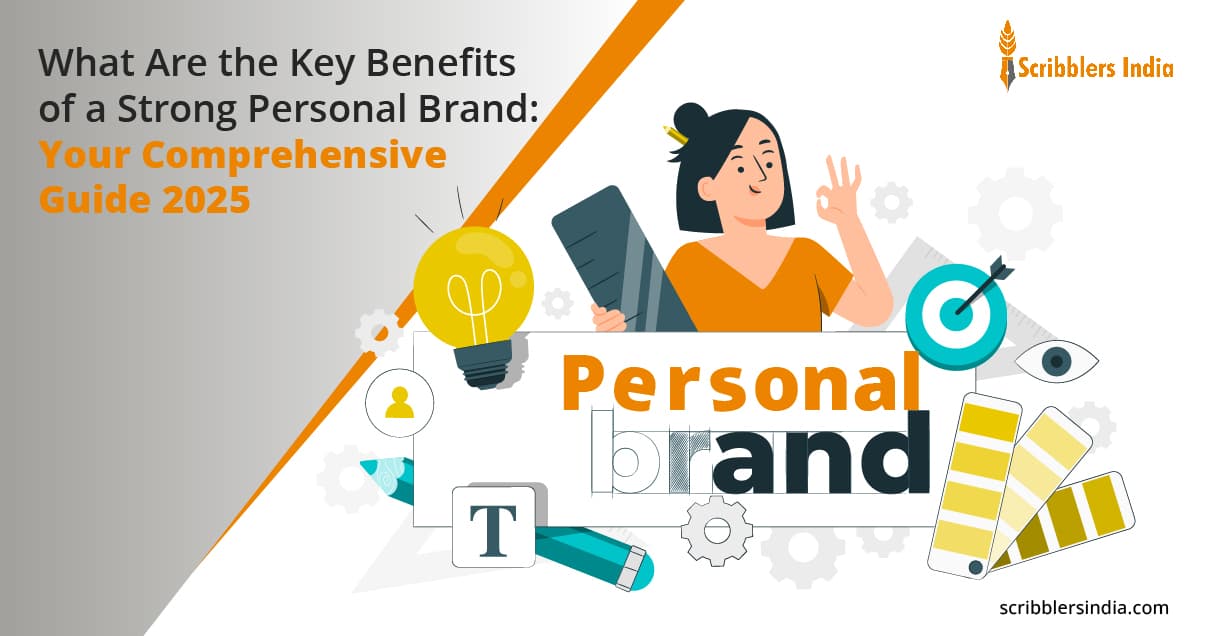
The benefits of personal branding extend beyond visibility. A deliberate professional reputation can make expertise easier to recognize, strengthen credibility, improve professional discovery, foster better conversations, support career mobility, and open opportunities aligned with the work you want to be known for.
Those outcomes rarely appear at the same time. Recognition may improve before commercial results. Better conversations may develop before a career move. For founders and executives, professional visibility can also influence how customers, candidates, partners, and other stakeholders understand the organization.
That is why personal branding should be evaluated through mechanisms and signals rather than follower growth alone. Each benefit develops under specific conditions and produces evidence that can be tracked over time.
For the broader strategic case behind investing in reputation, read our analysis on why personal branding is important.
Key Takeaways
|
What Are the Main Benefits of Personal Branding?
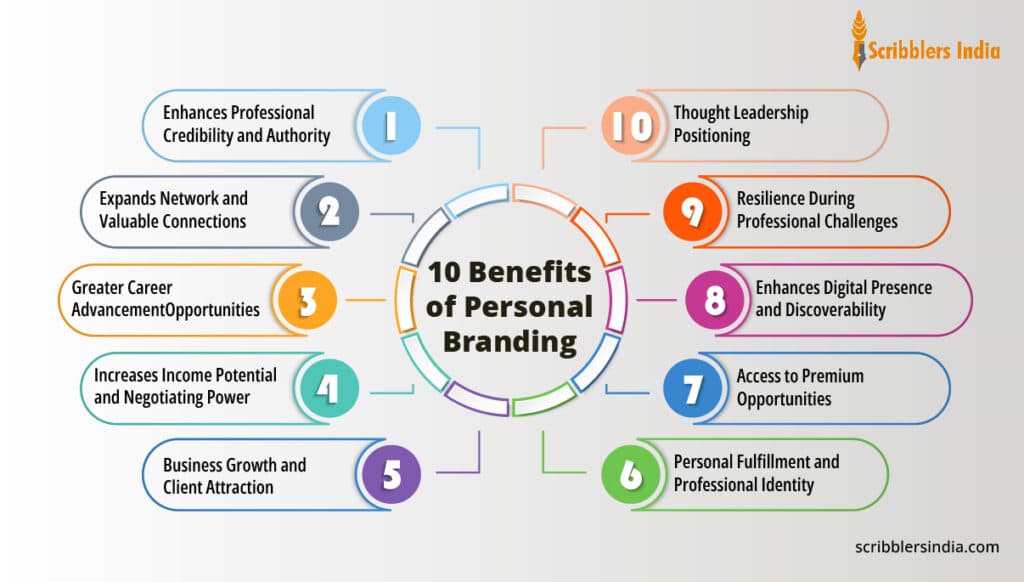
The benefits of personal branding become easier to evaluate when each outcome is connected to how it develops and what evidence shows that it is working. The table below separates ten common outcomes from the vanity metrics that can otherwise make reputation-building difficult to assess.
| S. No. | Outcome | How the Benefit Develops | Best Fit | Observable Signal |
| 1 | Clearer expertise association | Repeated themes connect your name with a defined professional territory | Professionals, consultants, executives | People describe your expertise using similar language |
| 2 | Stronger credibility signals | Public work gives others more evidence to assess your knowledge | All professionals | References to published work, expert requests, profile reviews |
| 3 | Better professional discoverability | Current profiles and published work create relevant entry points | Job seekers, consultants, founders | Search appearances, profile visits, inbound discovery |
| 4 | Easier career evaluation | Decision-makers gain richer context around your experience | Employees, executives | Better-fit recruiter conversations, role discussions, speaking requests |
| 5 | More relevant professional opportunities | Clear positioning helps others understand where your expertise fits | Employees, executives, consultants | Better-quality invitations, introductions, specialist opportunities |
| 6 | Stronger conversation starting points | Published ideas create context before meetings or introductions | Consultants, founders, executives | People reference specific ideas during conversations |
| 7 | Higher-quality relationship growth | Consistent expertise gives new and existing contacts reasons to engage | All professionals | Relevant introductions, peer discussions, reconnections |
| 8 | More informed inbound interest | Visible expertise helps people assess fit before contacting you | Consultants, advisors, founders | Inquiries arrive with specific context or questions |
| 9 | Greater thought-leadership influence | Distinctive ideas travel through content, events, media, and communities | Experts, executives, founders | Invitations, citations, media requests, industry discussion |
| 10 | Greater professional resilience | Reputation and relationships remain portable across role changes | Employees, consultants, executives | Existing visibility supports transitions or new directions |
These benefits rarely develop independently. Clear positioning makes expertise easier to recognize. Recognition creates stronger reasons for relevant people to engage, while repeated evidence can deepen credibility and professional relationships. Over time, those signals may contribute to career, commercial, or leadership opportunities.
That progression usually begins with reputation and authority, because people first need to understand what you are known for before that recognition can influence larger professional outcomes.

How Does Personal Branding Strengthen Professional Reputation and Authority?
Personal branding strengthens professional reputation by making expertise easier to understand, verify, and remember. A deliberate presence gives audiences repeated evidence of what you know, the problems you work on, and the experience that supports your perspective. Over time, those signals can create stronger professional associations around your name.
Harvard Business School Online describes personal branding as the intentional practice of defining and expressing professional value. It also emphasizes audience perception as part of that process.
1. Your Expertise Becomes Easier to Recognize
An experienced professional can still be difficult to place when their public profile covers too many unrelated roles, projects, interests, and achievements.
Personal branding creates a clearer association between the person and a defined area of expertise. A cybersecurity leader may become known for identity governance. A CFO might develop a recognizable position around capital discipline. A consultant could become associated with post-merger operating models.
The benefit becomes apparent when others begin describing your expertise in similar terms. This recognition creates the foundation for credibility. Once audiences understand what you know, they need evidence that supports the association.
2. Your Credibility Has More Public Evidence
Professional credibility becomes easier to assess when expertise leaves a visible record.
Articles, research, frameworks, conference sessions, case examples, interviews, recommendations, and documented work provide others with material they can evaluate. A profile no longer must carry the entire reputation claim on its own.
One substantive article may later support a speaking invitation. A useful framework can become a reference point during a client introduction. A conference session can provide a recruiter or journalist with additional evidence of the depth of a person’s expertise.
The underlying knowledge still creates the credibility. Personal branding makes more of that knowledge visible and verifiable. Once that evidence is publicly available, the next advantage is easier discovery.
3. Your Professional Reputation Becomes Easier to Find
People routinely search professional names before meetings, interviews, partnerships, speaking invitations, consulting engagements, or senior appointments.
A coherent digital presence gives them useful entry points through LinkedIn profiles, company biographies, author pages, event profiles, published articles, media coverage, research, podcasts, and other credible sources.
Professional discovery is also expanding beyond conventional search results. Answer engines and generative search systems can surface information from multiple sources when people research an executive, specialist, founder, or company. Consistent role descriptions, expertise signals, biographies, and published work therefore become increasingly useful.
The execution belongs within a broader online personal branding strategy. Brands and leaders who also need their expertise to be represented more consistently across generative search can connect that work to our Generative Engine Optimization services.
Better discovery creates more opportunities for evaluation. That is where personal branding begins influencing professional mobility.
How Can Personal Branding Support Career Growth and Professional Mobility?
Personal branding can support career growth by giving decision-makers more context than a résumé or current job title provides. Public evidence of expertise, judgment, and professional direction can make transitions easier to understand and help relevant people evaluate where your experience may fit next.
4. Career Transitions Become Easier to Explain
A career transition often requires a narrative that connects previous experience to a new professional direction.
Someone moving from operations to strategy must demonstrate how prior work supports strategic decision-making. A technical leader moving into an executive role needs evidence of broader judgment. An executive pursuing board positions may need a visible record of governance thinking beyond their operating title.
A strong personal brand creates continuity across those changes. Existing articles, public commentary, presentations, professional relationships, and themes of expertise help audiences understand that the new direction did not begin on the day the title changed.
The reputation becomes especially useful when it answers the question decision-makers are already asking: Why does this person make sense for this opportunity?
5. Professional Opportunities Can Become More Relevant
Visibility can increase the number of opportunities someone encounters. Relevance creates greater value.
A clearly positioned professional is easier to match with specific opportunities. These may include conference panels, leadership roles, specialist projects, advisory conversations, partnerships, media requests, mentoring opportunities, or industry collaborations.
This is where the importance of personal branding becomes practical. A defined reputation gives other people enough information to decide whether an opportunity aligns with your expertise before they contact you.
The best signal is therefore not opportunity volume. It is opportunity quality. Track whether conversations increasingly relate to the professional territory you want to own. Better-fit invitations show more progress than a larger number of generic requests.
Career opportunities often emerge through people rather than search alone, which makes professional relationships the next layer of value.
How Does Personal Branding Improve Professional Relationships and Networks?
Personal branding improves professional relationships by providing useful context before people interact with you. Clear expertise can make introductions more meaningful, help new contacts understand why a connection is relevant, and give former colleagues, clients, or peers fresh reasons to restart dormant conversations.
6. New Connections Start With More Context
A recognizable professional position gives a new relationship somewhere useful to begin.
Someone may have read an article, encountered a framework, watched a conference session, heard you on a podcast, or seen your perspective shared by another professional. The first interaction can then begin with an idea rather than a generic introduction.
That changes the quality of networking. A person connecting because of a specific argument has already signaled what they value. Their reason for engaging is clearer, making it easier to determine whether the relationship deserves further attention.
For platform-specific execution, our LinkedIn personal branding guide covers profile proof, content, network development, and measurement in greater depth.
7. Existing Relationships Gain Reasons to Reconnect
Professional reputation also affects people who already know you.
Former colleagues may discover how your expertise has developed. Previous clients can see work that was outside the original engagement. Peers may recognize a shared problem worth discussing. Older professional contacts gain fresh information about what you are doing now.
Those reconnections can sometimes create more value than entirely new relationships because trust already exists. Look for references to specific work, ideas, or changes in your professional direction. A message such as “I saw your article on…” reveals more reputation value than a passive like or impression.
When those relationships extend into buyer or client conversations, personal branding begins contributing to commercial outcomes.
How Can Personal Branding Support Business Development?
Personal branding can support business development by helping prospects understand expertise, perspective, and fit before a formal sales conversation begins. Its commercial role is usually assisted rather than isolated: visible expertise can shape awareness and consideration while offer quality, price, timing, sales execution, and procurement determine what happens next.
8. Inbound Conversations Can Arrive With Better Context
Useful content can answer part of a prospect’s question before they contact you.
Clear positioning also helps people decide whether your experience fits the problem they are trying to solve. As a result, inbound conversations can become more specific. A prospect may mention an article, framework, case study, presentation, or viewpoint.
Instead of asking what you do, they can begin by discussing how your thinking applies to their situation. A documented Scribblers India case study illustrates this distinction. For one study-abroad consultant, more than 92% of content views came from previously unreached non-followers during a measured 30-day window. Profile visits also increased by more than 135%.
Those figures demonstrate stronger discovery and profile-level interest within that engagement rather than proving downstream revenue attribution. Read the personal branding case study for a study-abroad consultant for the complete context.
Better-informed conversations can shorten the amount of explanation required at the beginning of an interaction. In complex B2B environments, expert content can influence a wider group of decision-makers as well.
9. Thought Leadership Can Support Complex Buying Decisions
For founders, executives, and senior experts, professional reputation can contribute to a broader company buying journey when the ideas address relevant market problems.
The 2025 Edelman-LinkedIn B2B Thought Leadership Impact Report found that 56% of target buyers and 55% of hidden buyers use thought leadership during vendor evaluation. It also reported that 41% of target buyers and 35% of hidden buyers had been encouraged by a C-suite executive to consider a vendor after engaging with that vendor’s thought leadership.
The finding supports a specific benefit: expert-led ideas can influence how stakeholders understand a category, problem, or company before they enter a formal buying conversation.
That influence still sits alongside product fit, pricing, proof, procurement, and sales execution. Founders and executives who need a structured system to develop stronger market-facing ideas can connect their personal branding with our thought leadership services.
Commercial attribution requires a separate measurement model. Our personal branding ROI guide explains how to distinguish direct outcomes from assisted influence and general visibility. For founders and senior leaders, the benefits can extend beyond individual opportunity creation and begin influencing organizational reputation.
How Can Personal Branding Benefit Founders, Executives, and Their Companies?
A founder or executive can provide an organization with another credible source of market insight. When leadership expertise is substantive and aligned with the company’s actual capabilities, personal branding can support category education, stakeholder understanding, talent perception, and broader organizational credibility.
10. Leaders Can Help Educate the Market
Emerging or complex categories often require buyers to understand the problem before they can evaluate a solution.
A founder can explain the problem that led to the company. A CTO can interpret a technical shift. A CHRO may discuss workforce design. A CFO can contribute perspective on financial decision-making. These ideas help audiences understand the market through a recognizable human source.
The organizational benefit becomes stronger when leadership commentary is supported by customer evidence, product knowledge, research, and expertise elsewhere in the company. Otherwise, the founder’s visibility can outstrip the institutional reputation supporting it.
Our personal branding vs company branding guide explains how founders can balance personal and company-level authority as an organization matures. Visible leaders also give candidates, partners, advisors, investors, and industry peers more context about how the organization thinks. Senior roles introduce additional governance requirements, which our executive branding guide covers separately.
The ten benefits above can all be valuable, but they do not appear in a fixed order. Understanding which signals typically emerge first makes measurement more realistic.
Which Benefits of Personal Branding Usually Appear First?
The earliest benefits of personal branding usually involve clarity, discovery, and recognition. Relationship effects tend to develop as relevant audiences repeatedly encounter the person’s work. Career, commercial, and influence outcomes generally require additional decisions and conditions outside the personal branding program itself.
A maturity model is therefore more useful than promising a fixed timeline.
| Stage | What Usually Changes First | Signals to Watch |
| Clarity | Positioning becomes easier to explain consistently | Similar language across profiles, bios, introductions, and content |
| Discovery | More relevant people encounter the professional | Search appearances, non-follower reach, relevant profile visits |
| Recognition | Audiences connect the person with defined expertise | Topic-specific comments, peer references, repeat engagement |
| Relationship | Reputation creates stronger professional conversations | Introductions, replies, invitations, collaboration discussions |
| Opportunity | Reputation contributes to professional consideration | Qualified inquiries, speaking, media, advisory, role discussions |
| Influence | Ideas begin shaping wider conversations | Citations, internal sharing, industry discussion, stakeholder response |
Progress does not always move neatly from one stage to the next. A consultant may generate qualified inquiries before receiving broad industry recognition. An executive can receive speaking invitations despite having a relatively small social audience. A specialist may build strong peer authority long before generating substantial follower growth.
Therefore, follower count provides an incomplete view. The better question is whether increasingly relevant people recognize the expertise, engage with the ideas, and take action aligned with the professional objective.
That progression depends heavily on the conditions behind the personal brand.
What Conditions Help the Benefits of Personal Branding Develop?
The benefits of personal branding become more likely when positioning is clear, expertise is substantive, proof is credible, visibility reaches the right audience, and the professional remains present long enough for recognition and relationships to develop. Activity alone cannot compensate for weakness in these foundations.
Clear Positioning
People need to understand what you know, the problems you can address, and where your professional relevance sits.
A profile that attempts to own too many unrelated subjects usually produces weaker associations.
Real Expertise
Public positioning must have substance behind it.
Experience, professional knowledge, research, original thinking, demonstrated work, or credible evidence should support the ideas being communicated.
Relevant Audience
Visibility has limited value when it reaches people with little connection to the intended professional outcome.
A consultant needs prospective clients, peers, partners, and referral sources more than random impressions. An executive may prioritize employees, customers, board members, investors, candidates, or industry stakeholders.
Credible Proof
Claims become stronger when audiences can inspect evidence.
Profiles, articles, case studies, research, speaking engagements, credentials, recommendations, interviews, and documented results can all contribute, depending on the professional context.
Sustained Presence
Recognition usually requires repeated exposure.
The objective is not constant posting. It is sufficient continuity for relevant audiences to encounter a consistent expertise signal across time and channels.
For professionals and organizations whose visibility also needs to extend into answer-led search environments, our Answer Engine Optimization services can complement personal-brand content by structuring supporting website information around relevant questions, evidence, entities, and search intent.
Even when these conditions are strong, personal branding cannot control every professional outcome.
Which Outcomes Remain Outside the Control of Personal Branding?
Personal branding can influence recognition, consideration, and professional opportunity, but it cannot guarantee income, promotions, clients, media coverage, or career outcomes. Those results depend on external factors such as market demand, performance, organizational requirements, offer quality, timing, pricing, negotiation, editorial interest, and decision-maker priorities.
- Income depends partly on market economics and the value of the work itself.
- Promotions depend on organizational needs, internal evaluation, leadership decisions, and available roles.
- Client acquisition also requires a suitable offer, commercial fit, sales execution, pricing, and timing.
- Media coverage depends on editorial priorities and whether the person’s expertise is relevant to the story.
- Virality deserves similar caution. A widely viewed post can create distribution without building meaningful authority if most viewers have little connection to the professional objective.
Personal branding should therefore receive credit for outcomes it can reasonably influence. These include expertise recognition, discoverability, audience relevance, stronger professional conversations, inbound context, stakeholder consideration, and assisted opportunity creation.
Once those boundaries are clear, measurement becomes much more useful.

How Should You Decide Which Personal Branding Benefits to Measure?
Choose personal branding metrics that align with the professional outcome you are trying to influence. A job seeker, consultant, founder, and executive may all build visible reputations, but they should not use the same scorecard, because the decisions they want their reputations to support differ.
A job seeker may prioritize:
- relevant search appearances,
- recruiter profile visits,
- better-fit role discussions,
- peer recognition, and
- stronger professional introductions.
A consultant may care more about:
- target-buyer engagement,
- referrals,
- informed inquiries,
- conversations referencing published ideas, and
- opportunities aligned with specialist expertise.
A founder could track:
- category recognition,
- buyer conversations,
- media or speaking interest,
- partner engagement, and
- company discussions influenced by founder content.
An executive may prioritize:
- stakeholder reach,
- authority within defined expertise areas,
- speaking invitations,
- board or advisory interest, and
- reputation quality.
The next step is to identify leading signals that appear before the outcome.
For example, a consultant seeking better inbound opportunities could monitor relevant profile visits, replies from target buyers, peer introductions, conversations referencing published work, and qualified inquiries.
This creates a measurement chain rather than a collection of disconnected social metrics. A deeper attribution framework belongs in the personal branding ROI guide, where direct outcomes, assisted influence, and visibility can be evaluated separately.
How Do You Turn Personal Branding Into a Useful Professional Asset?
Personal branding becomes useful when your expertise is easier to understand, discover, verify, and remember. Recognition usually develops first. Stronger conversations and relationships can follow, while career, commercial, and organizational value builds as those signals reinforce one another over time.
The next step depends on where the gap sits. If execution and discoverability are the challenges, our guide on how to build a personal brand online explains how to strengthen your digital presence more systematically.
If you want to see how that process works in practice, our personal branding strategy case study for an EdTech leader shows how we shaped positioning, expert-led content, and a more credible public presence around a leader’s professional goals.
For founders, executives, consultants, and professionals who need ongoing support, Scribblers India’s personal branding services bring positioning, profile development, thought leadership, and editorial execution into a single managed program built around defined reputation goals.
The objective is not to become visible everywhere. It is to make it easier for the right people to understand, trust, and remember the expertise that can support the opportunities you want to create next.
FAQs
Why Is Personal Branding Important for Professionals?
Personal branding is important because professional ability is difficult to evaluate when relevant people cannot see or understand it. A deliberate reputation makes expertise, evidence, interests, and professional direction easier to assess. This can support discovery, stronger relationships, career consideration, referrals, speaking opportunities, and informed commercial conversations.
Which Benefits of Personal Branding Usually Appear Before Revenue or Career Outcomes?
Early benefits often appear through clearer positioning, stronger searchability, relevant profile visits, better audience quality, and conversations that reference specific expertise. These signals show that the reputation is becoming easier to understand. Revenue or career outcomes usually require additional decisions involving fit, timing, budgets, hiring needs, or market conditions.
How Can I Tell Whether Visibility Is Improving My Reputation Rather Than Increasing Reach?
Look at who responds and what they associate with your name. Relevant comments, introductions, expert requests, profile searches, speaking invitations, and conversations referencing your ideas indicate stronger reputation signals. Large impression counts with low audience relevance primarily indicate distribution rather than meaningful authority.
Can Personal Branding Create Reputational Risk Alongside Its Benefits?
Yes. Greater visibility can expose inaccurate claims, poorly considered opinions, outdated information, or conflicts with employer expectations. The risk becomes higher for executives and regulated professionals. Clear topic boundaries, reliable sources, review processes, and consistent professional information can reduce avoidable reputation problems.
Which Benefits Matter Most for Employees Compared With Founders or Consultants?
Employees often prioritize discoverability, peer recognition, career mobility, and network strength. Consultants may focus on expertise recognition, referrals, and informed inquiries. Founders can also leverage professional authority to educate the category and build company credibility. The most valuable benefits depend on the decisions each person’s reputation needs to support.
Do Personal Branding Benefits Continue if I Reduce My Posting Frequency?
They can. Searchable articles, strong profiles, speaking appearances, relationships, recommendations, research, and established expertise can continue to create value even after publishing frequency declines. Fresh visibility may reduce over time, so the appropriate cadence depends on the role, audience, existing reputation, and professional objectives.
How Long Does It Take to See Benefits From Personal Branding?
There is no fixed timeline because existing reputation, positioning, expertise, audience access, publishing consistency, and objectives vary. Early signals such as clearer positioning, profile discovery, and relevant engagement may appear before larger outcomes. Career moves, commercial opportunities, or industry influence usually require more accumulated evidence and repeated exposure.
Can Personal Branding Help With AI and Generative Search Visibility?
It can contribute by creating consistent, credible information about a person’s role, expertise, experience, and published ideas across authoritative digital sources. Generative search visibility depends on a wider information ecosystem, so personal branding should support accurate entity representation rather than be treated as a guarantee of AI citations.