̦

Answer Engine Optimization Posts

What Is the Difference Between GEO, SEO, and AEO?
blog

What Is the Difference Between GEO, SEO, and AEO?

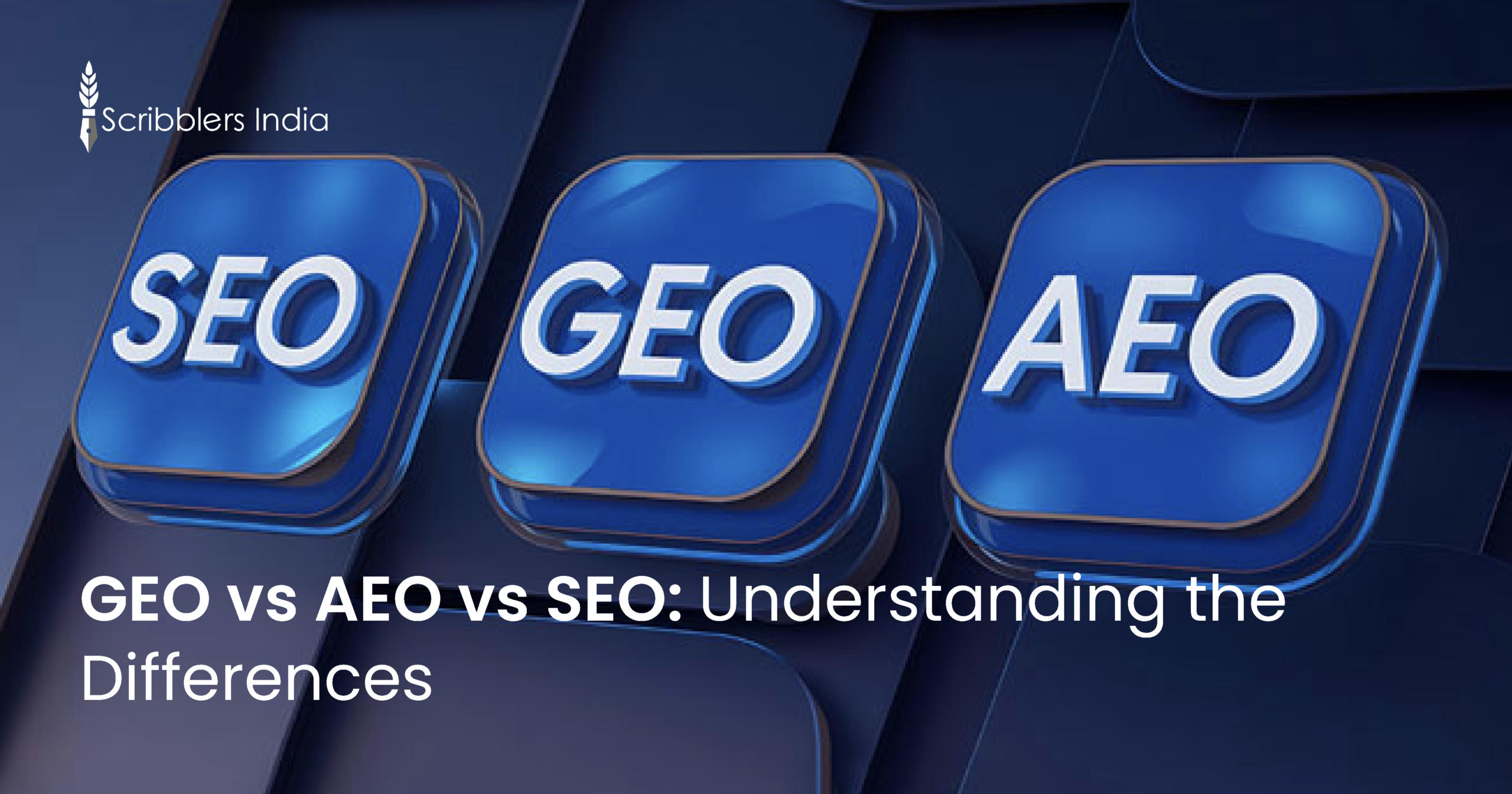
TL;DR: Understanding Core Differences Between GEO vs AEO vs SEO SEO targets traditional search rankings and drives organic website clicks. AEO optimizes for direct answers in structured search features and voice. GEO ensures AI platforms cite your content in synthesized generated responses. ChatGPT processes over one billion queries daily as of 2026. The GEO market is projected to reach $33.7 billion by 2034. Statistics in content improve AI citation rates by up to 41 percent. All three strategies share the same authority and accuracy signals at base. GEO requires earned media, original data, and entity clarity above all. Strong SEO is the technical prerequisite that enables effective GEO performance. Running all three together captures the full spectrum of modern search visibility.   Online search has now transitioned into three disciplines, each targeting a different layer of how people now discover information. Ranking on Google is no longer the only form of search visibility that drives business outcomes. The GEO vs AEO vs SEO comparison represents three separate optimization strategies that together cover the full scope of modern search.  Search Engine Optimization (SEO) gets your content ranked in traditional search results. Answer Engine Optimization (AEO) gets your content surfaced as a direct answer in structured features like featured snippets. Generative Engine Optimization (GEO) gets your content cited inside the synthesized responses that AI platforms like ChatGPT, Perplexity, and Google AI Overviews generate for users. Each discipline targets a different output, platform, and user behavior.  Understanding all three is how modern content teams build search visibility that does not collapse when one layer shifts.   What is the Importance of GEO in Digital Marketing: Why Is It Growing So Fast? Generative Engine Optimization (GEO) is the practice of structuring content so that AI-powered platforms like ChatGPT, Perplexity, Gemini, and Google AI Overviews retrieve and cite it within the responses they generate for users. The growth of this discipline reflects a key shift in search behavior. ChatGPT now processes over one billion queries daily and has reached 900 million weekly active users globally. That scale makes AI platforms a discovery channel that brands can no longer treat as secondary.  The GEO market was valued at $848 million in 2026 and is projected to reach $33.7 billion by 2034, growing at a 50.5% CAGR. These numbers reflect how rapidly organizations are recognizing that appearing inside AI-generated answers carries commercial value comparable to appearing on the first page of traditional search results. When GEO is compared to traditional SEO, it operates on a fundamentally different principle. Traditional SEO competes for a ranked position that a user clicks. GEO competes to become the trusted source that an AI system selects when synthesizing a response. The user may never visit the site, yet the brand earns authority and recognition with every citation. For businesses investing in content marketing, GEO represents the next layer of return on that investment.     What Is the Core Difference Between GEO and SEO? The difference between GEO vs SEO comes down to target output and optimization signals. SEO optimizes content so that search engines rank it highly. In practice, GEO  vs SEO means one targets click-through traffic, while the other targets AI citation authority. Here is how the GEO vs AEO vs SEO framework distinguishes the three disciplines across the dimensions that content strategy depends on: Target Output and Platform SEO targets a ranked link on Google or Bing that users click to reach a website. AEO targets a direct answer extracted from a single source and displayed in a featured snippet, People Also Ask box, or voice search response.  GEO targets inclusion in a synthesized, multi-source response that an AI platform generates for a user who may never see a traditional list of links. Content Format and Structure SEO rewards comprehensive, keyword-rich content that covers a topic with enough depth to satisfy a range of related queries. AEO rewards concise, directly answerable paragraphs of 40 to 60 words positioned immediately after a question-based heading.  GEO vs AEO comparison at the content level reveals that GEO additionally rewards original data, expert citations, and earned media mentions. These are signals that go well beyond format and structure into genuine information authority. Authority Signals SEO authority is built through backlinks, domain rating, internal linking, and on-page optimization signals. AEO authority is built through E-E-A-T signals of Experience, Expertise, Authoritativeness, and Trustworthiness that signal to Google that a source is credible enough to surface as a direct answer.  GEO authority additionally depends on how frequently a brand is cited across third-party, authoritative publications. Research shows that brands are 6.5 times more likely to be cited by AI platforms via third-party sources than on their own domains.  This means earned media and thought leadership content placements are direct GEO investments. Success Metrics SEO success is measured through keyword rankings, organic traffic volume, and click-through rates. On comparing SEO vs AEO, you will understand that AEO success is measured through featured snippet wins, voice search inclusion, and People Also Ask appearances.  GEO vs AEO comparison on measurement reveals that GEO success is measured through AI citation frequency, brand mention volume across AI platforms, share of voice in generated responses, and the downstream branded search volume that AI citations produce over time. Relationship to Click Traffic SEO and AEO both produce measurable website traffic, though AEO increasingly operates in a zero-click environment where the answer resolves the query without a visit. GEO operates almost entirely outside the click economy.  A brand cited inside a ChatGPT or Perplexity response earns authority and audience recognition without generating a trackable click in most cases. The value accumulates in brand trust, direct search behavior, and the purchasing decisions that AI recommendations influence before a user ever visits any website. Comparing GEO vs AEO vs SEO Here is a comparative analysis of GEO vs AEO vs SEO strategies for informed decision making: Category SEO AEO GEO Primary Target Targets ranked links and clicks Targets direct structured answer features Targets AI-generated synthesized

admin|24 May 2026
What are the Differences Between AEO vs SEO? (or Do You Need Both?)
blog

What are the Differences Between AEO vs SEO? (or Do You Need Both?)

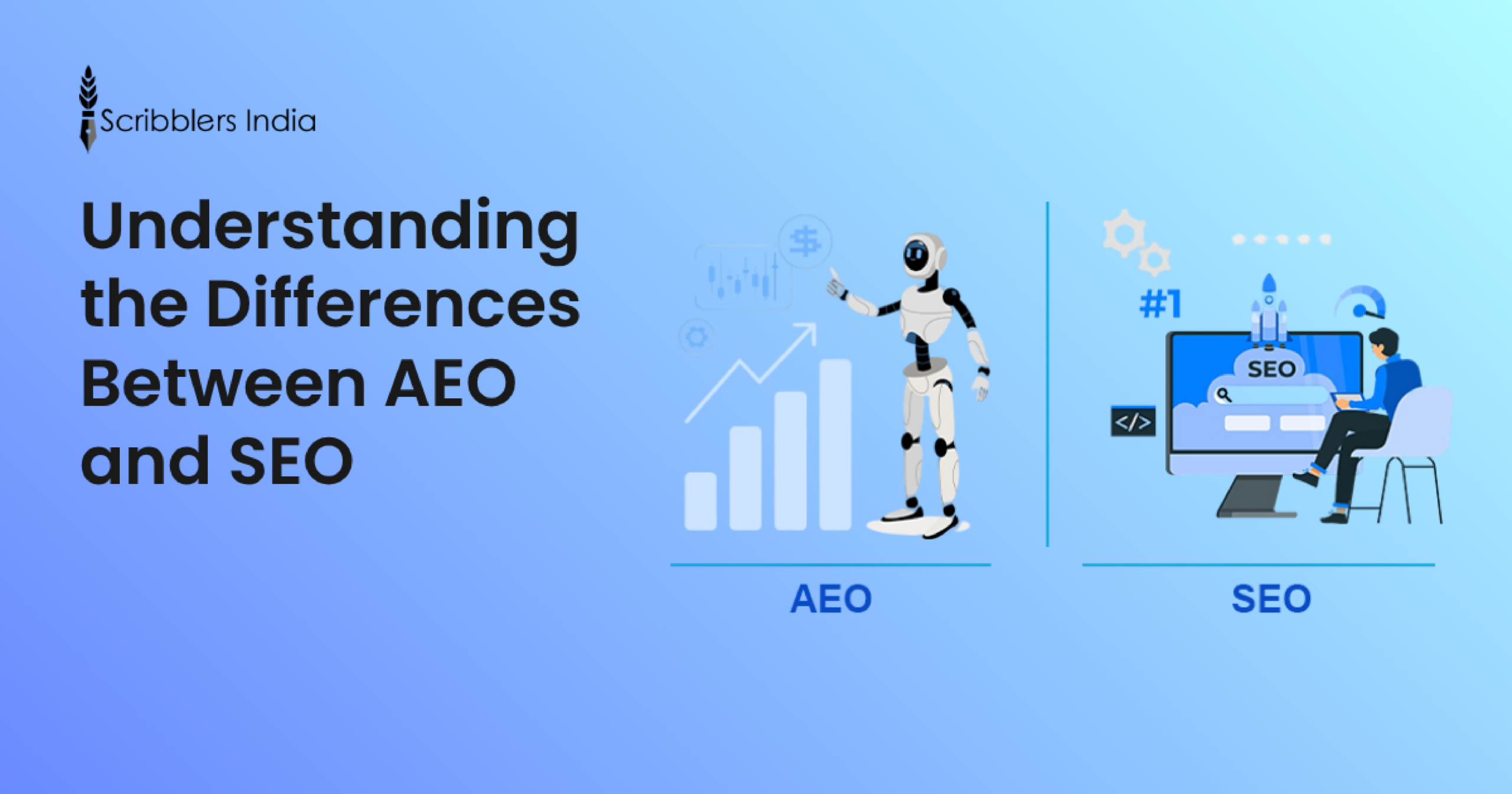
Your website ranks on page one of Google. Traffic is solid. Then something shifts. Rankings hold, yet organic clicks drop. You investigate and find that Google is answering your audience’s questions before they ever reach your site. This scenario is playing out across industries in 2026, and it describes why the AEO vs SEO conversation has moved from theoretical to urgent. According to industry reports, 69% of Google searches now end without a click, up from 56% just 12 months earlier. This 13-point jump correlates directly with the expansion of Google AI Overviews, which extracts answers from multiple sources and delivers them at the top of the results page. For every 1,000 searches, only 360 clicks reach the open web. Traditional search engine optimization gets your content into the index. Answer engine optimization helps your content appear in the answer. The difference between AEO vs SEO is not about choosing one over the other. It is about understanding how each works, where they overlap, and how to run both to capture visibility across every layer of modern search.   What Is AEO and What Does It Mean in Digital Marketing? Answer Engine Optimization (AEO) refers to the practice of structuring content so that AI-powered platforms, voice assistants, and AI-generated search features can extract, synthesize, and deliver it as a direct response to a user’s query. AEO in digital marketing emerged as a direct response to the rise of platforms like Google AI Overviews, ChatGPT, Perplexity, and voice assistants that answer user questions without displaying a ranked list of links. Rather than competing for a position on a results page, brands optimizing for AEO compete to become the cited, trusted source within the answer itself. The core objective of answer engine optimization vs search engine optimization comes down to this distinction: SEO optimizes for being found through a link. AEO optimizes for being used as the answer. Both forms of visibility have commercial value, but they operate through fundamentally different mechanisms and require different content structures to achieve.   What Is the Difference Between AEO and SEO in Practice? The difference between AEO and SEO lies in their target output, success metrics, content format requirements, and the platforms they optimize for. SEO aims to rank a page. AEO aims to become the answer that a platform generates when a user asks a relevant question. Here is how the AEO vs SEO distinction plays out across the five dimensions that matter most to a content strategy: Target Platform and Output SEO targets traditional search engines, primarily Google and Bing, where the output is a ranked list of links that users browse and click. AEO vs SEO in terms of platform: AEO targets AI-powered answer surfaces, including Google AI Overviews, ChatGPT, Perplexity, Amazon Alexa, and Apple Siri.  Here, the output is a synthesized response that may or may not include a clickable attribution. A business that appears in an AI Overview earns visibility even when the user never clicks through to the site. Success Metrics SEO success is measured through ranking positions, organic traffic volume, click-through rates, and keyword visibility scores. AEO success is measured through:  Featured snippet wins AI Overview citation frequency Voice search answer inclusion People Also Ask appearances Brand mention volume across AI-generated responses Businesses moving into AEO need a measurement framework that captures answer-layer visibility rather than relying on website traffic as the sole indicator of search performance. Content Format Requirements SEO rewards comprehensive, keyword-rich, long-form content that covers a topic with enough depth and breadth to satisfy a range of search queries. The difference between AEO and SEO in content format is significant. AEO rewards concise, direct, question-answering paragraphs of 40 to 60 words that allow an AI system to extract a complete answer from a single content block.  The structure that works best for AEO uses question-based headings followed immediately by a complete, standalone answer. This is the exact format that AI Overviews and voice assistants extract and deliver. Optimization Signals SEO optimization relies on keyword research, backlink building, metadata refinement, internal linking, site speed, and Core Web Vitals. The answer engine optimization vs search engine optimization comparison on signals indicates that AEO optimization relies on: Structured data markup (FAQPage, HowTo, Organization schema) E-E-A-T signals, including author credentials and citing original research Entity clarity that allows AI systems to understand exactly what a brand is, what it does, and who it serves. Relationship to Click-Through Traffic SEO is fundamentally traffic-oriented. Its commercial logic depends on users clicking through to the website where conversion opportunities exist. When it comes to AEO vs SEO on traffic indicates that AEO operates partly outside the click economy.  When a brand’s content is cited in an AI Overview or read aloud by a voice assistant, it earns brand awareness and authority with an audience that may never visit the site during that session. This awareness-level visibility influences direct search behavior, branded queries, and offline purchase decisions in ways that click-based analytics do not capture.   How Does SEO Work in 2026? SEO helps search engines discover, index, and rank your content for relevant queries. It remains essential in 2026 because the majority of commercial, transactional, and navigational queries continue to drive website clicks, and because strong SEO is the technical foundation AEO builds on. SEO operates across three interconnected disciplines.  Technical SEO ensures that search engines can crawl, index, and understand your site structure. It is done through fast load times, clean URL architecture, proper robots.txt configuration, and schema markup.  On-page SEO aligns your content with the specific queries your audience uses through keyword research, heading structure, meta descriptions, and internal linking.  Off-page SEO builds domain authority, which signals to search engines that your site is a credible, trusted source through backlink acquisition and brand mentions across the web. Is SEO Still Relevant in 2026? The commercial case for continued SEO investment is clear. According to a recent analysis, 36% of searches still result in clicks. For transactional queries, where someone

admin|12 May 2026
Why Businesses Need AEO Services in India in 2026?
blog

Why Businesses Need AEO Services in India in 2026?

Your customers are no longer scrolling through ten blue links. They type a full question into ChatGPT or Perplexity and receive a synthesized answer in seconds. Over 65% of Google searches now end without a single click, according to industry reports. Brands that appear inside these AI-generated answers earn discovery, trust, and leads before a competitor’s website is ever visited. This is the reality that makes AEO services in India a non-negotiable investment for any brand serious about digital visibility in 2026.  Whether you lead a B2B SaaS company, a professional services firm, or a content marketing agency, AEO determines whether AI platforms cite your brand or your competitor’s. This guide explains what answer engine optimization is, how it works across every major AI platform, and what a structured AEO strategy for businesses looks like in practice.   What Is Answer Engine Optimization in Digital Marketing? Answer engine optimization is the practice of structuring your content so that AI-powered platforms can extract, trust, and present it as a direct response to a user query. Unlike traditional SEO, which earns a ranked position in a list of results, what is AEO in digital marketing comes down to one objective: becoming the answer itself. When a prospect asks ChatGPT, “What is the best content strategy for a SaaS company?” the AI does not display a list of links. It synthesizes an answer from sources it has indexed, assessed for credibility, and found structurally clear enough to extract. AEO services in India ensure your content meets these extraction criteria across every major platform. How AI Platforms Select and Cite Sources in AEO? AI platforms evaluate content on four primary dimensions before citing it.  Structural clarity: Clear question-format headings, short paragraphs, and self-contained answer blocks make extraction straightforward.  Factual density: Specific data points, cited statistics, and defined terms signal reliability.  Authority: E-E-A-T signals, such as author credentials, publication dates, and source citations, confirm your expertise.  Topical coverage: A brand that publishes a hub blog supported by multiple spoke blogs signals deeper domain authority than a brand with a single standalone page.   The Scale of the Shift You Are Navigating in the Era of AEO? ChatGPT handles over 2 billion queries every day, and AI answer optimization platforms collectively drove a 527% year-over-year increase in AI-referred web sessions through mid-2025.  AI Overviews now appear in about 16% of Google searches, up from 6.5% at the start of 2025. The brands investing in AEO services today are capturing citation share while competition remains relatively low. That window closes with every month of delay.   What Is the Difference Between AEO and SEO: Which One Does Your Business Actually Need? AEO vs SEO services differ in goal, signals, and outputs. Traditional SEO optimizes a web page to rank in a search results list. Answer engine optimization optimizes your content to become the direct response that an AI platform delivers.  Both disciplines are necessary in 2026, and they perform best when treated as two layers of a single strategy. The Core Distinction SEO optimizes for a ranked list. AEO optimizes for a cited answer.  SEO measures success through keyword rankings, organic traffic, and click-through rates. Answer engine optimization measures success by citation frequency in ChatGPT, Perplexity, and Google AI Overviews, as well as brand mention velocity across off-site channels. These are distinct performance dimensions that require distinct optimization actions. When SEO Works and When AEO Takes Over? For high-intent transactional queries, SEO remains essential. A decision-maker searching for “enterprise project management software pricing” will visit comparison pages. For informational and conversational queries, such as “How do I reduce churn in a SaaS business?” AI answer engines are now the first destination.  AEO strategy for businesses addresses this shift by positioning your content for the discovery phase. Here a prospect forms an opinion about your brand before your website is ever opened. The Case for Integrating Both Research confirms that 92% of Google AI Overview citations come from pages already ranking in the top ten organic results. This means strong SEO feeds directly into AI answer optimization performance.  An AEO services agency that decouples the two disciplines is leaving citations on the table. The optimal approach treats both as one unified content strategy, where on-page SEO earns the ranking that makes AI extraction possible.   Here is a comparative analysis of AEO vs SEO: Category SEO (Search Engine Optimization) AEO (Answer Engine Optimization) Goal Rank in results list Become the cited answer Primary Platforms Google SERP ChatGPT, Perplexity, AI Overviews Content Format Keyword-optimized pages Question-answer structured passages Key Signals Backlinks and domain authority Brand mentions, factual density, schema Success Metric Rankings, traffic, CTR Citations, AI mentions, share of voice Measurement Tools GSC, Semrush, Ahrefs Profound, BrightEdge, Semrush AIO Result Timeline 3 to 6 months for rankings 60 to 90 days for initial citation signals Integration Works independently but complements AEO Works alongside SEO for maximum AI and search visibility   How Do AEO Services in India Help Your Content Appear in Google AI Overviews? AEO services in India help your content appear in Google AI Overviews by improving structural clarity, factual density, and topical authority. AI Overviews draw from pages that already rank in the top ten, making the combination of traditional SEO and AEO formatting the most reliable path to visibility. Passage Indexing and Self-Contained Answer Blocks Google’s passage indexing technology allows the search engine to extract specific sections of a page even when the overall page does not rank at position one. Answer engine optimization capitalizes on this by building self-contained answer passages of 134 to 167 words.  Each passage opens with a direct answer to the section heading and includes specific facts or statistics before closing. AI systems can extract and present these passages without needing the surrounding context, which increases your citation surface significantly. Question-Format Headings as Citation Anchors A heading written as “What causes high SaaS churn?” followed by a 50-word direct answer is far more likely to be cited than a

Supriya Jain|17 Apr 2026