

If you have ever wondered what is a ghostwriter, the simplest answer is this: a ghostwriter turns another person’s ideas, experience, and expertise into polished content published under that person’s name. The client owns the content, while the ghostwriter stays behind the scenes.
This matters because many professionals have strong ideas but limited writing time. Founders, executives, consultants, and industry experts often think clearly, speak well, and understand their domain deeply. Yet they struggle to convert that expertise into books, articles, speeches, LinkedIn posts, or newsletters.
A ghostwriter solves this gap. They help shape raw thinking into content that sounds like the client, serves the reader, and supports authority building. For busy professionals, professional ghostwriting services make consistent publishing possible without draining leadership time.
TL;DR
|
What Is a Ghostwriter and What Services Do They Offer?
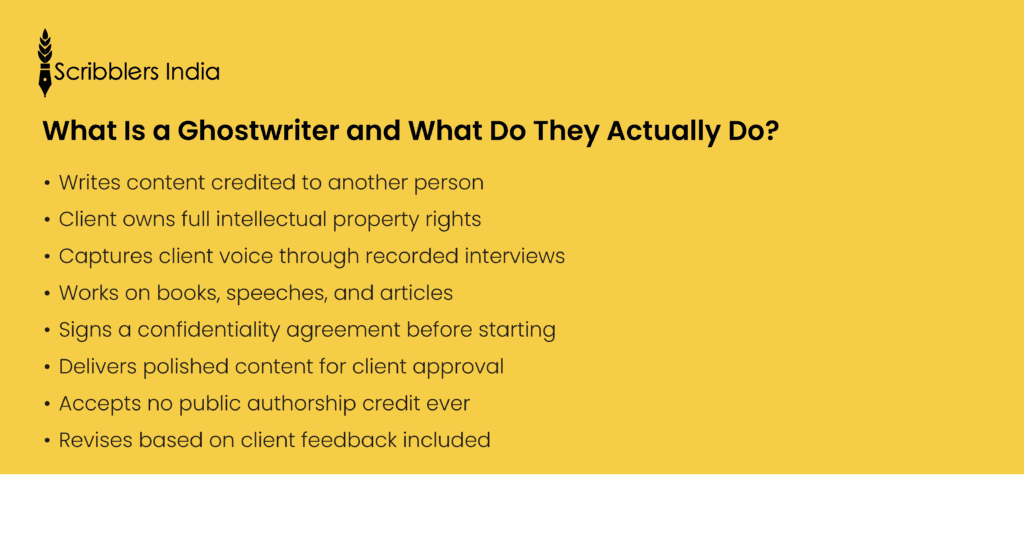
A ghostwriter is a professional writer hired to create content that is officially credited to another person or brand. The client owns the finished work in its entirety. The ghostwriter produces it, accepts no public authorship credit, and remains anonymous through a confidentiality agreement signed at the start of the engagement.
What does a ghostwriter do across an engagement? They research your topic and interview you to capture your specific ideas and voice. Then they draft the content, revise it based on your feedback, and deliver a final piece that reads as if you wrote it. Every word reflects your thinking. Every sentence carries your perspective.
What content formats can a ghostwriter create?
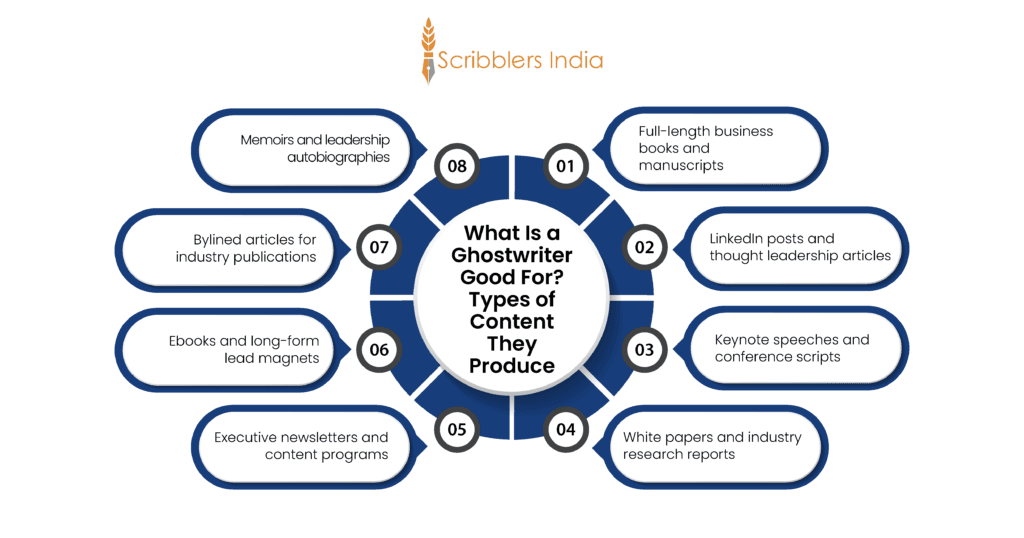
Ghostwriters support many professional formats. These include business books, LinkedIn posts, thought leadership articles, speeches, newsletters, white papers, ebooks, and bylined articles. The format depends on the client’s visibility goals. For example, a founder may need LinkedIn posts to build authority. A consultant may need a book to support speaking opportunities. An executive may need articles that express a clear industry point of view.
Who owns the content written by a ghostwriter?
The client owns the content upon delivery and payment, in accordance with the contract terms. Professional engagements usually transfer intellectual property rights, usage rights, and authorship control to the client. The ghostwriter does not claim public credit. This arrangement keeps ownership simple. The ghostwriter provides writing skill and structure. The client provides the ideas, experience, and professional authority behind the content.
How does a ghostwriter capture a client’s voice?
A skilled ghostwriter listens before writing. They study how the client explains ideas, forms arguments, uses examples, and speaks about their industry. Recorded interviews often become the strongest source for voice capture. The goal is not to make the client sound like a professional writer. The goal is to make the content sound like the best version of the client’s own thinking.

Why Do Founders and Executives Hire Ghostwriters to Build Authority?
A ghostwriter works with executives, founders, consultants, public figures, entrepreneurs, and subject-matter experts who have valuable knowledge to share. But they have insufficient time or writing skills to share it effectively on their own. The profile of a ghostwriting client is someone with many ideas and not enough writing hours.
Professional ghostwriting services are far more common than most professionals realize. An estimated 60 to 80% of business and self-help nonfiction books published today involve the work of a professional ghostwriting agency.
- Business Executives and C-Suite Leaders: Senior leaders hire ghostwriters when their ideas carry strategic value, but their schedules do not support regular writing. A ghostwriter converts boardroom thinking into articles, speeches, and executive LinkedIn content. This supports leadership visibility, thought leadership content, and long-term authority building.
- Founders and Entrepreneurs: Founders often need to explain the market, the company’s belief system, and the problem they are solving. Ghostwriters turn those insights into clear founder-led content without slowing business execution. This also supports founder personal branding and stronger investor or customer trust.
- Consultants and Professional Services Leaders: Consultants sell expertise, so their content must demonstrate their thinking before a sales call begins. Ghostwriters help create articles, case studies, and LinkedIn posts that explain methods, lessons, and viewpoints. This strengthens personal branding for consultants and improves inbound credibility.
- Public Figures and Media Personalities: Public figures usually require books, speeches, columns, and public statements that carry a consistent voice. A ghostwriter helps organize ideas, refine messaging, and protect clarity across formats. This support allows them to communicate at scale while maintaining a recognizable public identity.
How Does the Ghostwriting Process Work from Start to Finish?
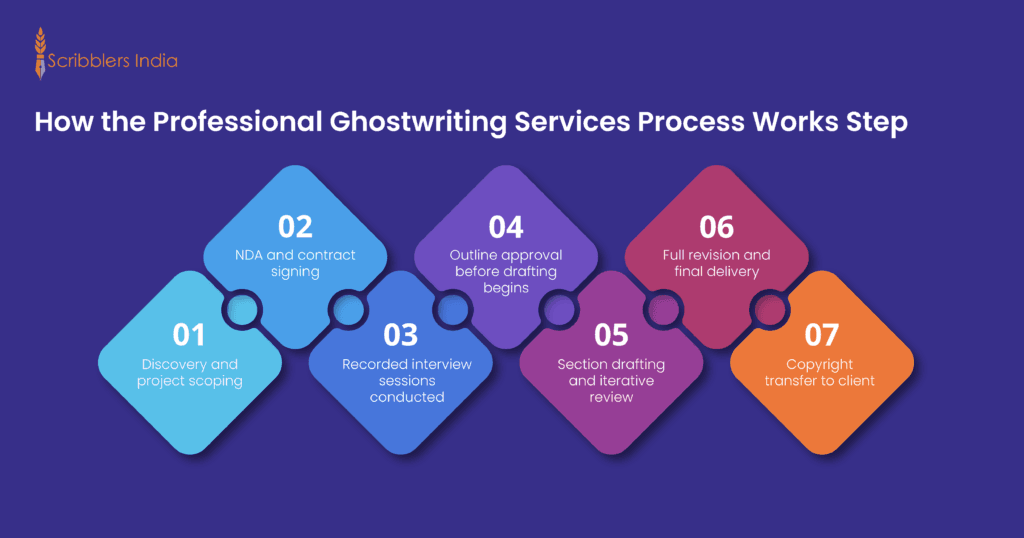
The ghostwriting process follows a defined sequence that moves from initial discovery through final delivery. Understanding each phase helps clients set realistic expectations and get maximum value from every hour of collaboration invested in the engagement.
The process for most professional ghostwriting engagements covers the following phases:
Discovery and project scoping
The first session clarifies the project’s purpose, target audience, desired outcome, and overall scope. A business book intended to attract speaking engagements requires a fundamentally different structure and tone than one designed to generate consulting inquiries. Aligning on purpose before writing begins prevents the structural rewrites that cost time and money when discovered late in the drafting process.
Recorded interview sessions as the content foundation
Multiple recorded conversations covering two to eight hours per week form the primary source material for every ghostwritten piece. The ghostwriter transcribes, analyzes, and synthesizes these recordings into the content framework. Each session adds to the voice reference library that the ghostwriter uses to calibrate every sentence against the client’s natural expression patterns and professional communication style.
Iterative drafting and review cycles
The ghostwriter delivers content in manageable sections. One chapter at a time for books, one article at a time for ongoing programs, so the client can provide feedback on both voice accuracy and content direction before subsequent sections are drafted. This phased review approach prevents misalignments from compounding across an entire manuscript.
What Is the Difference Between a Ghostwriter and a Copywriter?
Ghostwriter vs copywriter is one of the most common points of confusion for professionals exploring content services. Both produce written content professionally. They serve fundamentally different purposes, target different business outcomes, and require different skills and working relationships with their clients.
A ghostwriter produces long-form, voice-matched content published under the client’s name to build authority and professional reputation. A copywriter produces persuasion-focused content designed to generate a specific commercial action. This could be a click, a purchase, a subscription, or a lead form submission. It is typically done without strong voice matching to a named individual author.
- Authorship and voice matching: A ghostwriter disappears entirely into the client’s voice and perspective. Every piece the ghostwriter produces should be indistinguishable from the client’s best writing. A copywriter writes in the company’s brand voice rather than the individual voice of a named human professional whose reputation depends on the authenticity of what they publish.
- Content format and purpose: Ghostwriters produce books, keynote speeches, executive articles, LinkedIn posts, newsletters, and memoirs. Copywriters produce advertising copy, landing pages, email campaigns, product descriptions, and sales scripts. The ghostwriter’s output builds a reputation over time. The copywriter’s output drives an immediate commercial response.
- Relationship depth and timeline: A ghostwriting engagement typically involves months of close collaboration through recorded interviews, drafting sessions, and iterative reviews. Copywriting projects tend to be shorter, driven by deadlines, and less dependent on the sustained voice-capture relationship that distinguishes high-quality ghostwriting from other professional writing services.
What Are the Real Benefits of Ghostwriting for Your Career or Business?
The benefits of ghostwriting extend well past solving the immediate problem of not having enough time to write. A skilled ghostwriter transforms an expertise-rich but content-poor professional into a visibly authoritative voice in their field. This generates compounding commercial returns that accumulate over the entire career.
Recognized personal brands attract more inbound opportunities and command higher compensation than professionals who have never built a visible content presence. Ghostwriting is the infrastructure that makes that visible presence possible without the operational overhead of daily content creation.
- Authority building at a pace that solo writing cannot sustain: Senior professionals rarely sustain high publishing frequency alongside demanding leadership and operational responsibilities consistently over time. Ghostwriters support ongoing output across articles, newsletters, books, and thought leadership publishing initiatives. This enables steady growth in authority without placing additional time pressure on the professional.
- Inbound lead generation through published expertise: Published expertise attracts inbound opportunities more effectively than many traditional outbound prospecting and networking strategies today. Strong content organically generates speaking invitations, media inquiries, partnership discussions, and qualified client conversations. After publication, these assets continue to generate professional visibility without additional promotional or outreach efforts.
- Longevity and compounding visibility of well-crafted content: Ghostwritten articles published on authoritative platforms continue generating search visibility and industry attention for extended periods. These assets also attract backlinks, AI citations, and ongoing professional discovery opportunities over time. Unlike short-lived social posts, strong long-form content compounds in visibility and long-term brand authority.
- Professional quality that meets your audience’s expectations: Investors, enterprise clients, and industry peers consistently expect polished communication from recognized professionals and business leaders. Weak writing quality can undermine credibility and diminish perceived expertise in competitive professional environments. Professional ghostwriting ensures published content reflects the authority and standards your audience expects.

Do I Need a Ghostwriter: Signs That Point to Yes
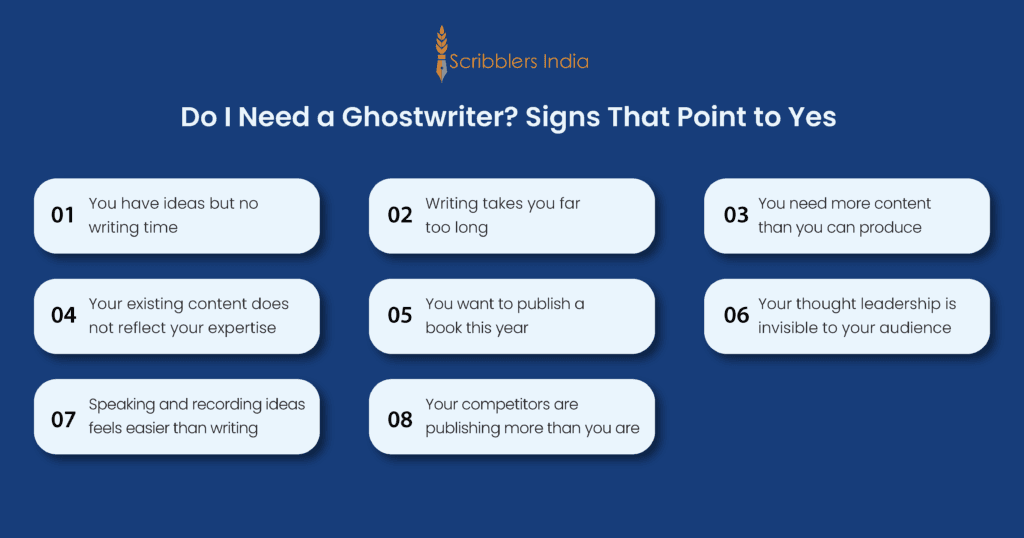
The question “do I need a ghostwriter” depends on the gap between expertise and consistent publishing. Many professionals have strong ideas but lack the time, writing skill, or editorial support to turn them into content. Ghostwriting becomes valuable when published content can build authority and create opportunities.
These signs usually show that professional ghostwriting support can help.
- Have Ideas but No Writing Time: Strong insights often stay unpublished because daily responsibilities take priority. A ghostwriter turns those ideas into clear articles, posts, speeches, or book chapters. This helps professionals keep building authority without taking time away from strategic work.
- Writing Feels Slow or Frustrating: Some professionals explain ideas well in meetings but struggle to write them with clarity. A ghostwriter simplifies the process through interviews and structured drafts. This saves time while improving the quality of every published piece.
- Content Does Not Reflect Your Expertise: Your published content should match the depth of your real experience. If posts sound basic or scattered, readers may miss your true authority. A ghostwriter helps shape stronger arguments, clearer examples, and sharper professional positioning.
- Need a Consistent Publishing Rhythm: Strong personal brands need repeated visibility across LinkedIn, newsletters, blogs, or industry publications. Most senior professionals cannot maintain that rhythm alone. A ghostwriter manages ideation, drafting, review cycles, and publishing support with greater consistency.
- Want Content to Support Business Growth: Ghostwriting makes sense when content supports inbound leads, speaking invitations, investor trust, or personal branding goals. The right content can turn expertise into business value. This makes the engagement more strategic than simple writing support.
Is Using a Ghostwriter Ethical and How Does Confidentiality Work?
Using a ghostwriter is ethical when the client provides the ideas and professional judgment behind the content. The ghostwriter shapes those inputs into clear writing without claiming public credit. The practice works best when ownership terms, confidentiality rules, and review rights are agreed before the first draft begins.
Let’s understand how ethical ghostwriting works in practice.
- Clear Idea Ownership: The client supplies the ideas, opinions, examples, and expertise that shape the content. The ghostwriter organizes those inputs into a publishable format. This keeps the final work rooted in the client’s real thinking.
- Confidentiality Agreements: Professional ghostwriting engagements usually start with a signed non-disclosure agreement. This protects private conversations, drafts, business details, and the working relationship. It also gives both sides clear boundaries before interviews or writing begins.
- Client Review Control: The client reviews every draft before publication and approves the final version. This ensures the content reflects accurate facts, correct views, and the intended tone. Ethical ghostwriting never bypasses client judgment or approval.
- Standard Publishing Practice: Ghostwriting has long supported business books, speeches, executive articles, and public communications. Many respected leaders use writing support to express their ideas clearly. The practice remains accepted when the content reflects the client’s expertise.
- Authenticity Through Expertise: Authenticity comes from the client’s insight, experience, and point of view. The ghostwriter improves structure, clarity, and readability. The published piece stays genuine because the thinking belongs to the client.
Why Do You Need a Ghostwriting Agency in India for Your Content Goals?
India’s professional ecosystem has many founders, executives, consultants, and specialists with ideas worth publishing. They understand their markets, clients, and industries deeply. Yet many lack the editorial structure needed to convert expertise into consistent, high-quality thought leadership content at scale.
A ghostwriting agency adds that missing publishing system. It helps professionals shape raw thinking into articles, books, LinkedIn posts, newsletters, and speeches. This support matters when the audience expects clear ideas, strong positioning, and polished communication across every public channel.
At Scribblers India, we provide ghostwriting services for executives, founders, consultants, and professionals. We capture voice, organize ideas, define structure, and build content systems that save leadership time. This helps clients publish with authority without lowering quality or consistency standards.
Scribblers India Ghostwriting Framework
Let’s have a look at the Scribblers India ghostwriting framework:
- Voice-first discovery process that captures your authentic thinking: We begin every ghostwriting engagement with structured recorded discovery sessions. These sessions extract your vocabulary, reasoning patterns, and professional perspective. We document these voice signals in a reference framework that governs every sentence we produce.
- Domain-matched ghostwriters for industry-specific authority: Our ghostwriting services pair each client with a team with expertise in their specific industry vertical. A fintech founder works with a writer fluent in payments infrastructure and venture-backed growth. A consulting leader works with a writer who understands professional services business models and B2B buyer psychology.
- Integrated thought leadership content strategy for compounding returns: We align every ghostwriting engagement with a comprehensive thought leadership content strategy. It positions each article, book, and LinkedIn post as part of a cumulative authority-building program. Individual pieces of content work harder when they are part of a coherent narrative.
- LinkedIn ghostwriting and personal branding content programs: Beyond books, we produce LinkedIn posts, newsletter content, bylined articles, and executive commentary through our personal branding strategy. Each piece we produce increases your platform visibility, inbound opportunity volume, and professional authority across key digital channels.
- Ebook and long-form lead magnet development for business development: Our ebook writing services produce high-quality long-form content assets. They help generate qualified leads, support sales conversations, and establish your business’s category authority. These assets continue to attract inbound opportunities for years after their initial publication date. They compound the return on a single content investment over the full duration of their digital lifespan.
Connect with our team today to discuss your publishing goals. Discover how our ghostwriting team can transform your expertise into content that builds the authority your career and business deserve.
FAQs
What is a ghostwriter and how do they differ from a regular editor?
A ghostwriter is a professional who creates original content from scratch under another person’s name, capturing their voice and ideas entirely. A regular editor works with content the client has already drafted, improving clarity, structure, and grammar. A ghostwriter produces the content from the first word. An editor refines content that already exists in some form before their involvement in the project.
Who is a ghostwriter typically working with in business contexts?
A ghostwriter supports executives in building LinkedIn thought leadership, founders in publishing business books, and consultants in creating industry-focused authority content. Many professionals possess valuable expertise but lack sufficient time or advanced writing capabilities for regular publishing. Ghostwriters help transform specialized knowledge into polished content that meets professional audience expectations.
Do I need a ghostwriter or can I just use AI writing tools instead?
You need a ghostwriter rather than an AI tool when voice authenticity, intellectual depth, and professional credibility are the primary objectives of the content. AI tools produce generic, pattern-based text that lacks the first-hand experience, specific industry insight, and authentic personal voice that professional ghostwriting services deliver. AI tools work best as drafting aids. A skilled ghostwriter produces content that builds a genuine professional reputation over time.
What are the benefits of ghostwriting compared to writing content yourself?
The benefits of ghostwriting include consistent publishing without consuming valuable leadership time or operational focus from professionals. Ghostwriters also bring editorial expertise that improves structure, readability, and overall content quality significantly across formats. A structured publishing approach builds long-term authority more effectively than inconsistent solo writing efforts over time.
How is a ghostwriter vs copywriter different for executive content needs?
A ghostwriter produces voice-matched long-form content published under the executive’s name to build professional authority and personal brand. A copywriter produces commercially oriented content designed to drive clicks, conversions, and lead generation. Executives who want to build a recognizable professional voice and thought leadership presence need a ghostwriter. Executives who need sales-focused marketing copy need a copywriter for that specific content category.