
Your website was built for human visitors. Every design decision, from the navigation layout to the hero image, serves a person who sees, scrolls, and clicks through a visual experience. A different class of visitor is now reading your site, and they experience it in an entirely different way. This brings new considerations, such as managing llms.txt for GEO and how these visitors interact with website content.
AI agents powering ChatGPT, Claude, Perplexity, and Gemini do not see your design. They process raw code. When an AI crawler visits a modern website, it must parse through kilobytes of JavaScript and CSS, navigation menus, and footer content before it reaches the required information.
This friction in the processing creates a barrier to accurate retrieval, which is precisely the problem that llms.txt for GEO is designed to solve. Understanding what this file does and how to implement it correctly is becoming a crucial step in any serious Generative Engine Optimization strategy for 2026.
TL;DR
|
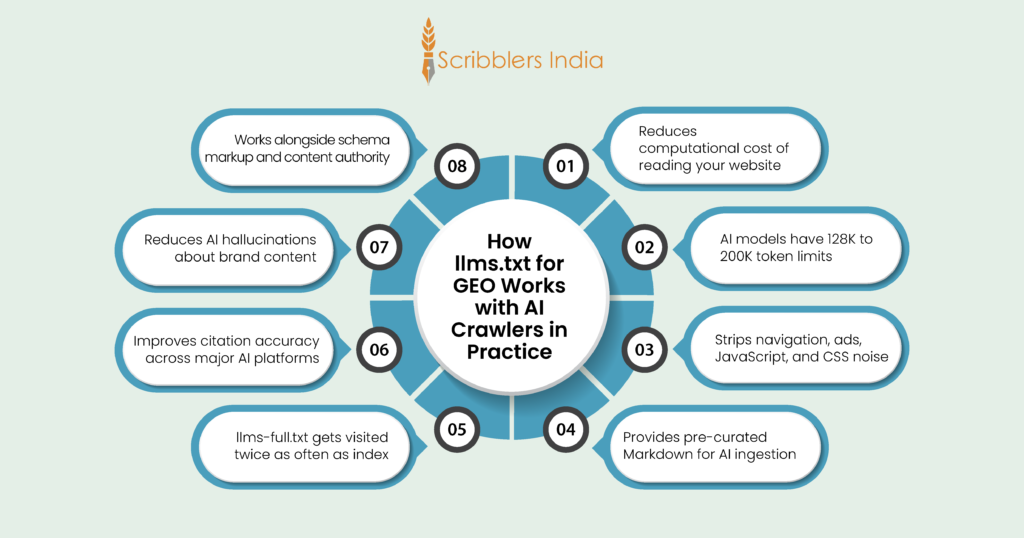
What Is llms.txt and Why Does It Matter for GEO?
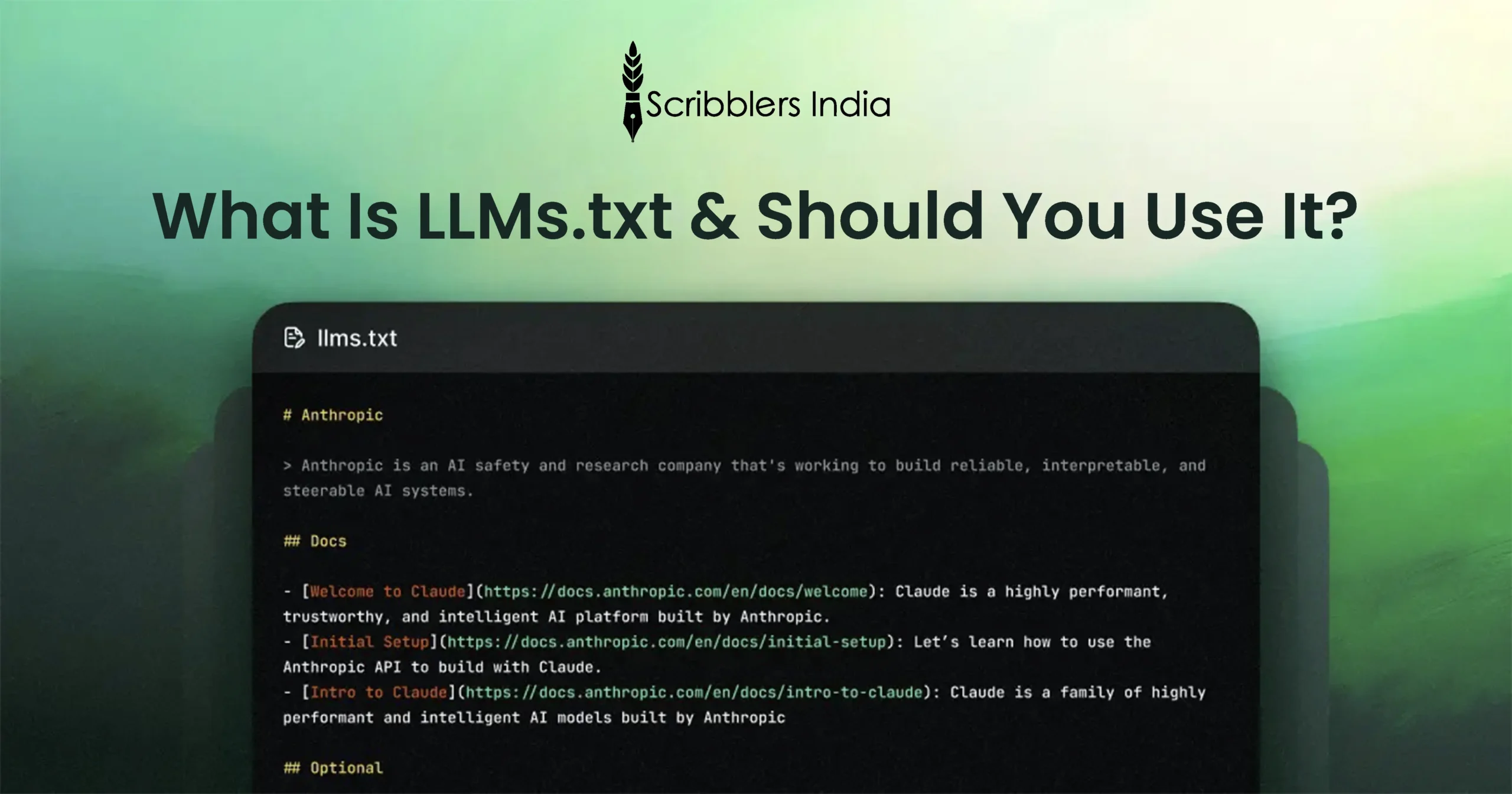
LLMs.txt is a simple Markdown-formatted file placed at the root of your website. It gives AI language models a clean and curated summary of your most important content. It tells AI systems what your site is, who it serves, and where to find its most relevant pages without parsing through HTML noise.
llms.txt for GEO matters because Generative Engine Optimization targets citations in AI-generated answers rather than ranking positions in traditional search results. AI crawlers reading cluttered HTML pages face significant computational friction. A well-structured llms.txt file removes that friction. It improves the probability that the AI accurately retrieves and cites your content.
AI crawlers now play a measurable role in how websites are discovered and accessed. Latest report from Cloudflare found that AI bots accounted for 4.2% of HTML request traffic in 2025, while Googlebot alone accounted for 4.5%. For brands investing in AI visibility, llms.txt is a simple technical addition that can help AI systems better understand website content. It costs nothing to implement and can usually be created in less than an hour.
How llms.txt Supports AI Search Visibility
A detailed llms.txt file gives brands greater control over how their information is discovered, interpreted, and surfaced across AI-generated answers. As AI search platforms increasingly rely on structured retrieval methods, a well-maintained llms.txt file can improve content accessibility and strengthen citation opportunities.
- Functions as a sitemap for AI language models: XML sitemaps help search engines like Googlebot find and understand important website pages. An llms.txt file plays a similar role for AI models. It directs them to your most reliable and citation-worthy pages without requiring them to scan the complete website.
- Establishes a machine-readable brand identity: The file explains what your company does, who it serves, and how AI systems should understand your content. This clarity helps AI platforms describe your business accurately in generated answers. It also reduces the chances of incorrect or misleading descriptions of your services.
- Gives you content control in the AI retrieval environment: You can choose which pages to include in the llms.txt file. This helps you guide AI systems toward your strongest and most reliable content. It also keeps them away from duplicate, outdated, or less useful pages that may misrepresent your brand.

How Is llms.txt Different from robots.txt on Your Website?
llms.txt and robots.txt are both text files located at your site’s root. They both communicate with automated systems visiting your domain. They serve opposite purposes and use different formats to achieve desired outcomes for varied audiences.
Understanding the distinction between these two files is crucial. It will help you seamlessly implement llms.txt for GEO as part of your broader AI crawler optimization website strategy.
- robots.txt controls access by telling crawlers where to avoid: It uses directives like User-agent, Allow, and Disallow to manage crawler access to specific URL paths. It acts as a gatekeeper, indicating to search crawlers which pages they can access or avoid. AI crawlers like GPTBot, ClaudeBot, and PerplexityBot may also follow robots.txt when configured correctly.
- llms.txt provides context by showing AI models your best content: It uses Markdown formatting instead of directive syntax and focuses on guidance rather than restriction. It does not block access to any page. Instead, it creates a curated list of important and authoritative pages that AI systems can retrieve and cite when generating answers about your brand or category.
- The two files work together rather than against each other: Your robots.txt file should allow the AI crawlers you want to access your content. Your llms.txt for GEO then guides those permitted crawlers to the pages that best represent your brand. Using both correctly creates a stronger technical foundation for websites optimizing for AI search visibility.
- robots.txt is established, while llms.txt is still emerging: Every major search engine recognizes robots.txt as a long-standing web standard. llms.txt for GEO is newer, voluntary, and still gaining adoption. Tech-forward companies such as Anthropic, Vercel, Stripe, and Hugging Face have already added it to their website infrastructure.
How Does llms.txt for GEO Work with AI Crawlers in Practice?
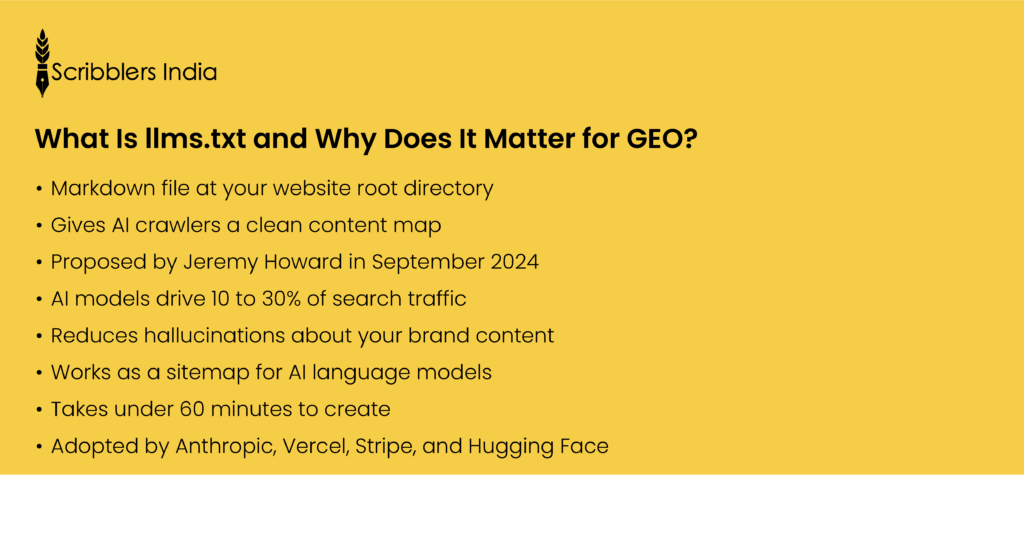
AI crawlers process websites under strict token limitations, making full-site parsing inefficient and often inaccurate for content retrieval. An llms.txt file simplifies this process by presenting clean, structured Markdown content without unnecessary scripts or navigation clutter. This improves retrieval efficiency and reduces parsing overhead. It helps AI systems represent brands accurately across GEO and AI-driven search experiences.
- Reduced Parsing Complexity for AI Crawlers: Without llms.txt, AI crawlers must clean HTML-heavy pages before understanding the actual content. This consumes computational resources and increases retrieval inaccuracies. A structured Markdown file removes unnecessary processing layers, helping language models access meaningful information efficiently during crawling and indexing workflows.
- Better Context Delivery Through llms-full.txt: The llms-full.txt file consolidates the entire website’s content into a single, readable Markdown document for AI systems. These files receive higher crawler engagement because they provide richer contextual understanding with minimal retrieval friction for large language models.
- Improved Brand Representation in AI Responses: AI systems generate better recommendations when they clearly understand a brand’s services, expertise, and audience positioning. Cleanly formatted llms.txt files reduce irrelevant retrieval signals and improve citation accuracy. This allows AI-generated answers to describe businesses more precisely across conversational search and recommendation platforms.
- Efficient Content Access Within Token Constraints: Most AI models operate within limited context windows that cannot accommodate large commercial websites in raw HTML form. llms.txt files compress essential business information into concise, machine-friendly Markdown structures. This enables stronger contextual understanding and more reliable retrieval for AI crawlers.
How to Create an llms.txt File for Your Website?
The process for creating an llms.txt file is quite simple. Open a plain text editor such as Notepad, TextEdit, or VS Code. Write the file in Markdown format following the llmstxt.org specification. Save it as llms.txt and upload it to your website’s root directory so it is accessible at yourwebsite.com/llms.txt.
The creation process for llms.txt for GEO takes under 60 minutes for most websites and requires no coding knowledge. The file uses a simple and consistent structure that any content strategist or marketing professional can implement without developer support.
The required structure of a valid llms.txt file
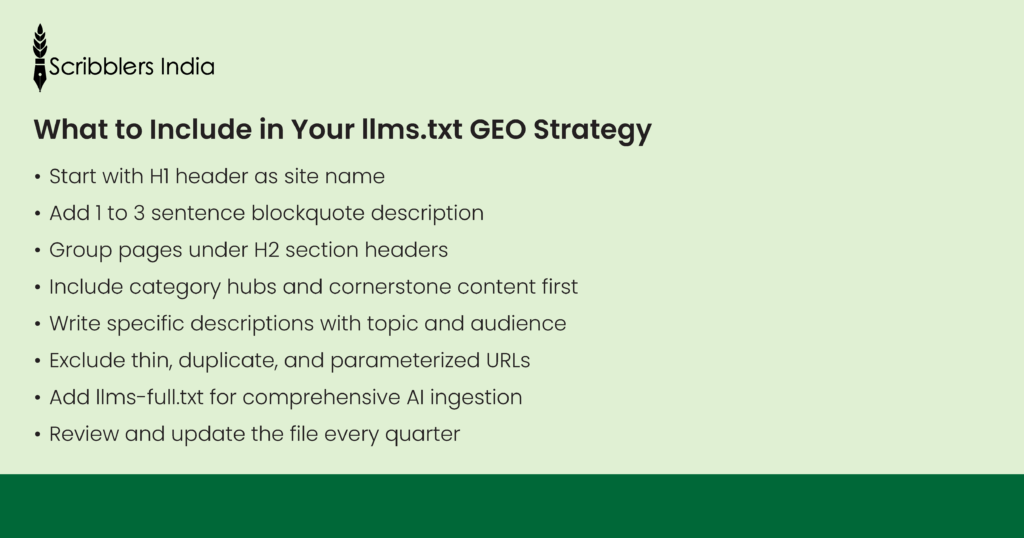
Every valid llms.txt file must begin with an H1 header containing your site or project name. This header must appear as the first element in the file. Follow it immediately with a blockquote containing a one to three-sentence description of what your site is and who it serves.
This opening blockquote often becomes the AI model’s primary mental model of your corporate brand when it processes your content. After the opening, organize your pages into sections using H2 headers. Common sections include Services, Blog and Guides, Tools, About, and Case Studies.
Under each section header, list individual pages as Markdown links with a one-sentence description of what each page covers. Write these descriptions as if explaining the page to someone who has never visited your site.
The llms-full.txt companion file for comprehensive AI ingestion
The llms-full.txt file combines the full content of your most important pages into one Markdown document. AI systems can read this complete context in one place instead of opening several page links. Creating this companion file alongside your standard llms.txt index gives AI crawlers a cleaner and accessible way to understand your website’s content.

Which Pages Should You Add to Your llms.txt File for GEO?
An effective llms.txt file should not include every page on your website. It should guide AI systems toward the pages that best explain your corporate or personal brand, expertise, products, services, and point of view. The goal is to make your strongest content easier to discover, understand, and cite.
This makes page selection important. A cluttered llms.txt file can reduce its usefulness because AI systems still need to identify what matters most. A clean file with clear descriptions gives crawlers a better path to your most reliable and citation-worthy content.
- Prioritize category hubs and cornerstone content over regular blog posts: Category hubs, product pages, service pages, and detailed pillar pages usually explain your authority better than short blog posts. These pages cover broader search intent and help AI systems understand your core expertise. Add blog posts only when they answer important questions better than your main pages.
- Use specific descriptions for better AI retrieval: Each entry should explain what the page covers, who it helps, and which questions it answers. Generic descriptions give AI systems little useful context. Specific descriptions increase the likelihood that your page matches the correct AI-generated answer.
- Remove weak, duplicate, or outdated URLs: Do not add parameterized URLs, duplicate pages, thin pages, expired offers, or outdated posts. These pages can confuse AI systems and weaken your brand representation. Your llms.txt file should act as a curated source list, not a full website dump.
- Review the file every quarter: Update your llms.txt file when you publish major pages, remove old content, change product positioning, or restructure your website. A quarterly review keeps the file useful and aligned with your current content strategy.
What are the Key Limitations of llms.txt for GEO in 2026?
llms.txt for GEO offers genuine value as a low-effort technical signal. But understanding its current limitations helps brands invest their GEO resources in the highest-impact activities rather than overemphasizing a single tactical implementation.
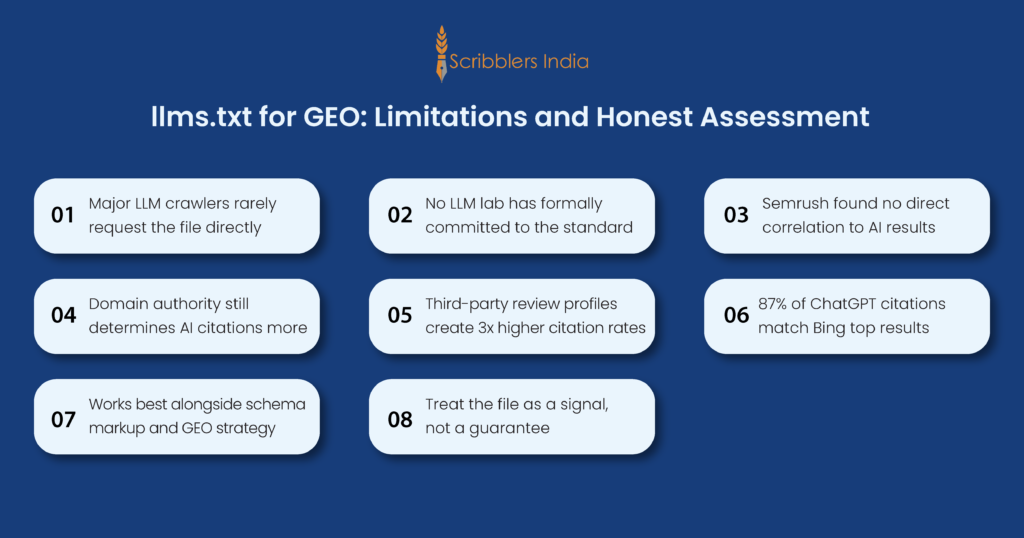
A 2025 industry audit of 1,000 Adobe Experience Manager domains found that major LLM crawlers, including GPTBot, ClaudeBot, and PerplexityBot, did not request the llms.txt file during the 30-day study period.
Standard search crawlers from Google and Bing accounted for most file requests. Additionally, Semrush reported finding no direct correlation between implementing llms.txt and improved performance in AI-generated results in their current research.
- llms.txt Remains a Voluntary AI Standard: No major AI platform officially requires or enforces llms.txt implementation across websites today. Adoption currently depends on individual platform preferences and experimental crawler behaviors. Early implementation helps brands prepare for broader standardization across future AI-driven search and retrieval ecosystems.
- Authority and Trust Still Drive AI Citations: High-quality content and trusted third-party validation influence AI citations more than llms.txt implementation alone. Research shows that authoritative domains receive significantly greater visibility in AI-generated responses and recommendations. llms.txt improves retrieval efficiency, while credibility determines whether platforms consistently cite your content.
- The file works best as part of a complete GEO strategy: llms.txt supports wider GEO initiatives rather than functioning as a standalone AI optimization solution for brands. Strong results also require schema markup, original research, and consistent content freshness signals. Combined optimization strategies improve AI visibility, retrieval accuracy, and citation opportunities across major AI platforms.
Why Do You Need GEO Services in India to Implement llms.txt Correctly?
India’s professional digital marketing market is advancing rapidly in AI search optimization strategy. Brands that implement llms.txt for GEO as an isolated technical step miss the full strategic context that makes the file most effective within a complete llms.txt GEO strategy framework.
At Scribblers India, we implement llms.txt for GEO as part of a comprehensive AI-driven content marketing strategy. It combines content strategy, authority building, and technical optimization into a unified AI visibility approach.
How Scribblers India Implements Your llms.txt File?
Here are the steps we follow to optimize your llms.txt file:
- Strategic content selection and llms.txt architecture: We audit your website to identify pages with the strongest authority and citation potential. Our team prioritizes high-value assets instead of indexing every website page. This creates a curated, AI-readable structure that guides crawlers to your most valuable content.
- Complete AI crawler accessibility audit: We review robots.txt rules, CDN settings, server logs, and JavaScript rendering accessibility across your website. This ensures major AI crawlers can access and process important content pages correctly. Misconfigured technical settings often block crawlers despite successful efforts to implement llms.txt for GEO.
- Schema markup and llms.txt integration for maximum signal density: We combine structured schema markup with llms.txt implementation to strengthen AI retrieval and indexing signals. FAQPage, Article, HowTo, and Organization schemas improve content-level extractability for language models. Together, these layers improve navigational clarity and contextual understanding across priority website pages.
- Original research and thought leadership content development: We produce thought leadership content and original research assets that become the primary citations in your llms.txt file. This content gives AI systems genuinely unique, verifiable information to retrieve and attribute to your brand. This is the underlying citation driver that the technical file alone cannot create without strong supporting content.
- Quarterly GEO audits and llms.txt refresh cycles: We monitor your brand’s AI citation frequency across platforms. This includes ChatGPT, Perplexity, and Google AI Overviews and update your llms.txt file alongside your broader content marketing strategy on a quarterly cadence. We ensure the file continues to reflect your current strongest pages and most relevant brand positioning.
Connect with our team today to implement llms.txt for GEO as part of a complete AI visibility strategy. We will position your brand for consistent citation across every major AI search platform.
FAQs
Does llms.txt for GEO directly guarantee more AI citations for your brand?
No. llms.txt improves retrieval efficiency and reduces processing complexity for AI systems reading website content. Citation selection still depends heavily on authority, content quality, E-E-A-T signals, and external brand validation. Strong content credibility remains the primary driver of AI-generated citations and recommendations.
What is the difference between llms.txt and robots.txt for AI crawlers?
llms.txt guides AI systems to important content through structured, Markdown-based website summaries and references. robots.txt controls crawler access permissions across website sections and specific URL paths. One improves retrieval clarity, while the other manages crawler accessibility for search and AI platforms.
How often should you update your llms.txt file to maintain GEO effectiveness?
Update your llms.txt for GEO whenever you publish significant new content, change URL structures, or deprecate old pages. At a minimum, review and refresh the file every quarter. AI retrieval is sensitive to content freshness and URL stability. A stale llms.txt file that references outdated or deleted pages actively undermines your broader llms.txt for GEO strategy performance over time.
Can small business websites benefit from implementing llms.txt for GEO?
Yes. Creating llms.txt for brands at any size takes under 60 minutes and costs nothing. Small businesses with focused, authoritative content in a specific niche benefit from the brand clarity and retrieval efficiency that the file provides. The file works best when the domain already demonstrates topical authority and content quality. It helps make smaller, specialized sites strong candidates for meaningful GEO improvement through strategic implementation.
What tools can help you create and validate an llms.txt file correctly?
The llmstxt.org specification provides the complete formatting standard and structural requirements. Web Aloha offers a free llms.txt generator for creating and validating files. AI Rank Lab provides technical auditing to confirm that the file is accessible, correctly formatted, and not blocked by robots.txt or CDN configuration. VS Code, TextEdit, and Notepad all work as basic editors for creating llms.txt files manually.