
Content Marketing India Posts
How to Feature in ChatGPT, Gemini and Perplexity: 11 Tips to Optimize Content for AI Answers
AI search is changing how buyers discover, compare and shortlist brands. Users now ask ChatGPT, Gemini, Perplexity and Google AI Overviews for direct recommendations, summaries and buying guidance before they visit a website. That is why brands need to optimize content for AI-generated answers if they want to stay visible across the platforms that shape modern search behavior. Google AI Overviews had already reached over 2 billion monthly users across more than 200 countries and territories by July 2025. This scale shows why brands need to optimize content for AI answers through a clear Generative Engine Optimization framework. GEO combines answer-first writing, entity clarity, authorship signals, structured data, technical accessibility and cross-platform authority building. At Scribblers India, AI search visibility is no longer a future-facing content experiment. It is now a practical requirement for content marketing for brands that want to stay visible across ChatGPT, Gemini, Perplexity, AI Overviews, and future answer engines. This blog covers 11 expert tips to help you optimize content for AI answers across four connected areas: content structure, authority signals, technical accessibility, and multi-platform presence. TL;DR Lead sections with direct, standalone answers. Use question-based headings matching user prompts. Define concepts before examples and context. Add FAQs with clear answer blocks. Use named authors with credible bios. Publish original research and expert frameworks. Earn mentions across trusted external platforms. Apply schema across all priority pages. Keep search and AI crawlers unblocked. Refresh high-value content on schedule. Build consistent multi-platform brand presence. Track AI citations across major platforms. How Can Content Structure Help You Optimize Content for AI Answers? Content structure helps AI platforms extract, summarize and cite your information with greater confidence. When every section starts with a direct answer, a question-based heading, and clear supporting context, ChatGPT, Gemini, and Perplexity can understand the page faster and use it more reliably in their generated responses. A strong content structure is the foundation of every GEO strategy. AI platforms scan pages for answer units, topical completeness and source clarity. If the answer appears after a long build-up, generic introduction, or loosely connected explanation, the page becomes harder to cite. A 2026 longitudinal study of Google AI Overviews found that AI Overviews appeared for 13.7% of all tested queries, rising to 64.7% for question-form queries. This makes question-led headings and direct answer blocks especially important for brands building AI visibility. The following structural practices help improve content optimization for AI answers across major generative search platforms. Tip 1: Use Answer-First Structure on Every Page Answer-first structure means placing the clearest possible response within the first few lines of every section. This makes your content easier for AI platforms to extract, summarize and cite when users ask direct questions across ChatGPT, Gemini, Perplexity or Google AI Overviews. Traditional blog writing often delays the answer. It starts with context, market background or broad observations before reaching the actual point. That approach works poorly for AI search because generative systems need concise answer blocks that resolve the user’s query immediately. A better structure follows this order: Question-based heading Direct answer in the opening paragraph Short explanation with context Example, data point or comparison Practical takeaway This format works especially well for commercial and informational pages. For example, instead of opening a section with “In today’s digital landscape, AI search has become important,” start with the exact answer: “To optimize content for ChatGPT, structure every section around a direct answer, verified source signals and clear entity context.” This gives the AI system a clean response unit it can reuse. It also helps human readers find the answer faster, improving readability and engagement Tip 2: Use Question-Based Headings That Mirror User Prompts Question-based headings help AI systems connect your content with natural user queries. When your H2s and H3s mirror the way people ask questions in ChatGPT, Gemini or Perplexity, your page becomes easier to retrieve for answer-led search experiences. Any content targeting AI search should avoid vague headings such as “Importance,” “Benefits,” or “Best Practices.” These headings provide weak semantic signals. Instead, use complete questions that reflect how users search. For example: What Is Content Optimization for AI Answers? How Can You Optimize Content for ChatGPT? How Can You Optimize Content for Gemini? How Can You Optimize Content for Perplexity? What Schema Helps AI Platforms Understand Your Content? These headings create a direct match between user intent and page structure. They also improve passage-level relevance because each section clearly answers one query. For Scribblers India blogs, question-led headings work especially well because they support SEO, AEO and GEO at the same time. They make the article easier to scan, extract, and repurpose into FAQs, LinkedIn posts, or sales enablement assets. Tip 3: Add Definitions, Examples, and Use Cases Within Each Section Definitions, examples and use cases make your content more useful for AI answers because they add clarity and information gain. AI platforms prefer sections that explain a concept, then support it with practical context. This helps readers understand the topic more quickly and gives AI systems stronger material to extract with greater confidence. Start with a clear definition before expanding the idea. A section on GEO for ChatGPT should first explain what the term means, then move into how it affects content visibility across AI-generated answers. Add examples that show how the concept works. If you explain content optimization for AI answers, include a sample section structure, heading format or answer-first paragraph that readers can understand and apply. Use real scenarios to build practical relevance. For example, explain how a SaaS brand can optimize content for Perplexity by publishing comparison pages, expert guides and source-friendly answer sections. Answer the next logical question within the same section. After defining the concept, explain why it matters, how it works in practice and what the reader should do next. Avoid generic explanations that repeat common information. Add original framing, brand-specific examples or expert observations so your content gives AI platforms something more useful than a standard summary.
AI search is changing how buyers discover, compare and shortlist brands. Users now ask ChatGPT, Gemini, Perplexity and Google AI Overviews for direct recommendations, summaries and buying guidance before they visit a website. That is why brands need to optimize content for AI-generated answers if they want to stay visible across the platforms that shape modern search behavior. Google AI Overviews had already reached over 2 billion monthly users across more than 200 countries and territories by July 2025. This scale shows why brands need to optimize content for AI answers through a clear Generative Engine Optimization framework. GEO combines answer-first writing, entity clarity, authorship signals, structured data, technical accessibility and cross-platform authority building. At Scribblers India, AI search visibility is no longer a future-facing content experiment. It is now a practical requirement for content marketing for brands that want to stay visible across ChatGPT, Gemini, Perplexity, AI Overviews, and future answer engines. This blog covers 11 expert tips to help you optimize content for AI answers across four connected areas: content structure, authority signals, technical accessibility, and multi-platform presence. TL;DR Lead sections with direct, standalone answers. Use question-based headings matching user prompts. Define concepts before examples and context. Add FAQs with clear answer blocks. Use named authors with credible bios. Publish original research and expert frameworks. Earn mentions across trusted external platforms. Apply schema across all priority pages. Keep search and AI crawlers unblocked. Refresh high-value content on schedule. Build consistent multi-platform brand presence. Track AI citations across major platforms. How Can Content Structure Help You Optimize Content for AI Answers? Content structure helps AI platforms extract, summarize and cite your information with greater confidence. When every section starts with a direct answer, a question-based heading, and clear supporting context, ChatGPT, Gemini, and Perplexity can understand the page faster and use it more reliably in their generated responses. A strong content structure is the foundation of every GEO strategy. AI platforms scan pages for answer units, topical completeness and source clarity. If the answer appears after a long build-up, generic introduction, or loosely connected explanation, the page becomes harder to cite. A 2026 longitudinal study of Google AI Overviews found that AI Overviews appeared for 13.7% of all tested queries, rising to 64.7% for question-form queries. This makes question-led headings and direct answer blocks especially important for brands building AI visibility. The following structural practices help improve content optimization for AI answers across major generative search platforms. Tip 1: Use Answer-First Structure on Every Page Answer-first structure means placing the clearest possible response within the first few lines of every section. This makes your content easier for AI platforms to extract, summarize and cite when users ask direct questions across ChatGPT, Gemini, Perplexity or Google AI Overviews. Traditional blog writing often delays the answer. It starts with context, market background or broad observations before reaching the actual point. That approach works poorly for AI search because generative systems need concise answer blocks that resolve the user’s query immediately. A better structure follows this order: Question-based heading Direct answer in the opening paragraph Short explanation with context Example, data point or comparison Practical takeaway This format works especially well for commercial and informational pages. For example, instead of opening a section with “In today’s digital landscape, AI search has become important,” start with the exact answer: “To optimize content for ChatGPT, structure every section around a direct answer, verified source signals and clear entity context.” This gives the AI system a clean response unit it can reuse. It also helps human readers find the answer faster, improving readability and engagement Tip 2: Use Question-Based Headings That Mirror User Prompts Question-based headings help AI systems connect your content with natural user queries. When your H2s and H3s mirror the way people ask questions in ChatGPT, Gemini or Perplexity, your page becomes easier to retrieve for answer-led search experiences. Any content targeting AI search should avoid vague headings such as “Importance,” “Benefits,” or “Best Practices.” These headings provide weak semantic signals. Instead, use complete questions that reflect how users search. For example: What Is Content Optimization for AI Answers? How Can You Optimize Content for ChatGPT? How Can You Optimize Content for Gemini? How Can You Optimize Content for Perplexity? What Schema Helps AI Platforms Understand Your Content? These headings create a direct match between user intent and page structure. They also improve passage-level relevance because each section clearly answers one query. For Scribblers India blogs, question-led headings work especially well because they support SEO, AEO and GEO at the same time. They make the article easier to scan, extract, and repurpose into FAQs, LinkedIn posts, or sales enablement assets. Tip 3: Add Definitions, Examples, and Use Cases Within Each Section Definitions, examples and use cases make your content more useful for AI answers because they add clarity and information gain. AI platforms prefer sections that explain a concept, then support it with practical context. This helps readers understand the topic more quickly and gives AI systems stronger material to extract with greater confidence. Start with a clear definition before expanding the idea. A section on GEO for ChatGPT should first explain what the term means, then move into how it affects content visibility across AI-generated answers. Add examples that show how the concept works. If you explain content optimization for AI answers, include a sample section structure, heading format or answer-first paragraph that readers can understand and apply. Use real scenarios to build practical relevance. For example, explain how a SaaS brand can optimize content for Perplexity by publishing comparison pages, expert guides and source-friendly answer sections. Answer the next logical question within the same section. After defining the concept, explain why it matters, how it works in practice and what the reader should do next. Avoid generic explanations that repeat common information. Add original framing, brand-specific examples or expert observations so your content gives AI platforms something more useful than a standard summary.
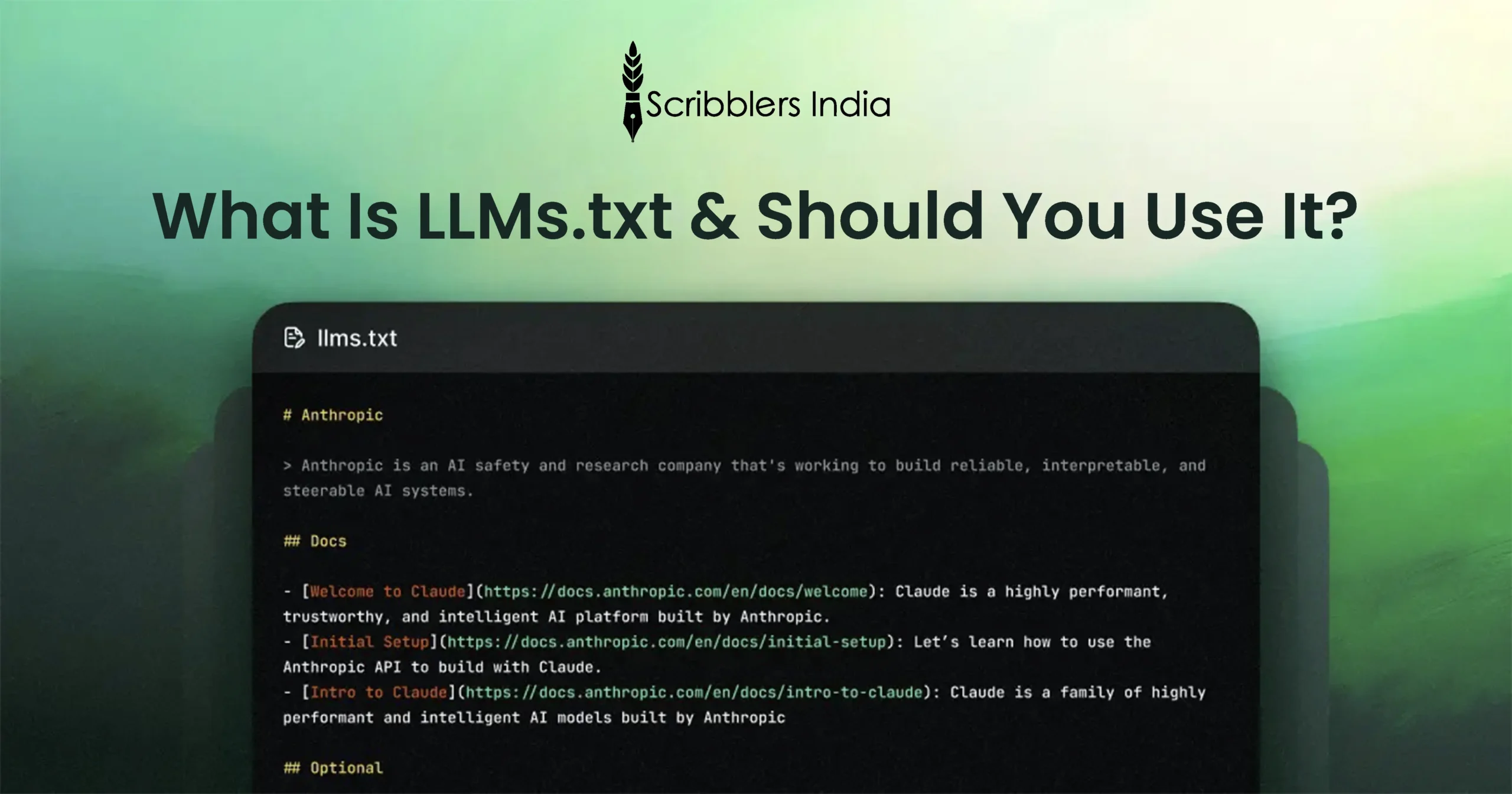
What Is llms.txt and Why It Matters for GEO
Your website was built for human visitors. Every design decision, from the navigation layout to the hero image, serves a person who sees, scrolls, and clicks through a visual experience. A different class of visitor is now reading your site, and they experience it in an entirely different way. This brings new considerations, such as managing llms.txt for GEO and how these visitors interact with website content. AI agents powering ChatGPT, Claude, Perplexity, and Gemini do not see your design. They process raw code. When an AI crawler visits a modern website, it must parse through kilobytes of JavaScript and CSS, navigation menus, and footer content before it reaches the required information. This friction in the processing creates a barrier to accurate retrieval, which is precisely the problem that llms.txt for GEO is designed to solve. Understanding what this file does and how to implement it correctly is becoming a crucial step in any serious Generative Engine Optimization strategy for 2026. TL;DR llms.txt is a Markdown file at your website’s root directory. It gives AI crawlers a clean, structured map of your content. The file was proposed by Jeremy Howard on September 3, 2024. It is fundamentally different from robots.txt in purpose and format. llms.txt for GEO reduces AI hallucinations about your brand content. Early adopters include Anthropic, Vercel, Stripe, and Hugging Face. Creating the file takes under 60 minutes and costs nothing. The file works best alongside strong schema markup and content authority. Update the file quarterly to maintain AI retrieval accuracy over time. What Is llms.txt and Why Does It Matter for GEO? LLMs.txt is a simple Markdown-formatted file placed at the root of your website. It gives AI language models a clean and curated summary of your most important content. It tells AI systems what your site is, who it serves, and where to find its most relevant pages without parsing through HTML noise. llms.txt for GEO matters because Generative Engine Optimization targets citations in AI-generated answers rather than ranking positions in traditional search results. AI crawlers reading cluttered HTML pages face significant computational friction. A well-structured llms.txt file removes that friction. It improves the probability that the AI accurately retrieves and cites your content. AI crawlers now play a measurable role in how websites are discovered and accessed. Latest report from Cloudflare found that AI bots accounted for 4.2% of HTML request traffic in 2025, while Googlebot alone accounted for 4.5%. For brands investing in AI visibility, llms.txt is a simple technical addition that can help AI systems better understand website content. It costs nothing to implement and can usually be created in less than an hour. How llms.txt Supports AI Search Visibility A detailed llms.txt file gives brands greater control over how their information is discovered, interpreted, and surfaced across AI-generated answers. As AI search platforms increasingly rely on structured retrieval methods, a well-maintained llms.txt file can improve content accessibility and strengthen citation opportunities. Functions as a sitemap for AI language models: XML sitemaps help search engines like Googlebot find and understand important website pages. An llms.txt file plays a similar role for AI models. It directs them to your most reliable and citation-worthy pages without requiring them to scan the complete website. Establishes a machine-readable brand identity: The file explains what your company does, who it serves, and how AI systems should understand your content. This clarity helps AI platforms describe your business accurately in generated answers. It also reduces the chances of incorrect or misleading descriptions of your services. Gives you content control in the AI retrieval environment: You can choose which pages to include in the llms.txt file. This helps you guide AI systems toward your strongest and most reliable content. It also keeps them away from duplicate, outdated, or less useful pages that may misrepresent your brand. How Is llms.txt Different from robots.txt on Your Website? llms.txt and robots.txt are both text files located at your site’s root. They both communicate with automated systems visiting your domain. They serve opposite purposes and use different formats to achieve desired outcomes for varied audiences. Understanding the distinction between these two files is crucial. It will help you seamlessly implement llms.txt for GEO as part of your broader AI crawler optimization website strategy. robots.txt controls access by telling crawlers where to avoid: It uses directives like User-agent, Allow, and Disallow to manage crawler access to specific URL paths. It acts as a gatekeeper, indicating to search crawlers which pages they can access or avoid. AI crawlers like GPTBot, ClaudeBot, and PerplexityBot may also follow robots.txt when configured correctly. llms.txt provides context by showing AI models your best content: It uses Markdown formatting instead of directive syntax and focuses on guidance rather than restriction. It does not block access to any page. Instead, it creates a curated list of important and authoritative pages that AI systems can retrieve and cite when generating answers about your brand or category. The two files work together rather than against each other: Your robots.txt file should allow the AI crawlers you want to access your content. Your llms.txt for GEO then guides those permitted crawlers to the pages that best represent your brand. Using both correctly creates a stronger technical foundation for websites optimizing for AI search visibility. robots.txt is established, while llms.txt is still emerging: Every major search engine recognizes robots.txt as a long-standing web standard. llms.txt for GEO is newer, voluntary, and still gaining adoption. Tech-forward companies such as Anthropic, Vercel, Stripe, and Hugging Face have already added it to their website infrastructure. How Does llms.txt for GEO Work with AI Crawlers in Practice? AI crawlers process websites under strict token limitations, making full-site parsing inefficient and often inaccurate for content retrieval. An llms.txt file simplifies this process by presenting clean, structured Markdown content without unnecessary scripts or navigation clutter. This improves retrieval efficiency and reduces parsing overhead. It helps AI systems represent brands accurately across GEO and AI-driven search experiences. Reduced
Your website was built for human visitors. Every design decision, from the navigation layout to the hero image, serves a person who sees, scrolls, and clicks through a visual experience. A different class of visitor is now reading your site, and they experience it in an entirely different way. This brings new considerations, such as managing llms.txt for GEO and how these visitors interact with website content. AI agents powering ChatGPT, Claude, Perplexity, and Gemini do not see your design. They process raw code. When an AI crawler visits a modern website, it must parse through kilobytes of JavaScript and CSS, navigation menus, and footer content before it reaches the required information. This friction in the processing creates a barrier to accurate retrieval, which is precisely the problem that llms.txt for GEO is designed to solve. Understanding what this file does and how to implement it correctly is becoming a crucial step in any serious Generative Engine Optimization strategy for 2026. TL;DR llms.txt is a Markdown file at your website’s root directory. It gives AI crawlers a clean, structured map of your content. The file was proposed by Jeremy Howard on September 3, 2024. It is fundamentally different from robots.txt in purpose and format. llms.txt for GEO reduces AI hallucinations about your brand content. Early adopters include Anthropic, Vercel, Stripe, and Hugging Face. Creating the file takes under 60 minutes and costs nothing. The file works best alongside strong schema markup and content authority. Update the file quarterly to maintain AI retrieval accuracy over time. What Is llms.txt and Why Does It Matter for GEO? LLMs.txt is a simple Markdown-formatted file placed at the root of your website. It gives AI language models a clean and curated summary of your most important content. It tells AI systems what your site is, who it serves, and where to find its most relevant pages without parsing through HTML noise. llms.txt for GEO matters because Generative Engine Optimization targets citations in AI-generated answers rather than ranking positions in traditional search results. AI crawlers reading cluttered HTML pages face significant computational friction. A well-structured llms.txt file removes that friction. It improves the probability that the AI accurately retrieves and cites your content. AI crawlers now play a measurable role in how websites are discovered and accessed. Latest report from Cloudflare found that AI bots accounted for 4.2% of HTML request traffic in 2025, while Googlebot alone accounted for 4.5%. For brands investing in AI visibility, llms.txt is a simple technical addition that can help AI systems better understand website content. It costs nothing to implement and can usually be created in less than an hour. How llms.txt Supports AI Search Visibility A detailed llms.txt file gives brands greater control over how their information is discovered, interpreted, and surfaced across AI-generated answers. As AI search platforms increasingly rely on structured retrieval methods, a well-maintained llms.txt file can improve content accessibility and strengthen citation opportunities. Functions as a sitemap for AI language models: XML sitemaps help search engines like Googlebot find and understand important website pages. An llms.txt file plays a similar role for AI models. It directs them to your most reliable and citation-worthy pages without requiring them to scan the complete website. Establishes a machine-readable brand identity: The file explains what your company does, who it serves, and how AI systems should understand your content. This clarity helps AI platforms describe your business accurately in generated answers. It also reduces the chances of incorrect or misleading descriptions of your services. Gives you content control in the AI retrieval environment: You can choose which pages to include in the llms.txt file. This helps you guide AI systems toward your strongest and most reliable content. It also keeps them away from duplicate, outdated, or less useful pages that may misrepresent your brand. How Is llms.txt Different from robots.txt on Your Website? llms.txt and robots.txt are both text files located at your site’s root. They both communicate with automated systems visiting your domain. They serve opposite purposes and use different formats to achieve desired outcomes for varied audiences. Understanding the distinction between these two files is crucial. It will help you seamlessly implement llms.txt for GEO as part of your broader AI crawler optimization website strategy. robots.txt controls access by telling crawlers where to avoid: It uses directives like User-agent, Allow, and Disallow to manage crawler access to specific URL paths. It acts as a gatekeeper, indicating to search crawlers which pages they can access or avoid. AI crawlers like GPTBot, ClaudeBot, and PerplexityBot may also follow robots.txt when configured correctly. llms.txt provides context by showing AI models your best content: It uses Markdown formatting instead of directive syntax and focuses on guidance rather than restriction. It does not block access to any page. Instead, it creates a curated list of important and authoritative pages that AI systems can retrieve and cite when generating answers about your brand or category. The two files work together rather than against each other: Your robots.txt file should allow the AI crawlers you want to access your content. Your llms.txt for GEO then guides those permitted crawlers to the pages that best represent your brand. Using both correctly creates a stronger technical foundation for websites optimizing for AI search visibility. robots.txt is established, while llms.txt is still emerging: Every major search engine recognizes robots.txt as a long-standing web standard. llms.txt for GEO is newer, voluntary, and still gaining adoption. Tech-forward companies such as Anthropic, Vercel, Stripe, and Hugging Face have already added it to their website infrastructure. How Does llms.txt for GEO Work with AI Crawlers in Practice? AI crawlers process websites under strict token limitations, making full-site parsing inefficient and often inaccurate for content retrieval. An llms.txt file simplifies this process by presenting clean, structured Markdown content without unnecessary scripts or navigation clutter. This improves retrieval efficiency and reduces parsing overhead. It helps AI systems represent brands accurately across GEO and AI-driven search experiences. Reduced
Why You Need to Edit AI Content to Prevent Google SEO Penalties?
Google’s March 2026 core update clearly named scaled content abuse as its primary enforcement target. Sites publishing hundreds of AI-generated pages without editorial oversight saw traffic drops of 50 to 80% during that update period. These consequences did not result from AI usage itself as the triggering factor. The real target was low-quality, unedited, generic content published at scale to manipulate rankings. Brands that survived every recent Google core update share one consistent practice. They thoroughly review and edit AI content before any piece goes live on their domain. This editorial discipline protects rankings and builds sustainable credibility across every content category they publish. TL;DR: Learn why it’s essential to edit AI content for better search results. Google penalizes low-quality content, not AI-generated content specifically. Always edit AI content before publishing to protect your SEO rankings Google AI content guidelines 2026 focus entirely on user helpfulness and accuracy. Add original data and expert insights when editing every AI draft. E-E-A-T signals separate insightful AI content from fluff. AI content detection tools identify and flag generic AI writing patterns. Humanize AI content for SEO by adding first-hand experience throughout every piece. Fact-check every AI-generated claim to prevent accuracy-related ranking drops. Human editorial oversight remains the most effective SEO protection strategy. What Does Google Actually Penalize About AI-Generated Content? Google does not penalize content for being AI-generated. It penalizes low-quality, generic content published at scale without genuine user value. According to Google AI content guidelines for 2026, the target is scaled content abuse rather than AI usage itself. This distinction determines your entire approach to publishing safe AI content. Understanding exactly what triggers Google penalties helps you effectively edit AI content. You can then publish at scale without risking your site’s search visibility. Scaled content abuse is the actual penalty trigger: Google added it as a specific spam category in early 2025. The March 2026 core update explicitly reinforced this policy. Sites publishing hundreds of near-identical AI pages without editorial oversight experienced 50-80% traffic drops. Publishing patterns, not production tools, trigger the enforcement mechanism every time. Thin content without added value signals a quality failure: AI content becomes risky when it repeats information already available on competitor pages. Google may see this as content with no real information gain. Original insights, proprietary data, and first-hand experience make AI-assisted content more useful and safer. Publishing velocity spikes attract SpamBrain scrutiny: A sudden rise in publishing volume can prompt Google to suspect content abuse at scale. Follow a steady editorial calendar instead. This gives your team enough time to review, fact-check, and improve every AI-assisted article before publishing. Factual inaccuracies accelerate quality-based ranking demotions: AI tools can produce claims that sound correct but contain errors. Wrong statistics, fake attributions, and outdated information weaken content quality. Google may detect these issues through user signals such as quick exits, low engagement, and short dwell time. What Are the Warning Signs That Your AI Content Needs Editing? AI drafts that need editing exhibit identifiable patterns that both human readers and Google’s quality systems reliably recognize. Knowing these patterns before publishing allows you to edit AI content systematically instead of trying to catch up after a ranking drop. The most common warning signs appear in predictable categories that AI content editing experts catch immediately during a structured content review process. Generic AI vocabulary that readers immediately recognize Phrases like “delve into,” “it is worth noting,” “comprehensive guide,” and “seamlessly” often appear in raw AI drafts. Readers leave pages that sound generic. Google may treat those bounce signals as indicators of poor quality. Use direct, specific, and conversational language when you edit AI content for publication. Missing first-person experience and genuine expertise signals AI tools summarize public information. They cannot share real client outcomes, product test results, or practical lessons from experience. Content without first-hand details may fall short on Google’s E-E-A-T standards. Add real examples and expert insights when you edit AI content. Factual claims without verified source attribution AI tools can create facts that sound correct but contain errors. Wrong statistics, fake attributions, and weak technical claims damage user trust. They may also trigger quality demotion signals. Check every statistic, source, and claim before publishing AI-assisted content. How Do You Edit AI Content to Meet Google’s Quality Standards? To edit AI content for Google’s quality standards, follow a clear sequence. Start with factual accuracy, then move to brand voice alignment. After that, add original insights and review the content structure. This order helps you improve AI drafts without rewriting every section from scratch. A structured editing process also protects your content library from long-term quality issues. It helps teams avoid publishing content that sounds generic, repeats what’s already on existing pages, or erodes trust over time. Fact-verification as the first editing priority The first task when you edit AI content is verifying every factual claim against a primary source. Check statistics, dates, product specifications, legal references, and technical claims across the piece. AI tools often create information that sounds believable but may be false. These errors can pass through quickly when teams publish without proper review. A single published hallucination can damage user trust and weaken content quality signals. It can also affect how Google evaluates the wider domain. Strong fact-checking should come before style edits, SEO review, or final proofreading. Brand voice rewriting to eliminate generic AI patterns AI drafts often use a generic professional tone that does not match a real brand voice. They may sound polished, but they often lack personality, clarity, and point of view. Editing for brand voice means replacing filler phrases and improving sentence rhythm. It also means making the content reflect the brand’s actual perspective. This step helps you humanize AI content for SEO without making it sound forced. Readers trust content more when the voice feels consistent across repeated visits. Adding original data and expert perspectives to every section Original research, proprietary data, expert comments, and real client examples make content more valuable. These
Google’s March 2026 core update clearly named scaled content abuse as its primary enforcement target. Sites publishing hundreds of AI-generated pages without editorial oversight saw traffic drops of 50 to 80% during that update period. These consequences did not result from AI usage itself as the triggering factor. The real target was low-quality, unedited, generic content published at scale to manipulate rankings. Brands that survived every recent Google core update share one consistent practice. They thoroughly review and edit AI content before any piece goes live on their domain. This editorial discipline protects rankings and builds sustainable credibility across every content category they publish. TL;DR: Learn why it’s essential to edit AI content for better search results. Google penalizes low-quality content, not AI-generated content specifically. Always edit AI content before publishing to protect your SEO rankings Google AI content guidelines 2026 focus entirely on user helpfulness and accuracy. Add original data and expert insights when editing every AI draft. E-E-A-T signals separate insightful AI content from fluff. AI content detection tools identify and flag generic AI writing patterns. Humanize AI content for SEO by adding first-hand experience throughout every piece. Fact-check every AI-generated claim to prevent accuracy-related ranking drops. Human editorial oversight remains the most effective SEO protection strategy. What Does Google Actually Penalize About AI-Generated Content? Google does not penalize content for being AI-generated. It penalizes low-quality, generic content published at scale without genuine user value. According to Google AI content guidelines for 2026, the target is scaled content abuse rather than AI usage itself. This distinction determines your entire approach to publishing safe AI content. Understanding exactly what triggers Google penalties helps you effectively edit AI content. You can then publish at scale without risking your site’s search visibility. Scaled content abuse is the actual penalty trigger: Google added it as a specific spam category in early 2025. The March 2026 core update explicitly reinforced this policy. Sites publishing hundreds of near-identical AI pages without editorial oversight experienced 50-80% traffic drops. Publishing patterns, not production tools, trigger the enforcement mechanism every time. Thin content without added value signals a quality failure: AI content becomes risky when it repeats information already available on competitor pages. Google may see this as content with no real information gain. Original insights, proprietary data, and first-hand experience make AI-assisted content more useful and safer. Publishing velocity spikes attract SpamBrain scrutiny: A sudden rise in publishing volume can prompt Google to suspect content abuse at scale. Follow a steady editorial calendar instead. This gives your team enough time to review, fact-check, and improve every AI-assisted article before publishing. Factual inaccuracies accelerate quality-based ranking demotions: AI tools can produce claims that sound correct but contain errors. Wrong statistics, fake attributions, and outdated information weaken content quality. Google may detect these issues through user signals such as quick exits, low engagement, and short dwell time. What Are the Warning Signs That Your AI Content Needs Editing? AI drafts that need editing exhibit identifiable patterns that both human readers and Google’s quality systems reliably recognize. Knowing these patterns before publishing allows you to edit AI content systematically instead of trying to catch up after a ranking drop. The most common warning signs appear in predictable categories that AI content editing experts catch immediately during a structured content review process. Generic AI vocabulary that readers immediately recognize Phrases like “delve into,” “it is worth noting,” “comprehensive guide,” and “seamlessly” often appear in raw AI drafts. Readers leave pages that sound generic. Google may treat those bounce signals as indicators of poor quality. Use direct, specific, and conversational language when you edit AI content for publication. Missing first-person experience and genuine expertise signals AI tools summarize public information. They cannot share real client outcomes, product test results, or practical lessons from experience. Content without first-hand details may fall short on Google’s E-E-A-T standards. Add real examples and expert insights when you edit AI content. Factual claims without verified source attribution AI tools can create facts that sound correct but contain errors. Wrong statistics, fake attributions, and weak technical claims damage user trust. They may also trigger quality demotion signals. Check every statistic, source, and claim before publishing AI-assisted content. How Do You Edit AI Content to Meet Google’s Quality Standards? To edit AI content for Google’s quality standards, follow a clear sequence. Start with factual accuracy, then move to brand voice alignment. After that, add original insights and review the content structure. This order helps you improve AI drafts without rewriting every section from scratch. A structured editing process also protects your content library from long-term quality issues. It helps teams avoid publishing content that sounds generic, repeats what’s already on existing pages, or erodes trust over time. Fact-verification as the first editing priority The first task when you edit AI content is verifying every factual claim against a primary source. Check statistics, dates, product specifications, legal references, and technical claims across the piece. AI tools often create information that sounds believable but may be false. These errors can pass through quickly when teams publish without proper review. A single published hallucination can damage user trust and weaken content quality signals. It can also affect how Google evaluates the wider domain. Strong fact-checking should come before style edits, SEO review, or final proofreading. Brand voice rewriting to eliminate generic AI patterns AI drafts often use a generic professional tone that does not match a real brand voice. They may sound polished, but they often lack personality, clarity, and point of view. Editing for brand voice means replacing filler phrases and improving sentence rhythm. It also means making the content reflect the brand’s actual perspective. This step helps you humanize AI content for SEO without making it sound forced. Readers trust content more when the voice feels consistent across repeated visits. Adding original data and expert perspectives to every section Original research, proprietary data, expert comments, and real client examples make content more valuable. These
AI Content Editing Services: Why You Need to Humanize AI-Generated Content Before Publishing?
Your content team is producing more than ever. AI writing tools have made that possible. Blog posts, product pages, LinkedIn articles, and email sequences that once took days now take hours. The volume is impressive but the risk, when that volume goes live without proper editorial review, is significant. AI content editing services are the professional layer that sits between your AI-generated drafts and your published content. They are staffed by human editors who fix what AI tools consistently get wrong. This includes factual accuracy, brand voice, logical flow, audience tone, and the specific patterns that search engines have learned to penalize at scale. Nearly 90% of content marketers now use AI writing tools regularly, according to industry research. That shows how common AI-assisted writing has become across content teams. The real advantage, however, comes when you pair AI’s speed with a human editor’s judgment. Unedited AI content can weaken your brand statement, introduce factual errors, and affect how readers trust your expertise. A skilled editor fixes these gaps through fact-checking, voice alignment, flow improvement, and SEO review. That is how your AI-assisted draft becomes credible and ready to publish. TL;DR: What you must know about AI content editing services? AI content editing services add human editorial oversight to AI-generated content drafts. Unedited AI content risks Google penalties, brand damage, and audience trust loss. Sites publishing 90% unedited AI content face mass deindexing within six months. Human editors catch hallucinations, factual errors, and invented statistics that AI tools create. Professional AI content editing restores the brand voice that generic AI drafts consistently lack. Structural logic, flow, and argument coherence require human editorial judgment to fix. AI writing patterns, such as formulaic transitions and overuse of em dashes, signal automated content. SEO optimization is a core deliverable of every professional AI content editing engagement. B2B technology firms, executives, and regulated industries carry the highest unedited AI risk. Human editing paired with AI drafting produces the strongest content quality and performance. What Are AI Content Editing Services? AI content editing services are professional editing solutions that help you turn AI-generated drafts into brand-ready and publishable content. Instead of treating an AI draft as the final version, these services add human judgment at the most critical stage of the content workflow. A skilled editor checks whether the content is factually correct, easy to read, aligned with your brand voice, and useful for your target audience. They also remove common AI writing patterns that make content feel generic or low-effort. In simple terms, AI gives you the first draft. Human editing makes it credible, clear, and ready to represent your business. What Do AI Content Editing Services Include? AI content editing services include a structured review process. Here, trained human editors assess and improve AI-generated content for factual accuracy, brand voice, tone consistency, flow, originality, and SEO alignment before publication. The scope of AI-generated content editing goes well past spell-checking and grammar correction. Here is what a comprehensive engagement covers: Fact-Checking and Hallucination Removal AI language models generate plausible-sounding text by predicting statistically likely word sequences. That process sometimes produces confident-sounding claims that are factually incorrect, a behavior known as hallucination. A human editor with domain knowledge catches invented statistics, incorrect company attributions, outdated regulatory information, and fabricated study citations before any of these errors reach your audience. On YMYL pages, content covering finance, health, or legal topics, a single hallucinated fact can trigger a Google quality demotion. This exposes the business to legal risk and permanently damages reader trust in the brand. Brand Voice Alignment and Tone Calibration AI tools generate content in a generalized professional register that rarely matches a specific brand’s established voice. A company that communicates with sharp wit sounds identical in an AI draft to one that leads with analytical precision. A professional AI content editing team applies the brand’s documented tone guidelines to every paragraph, ensuring the published content sounds like the organization rather than a capable but generic writing algorithm. This matters most for thought leadership content, where a distinctive voice is the primary asset the content is meant to build. Structural Logic and Flow Improvement AI-generated content frequently suffers from structural issues that grammar tools miss. Sections repeat points made earlier. Transitions between ideas feel abrupt. Arguments build toward a conclusion that is then contradicted in the following paragraph. A human editor restructures the logic, removes redundancy, and creates the coherent flow that keeps a reader engaged through a 1,500-word article rather than abandoning it at the third paragraph. This structural quality directly affects dwell time, bounce rate, and the engagement signals that search algorithms use to evaluate content relevance. AI Pattern Elimination and Humanization AI writing carries recognizable stylistic fingerprints: overuse of three-part lists, formulaic transitions, repetitive sentence openers, heavy reliance on em dashes, and a tendency toward hedged, non-committal conclusions. An experienced AI content review service identifies these patterns and rewrites them into genuinely natural prose that reads as though a knowledgeable human wrote every sentence with a specific audience in mind. This humanization process is distinct from basic editing. It requires a writer who understands both how AI tends to construct language and how actual professionals in each industry communicate. SEO Optimization and Search Alignment AI content editing services include a final pass for search optimization that a grammar-focused editor alone cannot complete. This covers keyword density review, heading structure alignment, featured snippet formatting, internal linking recommendations, and meta description refinement. The goal is to produce content that serves both the human reader and the search systems that determine whether that reader ever finds the page. Why Is Publishing Unedited AI Content a Serious Risk for Your Business? Publishing unedited AI content risks Google penalties, damage to already strong brand reputation, and erosion of audience trust. Google does not penalize content for being AI-generated. It penalizes low-quality, inaccurate, or scaled content without editorial value, regardless of how it was produced. The evidence from 2025 onward is consistent and
Your content team is producing more than ever. AI writing tools have made that possible. Blog posts, product pages, LinkedIn articles, and email sequences that once took days now take hours. The volume is impressive but the risk, when that volume goes live without proper editorial review, is significant. AI content editing services are the professional layer that sits between your AI-generated drafts and your published content. They are staffed by human editors who fix what AI tools consistently get wrong. This includes factual accuracy, brand voice, logical flow, audience tone, and the specific patterns that search engines have learned to penalize at scale. Nearly 90% of content marketers now use AI writing tools regularly, according to industry research. That shows how common AI-assisted writing has become across content teams. The real advantage, however, comes when you pair AI’s speed with a human editor’s judgment. Unedited AI content can weaken your brand statement, introduce factual errors, and affect how readers trust your expertise. A skilled editor fixes these gaps through fact-checking, voice alignment, flow improvement, and SEO review. That is how your AI-assisted draft becomes credible and ready to publish. TL;DR: What you must know about AI content editing services? AI content editing services add human editorial oversight to AI-generated content drafts. Unedited AI content risks Google penalties, brand damage, and audience trust loss. Sites publishing 90% unedited AI content face mass deindexing within six months. Human editors catch hallucinations, factual errors, and invented statistics that AI tools create. Professional AI content editing restores the brand voice that generic AI drafts consistently lack. Structural logic, flow, and argument coherence require human editorial judgment to fix. AI writing patterns, such as formulaic transitions and overuse of em dashes, signal automated content. SEO optimization is a core deliverable of every professional AI content editing engagement. B2B technology firms, executives, and regulated industries carry the highest unedited AI risk. Human editing paired with AI drafting produces the strongest content quality and performance. What Are AI Content Editing Services? AI content editing services are professional editing solutions that help you turn AI-generated drafts into brand-ready and publishable content. Instead of treating an AI draft as the final version, these services add human judgment at the most critical stage of the content workflow. A skilled editor checks whether the content is factually correct, easy to read, aligned with your brand voice, and useful for your target audience. They also remove common AI writing patterns that make content feel generic or low-effort. In simple terms, AI gives you the first draft. Human editing makes it credible, clear, and ready to represent your business. What Do AI Content Editing Services Include? AI content editing services include a structured review process. Here, trained human editors assess and improve AI-generated content for factual accuracy, brand voice, tone consistency, flow, originality, and SEO alignment before publication. The scope of AI-generated content editing goes well past spell-checking and grammar correction. Here is what a comprehensive engagement covers: Fact-Checking and Hallucination Removal AI language models generate plausible-sounding text by predicting statistically likely word sequences. That process sometimes produces confident-sounding claims that are factually incorrect, a behavior known as hallucination. A human editor with domain knowledge catches invented statistics, incorrect company attributions, outdated regulatory information, and fabricated study citations before any of these errors reach your audience. On YMYL pages, content covering finance, health, or legal topics, a single hallucinated fact can trigger a Google quality demotion. This exposes the business to legal risk and permanently damages reader trust in the brand. Brand Voice Alignment and Tone Calibration AI tools generate content in a generalized professional register that rarely matches a specific brand’s established voice. A company that communicates with sharp wit sounds identical in an AI draft to one that leads with analytical precision. A professional AI content editing team applies the brand’s documented tone guidelines to every paragraph, ensuring the published content sounds like the organization rather than a capable but generic writing algorithm. This matters most for thought leadership content, where a distinctive voice is the primary asset the content is meant to build. Structural Logic and Flow Improvement AI-generated content frequently suffers from structural issues that grammar tools miss. Sections repeat points made earlier. Transitions between ideas feel abrupt. Arguments build toward a conclusion that is then contradicted in the following paragraph. A human editor restructures the logic, removes redundancy, and creates the coherent flow that keeps a reader engaged through a 1,500-word article rather than abandoning it at the third paragraph. This structural quality directly affects dwell time, bounce rate, and the engagement signals that search algorithms use to evaluate content relevance. AI Pattern Elimination and Humanization AI writing carries recognizable stylistic fingerprints: overuse of three-part lists, formulaic transitions, repetitive sentence openers, heavy reliance on em dashes, and a tendency toward hedged, non-committal conclusions. An experienced AI content review service identifies these patterns and rewrites them into genuinely natural prose that reads as though a knowledgeable human wrote every sentence with a specific audience in mind. This humanization process is distinct from basic editing. It requires a writer who understands both how AI tends to construct language and how actual professionals in each industry communicate. SEO Optimization and Search Alignment AI content editing services include a final pass for search optimization that a grammar-focused editor alone cannot complete. This covers keyword density review, heading structure alignment, featured snippet formatting, internal linking recommendations, and meta description refinement. The goal is to produce content that serves both the human reader and the search systems that determine whether that reader ever finds the page. Why Is Publishing Unedited AI Content a Serious Risk for Your Business? Publishing unedited AI content risks Google penalties, damage to already strong brand reputation, and erosion of audience trust. Google does not penalize content for being AI-generated. It penalizes low-quality, inaccurate, or scaled content without editorial value, regardless of how it was produced. The evidence from 2025 onward is consistent and