
Content Strategy Posts

Are You Missing Any of These 7 Core Elements of a Personal Brand?
So, you have decided to stop being the industry’s best-kept secret. Good call. You know you are excellent at what you do, yet does Google know? Does your LinkedIn network know? Or are you shouting into the void (ignoring all core elements of a personal brand), hoping someone notices your brilliance? Posting random memes or sporadic updates is not branding. Real influence requires a strategy that converts casual observers into loyal believers. Credibility is not magic; it is a recipe with specific ingredients that you must master to win in the digital age. In this guide, we will break down the 7 non-negotiable core elements of a personal brand. These are the pillars that transform you from another face in the crowd into a recognized authority who commands respect and revenue. What Defines a Strong Personal Brand in 2026? A strong personal brand is not just about having a pretty logo or a viral post. It is the cumulative result of trust, reputation, and visibility working in perfect harmony. It is the difference between chasing clients and having them chase you. To achieve this level of influence, you must intentionally design and master the core elements of a personal brand rather than leaving your reputation to chance. Here are the seven pillars we will cover: Unique Value Proposition (UVP): Defining exactly what you bring to the table. Authentic Brand Story: Connecting your history to your future mission. Defined Target Audience: Knowing exactly who you serve and ignoring the rest. Visual and Verbal Identity: Creating a consistent look and voice across platforms. Strategic Content Engine: delivering value that proves your expertise daily. Digital Footprint and SEO: Controlling what Google says about you. Strategic Networking: Leveraging relationships to amplify your reach. Now that you see the blueprint, we will discuss each of these in detail to help you implement them effectively. 1. Define a Unique Value Proposition Your Unique Value Proposition (UVP) is the specific promise of value you deliver to your audience. It clarifies what you do, who you do it for, and why you do it better than anyone else. A strong UVP is one of the most critical elements of a personal brand because it immediately differentiates you. You cannot simply say you are a “consultant” because that is far too broad to be effective. You must drill down into the specific problem you solve, creating a sharp hook that captures the attention of the exact people willing to pay for your solution. The Formula: Structure your UVP using the formula: “I help [Target Audience] achieve [Result] by [Methodology].” This simple sentence instantly communicates your value and filters out unqualified leads who do not fit your specific client profile. The Differentiator: Identify the one thing you do that competitors ignore or do poorly. Highlighting this unique gap in the market positions you as a specialist rather than a generalist, allowing you to charge premium rates. The Emotional Hook: You must explain to the client, on a personal level, why this matters. Connecting your service to their internal desires, such as status or security, makes your proposition far more compelling than logic alone. The Tangible Outcome: Define the specific metric or change you deliver to the client. Promising concrete results, such as revenue growth or time saved, makes your value proposition measurable and much easier for clients to justify buying. 2. Create an Authentic Brand Story Authenticity means aligning your online persona with your offline reality. It is the heart of the core elements of a personal brand because humans connect with humans, not curated robots. Faking a persona creates a disconnect that audiences can sense immediately, leading to a loss of trust and engagement. If you hate wearing suits, do not wear a suit in your profile picture just to impress others. You will look uncomfortable, and we can all tell. Authenticity is about comfort in your own skin, which translates into confidence that attracts the right opportunities. Vulnerability: You should share your failures because they make your successes look more attainable and real. Vulnerability creates a deep emotional bond with your audience, showing them that you are a resilient human being rather than a perfect image. Voice Consistency: Ensure you sound the same in emails as on LinkedIn. A disjointed voice confuses your audience, while a consistent tone reinforces your personality and makes your brand instantly recognizable across platforms. Values Alignment: You must speak up about issues that matter to you to attract like-minded peers. Taking a stand on relevant topics acts as a filter, repelling those who don’t fit and magnetically attracting your ideal tribe. Behind the Scenes: You should show the messy process of your work, not just the polished result. Documenting your journey demonstrates transparency and allows your audience to appreciate the hard work and skill that goes into your final product. 3. Identify Your Target Audience Your target audience is the group most likely to benefit from your expertise. Defining this group is essential to a personal brand’s core elements because trying to appeal to everyone results in appealing to no one. You need to niche down to scale up. You might fear missing out on business by narrowing your focus, yet the opposite is true. Specialists get paid more than generalists because they solve specific, expensive problems. Knowing exactly who you serve allows you to tailor every piece of content to their specific needs. Demographics: Define their age, location, title, and industry to target them effectively. Understanding these basic parameters helps you choose the right platforms and language to reach the decision-makers who can actually hire you. Psychographics: Understand their fears and daily frustrations to write compelling copy. Digging into their internal motivations allows you to craft messages that resonate on an emotional level and drive them to take action. Pain Points: Identify the specific “migraine” problems they need you to fix immediately. Focusing on urgent and painful issues positions your services as a necessity rather than
So, you have decided to stop being the industry’s best-kept secret. Good call. You know you are excellent at what you do, yet does Google know? Does your LinkedIn network know? Or are you shouting into the void (ignoring all core elements of a personal brand), hoping someone notices your brilliance? Posting random memes or sporadic updates is not branding. Real influence requires a strategy that converts casual observers into loyal believers. Credibility is not magic; it is a recipe with specific ingredients that you must master to win in the digital age. In this guide, we will break down the 7 non-negotiable core elements of a personal brand. These are the pillars that transform you from another face in the crowd into a recognized authority who commands respect and revenue. What Defines a Strong Personal Brand in 2026? A strong personal brand is not just about having a pretty logo or a viral post. It is the cumulative result of trust, reputation, and visibility working in perfect harmony. It is the difference between chasing clients and having them chase you. To achieve this level of influence, you must intentionally design and master the core elements of a personal brand rather than leaving your reputation to chance. Here are the seven pillars we will cover: Unique Value Proposition (UVP): Defining exactly what you bring to the table. Authentic Brand Story: Connecting your history to your future mission. Defined Target Audience: Knowing exactly who you serve and ignoring the rest. Visual and Verbal Identity: Creating a consistent look and voice across platforms. Strategic Content Engine: delivering value that proves your expertise daily. Digital Footprint and SEO: Controlling what Google says about you. Strategic Networking: Leveraging relationships to amplify your reach. Now that you see the blueprint, we will discuss each of these in detail to help you implement them effectively. 1. Define a Unique Value Proposition Your Unique Value Proposition (UVP) is the specific promise of value you deliver to your audience. It clarifies what you do, who you do it for, and why you do it better than anyone else. A strong UVP is one of the most critical elements of a personal brand because it immediately differentiates you. You cannot simply say you are a “consultant” because that is far too broad to be effective. You must drill down into the specific problem you solve, creating a sharp hook that captures the attention of the exact people willing to pay for your solution. The Formula: Structure your UVP using the formula: “I help [Target Audience] achieve [Result] by [Methodology].” This simple sentence instantly communicates your value and filters out unqualified leads who do not fit your specific client profile. The Differentiator: Identify the one thing you do that competitors ignore or do poorly. Highlighting this unique gap in the market positions you as a specialist rather than a generalist, allowing you to charge premium rates. The Emotional Hook: You must explain to the client, on a personal level, why this matters. Connecting your service to their internal desires, such as status or security, makes your proposition far more compelling than logic alone. The Tangible Outcome: Define the specific metric or change you deliver to the client. Promising concrete results, such as revenue growth or time saved, makes your value proposition measurable and much easier for clients to justify buying. 2. Create an Authentic Brand Story Authenticity means aligning your online persona with your offline reality. It is the heart of the core elements of a personal brand because humans connect with humans, not curated robots. Faking a persona creates a disconnect that audiences can sense immediately, leading to a loss of trust and engagement. If you hate wearing suits, do not wear a suit in your profile picture just to impress others. You will look uncomfortable, and we can all tell. Authenticity is about comfort in your own skin, which translates into confidence that attracts the right opportunities. Vulnerability: You should share your failures because they make your successes look more attainable and real. Vulnerability creates a deep emotional bond with your audience, showing them that you are a resilient human being rather than a perfect image. Voice Consistency: Ensure you sound the same in emails as on LinkedIn. A disjointed voice confuses your audience, while a consistent tone reinforces your personality and makes your brand instantly recognizable across platforms. Values Alignment: You must speak up about issues that matter to you to attract like-minded peers. Taking a stand on relevant topics acts as a filter, repelling those who don’t fit and magnetically attracting your ideal tribe. Behind the Scenes: You should show the messy process of your work, not just the polished result. Documenting your journey demonstrates transparency and allows your audience to appreciate the hard work and skill that goes into your final product. 3. Identify Your Target Audience Your target audience is the group most likely to benefit from your expertise. Defining this group is essential to a personal brand’s core elements because trying to appeal to everyone results in appealing to no one. You need to niche down to scale up. You might fear missing out on business by narrowing your focus, yet the opposite is true. Specialists get paid more than generalists because they solve specific, expensive problems. Knowing exactly who you serve allows you to tailor every piece of content to their specific needs. Demographics: Define their age, location, title, and industry to target them effectively. Understanding these basic parameters helps you choose the right platforms and language to reach the decision-makers who can actually hire you. Psychographics: Understand their fears and daily frustrations to write compelling copy. Digging into their internal motivations allows you to craft messages that resonate on an emotional level and drive them to take action. Pain Points: Identify the specific “migraine” problems they need you to fix immediately. Focusing on urgent and painful issues positions your services as a necessity rather than

How Does a LinkedIn Ghostwriting Agency Help You Build Thought Leadership?
You likely face the “content paradox” daily. You need to be active on LinkedIn to influence the market, yet you are too busy running your business to write about it. The result is silence. Inconsistency kills credibility faster than bad content. A dormant profile implies a dormant business. When investors or clients search for you and find a profile that hasn’t posted in six months, they assume you are out of touch. This is where a LinkedIn ghostwriting agency becomes a strategic asset rather than a luxury. It is about cloning your expertise rather than faking your voice. You remain the architect of the ideas while the agency handles the construction. In this guide, you will learn how to turn your raw insights into a scalable content engine. You will discover how to drive revenue, attract top talent, and build unshakeable trust without typing a single word yourself. What Does a LinkedIn Ghostwriting Agency Actually Do? A LinkedIn ghostwriting agency provides a comprehensive service that includes strategic audience analysis, narrative building, and asset creation. They interview you to extract unique insights and transform them into engaging posts, newsletters, and carousels while managing the initial engagement to trigger the algorithm effectively. Clarify that this is not about writing captions. It involves deep strategy, audience analysis, and narrative building. You are hiring a strategic partner who understands platform dynamics. Strategic Narrative: They build a long-term content arc that positions you as an expert rather than just posting random thoughts daily. This ensures that every piece of content effectively reinforces your core message and business goals. Audience Analysis: An experienced ghostwriting agency researches exactly who your ideal client is and what problems keep them up at night. This allows us to tailor your message so it resonates deeply and drives high-quality engagement. Profile Optimization: They overhaul your bio, headline, and about section to immediately convert visitors into followers. Your profile becomes a high-converting landing page that clearly communicates your value proposition to prospects. Visual Identity: An experienced agency like Scribblers India creates a consistent visual style for your carousels and images, making your brand instantly recognizable in the feed. This professional aesthetic builds trust and stops the scroll in a crowded timeline. The Information Extraction Process Agencies extract “gold” from a 30-minute call with a founder. You provide the raw ore, and the agency refines it into a polished diamond. Here is how a LinkedIn ghostwriting agency gets all the information necessary to build your thought leadership: The Discovery Call: They conduct a focused interview, asking probing questions to uncover your unique stories and contrarian viewpoints. This session extracts the raw material needed to fuel a month of high-quality content. Voice Mapping: The agency records your speech patterns to ensure the written content sounds exactly like you rather than a generic corporate bot. This preserves your authenticity and ensures the audience connects with your true personality. Insight Mining: Their team digs into your past experiences to uncover specific micro-stories that illustrate broader business lessons. These personal anecdotes distinguish your content from generic advice and build a deeper connection with readers. Approval Loop: You review a batch of posts once a week to ensure you maintain full control over what goes live. This efficient process saves you time while guaranteeing that every post aligns with your vision. Create Multiple Content Assets for LinkedIn A full-service LinkedIn ghostwriting agency creates a mix of formats to keep the audience engaged. Text Posts: They write short, punchy updates that spark debate and share quick insights to keep your profile active daily. These text-only posts are favored by the algorithm for their ability to start conversations. Carousel Decks: The agency design visually engaging slide decks that break down complex frameworks into digestible lessons for high save rates. Carousels are excellent for educating your audience and demonstrating deep subject matter expertise visually. Newsletters: A LinkedIn ghostwriting agency drafts deep-dive articles that establish substantive authority and nurture your most loyal followers over time. Newsletters allow you to explore complex topics in detail and own your audience outside the feed. Why Is Thought Leadership Critical for B2B Growth in 2026? In the “Trust Economy,” people buy from people rather than faceless logos. Thought leadership strategy for CEOs is critical because personal profiles often see 10x the reach of company pages. Consistently sharing knowledge shortens sales cycles by answering objections upfront and acts as a recruitment magnet for top talent. Buyers want to know the person behind the brand before they trust the company with their money. A strong LinkedIn ghostwriting agency helps you leverage this personal connection to drive business results. Many deals start because a CEO saw your post, even if they never clicked a link. Human Connection: Your personal stories make the corporate entity feel approachable and aligned with the customer’s values. Humans connect with humans, so seeing the face behind the logo builds immediate rapport and trust. Reach Multiplier: LinkedIn’s algorithm inherently suppresses company page posts while boosting personal profile content significantly. Leveraging your personal profile ensures your message reaches a much wider and more engaged audience than your brand page. Zero-Click Attribution: Many high-value deals originate simply because a decision-maker consistently sees your valuable content in their feed. They may never engage publicly, yet they reach out when they are ready to purchase. Why Thought Leadership Is a Magnet for Top Recruitment? Top talent wants to work for visionary leaders rather than just collecting a paycheck. Your content acts as your best job description. A strong personal branding strategy for founders automatically attracts A-players by showcasing your values, leadership style, and vision for the future of your industry. Cultural Signal: Your posts show prospective employees what you value and how you lead which filters for cultural fit automatically. Candidates who align with your mission will be drawn to apply to your open roles. Passive Candidates: High performers are rarely looking for jobs actively, yet they follow inspiring leaders and will reach out when
You likely face the “content paradox” daily. You need to be active on LinkedIn to influence the market, yet you are too busy running your business to write about it. The result is silence. Inconsistency kills credibility faster than bad content. A dormant profile implies a dormant business. When investors or clients search for you and find a profile that hasn’t posted in six months, they assume you are out of touch. This is where a LinkedIn ghostwriting agency becomes a strategic asset rather than a luxury. It is about cloning your expertise rather than faking your voice. You remain the architect of the ideas while the agency handles the construction. In this guide, you will learn how to turn your raw insights into a scalable content engine. You will discover how to drive revenue, attract top talent, and build unshakeable trust without typing a single word yourself. What Does a LinkedIn Ghostwriting Agency Actually Do? A LinkedIn ghostwriting agency provides a comprehensive service that includes strategic audience analysis, narrative building, and asset creation. They interview you to extract unique insights and transform them into engaging posts, newsletters, and carousels while managing the initial engagement to trigger the algorithm effectively. Clarify that this is not about writing captions. It involves deep strategy, audience analysis, and narrative building. You are hiring a strategic partner who understands platform dynamics. Strategic Narrative: They build a long-term content arc that positions you as an expert rather than just posting random thoughts daily. This ensures that every piece of content effectively reinforces your core message and business goals. Audience Analysis: An experienced ghostwriting agency researches exactly who your ideal client is and what problems keep them up at night. This allows us to tailor your message so it resonates deeply and drives high-quality engagement. Profile Optimization: They overhaul your bio, headline, and about section to immediately convert visitors into followers. Your profile becomes a high-converting landing page that clearly communicates your value proposition to prospects. Visual Identity: An experienced agency like Scribblers India creates a consistent visual style for your carousels and images, making your brand instantly recognizable in the feed. This professional aesthetic builds trust and stops the scroll in a crowded timeline. The Information Extraction Process Agencies extract “gold” from a 30-minute call with a founder. You provide the raw ore, and the agency refines it into a polished diamond. Here is how a LinkedIn ghostwriting agency gets all the information necessary to build your thought leadership: The Discovery Call: They conduct a focused interview, asking probing questions to uncover your unique stories and contrarian viewpoints. This session extracts the raw material needed to fuel a month of high-quality content. Voice Mapping: The agency records your speech patterns to ensure the written content sounds exactly like you rather than a generic corporate bot. This preserves your authenticity and ensures the audience connects with your true personality. Insight Mining: Their team digs into your past experiences to uncover specific micro-stories that illustrate broader business lessons. These personal anecdotes distinguish your content from generic advice and build a deeper connection with readers. Approval Loop: You review a batch of posts once a week to ensure you maintain full control over what goes live. This efficient process saves you time while guaranteeing that every post aligns with your vision. Create Multiple Content Assets for LinkedIn A full-service LinkedIn ghostwriting agency creates a mix of formats to keep the audience engaged. Text Posts: They write short, punchy updates that spark debate and share quick insights to keep your profile active daily. These text-only posts are favored by the algorithm for their ability to start conversations. Carousel Decks: The agency design visually engaging slide decks that break down complex frameworks into digestible lessons for high save rates. Carousels are excellent for educating your audience and demonstrating deep subject matter expertise visually. Newsletters: A LinkedIn ghostwriting agency drafts deep-dive articles that establish substantive authority and nurture your most loyal followers over time. Newsletters allow you to explore complex topics in detail and own your audience outside the feed. Why Is Thought Leadership Critical for B2B Growth in 2026? In the “Trust Economy,” people buy from people rather than faceless logos. Thought leadership strategy for CEOs is critical because personal profiles often see 10x the reach of company pages. Consistently sharing knowledge shortens sales cycles by answering objections upfront and acts as a recruitment magnet for top talent. Buyers want to know the person behind the brand before they trust the company with their money. A strong LinkedIn ghostwriting agency helps you leverage this personal connection to drive business results. Many deals start because a CEO saw your post, even if they never clicked a link. Human Connection: Your personal stories make the corporate entity feel approachable and aligned with the customer’s values. Humans connect with humans, so seeing the face behind the logo builds immediate rapport and trust. Reach Multiplier: LinkedIn’s algorithm inherently suppresses company page posts while boosting personal profile content significantly. Leveraging your personal profile ensures your message reaches a much wider and more engaged audience than your brand page. Zero-Click Attribution: Many high-value deals originate simply because a decision-maker consistently sees your valuable content in their feed. They may never engage publicly, yet they reach out when they are ready to purchase. Why Thought Leadership Is a Magnet for Top Recruitment? Top talent wants to work for visionary leaders rather than just collecting a paycheck. Your content acts as your best job description. A strong personal branding strategy for founders automatically attracts A-players by showcasing your values, leadership style, and vision for the future of your industry. Cultural Signal: Your posts show prospective employees what you value and how you lead which filters for cultural fit automatically. Candidates who align with your mission will be drawn to apply to your open roles. Passive Candidates: High performers are rarely looking for jobs actively, yet they follow inspiring leaders and will reach out when

Which Are the Best Ghostwriting Agencies in India for 2026?
You have a groundbreaking idea for a book, a series of thought leadership articles, or a memoir that needs to be told. However, like most successful leaders, you lack the hundreds of hours required to sit down and type it all out. This is a common dilemma. The solution lies in finding one of the best ghostwriting agencies in India that can extract your thoughts and translate them into professional prose while you retain full credit. Writing is a demanding craft that requires focus, structure, and emotional intelligence. Most CEOs, founders, and industry experts struggle to find the bandwidth for deep work amidst their daily operations. This is where a professional agency steps in to bridge the gap between your vision and the final manuscript. In fact, the total market size for ghostwriting services is expected to reach $7.6 billion by 2033, indicating the growing demand for professional ghostwriters. India has emerged as a global hub for high-quality writing talent, offering a blend of native-level English proficiency and cost-effective pricing. This guide will help you navigate the crowded market to find the best ghostwriting agencies in India. We will analyze the top players, discuss costs, and explain exactly how to choose a ghostwriter who aligns with your voice and goals. What Services Do Best Ghostwriting Agencies in India Offer For Clients? Ghostwriting agencies provide professional writers who create valuable content on your behalf while assigning you 100% of the legal copyright. They handle everything from book manuscripts and speeches to LinkedIn articles, case studies and newsletter writing. Their process involves deep interviewing to capture your unique voice, followed by rigorous drafting, editing, and proofreading to ensure the final output sounds exactly like you. Beyond Books Many people assume professional ghostwriting services in India are only for celebrity memoirs. In reality, agencies today produce a vast array of corporate assets. They write business books that function as high-end business cards, whitepapers that generate leads, and speeches that define industry trends. If it involves words and your name is on it, a ghostwriter likely wrote it. The Collaborative Process The relationship is a partnership rather than a simple transaction. The agency starts with a “discovery phase” where they interview you to understand your tone, values, and objectives. You provide the raw material—the stories, the data, the arguments—and they provide the structure and polish. You remain the architect of the idea, while they serve as the builders who lay the bricks. Agency vs. Freelancer Hiring a freelance writer often carries risk regarding reliability and bandwidth. A freelancer might get sick or overwhelmed, leaving your project in limbo. An agency offers a layer of security with project managers, multiple editors, and backup writers. They ensure consistency and adherence to deadlines, which is critical for long-form projects like books. Why Should You Work With A Ghostwriting Agency from India? India offers a massive pool of highly educated, English-speaking talent that rivals Western markets in quality while offering significant cost advantages. When you hire a ghostwriter in India, you benefit from a “value arbitrage” where you pay mid-market rates for premium, global-standard output. Additionally, Indian writers are culturally adaptable and experienced in servicing global clients across diverse industries. Global Quality Standards India has the second-largest English-speaking population in the world. The top agencies recruit writers with advanced degrees in literature, journalism, and business. These professionals are trained to write in US or UK English, ensuring that your content resonates with your specific target audience without any linguistic friction. Cost-Effectiveness The cost of living difference allows Indian agencies to offer book writing services in India at a fraction of the cost of US-based competitors. A high-end manuscript that might cost $50,000 in New York could cost $10,000 to $12,000 in India for the same level of editorial rigor. This allows you to allocate more budget toward marketing and distribution. Cultural Adaptability Indian writers have decades of experience working with Western companies. They understand global business trends, pop culture references, and corporate nuances. This cultural agility ensures that your ghostwriter can step into your shoes and write from your perspective, regardless of where your business is located. How to Choose the Best Ghostwriting Agency for Your Needs? You must look for a diverse portfolio that demonstrates the agency’s ability to adapt its voice to different clients. A valid agency will always insist on interviewing you to capture your tone; avoid any service that skips this step. You should also verify their confidentiality protocols, specifically asking for a Non-Disclosure Agreement (NDA), and check if they have specific experience in your industry niche. Portfolio Check: You need to review samples to see if the agency has range. If every book they write sounds the same, they are not true ghostwriters. Good ghostwriters are chameleons who disappear into the client’s persona. You should see a distinct difference between a CEO’s leadership guide and a fiction novel in their portfolio. The Interview Process: The quality of the input determines the quality of the output. If an agency claims they can write your book without talking to you, they are likely running a “content mill” that produces generic text. A premium agency will schedule regular calls to extract your specific anecdotes and insights. Confidentiality Protocols: Your reputation is on the line. You must ensure the agency signs a strict NDA that forbids them from ever claiming authorship. Professional agencies have robust legal frameworks to protect your intellectual property. You should own the full copyright from the moment the payment is made. Specialization Matches: You should ask if they have writers who understand your specific field. A writer who excels at romance novels may struggle to write a technical B2B whitepaper. The Best Ghostwriting Agencies in India have specialized teams for different genres, ensuring that your subject matter expert is actually an expert. Which Are the Best Ghostwriting Agencies in India? Finding the perfect partner is critical for your manuscript’s success. We have analyzed the market
You have a groundbreaking idea for a book, a series of thought leadership articles, or a memoir that needs to be told. However, like most successful leaders, you lack the hundreds of hours required to sit down and type it all out. This is a common dilemma. The solution lies in finding one of the best ghostwriting agencies in India that can extract your thoughts and translate them into professional prose while you retain full credit. Writing is a demanding craft that requires focus, structure, and emotional intelligence. Most CEOs, founders, and industry experts struggle to find the bandwidth for deep work amidst their daily operations. This is where a professional agency steps in to bridge the gap between your vision and the final manuscript. In fact, the total market size for ghostwriting services is expected to reach $7.6 billion by 2033, indicating the growing demand for professional ghostwriters. India has emerged as a global hub for high-quality writing talent, offering a blend of native-level English proficiency and cost-effective pricing. This guide will help you navigate the crowded market to find the best ghostwriting agencies in India. We will analyze the top players, discuss costs, and explain exactly how to choose a ghostwriter who aligns with your voice and goals. What Services Do Best Ghostwriting Agencies in India Offer For Clients? Ghostwriting agencies provide professional writers who create valuable content on your behalf while assigning you 100% of the legal copyright. They handle everything from book manuscripts and speeches to LinkedIn articles, case studies and newsletter writing. Their process involves deep interviewing to capture your unique voice, followed by rigorous drafting, editing, and proofreading to ensure the final output sounds exactly like you. Beyond Books Many people assume professional ghostwriting services in India are only for celebrity memoirs. In reality, agencies today produce a vast array of corporate assets. They write business books that function as high-end business cards, whitepapers that generate leads, and speeches that define industry trends. If it involves words and your name is on it, a ghostwriter likely wrote it. The Collaborative Process The relationship is a partnership rather than a simple transaction. The agency starts with a “discovery phase” where they interview you to understand your tone, values, and objectives. You provide the raw material—the stories, the data, the arguments—and they provide the structure and polish. You remain the architect of the idea, while they serve as the builders who lay the bricks. Agency vs. Freelancer Hiring a freelance writer often carries risk regarding reliability and bandwidth. A freelancer might get sick or overwhelmed, leaving your project in limbo. An agency offers a layer of security with project managers, multiple editors, and backup writers. They ensure consistency and adherence to deadlines, which is critical for long-form projects like books. Why Should You Work With A Ghostwriting Agency from India? India offers a massive pool of highly educated, English-speaking talent that rivals Western markets in quality while offering significant cost advantages. When you hire a ghostwriter in India, you benefit from a “value arbitrage” where you pay mid-market rates for premium, global-standard output. Additionally, Indian writers are culturally adaptable and experienced in servicing global clients across diverse industries. Global Quality Standards India has the second-largest English-speaking population in the world. The top agencies recruit writers with advanced degrees in literature, journalism, and business. These professionals are trained to write in US or UK English, ensuring that your content resonates with your specific target audience without any linguistic friction. Cost-Effectiveness The cost of living difference allows Indian agencies to offer book writing services in India at a fraction of the cost of US-based competitors. A high-end manuscript that might cost $50,000 in New York could cost $10,000 to $12,000 in India for the same level of editorial rigor. This allows you to allocate more budget toward marketing and distribution. Cultural Adaptability Indian writers have decades of experience working with Western companies. They understand global business trends, pop culture references, and corporate nuances. This cultural agility ensures that your ghostwriter can step into your shoes and write from your perspective, regardless of where your business is located. How to Choose the Best Ghostwriting Agency for Your Needs? You must look for a diverse portfolio that demonstrates the agency’s ability to adapt its voice to different clients. A valid agency will always insist on interviewing you to capture your tone; avoid any service that skips this step. You should also verify their confidentiality protocols, specifically asking for a Non-Disclosure Agreement (NDA), and check if they have specific experience in your industry niche. Portfolio Check: You need to review samples to see if the agency has range. If every book they write sounds the same, they are not true ghostwriters. Good ghostwriters are chameleons who disappear into the client’s persona. You should see a distinct difference between a CEO’s leadership guide and a fiction novel in their portfolio. The Interview Process: The quality of the input determines the quality of the output. If an agency claims they can write your book without talking to you, they are likely running a “content mill” that produces generic text. A premium agency will schedule regular calls to extract your specific anecdotes and insights. Confidentiality Protocols: Your reputation is on the line. You must ensure the agency signs a strict NDA that forbids them from ever claiming authorship. Professional agencies have robust legal frameworks to protect your intellectual property. You should own the full copyright from the moment the payment is made. Specialization Matches: You should ask if they have writers who understand your specific field. A writer who excels at romance novels may struggle to write a technical B2B whitepaper. The Best Ghostwriting Agencies in India have specialized teams for different genres, ensuring that your subject matter expert is actually an expert. Which Are the Best Ghostwriting Agencies in India? Finding the perfect partner is critical for your manuscript’s success. We have analyzed the market

Which Social Media Trends in 2026 Will Dominate The Digital Landscape: 12 Key Developments
Have you noticed your feed changing lately, filled with hyper-specific recommendations? This is just one of the many social media trends in 2026 that are shaping our online experiences. You are not imagining it. The days of simply posting a photo and hoping for likes are officially dead. We are entering an era of intelligent immersion where ‘posting and ghosting’ guarantees failure. The algorithms have evolved from simple chronological displays to complex predictive engines that value retention and depth over mere frequency. The landscape is shifting beneath your feet. A recent industry report predicts that by 2026, traditional search engine volume will drop by 25% as users abandon generic search bars for AI-driven, hyper-personalized social discovery. This means your audience is no longer just scrolling; they are using social platforms as their primary source of truth. If your content marketing strategy is not optimized for this new behavior, you are essentially invisible to the modern consumer. To survive, you must adapt to a future where humans and AI work together to cut through the noise. We have analyzed the data to bring you the top 12 social media trends in 2026 that will define your success. 1. Gen Z is Choosing Social Platforms Over Google for Local Searches Younger generations now trust platforms like TikTok and Instagram more than traditional search engines for discovery. Reports indicate that 46% of Gen Z now prioritizes social apps over Google for discovery, you must optimize content with visual elements rather than SEO-bloated text. They want authentic human validation, not just links. The way we find information has fundamentally changed. You likely search for a restaurant on Instagram to see the food rather than reading a text review. This behavior is driving one of the biggest social media trends in 2026, forcing brands to rethink their visibility strategy. Optimize Captions: You cannot rely on hashtags alone anymore. You need to write descriptive captions rich with the keywords your customers actually type into the search bar. Create Visual Answers: You should build a library of videos that answer specific questions. If someone asks ‘how to style a scarf,’ your video needs to be the top result. Focus on Local Tags: You must tag your locations precisely. Social maps are becoming the new Yellow Pages, and social search optimization ensures you are visible when users browse their area. Profile as Landing Page: Your bio is no longer just for vibes; it is your elevator pitch. Ensure it clearly states who you are and what you solve immediately. 2. AI is Changing Content Creation AI will not replace human creativity, but it will automate the heavy lifting of production. You will see a flood of AI-generated content, which means your unique human perspective and ‘imperfect’ behind-the-scenes footage will become more valuable as a signal of authenticity. AI content management tools are becoming standard for efficiency. However, reliance on them creates a ‘sameness’ that you must avoid. The most successful creators will use AI for structure while infusing the final output with raw human personality. Here is how AI will optimize your workflow: Automate the Grunt Work: You should use AI to generate captions, schedule posts, and even slice long videos into shorts. This frees you up to be creative. Label AI Content: You must be transparent. Platforms in 2026 are heavily labeling AI-generated images. If you fake it and get caught, your trust score will plummet. Lean Into Personality: You have something ChatGPT lacks: a life. Share your failures, your face, and your real stories. This ‘un-promptable’ content is your moat. Ideation Partner: You can treat AI as your co-pilot. Ask it for 50 content ideas, then pick the best 5 and make them uniquely yours. 3. Future of Shopping is on Social Apps Social commerce is moving from ‘link in bio’ to ‘checkout in feed.’ Platforms are removing friction so users can buy products instantly without leaving the app. You need to integrate your product catalog directly into your videos and livestreams to capture impulse buyers immediately. Social commerce trends in 2026 indicate that if you make a user click twice, you lose them. This assumes greater importance in the light of the fact that the global social commerce market is expected to reach $8.5 trillion by 2030. This is the year of frictionless purchasing, where the storefront lives entirely within the content itself. Enable In-App Checkout: You must set up your shops on Instagram, TikTok, and Pinterest. The algorithm pushes content that keeps users on the app, including shopping. Host Live Shopping: You can act like a digital QVC host. Live streams where viewers can buy the product being demonstrated are converting at record rates. Use AI Assistants: You will soon see chatbots that help users pick the right size or color inside the DM. Train these bots to close sales for you. Leverage User Reviews: You should tag products in user-generated content. When a real customer shows off your product, make it clickable right there. 4. Private Communities Will Grow Quickly on Social Media People are tired of the noise and toxicity of public comment sections and are retreating to private groups. You cannot run ads in these ‘Dark Social’ spaces, so you must create highly shareable value-driven content that users naturally want to drop into their WhatsApp and Discord groups. While public metrics matter, the real influence happens in private. One of the quietest social media trends in 2026 is the migration to ‘Dark Social,’ where brands must earn their way into the conversation through pure value. Create VIP Groups: You should build a space like a Broadcast Channel or Discord for your superfans. Give them early access to make them feel special. Design for Sharing: You need to make memes, charts, and cheat sheets. These are the assets that get forwarded to private group chats where real influence happens. Encourage Peer Support: You do not always have to be the expert. Create spaces where your customers can help each
Have you noticed your feed changing lately, filled with hyper-specific recommendations? This is just one of the many social media trends in 2026 that are shaping our online experiences. You are not imagining it. The days of simply posting a photo and hoping for likes are officially dead. We are entering an era of intelligent immersion where ‘posting and ghosting’ guarantees failure. The algorithms have evolved from simple chronological displays to complex predictive engines that value retention and depth over mere frequency. The landscape is shifting beneath your feet. A recent industry report predicts that by 2026, traditional search engine volume will drop by 25% as users abandon generic search bars for AI-driven, hyper-personalized social discovery. This means your audience is no longer just scrolling; they are using social platforms as their primary source of truth. If your content marketing strategy is not optimized for this new behavior, you are essentially invisible to the modern consumer. To survive, you must adapt to a future where humans and AI work together to cut through the noise. We have analyzed the data to bring you the top 12 social media trends in 2026 that will define your success. 1. Gen Z is Choosing Social Platforms Over Google for Local Searches Younger generations now trust platforms like TikTok and Instagram more than traditional search engines for discovery. Reports indicate that 46% of Gen Z now prioritizes social apps over Google for discovery, you must optimize content with visual elements rather than SEO-bloated text. They want authentic human validation, not just links. The way we find information has fundamentally changed. You likely search for a restaurant on Instagram to see the food rather than reading a text review. This behavior is driving one of the biggest social media trends in 2026, forcing brands to rethink their visibility strategy. Optimize Captions: You cannot rely on hashtags alone anymore. You need to write descriptive captions rich with the keywords your customers actually type into the search bar. Create Visual Answers: You should build a library of videos that answer specific questions. If someone asks ‘how to style a scarf,’ your video needs to be the top result. Focus on Local Tags: You must tag your locations precisely. Social maps are becoming the new Yellow Pages, and social search optimization ensures you are visible when users browse their area. Profile as Landing Page: Your bio is no longer just for vibes; it is your elevator pitch. Ensure it clearly states who you are and what you solve immediately. 2. AI is Changing Content Creation AI will not replace human creativity, but it will automate the heavy lifting of production. You will see a flood of AI-generated content, which means your unique human perspective and ‘imperfect’ behind-the-scenes footage will become more valuable as a signal of authenticity. AI content management tools are becoming standard for efficiency. However, reliance on them creates a ‘sameness’ that you must avoid. The most successful creators will use AI for structure while infusing the final output with raw human personality. Here is how AI will optimize your workflow: Automate the Grunt Work: You should use AI to generate captions, schedule posts, and even slice long videos into shorts. This frees you up to be creative. Label AI Content: You must be transparent. Platforms in 2026 are heavily labeling AI-generated images. If you fake it and get caught, your trust score will plummet. Lean Into Personality: You have something ChatGPT lacks: a life. Share your failures, your face, and your real stories. This ‘un-promptable’ content is your moat. Ideation Partner: You can treat AI as your co-pilot. Ask it for 50 content ideas, then pick the best 5 and make them uniquely yours. 3. Future of Shopping is on Social Apps Social commerce is moving from ‘link in bio’ to ‘checkout in feed.’ Platforms are removing friction so users can buy products instantly without leaving the app. You need to integrate your product catalog directly into your videos and livestreams to capture impulse buyers immediately. Social commerce trends in 2026 indicate that if you make a user click twice, you lose them. This assumes greater importance in the light of the fact that the global social commerce market is expected to reach $8.5 trillion by 2030. This is the year of frictionless purchasing, where the storefront lives entirely within the content itself. Enable In-App Checkout: You must set up your shops on Instagram, TikTok, and Pinterest. The algorithm pushes content that keeps users on the app, including shopping. Host Live Shopping: You can act like a digital QVC host. Live streams where viewers can buy the product being demonstrated are converting at record rates. Use AI Assistants: You will soon see chatbots that help users pick the right size or color inside the DM. Train these bots to close sales for you. Leverage User Reviews: You should tag products in user-generated content. When a real customer shows off your product, make it clickable right there. 4. Private Communities Will Grow Quickly on Social Media People are tired of the noise and toxicity of public comment sections and are retreating to private groups. You cannot run ads in these ‘Dark Social’ spaces, so you must create highly shareable value-driven content that users naturally want to drop into their WhatsApp and Discord groups. While public metrics matter, the real influence happens in private. One of the quietest social media trends in 2026 is the migration to ‘Dark Social,’ where brands must earn their way into the conversation through pure value. Create VIP Groups: You should build a space like a Broadcast Channel or Discord for your superfans. Give them early access to make them feel special. Design for Sharing: You need to make memes, charts, and cheat sheets. These are the assets that get forwarded to private group chats where real influence happens. Encourage Peer Support: You do not always have to be the expert. Create spaces where your customers can help each
Which Content Marketing Strategy Trends Will Define 2026?
Remember when planning a strategy meant stuffing keywords into a blog post and praying to the search engine gods? Those days are gone. Looking ahead, a successful content marketing strategy in 2026 will likely involve much more than just keywords, especially given the reality that nearly 60% of Google searches now end without a click to another web property. You might feel like the internet is getting crowded and perhaps too robotic. You are not alone in this feeling. While everyone else panics about AI taking over the world, a quieter shift is happening. We are not scrolling anymore, we are seeking connections and are trading blue links for trusted voices and generic influencers for real communities. The robots are here and they are helpful. However, 2026 is shaping up to be the year when humanity strikes back. We have dug through the data and analyzed the death of the click. We looked beyond the AI hype to bring you insights that matter. Here are the trends that will define your content marketing in 2026 and help you survive this shift. 1. Optimize Content Visibility For Zero-Click Search Results Organic traffic is dropping because search engines and AI chatbots now answer questions directly on the results page. You must stop trying to trick people into clicking and start optimizing for visibility. You need to become the source of truth that AI cites to build brand trust without the pageview. The game has changed for your content marketing strategy in 2026. Users get weather updates, sports scores, or software summaries without ever visiting a website. You must adapt your approach to ensure your brand remains visible even when no one clicks. Optimize for Featured Snippets: You must structure your content to answer questions immediately. Search engines prioritize direct answers. If you provide the best summary, you occupy the prime real estate on the screen. This visibility establishes authority even if the user does not visit your site. Target Broad AI Overviews: Large Language Models summarize vast amounts of information. Your content must be factual and easy to read. You want these models to recognize your brand as a primary source. This requires high-quality information that robots can parse easily. Measure Brand Impressions: You cannot rely solely on traffic metrics anymore. You should track how often your brand appears in search summaries. This shift in measurement is crucial for a successful content marketing strategy in 2026. Focus on Value Delivery: You must give the user what they want instantly. Do not bury the lead. If you solve their problem on the search page, they will remember your name. This builds long-term trust which eventually leads to direct visits. 2. Private Community Marketing To Drive Real Sales The most valuable conversations happen in private channels like WhatsApp, Discord, and Slack rather than public feeds. This is Dark Social, and you cannot track it easily. You must create shareable content that people want to copy and paste into their private group chats to drive influence. You cannot run ads in these spaces and have to be invited to join the groups. Community-led branding and growth strategies are essential here. Your content marketing strategy in 2026 must focus on creating assets that penetrate these private circles. Create Shareable Assets: You should build templates, memes, or cheat sheets that provide immense value. People share things that make them look smart or helpful to their peers. Your goal is to be the link dropped in the group chat. Spark Genuine Conversations: You need to move beyond broadcasting messages. Create content that invites debate or discussion. When people argue or agree passionately, they share that content with their private networks to validate their opinions. Leverage Niche Influencers: Identify the leaders within these private communities. You can partner with them to get your message inside. These influencers hold the keys to the gates of Dark Social. Measure Indirect Attribution: You will see spikes in direct traffic that you cannot explain. This is often the result of Dark Social. You must acknowledge this unseen force in your content marketing strategy in 2026. 3. Video Commerce Will Replace Traditional Ecommerce in 2026 Video is no longer just for watching; it is for buying. Platforms like TikTok Shop and YouTube Shopping have normalized the purchase process. Your video content must function as your storefront with embedded checkout links to remove friction and capture impulse buyers immediately. Video commerce trends are reshaping how we sell. The friction between seeing a product and buying it is gone. If you are in e-commerce, your content marketing strategy in 2026 must prioritize shoppable media. Integrate Direct Checkout: You cannot ask users to search for a link in your bio. That is an outdated tactic. You must use platform features that allow users to buy the product with a single tap on the video itself. Create Unboxing Experiences: You should film authentic unboxing and usage videos. These act as virtual demos. When customers see exactly what they get, their confidence increases, and they are more likely to hit the buy button. Utilize Live Shopping Events: You can host live streams where you demonstrate products in real-time. This creates urgency and allows for instant interaction. Viewers can ask questions and buy immediately during the broadcast. Short-Form Product Showcases: You must master the art of the 60-second pitch. You have very little time to grab attention. Show the problem and the solution quickly to drive conversions within the video feed. 4. Optimize Content for Generative Engine Optimization (GEO) SEO is evolving into Generative Engine Optimization (GEO). You are now optimizing for Large Language Models like ChatGPT and Gemini rather than just a search bar. You must use clear headings, data tables, and structured formatting so AI can read, understand, and cite your content. The robots are your new audience. A robust content marketing strategy in 2026 requires you to speak their language. If an AI cannot summarize your article in two seconds,
Remember when planning a strategy meant stuffing keywords into a blog post and praying to the search engine gods? Those days are gone. Looking ahead, a successful content marketing strategy in 2026 will likely involve much more than just keywords, especially given the reality that nearly 60% of Google searches now end without a click to another web property. You might feel like the internet is getting crowded and perhaps too robotic. You are not alone in this feeling. While everyone else panics about AI taking over the world, a quieter shift is happening. We are not scrolling anymore, we are seeking connections and are trading blue links for trusted voices and generic influencers for real communities. The robots are here and they are helpful. However, 2026 is shaping up to be the year when humanity strikes back. We have dug through the data and analyzed the death of the click. We looked beyond the AI hype to bring you insights that matter. Here are the trends that will define your content marketing in 2026 and help you survive this shift. 1. Optimize Content Visibility For Zero-Click Search Results Organic traffic is dropping because search engines and AI chatbots now answer questions directly on the results page. You must stop trying to trick people into clicking and start optimizing for visibility. You need to become the source of truth that AI cites to build brand trust without the pageview. The game has changed for your content marketing strategy in 2026. Users get weather updates, sports scores, or software summaries without ever visiting a website. You must adapt your approach to ensure your brand remains visible even when no one clicks. Optimize for Featured Snippets: You must structure your content to answer questions immediately. Search engines prioritize direct answers. If you provide the best summary, you occupy the prime real estate on the screen. This visibility establishes authority even if the user does not visit your site. Target Broad AI Overviews: Large Language Models summarize vast amounts of information. Your content must be factual and easy to read. You want these models to recognize your brand as a primary source. This requires high-quality information that robots can parse easily. Measure Brand Impressions: You cannot rely solely on traffic metrics anymore. You should track how often your brand appears in search summaries. This shift in measurement is crucial for a successful content marketing strategy in 2026. Focus on Value Delivery: You must give the user what they want instantly. Do not bury the lead. If you solve their problem on the search page, they will remember your name. This builds long-term trust which eventually leads to direct visits. 2. Private Community Marketing To Drive Real Sales The most valuable conversations happen in private channels like WhatsApp, Discord, and Slack rather than public feeds. This is Dark Social, and you cannot track it easily. You must create shareable content that people want to copy and paste into their private group chats to drive influence. You cannot run ads in these spaces and have to be invited to join the groups. Community-led branding and growth strategies are essential here. Your content marketing strategy in 2026 must focus on creating assets that penetrate these private circles. Create Shareable Assets: You should build templates, memes, or cheat sheets that provide immense value. People share things that make them look smart or helpful to their peers. Your goal is to be the link dropped in the group chat. Spark Genuine Conversations: You need to move beyond broadcasting messages. Create content that invites debate or discussion. When people argue or agree passionately, they share that content with their private networks to validate their opinions. Leverage Niche Influencers: Identify the leaders within these private communities. You can partner with them to get your message inside. These influencers hold the keys to the gates of Dark Social. Measure Indirect Attribution: You will see spikes in direct traffic that you cannot explain. This is often the result of Dark Social. You must acknowledge this unseen force in your content marketing strategy in 2026. 3. Video Commerce Will Replace Traditional Ecommerce in 2026 Video is no longer just for watching; it is for buying. Platforms like TikTok Shop and YouTube Shopping have normalized the purchase process. Your video content must function as your storefront with embedded checkout links to remove friction and capture impulse buyers immediately. Video commerce trends are reshaping how we sell. The friction between seeing a product and buying it is gone. If you are in e-commerce, your content marketing strategy in 2026 must prioritize shoppable media. Integrate Direct Checkout: You cannot ask users to search for a link in your bio. That is an outdated tactic. You must use platform features that allow users to buy the product with a single tap on the video itself. Create Unboxing Experiences: You should film authentic unboxing and usage videos. These act as virtual demos. When customers see exactly what they get, their confidence increases, and they are more likely to hit the buy button. Utilize Live Shopping Events: You can host live streams where you demonstrate products in real-time. This creates urgency and allows for instant interaction. Viewers can ask questions and buy immediately during the broadcast. Short-Form Product Showcases: You must master the art of the 60-second pitch. You have very little time to grab attention. Show the problem and the solution quickly to drive conversions within the video feed. 4. Optimize Content for Generative Engine Optimization (GEO) SEO is evolving into Generative Engine Optimization (GEO). You are now optimizing for Large Language Models like ChatGPT and Gemini rather than just a search bar. You must use clear headings, data tables, and structured formatting so AI can read, understand, and cite your content. The robots are your new audience. A robust content marketing strategy in 2026 requires you to speak their language. If an AI cannot summarize your article in two seconds,

How to Create a Lead Magnet Ebook That Gets You Customers on Autopilot?
You are probably finding it tough to attract consistent, high-quality leads for your business right now. It is a common frustration. Most businesses face the challenge of rising advertising costs and shrinking conversion rates. But here is the deal: there is a powerful asset that works for you around the clock, even while you sleep. We are talking about a lead magnet ebook. This comprehensive guide is designed to walk you through the entire process, ensuring you understand every single step clearly. You will learn how to select a topic, craft compelling content, design a professional layout, and establish an automated system. By the end of this post, you will know exactly how to build a lead magnet ebook that consistently attracts your ideal customers. What is a Lead Magnet Ebook and Why Do You Need One? A lead magnet ebook is a valuable and in-depth digital guide that brands, thought leaders, or organizations offer to potential customers for free in exchange for their email address. It serves as a foundational tool for modern digital marketing because it builds trust, showcases your expertise, and grows your email list with qualified leads. Think of it as a fair trade. You provide immense value, and they offer a direct line of communication. This type of content is an excellent asset for your business because it continues to work. It attracts prospects who are genuinely interested in what you have to offer, rather than cold traffic that bounces instantly. The Power of Ebooks as Lead Magnets in India Ebooks are highly effective lead magnets due to their high perceived value. Unlike a simple checklist, an ebook suggests a comprehensive solution to a significant problem. This format allows you to explore a topic deeply, establishing your authority and building substantial trust with your audience from the very first interaction. Why Do You Need a Lead Magnet Ebook? You need a lead magnet ebook to filter out people who are not serious about your industry. Unlike a simple checklist, an ebook suggests a comprehensive solution to a significant problem. This format allows you to explore a topic deeply, establishing your authority and building substantial trust with your audience from the very first interaction. Automating Your Lead Generation A lead magnet ebook creates an automated lead generation system. A visitor finds your offer on a landing page, provides their email, and automatically receives the ebook. This action triggers a pre-written email sequence that nurtures the relationship, moving them closer to a purchase without any manual effort on your part. How Do You Pick the Right Topic for a Lead Magnet Ebook? Choosing the right topic is the most critical step in creating a lead magnet ebook. You must select a topic that addresses a specific, urgent problem your target audience is facing right now. If the ebook’s subject is boring or irrelevant, no one will download it. Your goal must be to offer a solution so valuable that they are eager to provide their email address to get it. A well-chosen topic ensures your ebook attracts qualified leads who are likely to be interested in your paid products or services. Researching your audience’s needs is fundamental to this process. An independent study reveals that 72% of marketers believe content marketing enhances engagement, which begins with selecting a relevant topic. Understand Your Customer’s Problems Begin by identifying the biggest challenges your ideal customers face. What questions do they frequently ask? What are their primary pain points? You can find this information by reviewing customer emails, conducting surveys, or analyzing discussions on social media and forums like Reddit or Quora. Share Your Unique Knowledge What expertise do you possess that your audience values? Your lead magnet ebook should leverage your unique insights and experience. Offer a perspective or solution that they cannot find elsewhere. This approach differentiates your content and positions you as an industry expert. Validate Your Topic Idea Before you begin writing, validate that people are actively seeking information on your chosen topic. Use keyword research tools to check search volume. Analyze what your competitors are offering as lead magnets. This ensures you are creating content that has a built-in audience and fills a gap in the market. Effective Lead Magnet Ebook Content Ideas Some of the most successful ebook content ideas are structured as practical guides. Formats like “The Ultimate Guide to X,” “10 Strategies for Achieving Y,” or “A Beginner’s Handbook for Z” work very well. These titles promise a clear, actionable solution to a pressing problem. How Do You Plan a Lead Magnet Ebook’s Content and Structure? You should start with a comprehensive outline that guides the reader from their current problem to your proposed solution. A well-organized structure is essential for a readable and effective lead magnet ebook. Planning your content before you start writing prevents confusion and ensures a logical flow. Your ebook should guide the reader from their current problem to your proposed solution in a clear, step-by-step manner. This planning phase helps you deliver on the promise your title makes. A logical structure makes complex information easy to digest and helps readers find the value they are looking for quickly. If required, you can also consider using artificial intelligence to optimize ebook content flow and structure. Create a Detailed Outline Start with a comprehensive outline. List your main chapters as headings, and under each heading, add bullet points for the key ideas, data, and examples you want to include. This roadmap will keep your writing focused and ensure you cover all necessary points without repetition. Define Each Chapter’s Purpose Each chapter should serve a specific purpose and build upon the last. The introduction should hook the reader and state the ebook’s goal. Subsequent chapters should delve into specific sub-topics, providing actionable advice. The conclusion should summarize the key takeaways and include a call to action. Focus on Readability To make your lead magnet ebook easy to read, use clear formatting. Keep paragraphs short and focused on
You are probably finding it tough to attract consistent, high-quality leads for your business right now. It is a common frustration. Most businesses face the challenge of rising advertising costs and shrinking conversion rates. But here is the deal: there is a powerful asset that works for you around the clock, even while you sleep. We are talking about a lead magnet ebook. This comprehensive guide is designed to walk you through the entire process, ensuring you understand every single step clearly. You will learn how to select a topic, craft compelling content, design a professional layout, and establish an automated system. By the end of this post, you will know exactly how to build a lead magnet ebook that consistently attracts your ideal customers. What is a Lead Magnet Ebook and Why Do You Need One? A lead magnet ebook is a valuable and in-depth digital guide that brands, thought leaders, or organizations offer to potential customers for free in exchange for their email address. It serves as a foundational tool for modern digital marketing because it builds trust, showcases your expertise, and grows your email list with qualified leads. Think of it as a fair trade. You provide immense value, and they offer a direct line of communication. This type of content is an excellent asset for your business because it continues to work. It attracts prospects who are genuinely interested in what you have to offer, rather than cold traffic that bounces instantly. The Power of Ebooks as Lead Magnets in India Ebooks are highly effective lead magnets due to their high perceived value. Unlike a simple checklist, an ebook suggests a comprehensive solution to a significant problem. This format allows you to explore a topic deeply, establishing your authority and building substantial trust with your audience from the very first interaction. Why Do You Need a Lead Magnet Ebook? You need a lead magnet ebook to filter out people who are not serious about your industry. Unlike a simple checklist, an ebook suggests a comprehensive solution to a significant problem. This format allows you to explore a topic deeply, establishing your authority and building substantial trust with your audience from the very first interaction. Automating Your Lead Generation A lead magnet ebook creates an automated lead generation system. A visitor finds your offer on a landing page, provides their email, and automatically receives the ebook. This action triggers a pre-written email sequence that nurtures the relationship, moving them closer to a purchase without any manual effort on your part. How Do You Pick the Right Topic for a Lead Magnet Ebook? Choosing the right topic is the most critical step in creating a lead magnet ebook. You must select a topic that addresses a specific, urgent problem your target audience is facing right now. If the ebook’s subject is boring or irrelevant, no one will download it. Your goal must be to offer a solution so valuable that they are eager to provide their email address to get it. A well-chosen topic ensures your ebook attracts qualified leads who are likely to be interested in your paid products or services. Researching your audience’s needs is fundamental to this process. An independent study reveals that 72% of marketers believe content marketing enhances engagement, which begins with selecting a relevant topic. Understand Your Customer’s Problems Begin by identifying the biggest challenges your ideal customers face. What questions do they frequently ask? What are their primary pain points? You can find this information by reviewing customer emails, conducting surveys, or analyzing discussions on social media and forums like Reddit or Quora. Share Your Unique Knowledge What expertise do you possess that your audience values? Your lead magnet ebook should leverage your unique insights and experience. Offer a perspective or solution that they cannot find elsewhere. This approach differentiates your content and positions you as an industry expert. Validate Your Topic Idea Before you begin writing, validate that people are actively seeking information on your chosen topic. Use keyword research tools to check search volume. Analyze what your competitors are offering as lead magnets. This ensures you are creating content that has a built-in audience and fills a gap in the market. Effective Lead Magnet Ebook Content Ideas Some of the most successful ebook content ideas are structured as practical guides. Formats like “The Ultimate Guide to X,” “10 Strategies for Achieving Y,” or “A Beginner’s Handbook for Z” work very well. These titles promise a clear, actionable solution to a pressing problem. How Do You Plan a Lead Magnet Ebook’s Content and Structure? You should start with a comprehensive outline that guides the reader from their current problem to your proposed solution. A well-organized structure is essential for a readable and effective lead magnet ebook. Planning your content before you start writing prevents confusion and ensures a logical flow. Your ebook should guide the reader from their current problem to your proposed solution in a clear, step-by-step manner. This planning phase helps you deliver on the promise your title makes. A logical structure makes complex information easy to digest and helps readers find the value they are looking for quickly. If required, you can also consider using artificial intelligence to optimize ebook content flow and structure. Create a Detailed Outline Start with a comprehensive outline. List your main chapters as headings, and under each heading, add bullet points for the key ideas, data, and examples you want to include. This roadmap will keep your writing focused and ensure you cover all necessary points without repetition. Define Each Chapter’s Purpose Each chapter should serve a specific purpose and build upon the last. The introduction should hook the reader and state the ebook’s goal. Subsequent chapters should delve into specific sub-topics, providing actionable advice. The conclusion should summarize the key takeaways and include a call to action. Focus on Readability To make your lead magnet ebook easy to read, use clear formatting. Keep paragraphs short and focused on

When Is It the Right Time to Hire a Ghostwriter for Your Business?
You are a fantastic writer. You know how to turn a phrase, craft a compelling argument, and engage your audience. The idea of hiring someone else to write for you might seem strange. Why would a great writer ever need to hire a ghostwriter? Many people believe ghostwriting is only for those who lack writing skills. This is a common misconception. The decision to work with a ghostwriter is a strategic move for smart, busy professionals, authors, and entrepreneurs who want to scale their impact. It is about leveraging your time and expertise effectively. This guide will explain exactly when and why even the best writers use professional writing assistance. You will learn how to leverage this “secret weapon” to achieve your goals. What Exactly Does a Ghostwriter Do? A ghostwriter is a professional writer you engage to create content that will be officially credited to you. Their job is to translate your ideas, knowledge, and unique voice into polished, well-structured text. The process is a close collaboration, ensuring the final product truly represents you. The scope of a ghostwriter’s work extends far beyond books. Professionals often hire a ghostwriter for many different content needs. These assignments can include: In-depth articles and blog posts Compelling thought leadership content Authoritative whitepapers and case studies Lead magnet ebooks Engaging email newsletters Strategic social media content Why Would a Good Writer Hire a Ghostwriter? Excellent writers choose to hire a ghostwriter for strategic reasons that go beyond writing ability. It is a business decision focused on efficiency, scalability, and impact. It allows you to delegate the time-consuming task of writing while you focus on core business functions and high-level strategy. Do You Have the Time to Write Consistently? Yes, you have to hire a ghostwriter if you lack the time to write consistently. Many skilled professionals running a business or leading a team cannot dedicate the required hours. A ghostwriter provides the dedicated focus to produce regular, high-quality content while you focus on your core responsibilities. Consistent content creation is a significant time commitment. According to a survey by Orbit Media, a typical blog post now takes over four hours to write. For important thought leadership pieces, this time can be much longer. When you use a ghostwriter, you are effectively buying back your time. Do You Need an Outsider’s Perspective? You need to hire a ghostwriter for an outsider’s perspective if you are an expert in your field. Experts can struggle to explain complex topics simply due to the “curse of knowledge.” A ghostwriter acts as a translator, ensuring your brilliant ideas are clear, engaging, and accessible. Your brilliant ideas might get lost in technical jargon or complex explanations. A ghostwriter serves as your first reader, making sure your message connects with your target audience. This is a primary reason people seek professional ghostwriting services, as it ensures the content has the intended impact. Are You Trying to Scale Your Content? You should hire a ghostwriter when you need to scale your content production. A single person has limited output, which can hinder an ambitious content strategy. A ghostwriter acts as a force multiplier, helping you publish consistently to build your audience and improve your search rankings. If your marketing strategy involves publishing multiple blog posts per week, writing a series of ebooks, or a consistent stream of articles, you will need support. A ghostwriter helps you maintain a robust and consistent publishing schedule, which is critical for growing your personal brand’s online presence. Is Writing Draining Your Creative Energy? If writing drains your creative energy, it is a good reason to hire a ghostwriter. Your mental energy is a finite resource better spent on high-level strategy and innovation. Delegating the writing task allows you to conserve this valuable asset for your most critical business functions. Writing is mentally demanding work, even for those who enjoy it. Your creative energy is a finite resource. Many successful leaders choose to hire a ghostwriter specifically to protect their time and energy for the tasks that only they can perform within their organization. Do You Need Specific Format Expertise? Yes, you should hire a ghostwriter when you need expertise in a specific format. Strong writing skills in one area, like emails, do not always translate to books or speeches. A specialist ghostwriter understands the unique rules and structure of different content types, ensuring a professional result. Each content format has its own best practices. Professional ghostwriters are specialists. You can find a writer with deep expertise in structuring a compelling business book, writing a viral LinkedIn post, or scripting a captivating keynote speech. This ensures your content is perfectly tailored to the medium. When Should You Seriously Consider Hiring a Ghostwriter? You should consider hiring a ghostwriter when a writing project is critical for your goals, yet you lack the time or specific format expertise to execute it yourself. This decision is about recognizing when a professional partner can help you achieve a better outcome more efficiently. Writing a Book: Writing a book is an immense undertaking requiring hundreds of hours of focused effort. The process includes outlining, research, writing, editing, and structuring. A professional ghostwriter for a book acts as your project manager, author, and coach. They guide the process from concept to completion, transforming your expertise into a polished manuscript. Establishing Thought Leadership: Consistent, high-quality content is the foundation of thought leadership. Busy executives and experts need to publish articles, blogs, and white papers to build a personal brand. When you hire a ghostwriter, you can maintain a robust public presence without being pulled away from your primary responsibilities. Data shows that 88% of decision-makers say thought leadership is effective in enhancing their perceptions of a company. Launching a New Website or Blog: A new website needs a strong foundation of content to make a good first impression and attract search traffic. A ghostwriter can help you develop the core pages, pillar articles, and initial blog posts. This allows you to launch
You are a fantastic writer. You know how to turn a phrase, craft a compelling argument, and engage your audience. The idea of hiring someone else to write for you might seem strange. Why would a great writer ever need to hire a ghostwriter? Many people believe ghostwriting is only for those who lack writing skills. This is a common misconception. The decision to work with a ghostwriter is a strategic move for smart, busy professionals, authors, and entrepreneurs who want to scale their impact. It is about leveraging your time and expertise effectively. This guide will explain exactly when and why even the best writers use professional writing assistance. You will learn how to leverage this “secret weapon” to achieve your goals. What Exactly Does a Ghostwriter Do? A ghostwriter is a professional writer you engage to create content that will be officially credited to you. Their job is to translate your ideas, knowledge, and unique voice into polished, well-structured text. The process is a close collaboration, ensuring the final product truly represents you. The scope of a ghostwriter’s work extends far beyond books. Professionals often hire a ghostwriter for many different content needs. These assignments can include: In-depth articles and blog posts Compelling thought leadership content Authoritative whitepapers and case studies Lead magnet ebooks Engaging email newsletters Strategic social media content Why Would a Good Writer Hire a Ghostwriter? Excellent writers choose to hire a ghostwriter for strategic reasons that go beyond writing ability. It is a business decision focused on efficiency, scalability, and impact. It allows you to delegate the time-consuming task of writing while you focus on core business functions and high-level strategy. Do You Have the Time to Write Consistently? Yes, you have to hire a ghostwriter if you lack the time to write consistently. Many skilled professionals running a business or leading a team cannot dedicate the required hours. A ghostwriter provides the dedicated focus to produce regular, high-quality content while you focus on your core responsibilities. Consistent content creation is a significant time commitment. According to a survey by Orbit Media, a typical blog post now takes over four hours to write. For important thought leadership pieces, this time can be much longer. When you use a ghostwriter, you are effectively buying back your time. Do You Need an Outsider’s Perspective? You need to hire a ghostwriter for an outsider’s perspective if you are an expert in your field. Experts can struggle to explain complex topics simply due to the “curse of knowledge.” A ghostwriter acts as a translator, ensuring your brilliant ideas are clear, engaging, and accessible. Your brilliant ideas might get lost in technical jargon or complex explanations. A ghostwriter serves as your first reader, making sure your message connects with your target audience. This is a primary reason people seek professional ghostwriting services, as it ensures the content has the intended impact. Are You Trying to Scale Your Content? You should hire a ghostwriter when you need to scale your content production. A single person has limited output, which can hinder an ambitious content strategy. A ghostwriter acts as a force multiplier, helping you publish consistently to build your audience and improve your search rankings. If your marketing strategy involves publishing multiple blog posts per week, writing a series of ebooks, or a consistent stream of articles, you will need support. A ghostwriter helps you maintain a robust and consistent publishing schedule, which is critical for growing your personal brand’s online presence. Is Writing Draining Your Creative Energy? If writing drains your creative energy, it is a good reason to hire a ghostwriter. Your mental energy is a finite resource better spent on high-level strategy and innovation. Delegating the writing task allows you to conserve this valuable asset for your most critical business functions. Writing is mentally demanding work, even for those who enjoy it. Your creative energy is a finite resource. Many successful leaders choose to hire a ghostwriter specifically to protect their time and energy for the tasks that only they can perform within their organization. Do You Need Specific Format Expertise? Yes, you should hire a ghostwriter when you need expertise in a specific format. Strong writing skills in one area, like emails, do not always translate to books or speeches. A specialist ghostwriter understands the unique rules and structure of different content types, ensuring a professional result. Each content format has its own best practices. Professional ghostwriters are specialists. You can find a writer with deep expertise in structuring a compelling business book, writing a viral LinkedIn post, or scripting a captivating keynote speech. This ensures your content is perfectly tailored to the medium. When Should You Seriously Consider Hiring a Ghostwriter? You should consider hiring a ghostwriter when a writing project is critical for your goals, yet you lack the time or specific format expertise to execute it yourself. This decision is about recognizing when a professional partner can help you achieve a better outcome more efficiently. Writing a Book: Writing a book is an immense undertaking requiring hundreds of hours of focused effort. The process includes outlining, research, writing, editing, and structuring. A professional ghostwriter for a book acts as your project manager, author, and coach. They guide the process from concept to completion, transforming your expertise into a polished manuscript. Establishing Thought Leadership: Consistent, high-quality content is the foundation of thought leadership. Busy executives and experts need to publish articles, blogs, and white papers to build a personal brand. When you hire a ghostwriter, you can maintain a robust public presence without being pulled away from your primary responsibilities. Data shows that 88% of decision-makers say thought leadership is effective in enhancing their perceptions of a company. Launching a New Website or Blog: A new website needs a strong foundation of content to make a good first impression and attract search traffic. A ghostwriter can help you develop the core pages, pillar articles, and initial blog posts. This allows you to launch
Why Must You Optimize Your Personal Brand for AI Search and AI Overview Now?
You have a question, so you turn to Google. Instead of the familiar list of ten blue links, you get a complete, conversational answer at the top. To stay relevant in this landscape, it’s crucial to optimize your personal brand for AI search. The search engine did not simply find sources for you; it became the source. This is the new reality of search. This is Google’s AI Overview, the result of its Search Generative Experience project. This technology represents the most significant shift in how we find information in over a decade. It forces us to ask a critical question. If the search engine provides the answer directly, what happens to your website, content, and personal brand? This guide will demystify the new era of AI search. It will explain what AI Overviews are and how they will impact your visibility. Most importantly, it will provide an actionable roadmap to AI search optimization, enabling you to thrive in the future of discovery. What Is an AI Overview or AI Search? An AI Overview is an AI-generated summary that directly answers a user’s query at the very top of the search results page. It synthesizes information from multiple web sources to provide a single, comprehensive answer, reducing the need for users to click on multiple links. Think of it less like a librarian pointing you to the right books and more like an expert researcher reading those books for you and giving you a complete summary. This conversational, answer-first model is the direction all major tech companies are moving toward. This new approach requires a fresh personal branding strategy. The term “Search Generative Experience” was the original name for Google’s project, and understanding what is Search Generative Experience helps contextualize this evolution. How Will AI Overviews Change How People Find You? AI Overviews will fundamentally alter user behavior by prioritizing direct answers over clickable links. This change means your visibility will depend on your content being used as a source for the AI’s summary, rather than your website simply ranking in the top position. From a List of Links to a Direct Answer: This change represents a shift from a “search and click” model to a “search and done” experience. AI Overviews aim to satisfy a user’s intent immediately within the search results page. This efficiency for the user means a new challenge for brands seeking to attract website traffic. The Rise of “Zero-Click” Searches: A “zero-click” search occurs when the AI summary provides a sufficient answer, so the user never clicks on a website link. The AI Overview impact on SEO is significant, as a large portion of searches could end on the results page itself, making inclusion in the AI summary critical. A New Emphasis on Trust and Verifiable Facts: AI models are designed to pull information from sources they deem authoritative, factual, and trustworthy. The new search prioritizes content from well-established entities with a history of expertise. You must optimize your personal brand for AI search by demonstrating verifiable credibility across the web. Why Is Your Current Personal Brand Strategy at Risk? Your current personal brand strategy is at risk because AI search redefines digital visibility. If your brand is not recognized as a primary, authoritative source by AI models, you risk becoming invisible, losing traffic, and having your reputation shaped by algorithms you do not control. Your Website Traffic Could Disappear A strategy that relies solely on ranking number one for a keyword is now vulnerable. The AI Overview box sits above the top organic result, capturing the user’s initial attention. If your content is not featured in that summary, you could lose a significant amount of traffic. Your Expert Content Might Get Lost AI may use your content to generate a summary without linking back to your site. This process makes your expertise anonymous. It can absorb your carefully crafted insights into a generic answer, stripping you of credit and authority. Your Reputation is Now in the Hands of an AI An AI model will summarize who you are based on the information it finds across the entire web. If it misinterprets your content or pulls from a negative or inaccurate source, it could damage your reputation in a very public and impactful way. You must actively optimize your personal brand for AI search. How Can You Optimize Your Personal Brand for AI Search? You can optimize your personal brand for AI search by transitioning from a keyword focus to an entity focus through the following strategies: Focus on Becoming a Recognized “Entity”: To optimize your personal brand for AI search, you must be seen as a recognized “entity.” An entity is a distinct person, place, or concept that a search engine can identify and understand. The goal is for Google’s Knowledge Graph to know who you are and what you are an expert in. Create Comprehensive, Expert-Driven Content: The new personal branding strategy requires depth. You need to create pillar pages and detailed guides that answer questions so comprehensively that your site becomes an indispensable source. A recent Edelman-LinkedIn report found that 63% of decision-makers will pay a premium to work with organizations that articulate a clear vision, which is achieved through expert content. Prioritize Factual Accuracy and Clear Citations: To be trusted by an AI, your content must be factually verifiable. This means citing your sources, linking to authoritative studies, and maintaining an up-to-date and accurate digital presence. Every claim should be backed by evidence, proving your commitment to truth and accuracy. Build Brand Authority Online Across Multiple Platforms: AI search verifies your expertise across the web. Your authority needs to be visible on your blog, in guest posts, on podcasts, in YouTube videos, and in reputable publications. This creates a network of trust signals that AI algorithms can easily identify and validate. Structure Your Data for Machines: To properly optimize your personal brand for AI search, you should use Schema markup. This is like adding descriptive labels to your website’s code.
You have a question, so you turn to Google. Instead of the familiar list of ten blue links, you get a complete, conversational answer at the top. To stay relevant in this landscape, it’s crucial to optimize your personal brand for AI search. The search engine did not simply find sources for you; it became the source. This is the new reality of search. This is Google’s AI Overview, the result of its Search Generative Experience project. This technology represents the most significant shift in how we find information in over a decade. It forces us to ask a critical question. If the search engine provides the answer directly, what happens to your website, content, and personal brand? This guide will demystify the new era of AI search. It will explain what AI Overviews are and how they will impact your visibility. Most importantly, it will provide an actionable roadmap to AI search optimization, enabling you to thrive in the future of discovery. What Is an AI Overview or AI Search? An AI Overview is an AI-generated summary that directly answers a user’s query at the very top of the search results page. It synthesizes information from multiple web sources to provide a single, comprehensive answer, reducing the need for users to click on multiple links. Think of it less like a librarian pointing you to the right books and more like an expert researcher reading those books for you and giving you a complete summary. This conversational, answer-first model is the direction all major tech companies are moving toward. This new approach requires a fresh personal branding strategy. The term “Search Generative Experience” was the original name for Google’s project, and understanding what is Search Generative Experience helps contextualize this evolution. How Will AI Overviews Change How People Find You? AI Overviews will fundamentally alter user behavior by prioritizing direct answers over clickable links. This change means your visibility will depend on your content being used as a source for the AI’s summary, rather than your website simply ranking in the top position. From a List of Links to a Direct Answer: This change represents a shift from a “search and click” model to a “search and done” experience. AI Overviews aim to satisfy a user’s intent immediately within the search results page. This efficiency for the user means a new challenge for brands seeking to attract website traffic. The Rise of “Zero-Click” Searches: A “zero-click” search occurs when the AI summary provides a sufficient answer, so the user never clicks on a website link. The AI Overview impact on SEO is significant, as a large portion of searches could end on the results page itself, making inclusion in the AI summary critical. A New Emphasis on Trust and Verifiable Facts: AI models are designed to pull information from sources they deem authoritative, factual, and trustworthy. The new search prioritizes content from well-established entities with a history of expertise. You must optimize your personal brand for AI search by demonstrating verifiable credibility across the web. Why Is Your Current Personal Brand Strategy at Risk? Your current personal brand strategy is at risk because AI search redefines digital visibility. If your brand is not recognized as a primary, authoritative source by AI models, you risk becoming invisible, losing traffic, and having your reputation shaped by algorithms you do not control. Your Website Traffic Could Disappear A strategy that relies solely on ranking number one for a keyword is now vulnerable. The AI Overview box sits above the top organic result, capturing the user’s initial attention. If your content is not featured in that summary, you could lose a significant amount of traffic. Your Expert Content Might Get Lost AI may use your content to generate a summary without linking back to your site. This process makes your expertise anonymous. It can absorb your carefully crafted insights into a generic answer, stripping you of credit and authority. Your Reputation is Now in the Hands of an AI An AI model will summarize who you are based on the information it finds across the entire web. If it misinterprets your content or pulls from a negative or inaccurate source, it could damage your reputation in a very public and impactful way. You must actively optimize your personal brand for AI search. How Can You Optimize Your Personal Brand for AI Search? You can optimize your personal brand for AI search by transitioning from a keyword focus to an entity focus through the following strategies: Focus on Becoming a Recognized “Entity”: To optimize your personal brand for AI search, you must be seen as a recognized “entity.” An entity is a distinct person, place, or concept that a search engine can identify and understand. The goal is for Google’s Knowledge Graph to know who you are and what you are an expert in. Create Comprehensive, Expert-Driven Content: The new personal branding strategy requires depth. You need to create pillar pages and detailed guides that answer questions so comprehensively that your site becomes an indispensable source. A recent Edelman-LinkedIn report found that 63% of decision-makers will pay a premium to work with organizations that articulate a clear vision, which is achieved through expert content. Prioritize Factual Accuracy and Clear Citations: To be trusted by an AI, your content must be factually verifiable. This means citing your sources, linking to authoritative studies, and maintaining an up-to-date and accurate digital presence. Every claim should be backed by evidence, proving your commitment to truth and accuracy. Build Brand Authority Online Across Multiple Platforms: AI search verifies your expertise across the web. Your authority needs to be visible on your blog, in guest posts, on podcasts, in YouTube videos, and in reputable publications. This creates a network of trust signals that AI algorithms can easily identify and validate. Structure Your Data for Machines: To properly optimize your personal brand for AI search, you should use Schema markup. This is like adding descriptive labels to your website’s code.

Is Wikipedia Reliable and Relevant in the Age of AI Search?
You have experienced the quiet revolution of modern AI search. It’s like having a brilliant personal research assistant. You ask a complex question, and a platform like Google SGE or ChatGPT instantly crafts a tailored, paragraph-long answer. This frictionless access to information feels like the future, a seamless evolution of how we learn. But as this technology embeds itself into our lives, it forces you to ask questions on what is the role of a legacy platform like Wikipedia in this new era? With AI providing such confident answers, the debate over whether is Wikipedia reliable has taken on a new urgency. Is this human-powered encyclopedia now an obsolete relic? The answer is a resounding no. While AI search is a powerful tool for summarization, it is not a substitute for deep, verifiable knowledge. In fact, Wikipedia’s foundational principles of transparency, human collaboration, and verifiable sourcing make it essential than ever. It serves as a vital anchor of accountability in the often-opaque world of AI-generated content. This article explores why your trust in Wikipedia is well-placed and why it remains a cornerstone of digital literacy. Keep reading to learn more. What is AI Search and How is it Changing How We Find Information? AI search uses artificial intelligence, specifically Large Language Models (LLMs), to provide direct, synthesized answers to your queries. Instead of merely presenting a list of links for you to investigate, this technology interprets your question’s intent. It then generates a unique, conversational response, fundamentally altering your relationship with information seeking from one of searching to one of dialogue. How do AI search engines like Google SGE and ChatGPT work? These platforms are powered by Large Language Models (LLMs). An LLM is an AI that has been pre-trained on a colossal dataset—trillions of words and code snippets from across the public internet. By analyzing this data, it learns the intricate patterns, context, and grammar of human language. This allows it to generate new, coherent text word-by-word. Many modern systems use a technique called Retrieval-Augmented Generation (RAG), where the AI first finds relevant documents from its database and then uses its language skills to summarize that retrieved information into the answer you see. What are the main benefits of using AI for search? You gain immense advantages from SearchGPT, which explains its rapid adoption. The core benefit is the significant reduction in cognitive load, i.e., the mental effort required to find what you need. AI achieves this by offering: Unprecedented Speed: Get a synthesized answer to a question like, “What are the supply chain impacts of lithium-ion battery recycling policies?” in seconds, saving you from reading multiple dense reports. Powerful Summarization: Condense lengthy documents, academic papers, or news articles into key bullet points. You can ask it to simplify complex topics, making them instantly more accessible. Conversational Exploration: Engage in a natural dialogue. You can ask follow-up questions, request different perspectives, or ask for clarification, allowing for a more intuitive and iterative learning process. What is the “black box” problem of AI? The “black box” problem is one of the most significant AI Search Limitations. It describes the inherent opacity of these systems. When an AI provides an answer, the exact process, including which specific sources it prioritized and how it synthesized them, is hidden from you. Even when sources are provided, they may be general or, worse, completely incorrect. This lack of a clear, verifiable trail from claim to source is a critical issue for anyone who needs to trust the information they receive. The question of whether is Wikipedia reliable becomes much clearer when you compare its transparency to this problem. Is Wikipedia Reliable: How Does It Actually Work? Wikipedia’s reliability comes from its open, human-centric structure governed by non-negotiable content policies. It is far more than a website where “anyone can edit.” It is a sophisticated ecosystem of human editors, specialized user roles, and automated tools, all operating in public view to curate and verify information according to a shared set of principles. This process is what ensures the content remains neutral, sourced, and trustworthy. A Wikimedia Foundation report noted that over 260,000 volunteer editors make contributions to Wikipedia every month. This vast, decentralized network is its greatest strength. Who writes and edits Wikipedia articles? Wikipedia is built by a global community of millions of volunteer editors. This community has a well-defined structure. New users can fix typos, but only “autoconfirmed” users (with accounts a few days old and a handful of edits) are eligible for developing Wikipedia pages. Highly contentious topics are often “semi-protected,” meaning only these established editors can contribute. Vandalism is often reverted in seconds by sophisticated bots like ClueBot NG, and a hierarchy of administrators has the tools to lock pages or block disruptive users. This layered security model directly answers the question of whether is Wikipedia reliable against bad actors. What are Wikipedia’s “Three Core Content Policies”? The platform’s entire model of trust is built on three essential, non-negotiable rules. Understanding them is fundamental to understanding why you can and should, trust its content. This directly answers the question “is Wikipedia reliable”. Neutral Point of View (NPOV): This is the guiding editorial principle. It mandates that articles must fairly represent all significant viewpoints that have been published by reliable sources, in proportion to their prominence. It’s not about giving equal time to a fringe theory and a scientific consensus; it’s about giving each “due weight,” a concept that prevents misinformation from taking hold. Verifiability: This is arguably the most important policy. Every substantive claim you read must be attributable to a reliable, published source. The community’s motto is “verifiability, not truth.” This means it doesn’t matter what an editor believes is true; what matters is what they can prove with a citation. This is the cornerstone that lets you verify that is Wikipedia reliable. No Original Research: Wikipedia is a tertiary source. Its purpose is to summarize and synthesize knowledge that has already been published in reliable secondary sources (like
You have experienced the quiet revolution of modern AI search. It’s like having a brilliant personal research assistant. You ask a complex question, and a platform like Google SGE or ChatGPT instantly crafts a tailored, paragraph-long answer. This frictionless access to information feels like the future, a seamless evolution of how we learn. But as this technology embeds itself into our lives, it forces you to ask questions on what is the role of a legacy platform like Wikipedia in this new era? With AI providing such confident answers, the debate over whether is Wikipedia reliable has taken on a new urgency. Is this human-powered encyclopedia now an obsolete relic? The answer is a resounding no. While AI search is a powerful tool for summarization, it is not a substitute for deep, verifiable knowledge. In fact, Wikipedia’s foundational principles of transparency, human collaboration, and verifiable sourcing make it essential than ever. It serves as a vital anchor of accountability in the often-opaque world of AI-generated content. This article explores why your trust in Wikipedia is well-placed and why it remains a cornerstone of digital literacy. Keep reading to learn more. What is AI Search and How is it Changing How We Find Information? AI search uses artificial intelligence, specifically Large Language Models (LLMs), to provide direct, synthesized answers to your queries. Instead of merely presenting a list of links for you to investigate, this technology interprets your question’s intent. It then generates a unique, conversational response, fundamentally altering your relationship with information seeking from one of searching to one of dialogue. How do AI search engines like Google SGE and ChatGPT work? These platforms are powered by Large Language Models (LLMs). An LLM is an AI that has been pre-trained on a colossal dataset—trillions of words and code snippets from across the public internet. By analyzing this data, it learns the intricate patterns, context, and grammar of human language. This allows it to generate new, coherent text word-by-word. Many modern systems use a technique called Retrieval-Augmented Generation (RAG), where the AI first finds relevant documents from its database and then uses its language skills to summarize that retrieved information into the answer you see. What are the main benefits of using AI for search? You gain immense advantages from SearchGPT, which explains its rapid adoption. The core benefit is the significant reduction in cognitive load, i.e., the mental effort required to find what you need. AI achieves this by offering: Unprecedented Speed: Get a synthesized answer to a question like, “What are the supply chain impacts of lithium-ion battery recycling policies?” in seconds, saving you from reading multiple dense reports. Powerful Summarization: Condense lengthy documents, academic papers, or news articles into key bullet points. You can ask it to simplify complex topics, making them instantly more accessible. Conversational Exploration: Engage in a natural dialogue. You can ask follow-up questions, request different perspectives, or ask for clarification, allowing for a more intuitive and iterative learning process. What is the “black box” problem of AI? The “black box” problem is one of the most significant AI Search Limitations. It describes the inherent opacity of these systems. When an AI provides an answer, the exact process, including which specific sources it prioritized and how it synthesized them, is hidden from you. Even when sources are provided, they may be general or, worse, completely incorrect. This lack of a clear, verifiable trail from claim to source is a critical issue for anyone who needs to trust the information they receive. The question of whether is Wikipedia reliable becomes much clearer when you compare its transparency to this problem. Is Wikipedia Reliable: How Does It Actually Work? Wikipedia’s reliability comes from its open, human-centric structure governed by non-negotiable content policies. It is far more than a website where “anyone can edit.” It is a sophisticated ecosystem of human editors, specialized user roles, and automated tools, all operating in public view to curate and verify information according to a shared set of principles. This process is what ensures the content remains neutral, sourced, and trustworthy. A Wikimedia Foundation report noted that over 260,000 volunteer editors make contributions to Wikipedia every month. This vast, decentralized network is its greatest strength. Who writes and edits Wikipedia articles? Wikipedia is built by a global community of millions of volunteer editors. This community has a well-defined structure. New users can fix typos, but only “autoconfirmed” users (with accounts a few days old and a handful of edits) are eligible for developing Wikipedia pages. Highly contentious topics are often “semi-protected,” meaning only these established editors can contribute. Vandalism is often reverted in seconds by sophisticated bots like ClueBot NG, and a hierarchy of administrators has the tools to lock pages or block disruptive users. This layered security model directly answers the question of whether is Wikipedia reliable against bad actors. What are Wikipedia’s “Three Core Content Policies”? The platform’s entire model of trust is built on three essential, non-negotiable rules. Understanding them is fundamental to understanding why you can and should, trust its content. This directly answers the question “is Wikipedia reliable”. Neutral Point of View (NPOV): This is the guiding editorial principle. It mandates that articles must fairly represent all significant viewpoints that have been published by reliable sources, in proportion to their prominence. It’s not about giving equal time to a fringe theory and a scientific consensus; it’s about giving each “due weight,” a concept that prevents misinformation from taking hold. Verifiability: This is arguably the most important policy. Every substantive claim you read must be attributable to a reliable, published source. The community’s motto is “verifiability, not truth.” This means it doesn’t matter what an editor believes is true; what matters is what they can prove with a citation. This is the cornerstone that lets you verify that is Wikipedia reliable. No Original Research: Wikipedia is a tertiary source. Its purpose is to summarize and synthesize knowledge that has already been published in reliable secondary sources (like
How To Measure the True ROI of Personal Branding?
You have likely noticed the constant conversation around personal branding. It is no longer a concept reserved for celebrities or CEOs; it is a critical tool for anyone looking to advance their career, grow a business, or build influence in their industry. Its rise is undeniable. In simple terms, your personal brand is your professional reputation. It is the story people tell about your skills, experience, and character when you are not in the room. It is how you are perceived by colleagues, clients, and your industry at large. This all sounds promising, but it leads to a crucial question: “Is the effort really worth it?” You invest significant time and sometimes money into building your presence. How do you know if these actions are actually paying off in a meaningful way? This uncertainty is a common challenge. This guide is designed to demystify this process. We will break down how to measure the ROI of personal branding. We will provide you with a clear framework and actionable metrics to prove the value of your efforts and make smarter strategic decisions for your future. What Does ROI Mean for Your Personal Brand? ROI, or Return on Investment, is the value you receive back from the resources you put in. For a personal brand, your investment includes time spent creating content, money for tools or courses, and consistent networking efforts. The “return,” however, is often more complex than a simple dollar figure. Unlike traditional marketing, where ROI might be a direct sales number, personal branding ROI is a mix of tangible and intangible benefits that unfold over the long term. A strong brand might not lead to a sale today, but it could land you a major promotion or a game-changing client six months from now. According to a recent study, 86% of B2B decision-makers say that thought leadership content has a significant impact on their purchasing decisions, showcasing the indirect but powerful financial return of a strong professional reputation. Why is Measuring ROI of Personal Branding Important? Tracking your progress is not just about numbers; it is about strategy and validation. When you track personal brand metrics, you empower yourself to build a more effective and rewarding professional life. Justify Your Investment: Clearly show yourself, your boss, or your partners that the time and resources you are dedicating are yielding positive results. Optimize Your Strategy: Data reveals what resonates with your audience. You can see which content, platforms, or topics are working and double down on them. Make Smarter Decisions: Your metrics guide your next steps, helping you decide whether to focus on LinkedIn, start a newsletter, or pursue speaking engagements. Attract Better Opportunities: When you can articulate the impact and reach of your brand, you become a more attractive candidate for high-level jobs, clients, and collaborations. What Do You Want Your Personal Brand to Achieve? You cannot measure the ROI of personal branding without first defining what “return” means to you. Your ROI is only meaningful when it is directly connected to clear, specific, and measurable goals. Without a target, you are just collecting data without purpose. Before you look at any metric, you must ask yourself: “What is the primary objective of this effort?” Setting clear personal brand goals transforms your activities from random acts of content into a focused strategy for success. Here are some common goals: Secure a new job, promotion, or career transition. Attract more qualified clients for your freelance or consulting business. Become a recognized thought leader or go-to expert in your niche. Increase your overall earning potential through salary or business revenue. Build a powerful and supportive professional network. Drive sales for a specific product, course, or service you offer. How Do Goals Help Measure Personal Branding Success? Goals provide the context for your metrics. They are the foundation of any effort to measure the ROI of personal branding because they tell you which numbers actually matter. Connect Metrics to Goals: If your goal is to attract more clients, your most important metrics are not just likes and shares, but qualified leads and conversion rates. Tailor Your Measurement: If your goal is to become a thought leader, you will focus more on media mentions, content shares, and speaking invitations rather than direct sales. Different goals require different yardsticks for personal brand success. How Do You Measure Brand Awareness and Visibility of Personal Branding? This is the top of your funnel. It measures how many people know you exist and see your content. Increased brand visibility is the first step toward achieving larger goals and a key indicator of your growing influence. Search Volume for Your Name/Brand: This metric shows how many people are looking for you specifically. You can use tools like Google Trends to see if searches for your name are increasing over time. A rising trend indicates your reputation is growing and people are actively seeking you out. Website Traffic (Organic & Referral): This is the number of visitors to your personal website or blog. Pay close attention to organic traffic (from search engines) and referral traffic (from other sites or social media). An increase shows your content is being discovered and valued. Social Media Reach/Impressions: Reach is the number of unique people who see your content, while impressions are the total number of times it was displayed. Growing reach means you are expanding your audience and getting your message in front of new eyes, which is fundamental to personal branding ROI. Media Mentions & Press: This tracks every time you are featured in articles, quoted by journalists, or appear on podcasts. Each mention acts as a third-party endorsement, significantly boosting your credibility. Set up Google Alerts for your name to track this automatically. Google Search Rankings for Keywords: When you create content, you should target specific keywords related to your expertise. Tracking your rank for these terms (e.g., “B2B marketing consultant”) shows if you are becoming a recognized authority on those topics in the eyes of search engines. How
You have likely noticed the constant conversation around personal branding. It is no longer a concept reserved for celebrities or CEOs; it is a critical tool for anyone looking to advance their career, grow a business, or build influence in their industry. Its rise is undeniable. In simple terms, your personal brand is your professional reputation. It is the story people tell about your skills, experience, and character when you are not in the room. It is how you are perceived by colleagues, clients, and your industry at large. This all sounds promising, but it leads to a crucial question: “Is the effort really worth it?” You invest significant time and sometimes money into building your presence. How do you know if these actions are actually paying off in a meaningful way? This uncertainty is a common challenge. This guide is designed to demystify this process. We will break down how to measure the ROI of personal branding. We will provide you with a clear framework and actionable metrics to prove the value of your efforts and make smarter strategic decisions for your future. What Does ROI Mean for Your Personal Brand? ROI, or Return on Investment, is the value you receive back from the resources you put in. For a personal brand, your investment includes time spent creating content, money for tools or courses, and consistent networking efforts. The “return,” however, is often more complex than a simple dollar figure. Unlike traditional marketing, where ROI might be a direct sales number, personal branding ROI is a mix of tangible and intangible benefits that unfold over the long term. A strong brand might not lead to a sale today, but it could land you a major promotion or a game-changing client six months from now. According to a recent study, 86% of B2B decision-makers say that thought leadership content has a significant impact on their purchasing decisions, showcasing the indirect but powerful financial return of a strong professional reputation. Why is Measuring ROI of Personal Branding Important? Tracking your progress is not just about numbers; it is about strategy and validation. When you track personal brand metrics, you empower yourself to build a more effective and rewarding professional life. Justify Your Investment: Clearly show yourself, your boss, or your partners that the time and resources you are dedicating are yielding positive results. Optimize Your Strategy: Data reveals what resonates with your audience. You can see which content, platforms, or topics are working and double down on them. Make Smarter Decisions: Your metrics guide your next steps, helping you decide whether to focus on LinkedIn, start a newsletter, or pursue speaking engagements. Attract Better Opportunities: When you can articulate the impact and reach of your brand, you become a more attractive candidate for high-level jobs, clients, and collaborations. What Do You Want Your Personal Brand to Achieve? You cannot measure the ROI of personal branding without first defining what “return” means to you. Your ROI is only meaningful when it is directly connected to clear, specific, and measurable goals. Without a target, you are just collecting data without purpose. Before you look at any metric, you must ask yourself: “What is the primary objective of this effort?” Setting clear personal brand goals transforms your activities from random acts of content into a focused strategy for success. Here are some common goals: Secure a new job, promotion, or career transition. Attract more qualified clients for your freelance or consulting business. Become a recognized thought leader or go-to expert in your niche. Increase your overall earning potential through salary or business revenue. Build a powerful and supportive professional network. Drive sales for a specific product, course, or service you offer. How Do Goals Help Measure Personal Branding Success? Goals provide the context for your metrics. They are the foundation of any effort to measure the ROI of personal branding because they tell you which numbers actually matter. Connect Metrics to Goals: If your goal is to attract more clients, your most important metrics are not just likes and shares, but qualified leads and conversion rates. Tailor Your Measurement: If your goal is to become a thought leader, you will focus more on media mentions, content shares, and speaking invitations rather than direct sales. Different goals require different yardsticks for personal brand success. How Do You Measure Brand Awareness and Visibility of Personal Branding? This is the top of your funnel. It measures how many people know you exist and see your content. Increased brand visibility is the first step toward achieving larger goals and a key indicator of your growing influence. Search Volume for Your Name/Brand: This metric shows how many people are looking for you specifically. You can use tools like Google Trends to see if searches for your name are increasing over time. A rising trend indicates your reputation is growing and people are actively seeking you out. Website Traffic (Organic & Referral): This is the number of visitors to your personal website or blog. Pay close attention to organic traffic (from search engines) and referral traffic (from other sites or social media). An increase shows your content is being discovered and valued. Social Media Reach/Impressions: Reach is the number of unique people who see your content, while impressions are the total number of times it was displayed. Growing reach means you are expanding your audience and getting your message in front of new eyes, which is fundamental to personal branding ROI. Media Mentions & Press: This tracks every time you are featured in articles, quoted by journalists, or appear on podcasts. Each mention acts as a third-party endorsement, significantly boosting your credibility. Set up Google Alerts for your name to track this automatically. Google Search Rankings for Keywords: When you create content, you should target specific keywords related to your expertise. Tracking your rank for these terms (e.g., “B2B marketing consultant”) shows if you are becoming a recognized authority on those topics in the eyes of search engines. How
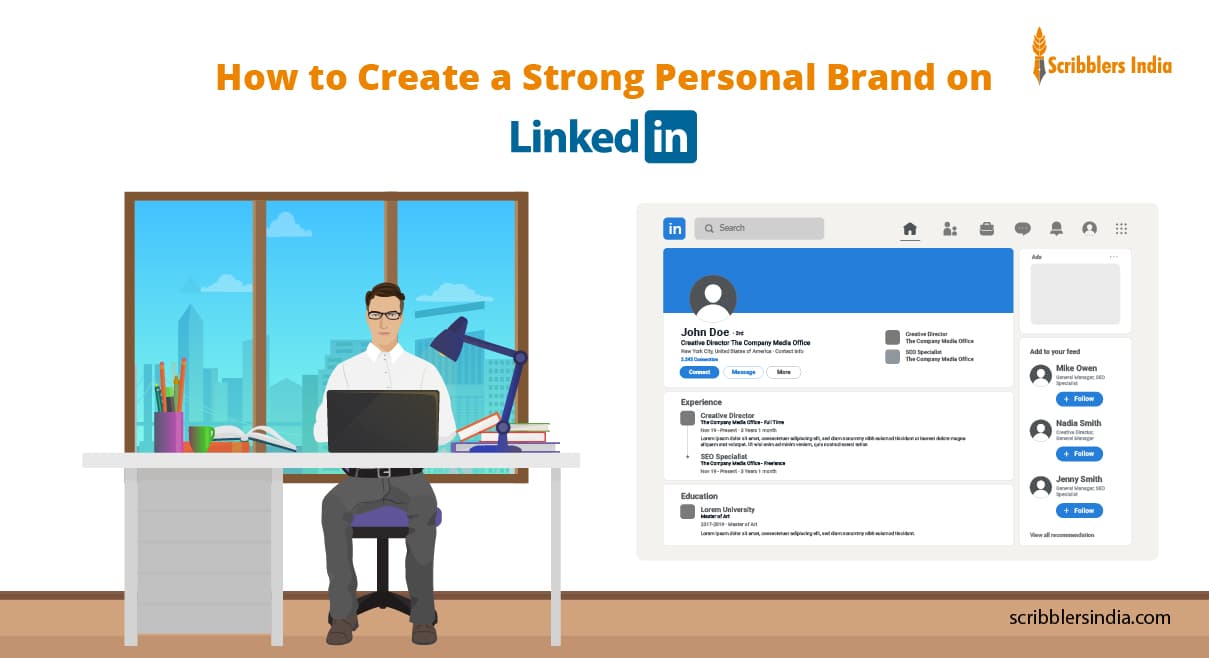
How to Build a Powerful Personal Brand on LinkedIn?
In the modern professional ecosystem, having a LinkedIn profile alone is no longer sufficient. With over a billion professionals on the platform, the real question is: are you truly standing out? Your profile is the cornerstone of your professional reputation and a strong personal brand on LinkedIn is a powerful tool for advancing your career. Personal branding is the conscious effort to shape the public perception of your skills, experience, and values. It is what builds trust, establishes credibility, and sets you apart from others. A strong personal brand on LinkedIn serves as your professional advocate, working on your behalf even when you are not. LinkedIn is the world’s premier platform for professional networking and branding. It provides the perfect ecosystem to showcase your expertise, connect with industry leaders, and unlock new opportunities. This guide will provide you with a step-by-step framework to transform your profile into a powerful branding asset. Why is a Strong Personal Brand Important for Your Career? A strong personal brand on LinkedIn is your career accelerator in dynamic modern markets. It moves you from being a passive participant to an active architect of your professional journey, creating a distinct identity that attracts success. Stand Out from the Crowd: In a job market with millions of talented individuals, a strong personal brand helps you get noticed by recruiters and collaborators for the right reasons. Build Trust and Credibility: A well-maintained profile with consistent, valuable content establishes you as a reliable and knowledgeable professional in your field, fostering trust among your connections. Attract High-Value Opportunities: Your brand works 24/7, drawing in job offers, speaking invitations, client leads, and collaboration requests that align with your career aspirations. Showcase Your Expertise: It provides a platform to demonstrate your skills and insights, positioning you as a go-to expert and a thought leadership figure in your niche. Enable Long-Term Career Growth: A powerful brand on LinkedIn is an asset that grows with you, opening doors for promotions, career pivots, and entrepreneurial ventures throughout your professional life. Amplify Your Networking Power: Networking becomes more effective when people are more likely to connect with and respond to a professional with a clear and compelling brand identity. What Do You Need For a Strong Personal Brand on LinkedIn? A standout LinkedIn profile is a strategic blend of professional presentation and personal storytelling. It immediately communicates your value proposition, making a memorable first impression that encourages viewers to learn more about you and your work. Here are the key elements you need for a strong personal brand on LinkedIn: Professional Headshot & Banner Your profile picture is your digital handshake. Use a high-quality, professional headshot where you appear approachable. Your banner image should be a visual representation of your professional field, brand, or passion, adding another layer of context. Compelling Headline Move beyond just your job title. Your headline is prime real estate to showcase your core value. Use keywords to describe what you do, who you help, and the results you deliver. For example, “Content Strategist helping SaaS startups drive organic growth.” Impactful ‘About’ Section This is your brand’s story. Write in the first person, narrating your professional journey, your mission, and your key achievements. Infuse relevant keywords naturally to enhance your LinkedIn profile optimization and end with a clear call to action. Detailed Experience Section Do not just list your responsibilities. Frame your experience in terms of impact and quantifiable achievements. Use bullet points with action verbs to describe how you added value in each role, like “Increased lead generation by 30% through targeted content campaigns.” Skills & Endorsements List skills that are relevant to your industry and future goals. A profile with at least five skills is viewed up to 17 times more. Endorsements from your network act as social proof, validating your expertise and boosting your credibility. Recommendations and Featured Section Recommendations are powerful testimonials. Request them from colleagues, clients, and managers. Use the ‘Featured’ section to showcase your best work, such as articles you have published, projects you have led, or presentations you have given. This provides tangible proof of your abilities and helps establish a strong personal brand on LinkedIn. How Can a Consistent Content Strategy Build a Strong Personal Brand on LinkedIn? A proactive LinkedIn content strategy transforms your profile from a static resume into a dynamic platform for thought leadership. Sharing valuable content consistently demonstrates your expertise, keeps you top-of-mind, and builds a community around your brand. Let’s understand how a well-planned LinkedIn content strategy helps establish your thought leadership in your niche: Define Your Niche: Identify your area of expertise and your target audience. Ask yourself what unique insights you can offer and who you want to reach. This focus makes your content more impactful. Share Diverse Content Types: Mix your content formats to keep your audience engaged. Share text posts, articles, carousels, infographics, and short videos. Each format serves a different purpose in telling your professional story. Maintain Consistency: Develop a content calendar and post regularly. Whether it is twice a week or five times a week, consistency is crucial for building momentum and staying visible to your network and the LinkedIn algorithm. Provide Genuine Value: Your content should aim to educate, inspire, or solve a problem for your audience. Focus on giving value freely rather than constantly promoting yourself. This approach builds trust and loyalty. Leverage Personal Stories: Authenticity resonates deeply. Share personal career lessons, challenges, and successes. This humanizes your brand and creates a stronger, more relatable connection with your audience. Adapt to the Indian Context: Discuss local market trends, industry challenges, and success stories relevant to India. This contextualization makes your content more relatable and valuable to your primary audience. How Can You Engage and Expand Your Network on LinkedIn for Personal Branding? Effective networking on LinkedIn is about building meaningful relationships, not just collecting connections. A strategic approach to engagement and outreach helps you expand your influence and create a supportive professional community that fosters mutual growth. Here are the
In the modern professional ecosystem, having a LinkedIn profile alone is no longer sufficient. With over a billion professionals on the platform, the real question is: are you truly standing out? Your profile is the cornerstone of your professional reputation and a strong personal brand on LinkedIn is a powerful tool for advancing your career. Personal branding is the conscious effort to shape the public perception of your skills, experience, and values. It is what builds trust, establishes credibility, and sets you apart from others. A strong personal brand on LinkedIn serves as your professional advocate, working on your behalf even when you are not. LinkedIn is the world’s premier platform for professional networking and branding. It provides the perfect ecosystem to showcase your expertise, connect with industry leaders, and unlock new opportunities. This guide will provide you with a step-by-step framework to transform your profile into a powerful branding asset. Why is a Strong Personal Brand Important for Your Career? A strong personal brand on LinkedIn is your career accelerator in dynamic modern markets. It moves you from being a passive participant to an active architect of your professional journey, creating a distinct identity that attracts success. Stand Out from the Crowd: In a job market with millions of talented individuals, a strong personal brand helps you get noticed by recruiters and collaborators for the right reasons. Build Trust and Credibility: A well-maintained profile with consistent, valuable content establishes you as a reliable and knowledgeable professional in your field, fostering trust among your connections. Attract High-Value Opportunities: Your brand works 24/7, drawing in job offers, speaking invitations, client leads, and collaboration requests that align with your career aspirations. Showcase Your Expertise: It provides a platform to demonstrate your skills and insights, positioning you as a go-to expert and a thought leadership figure in your niche. Enable Long-Term Career Growth: A powerful brand on LinkedIn is an asset that grows with you, opening doors for promotions, career pivots, and entrepreneurial ventures throughout your professional life. Amplify Your Networking Power: Networking becomes more effective when people are more likely to connect with and respond to a professional with a clear and compelling brand identity. What Do You Need For a Strong Personal Brand on LinkedIn? A standout LinkedIn profile is a strategic blend of professional presentation and personal storytelling. It immediately communicates your value proposition, making a memorable first impression that encourages viewers to learn more about you and your work. Here are the key elements you need for a strong personal brand on LinkedIn: Professional Headshot & Banner Your profile picture is your digital handshake. Use a high-quality, professional headshot where you appear approachable. Your banner image should be a visual representation of your professional field, brand, or passion, adding another layer of context. Compelling Headline Move beyond just your job title. Your headline is prime real estate to showcase your core value. Use keywords to describe what you do, who you help, and the results you deliver. For example, “Content Strategist helping SaaS startups drive organic growth.” Impactful ‘About’ Section This is your brand’s story. Write in the first person, narrating your professional journey, your mission, and your key achievements. Infuse relevant keywords naturally to enhance your LinkedIn profile optimization and end with a clear call to action. Detailed Experience Section Do not just list your responsibilities. Frame your experience in terms of impact and quantifiable achievements. Use bullet points with action verbs to describe how you added value in each role, like “Increased lead generation by 30% through targeted content campaigns.” Skills & Endorsements List skills that are relevant to your industry and future goals. A profile with at least five skills is viewed up to 17 times more. Endorsements from your network act as social proof, validating your expertise and boosting your credibility. Recommendations and Featured Section Recommendations are powerful testimonials. Request them from colleagues, clients, and managers. Use the ‘Featured’ section to showcase your best work, such as articles you have published, projects you have led, or presentations you have given. This provides tangible proof of your abilities and helps establish a strong personal brand on LinkedIn. How Can a Consistent Content Strategy Build a Strong Personal Brand on LinkedIn? A proactive LinkedIn content strategy transforms your profile from a static resume into a dynamic platform for thought leadership. Sharing valuable content consistently demonstrates your expertise, keeps you top-of-mind, and builds a community around your brand. Let’s understand how a well-planned LinkedIn content strategy helps establish your thought leadership in your niche: Define Your Niche: Identify your area of expertise and your target audience. Ask yourself what unique insights you can offer and who you want to reach. This focus makes your content more impactful. Share Diverse Content Types: Mix your content formats to keep your audience engaged. Share text posts, articles, carousels, infographics, and short videos. Each format serves a different purpose in telling your professional story. Maintain Consistency: Develop a content calendar and post regularly. Whether it is twice a week or five times a week, consistency is crucial for building momentum and staying visible to your network and the LinkedIn algorithm. Provide Genuine Value: Your content should aim to educate, inspire, or solve a problem for your audience. Focus on giving value freely rather than constantly promoting yourself. This approach builds trust and loyalty. Leverage Personal Stories: Authenticity resonates deeply. Share personal career lessons, challenges, and successes. This humanizes your brand and creates a stronger, more relatable connection with your audience. Adapt to the Indian Context: Discuss local market trends, industry challenges, and success stories relevant to India. This contextualization makes your content more relatable and valuable to your primary audience. How Can You Engage and Expand Your Network on LinkedIn for Personal Branding? Effective networking on LinkedIn is about building meaningful relationships, not just collecting connections. A strategic approach to engagement and outreach helps you expand your influence and create a supportive professional community that fosters mutual growth. Here are the
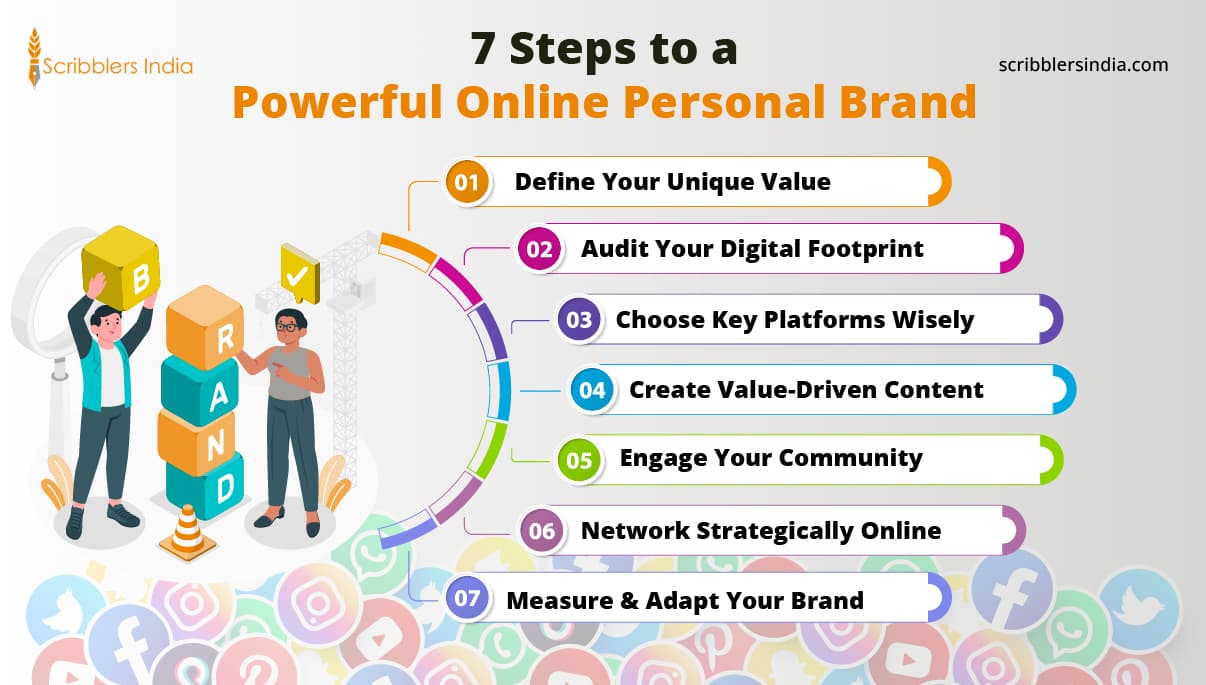
How to Build a Strong Personal Brand Online: A Comprehensive Guide
Did you know that 82% of people are more likely to trust a company when its senior executives have a strong personal brand online? This powerful connection between leadership presence and trust highlights the importance of knowing how to build personal brand online. Your personal brand is the unique combination of skills, experiences, and personality traits that you want the world to see. In the digital era, building your personal brand online has become essential for career advancement and professional growth. This guide will walk you through the essential steps on how to build personal brand online, from foundational planning to advanced strategies. This will help you craft an impactful online personal branding strategy that opens doors to new opportunities. What Is a Personal Brand and Why Does It Matter? A personal brand is the intentional representation of your professional identity, values, and expertise across digital channels. It goes beyond a simple social media presence to encompass your overall reputation and the perception others have of you in professional contexts. The concept of how to build a personal brand online has evolved dramatically in the digital age. What once required media connections or industry fame now simply needs strategic online presence. In fact, research indicates that 77% of consumers are more likely to engage with a business when the company leaders are active on social media. Strong online brands deliver tangible results: Professionals with optimized LinkedIn profiles are 40% more likely to receive opportunities through the platform 86% of consumers say authenticity is important when deciding which brands to support Consider figures like Gary Vaynerchuk, Brené Brown, or Mark Cuban. Each has distinct personal branding strategies that amplify their expertise. Without actively managing your online presence, you risk others defining your narrative or, worse, becoming professionally invisible. How to Prepare Before Building Your Online Personal Brand? Beginning your personal brand building journey requires establishing solid foundations before creating content for expanding your reach. Your first step toward understanding how to build personal brand online, is conducting a comprehensive personal brand audit. Search your name online, review your social profiles through an objective lens, and identify content that doesn’t align with your desired brand image. Identifying Your Unique Value Proposition Determine what makes you distinctive in your field. This could be specialized knowledge, unique experiences, or a particular approach to solving industry problems that others don’t offer. Defining Your Target Audience Clarity about whom you’re trying to reach is crucial. Research demographics, professional backgrounds, and online behaviors of your ideal audience to tailor your messaging effectively. Setting Clear Branding Goals Establish specific, measurable objectives for your personal brand. Whether it’s generating speaking opportunities, attracting clients, or positioning for advancement, these goals will guide your strategy. Creating Your Personal Brand Statement Develop a concise statement (1-2 sentences) that articulates who you are professionally, whom you serve, and the unique value you provide. This statement will guide all your online activities. What Are the Steps to Build Your Personal Brand Online? Building your personal brand online requires a systematic approach that moves from planning to execution to optimization. Follow these seven essential steps to create a strong professional presence that resonates with your target audience. Define Your Brand Purpose and Positioning Clarify your professional “why” and identify where you fit within your industry landscape. Your positioning should highlight your unique strengths while addressing specific audience needs. Audit and Clean Up Your Current Online Presence Search your name online and review all social profiles critically. Remove or update outdated content and ensure privacy settings align with your personal branding strategy. Optimize Your Primary Digital Platforms Select 2-3 key platforms based on your audience research. Create comprehensive profiles with professional photos, compelling bios, and consistent visual elements across all channels. Develop Your Content Strategy Create a strategy around what content types will showcase your expertise best. Create a sustainable publishing schedule that balances quality with consistency to build audience expectations. Build Strategic Professional Networks Connect intentionally with peers, industry leaders, and target audience members. Focus on quality over quantity, establishing meaningful relationships rather than collecting connections. Monitor and Manage Your Online Reputation Set up alerts to track mentions of your name and respond promptly to feedback. Address negative comments professionally and amplify positive feedback to strengthen your brand perception. Measure Results and Refine Your Approach Track engagement metrics, audience growth, and professional opportunities generated. Use data insights to adjust your strategy, doubling down on what works and revising what doesn’t. When learning how to build a personal brand online, following a proven framework increases your chances of success. These steps provide a roadmap that professionals across industries can adapt to their specific needs and goals. What Are the Core Elements of a Strong Online Personal Brand Strategy? A successful online personal branding strategy combines several essential elements that work together to create a cohesive professional identity. The foundation of your strategy for how to build personal brand online begins with your brand voice, the distinctive tone and style that reflects your personality while maintaining professionalism. This voice should remain consistent whether you are writing blog posts or responding to comments. Here are the core elements of a robust online personal branding strategy: Visual Branding Elements: Select consistent colors, typography, and imagery that reflect your personal brand attributes. Research shows people remember visual elements 65% more effectively than text alone. Content Pillars: Identify 3-5 core topics that showcase your expertise and align with audience interests. These content pillars will guide your content creation and establish topical authority in your field. Cross-Platform Consistency: Maintain cohesive messaging across platforms while adapting to each platform’s unique strengths. Your LinkedIn profile should connect thematically with your Twitter presence, even with different content formats. Authenticity vs. Curation: Finding the balance between showing your authentic self and maintaining professional standards is crucial. According to Stackla, 86% of consumers say authenticity is important when deciding which brands to support. Which Online Platforms Should You Use to Build Your Personal Brand? Platform
Did you know that 82% of people are more likely to trust a company when its senior executives have a strong personal brand online? This powerful connection between leadership presence and trust highlights the importance of knowing how to build personal brand online. Your personal brand is the unique combination of skills, experiences, and personality traits that you want the world to see. In the digital era, building your personal brand online has become essential for career advancement and professional growth. This guide will walk you through the essential steps on how to build personal brand online, from foundational planning to advanced strategies. This will help you craft an impactful online personal branding strategy that opens doors to new opportunities. What Is a Personal Brand and Why Does It Matter? A personal brand is the intentional representation of your professional identity, values, and expertise across digital channels. It goes beyond a simple social media presence to encompass your overall reputation and the perception others have of you in professional contexts. The concept of how to build a personal brand online has evolved dramatically in the digital age. What once required media connections or industry fame now simply needs strategic online presence. In fact, research indicates that 77% of consumers are more likely to engage with a business when the company leaders are active on social media. Strong online brands deliver tangible results: Professionals with optimized LinkedIn profiles are 40% more likely to receive opportunities through the platform 86% of consumers say authenticity is important when deciding which brands to support Consider figures like Gary Vaynerchuk, Brené Brown, or Mark Cuban. Each has distinct personal branding strategies that amplify their expertise. Without actively managing your online presence, you risk others defining your narrative or, worse, becoming professionally invisible. How to Prepare Before Building Your Online Personal Brand? Beginning your personal brand building journey requires establishing solid foundations before creating content for expanding your reach. Your first step toward understanding how to build personal brand online, is conducting a comprehensive personal brand audit. Search your name online, review your social profiles through an objective lens, and identify content that doesn’t align with your desired brand image. Identifying Your Unique Value Proposition Determine what makes you distinctive in your field. This could be specialized knowledge, unique experiences, or a particular approach to solving industry problems that others don’t offer. Defining Your Target Audience Clarity about whom you’re trying to reach is crucial. Research demographics, professional backgrounds, and online behaviors of your ideal audience to tailor your messaging effectively. Setting Clear Branding Goals Establish specific, measurable objectives for your personal brand. Whether it’s generating speaking opportunities, attracting clients, or positioning for advancement, these goals will guide your strategy. Creating Your Personal Brand Statement Develop a concise statement (1-2 sentences) that articulates who you are professionally, whom you serve, and the unique value you provide. This statement will guide all your online activities. What Are the Steps to Build Your Personal Brand Online? Building your personal brand online requires a systematic approach that moves from planning to execution to optimization. Follow these seven essential steps to create a strong professional presence that resonates with your target audience. Define Your Brand Purpose and Positioning Clarify your professional “why” and identify where you fit within your industry landscape. Your positioning should highlight your unique strengths while addressing specific audience needs. Audit and Clean Up Your Current Online Presence Search your name online and review all social profiles critically. Remove or update outdated content and ensure privacy settings align with your personal branding strategy. Optimize Your Primary Digital Platforms Select 2-3 key platforms based on your audience research. Create comprehensive profiles with professional photos, compelling bios, and consistent visual elements across all channels. Develop Your Content Strategy Create a strategy around what content types will showcase your expertise best. Create a sustainable publishing schedule that balances quality with consistency to build audience expectations. Build Strategic Professional Networks Connect intentionally with peers, industry leaders, and target audience members. Focus on quality over quantity, establishing meaningful relationships rather than collecting connections. Monitor and Manage Your Online Reputation Set up alerts to track mentions of your name and respond promptly to feedback. Address negative comments professionally and amplify positive feedback to strengthen your brand perception. Measure Results and Refine Your Approach Track engagement metrics, audience growth, and professional opportunities generated. Use data insights to adjust your strategy, doubling down on what works and revising what doesn’t. When learning how to build a personal brand online, following a proven framework increases your chances of success. These steps provide a roadmap that professionals across industries can adapt to their specific needs and goals. What Are the Core Elements of a Strong Online Personal Brand Strategy? A successful online personal branding strategy combines several essential elements that work together to create a cohesive professional identity. The foundation of your strategy for how to build personal brand online begins with your brand voice, the distinctive tone and style that reflects your personality while maintaining professionalism. This voice should remain consistent whether you are writing blog posts or responding to comments. Here are the core elements of a robust online personal branding strategy: Visual Branding Elements: Select consistent colors, typography, and imagery that reflect your personal brand attributes. Research shows people remember visual elements 65% more effectively than text alone. Content Pillars: Identify 3-5 core topics that showcase your expertise and align with audience interests. These content pillars will guide your content creation and establish topical authority in your field. Cross-Platform Consistency: Maintain cohesive messaging across platforms while adapting to each platform’s unique strengths. Your LinkedIn profile should connect thematically with your Twitter presence, even with different content formats. Authenticity vs. Curation: Finding the balance between showing your authentic self and maintaining professional standards is crucial. According to Stackla, 86% of consumers say authenticity is important when deciding which brands to support. Which Online Platforms Should You Use to Build Your Personal Brand? Platform

How Does a Content-Led GTM Strategy Drive Product Success? (+ examples)
The rise of self-service buying journeys and information-empowered customers has transformed how successful companies introduce products to market. According to a study by Gartner, 75% of business buyers prefer a red-free sales experience. This fundamental shift in buyer behavior has given rise to businesses adopting a content-led go-to-market strategy. This approach leverages high-quality content as the primary driver of awareness, education, and conversion throughout the customer journey. This blog explores the key facets of a content-led GTM strategy along with an analysis of successful real-world examples to help you understand its effectiveness. What is a content-led go-to-market strategy? A content-led go-to-market strategy uses strategic content assets as the primary driver to attract, educate, and convert customers when launching a product or entering a new market. This approach positions valuable information ahead of sales outreach, allowing customers to self-educate and move through buying stages at their own pace. Unlike traditional GTM approaches that rely heavily on outbound sales motions, a content-led GTM strategy empowers prospects to discover and evaluate your offering through educational content, thought leadership, and product information. This aligns with modern buying preferences, where customers increasingly expect to research and evaluate products on their terms before engaging with sales representatives. This go-to-market approach is particularly effective for complex offerings that require education and for reaching audiences skeptical of traditional marketing and sales tactics. According to recent research, 80% of decision-makers prefer to get information from articles rather than advertisements. What are the key components of a go-to-market strategy? A comprehensive go-to-market strategy includes market analysis, target audience definition, value proposition, competitive positioning, pricing strategy, channel selection, sales approach, and success metrics. Content plays a critical role in communicating each component effectively to your target audience. A successful GTM strategy requires alignment across multiple business functions: Market Analysis: Understanding market dynamics, size, and growth opportunities helps focus your content marketing for product launch efforts on the most promising segments and pain points. Target Audience: Detailed buyer personas guide content creation by revealing specific challenges, information needs, and preferred content formats for each decision-maker in the buying process. Value Proposition: Your unique value must be clearly articulated through content that communicates specific benefits rather than just features, helping prospects understand why your solution matters. Competitive Differentiation: Content that highlights your unique advantages helps position your offering distinctly in the market, addressing common competitive objections before they arise. Channel Strategy: Identifying the most effective channels for content distribution ensures your message reaches your audience where they already seek information about solutions like yours. In a content-led go-to-market strategy, each of these components is supported by specific content types designed to address customer questions and move prospects through their buying journey without heavy reliance on sales intervention. How does a content-led GTM strategy deliver growth? A content-led GTM strategy delivers growth by building trust through education, shortening sales cycles, reducing customer acquisition costs, scaling more efficiently than sales-led approaches, and providing valuable data for continuous optimization. This approach aligns with how modern buyers prefer to purchase. The growth impact of this approach is substantial for several reasons: Trust Building: By focusing on customer education rather than product promotion, you establish authority and credibility early in the relationship. Most successful B2B content marketers aim to ensure that their audience views their organization as a credible and trusted resource. Self-Service Purchasing: Modern buyers prefer self-directed research, with most completing over 72% of their evaluation process before contacting vendors. Content-led approaches enable this preferred buying behavior, removing friction from the purchase process. Compounding Returns: Unlike paid advertising that stops working when you stop paying, quality content continues generating leads and conversions long after creation. Data-Driven Insights: Content engagement provides valuable signals about prospect interests, challenges, and buying readiness that can inform both content optimization and product development. A well-executed content-driven go-to-market approach creates a sustainable engine for attracting qualified prospects while building a valuable content library that continues delivering returns over time. How to develop and implement a content-led GTM strategy? Developing an effective content-led GTM strategy involves mapping buyer journeys, identifying content gaps, creating strategic assets, implementing distribution plans, measuring performance, and optimizing based on results. Each step ensures your content effectively supports your market entry goals. 1. Define Your Target Audience and Buyer’s Journey Start by creating detailed buyer personas that capture not just demographics but information needs at each stage of the purchase process. Map the specific questions and concerns prospects have as they move from awareness to consideration to decision, identifying content opportunities for each stage. 2. Audit Existing Content and Identify Gaps Evaluate your current content assets against the buyer journey map to identify coverage gaps. Where are prospects likely to get stuck due to missing information? Which competitor objections remain unaddressed? This gap analysis becomes your content creation roadmap. 3. Develop a Content Strategy and Calendar Create a strategic content plan that addresses identified gaps while maintaining consistent messaging across all assets. Your plan should include content types, topics, publishing cadence, and responsibilities. According to Semrush’s research, companies with documented content strategies are 3x more likely to report success. 4. Create High-Quality, Targeted Content Develop content assets that directly address buyer needs at each journey stage. Focus on quality over quantity, ensuring each piece delivers genuine value while subtly positioning your offering as the logical solution. This might include educational blog posts, comparison guides, case studies, and product demonstrations. 5. Implement Distribution and Promotion Plan Even exceptional content requires strategic distribution. Develop channel-specific promotion plans to ensure your content reaches your target audience. This includes owned channels (website, email), social media, partnerships, and potentially paid promotion for high-value assets. 6. Measure Performance and Optimize Establish clear KPIs aligned with business objectives and regularly evaluate content performance against these metrics. Look beyond vanity metrics to understand how content influences pipeline and revenue. Use these insights to refine your GTM content strategy continuously. What are the Examples of Successful Content-led Go To Market Strategy? These companies have successfully implemented content-driven go-to-market
The rise of self-service buying journeys and information-empowered customers has transformed how successful companies introduce products to market. According to a study by Gartner, 75% of business buyers prefer a red-free sales experience. This fundamental shift in buyer behavior has given rise to businesses adopting a content-led go-to-market strategy. This approach leverages high-quality content as the primary driver of awareness, education, and conversion throughout the customer journey. This blog explores the key facets of a content-led GTM strategy along with an analysis of successful real-world examples to help you understand its effectiveness. What is a content-led go-to-market strategy? A content-led go-to-market strategy uses strategic content assets as the primary driver to attract, educate, and convert customers when launching a product or entering a new market. This approach positions valuable information ahead of sales outreach, allowing customers to self-educate and move through buying stages at their own pace. Unlike traditional GTM approaches that rely heavily on outbound sales motions, a content-led GTM strategy empowers prospects to discover and evaluate your offering through educational content, thought leadership, and product information. This aligns with modern buying preferences, where customers increasingly expect to research and evaluate products on their terms before engaging with sales representatives. This go-to-market approach is particularly effective for complex offerings that require education and for reaching audiences skeptical of traditional marketing and sales tactics. According to recent research, 80% of decision-makers prefer to get information from articles rather than advertisements. What are the key components of a go-to-market strategy? A comprehensive go-to-market strategy includes market analysis, target audience definition, value proposition, competitive positioning, pricing strategy, channel selection, sales approach, and success metrics. Content plays a critical role in communicating each component effectively to your target audience. A successful GTM strategy requires alignment across multiple business functions: Market Analysis: Understanding market dynamics, size, and growth opportunities helps focus your content marketing for product launch efforts on the most promising segments and pain points. Target Audience: Detailed buyer personas guide content creation by revealing specific challenges, information needs, and preferred content formats for each decision-maker in the buying process. Value Proposition: Your unique value must be clearly articulated through content that communicates specific benefits rather than just features, helping prospects understand why your solution matters. Competitive Differentiation: Content that highlights your unique advantages helps position your offering distinctly in the market, addressing common competitive objections before they arise. Channel Strategy: Identifying the most effective channels for content distribution ensures your message reaches your audience where they already seek information about solutions like yours. In a content-led go-to-market strategy, each of these components is supported by specific content types designed to address customer questions and move prospects through their buying journey without heavy reliance on sales intervention. How does a content-led GTM strategy deliver growth? A content-led GTM strategy delivers growth by building trust through education, shortening sales cycles, reducing customer acquisition costs, scaling more efficiently than sales-led approaches, and providing valuable data for continuous optimization. This approach aligns with how modern buyers prefer to purchase. The growth impact of this approach is substantial for several reasons: Trust Building: By focusing on customer education rather than product promotion, you establish authority and credibility early in the relationship. Most successful B2B content marketers aim to ensure that their audience views their organization as a credible and trusted resource. Self-Service Purchasing: Modern buyers prefer self-directed research, with most completing over 72% of their evaluation process before contacting vendors. Content-led approaches enable this preferred buying behavior, removing friction from the purchase process. Compounding Returns: Unlike paid advertising that stops working when you stop paying, quality content continues generating leads and conversions long after creation. Data-Driven Insights: Content engagement provides valuable signals about prospect interests, challenges, and buying readiness that can inform both content optimization and product development. A well-executed content-driven go-to-market approach creates a sustainable engine for attracting qualified prospects while building a valuable content library that continues delivering returns over time. How to develop and implement a content-led GTM strategy? Developing an effective content-led GTM strategy involves mapping buyer journeys, identifying content gaps, creating strategic assets, implementing distribution plans, measuring performance, and optimizing based on results. Each step ensures your content effectively supports your market entry goals. 1. Define Your Target Audience and Buyer’s Journey Start by creating detailed buyer personas that capture not just demographics but information needs at each stage of the purchase process. Map the specific questions and concerns prospects have as they move from awareness to consideration to decision, identifying content opportunities for each stage. 2. Audit Existing Content and Identify Gaps Evaluate your current content assets against the buyer journey map to identify coverage gaps. Where are prospects likely to get stuck due to missing information? Which competitor objections remain unaddressed? This gap analysis becomes your content creation roadmap. 3. Develop a Content Strategy and Calendar Create a strategic content plan that addresses identified gaps while maintaining consistent messaging across all assets. Your plan should include content types, topics, publishing cadence, and responsibilities. According to Semrush’s research, companies with documented content strategies are 3x more likely to report success. 4. Create High-Quality, Targeted Content Develop content assets that directly address buyer needs at each journey stage. Focus on quality over quantity, ensuring each piece delivers genuine value while subtly positioning your offering as the logical solution. This might include educational blog posts, comparison guides, case studies, and product demonstrations. 5. Implement Distribution and Promotion Plan Even exceptional content requires strategic distribution. Develop channel-specific promotion plans to ensure your content reaches your target audience. This includes owned channels (website, email), social media, partnerships, and potentially paid promotion for high-value assets. 6. Measure Performance and Optimize Establish clear KPIs aligned with business objectives and regularly evaluate content performance against these metrics. Look beyond vanity metrics to understand how content influences pipeline and revenue. Use these insights to refine your GTM content strategy continuously. What are the Examples of Successful Content-led Go To Market Strategy? These companies have successfully implemented content-driven go-to-market

Understanding Content Led Growth: How Does it Impact Marketers?
In the modern digital ecosystem, traditional marketing approaches are becoming less effective as consumers grow increasingly selective about the content they consume. The rise of ad blockers, content saturation, and audience fragmentation has created new challenges for marketers seeking sustainable growth. This shift has given rise to content led growth, a strategic approach that positions valuable content at the center of your business growth strategy. Unlike interruptive advertising, content-led approaches focus on building relationships through information and insights that genuinely help your audience solve problems and make decisions. This article explores what is content led growth, its different aspects, benefits, mistakes to avoid and more. Let’s get started. What is Content-Led Growth? Content-led growth is a strategic approach that uses high-quality, valuable content as the primary driver for attracting, engaging, and converting customers throughout their journey. However, unlike traditional marketing, it focuses on building trust and relationships before pushing for sales. This strategy positions your brand as a trusted advisor rather than just a solution provider. By consistently delivering relevant, helpful content that addresses your audience’s needs, challenges, and questions, you create multiple touchpoints that guide prospects naturally toward your products or services. The foundation of content led growth lies in understanding that modern buyers conduct extensive research before making purchase decisions. By being present with valuable information during this research phase, you influence decision-making and build credibility that translates into business growth. Why Content-Led Marketing Strategies Are Effective for Brands? Content-led marketing strategies are more effective than ever because they align with modern buying behaviors, build trust in an era of skepticism, offer measurable ROI, and provide a sustainable competitive advantage through accumulated content assets. This approach meets customers where they are in their information-seeking journey. The effectiveness of content led marketing stems from several key factors: Changed consumer behavior: According to reports, 87% of B2B buyers conduct online research before speaking with a vendor, making content crucial for early-stage influence. Trust building: In an era of declining trust in traditional advertising, content that educates rather than sells builds credibility and authentic connections. Search engine prioritization: Search algorithms increasingly favor comprehensive, valuable content that answers user questions, rewarding brands that invest in quality information. Multi-channel amplification: Quality content can be repurposed across numerous platforms, extending reach and reinforcing messaging through different formats. Measurable impact: Modern analytics tools allow precise tracking of content performance, enabling data-driven optimization of your content led growth strategy. What are the Benefits of Content Led Growth? Content led growth delivers multiple benefits including enhanced brand authority, increased organic visibility, reduced customer acquisition costs, higher conversion rates, and valuable audience insights that drive product development and customer retention. This approach creates sustainable growth momentum. Establishes Authority and Trust Consistently producing insightful, valuable content positions your brand as a thought leader in your industry. This perceived expertise accelerates trust-building with potential customers who are more likely to purchase from brands they view as authorities. According to experts, 96% of the most successful content marketers agree their audience views their organization as a trusted resource. Generates Sustainable Organic Traffic Quality content creates a compounding effect on your digital presence. While paid advertising stops working the moment you stop funding it, content continues attracting visitors months or even years after publication. Reduces Customer Acquisition Costs Research shows that content led marketing costs 62% less than traditional marketing while generating approximately three times as many leads per dollar spent. As content accumulates, acquisition costs typically decrease while effectiveness increases. Shortens Sales Cycles Educational content that addresses common questions, concerns, and objections helps prospects move through the decision-making process more efficiently. When customers enter the sales conversation better informed, the path to purchase becomes shorter and more direct. Provides Valuable Customer Insights Content engagement metrics reveal what topics, problems, and solutions resonate most with your audience. These insights drive not only better content creation but also product development, sales approaches, and customer retention strategies. What are the Key Aspects of Content Led Growth? The different aspects of content led growth include blogging operations, content marketing, email marketing, thought leadership, social media marketing, and video marketing. Each component plays a specific role in attracting and nurturing your audience. Blogging Operations Blogging serves as the foundation of most content led growth strategies, establishing your digital home base for in-depth content. Regular publishing of valuable blog content improves search visibility while building a repository of information that addresses audience needs throughout their journey. Content Marketing Content marketing playbook extends beyond blogging to include ebooks, whitepapers, case studies, templates, and other valuable resources that solve specific problems. These assets work as powerful lead generation tools by offering substantial value in exchange for contact information. Social Media Marketing (SMM) Social media platforms amplify your content reach while facilitating direct engagement with your audience. Each platform requires tailored social media content approaches that match both audience expectations and platform dynamics, extending your content’s impact beyond your owned channels. Email Marketing Email marketing nurtures relationships with prospects and customers through personalized content delivery. By segmenting your audience and delivering relevant content based on their interests and journey stage, you maintain connections and guide them toward conversion. Thought Leadership Thought leadership content positions your brand at the forefront of industry trends and innovations. By sharing unique insights, research, and perspectives, you differentiate your brand and attract audience segments specifically interested in forward-thinking approaches. Video Marketing Visual content addresses diverse learning preferences while increasing engagement and retention of information. From educational tutorials to customer testimonials, video formats create emotional connections and simplify complex concepts in ways text alone cannot achieve. How to Create a Content Led Growth Plan? Creating a content led growth plan involves knowing your audience, creating engaging content, distributing it purposefully, empowering your team to create content, and repurposing valuable assets. This systematic approach ensures your content efforts align with business goals. Step 1: Know Your Audience Effective content led growth begins with deep audience understanding through data analysis, surveys, and direct conversations. Create detailed buyer personas
In the modern digital ecosystem, traditional marketing approaches are becoming less effective as consumers grow increasingly selective about the content they consume. The rise of ad blockers, content saturation, and audience fragmentation has created new challenges for marketers seeking sustainable growth. This shift has given rise to content led growth, a strategic approach that positions valuable content at the center of your business growth strategy. Unlike interruptive advertising, content-led approaches focus on building relationships through information and insights that genuinely help your audience solve problems and make decisions. This article explores what is content led growth, its different aspects, benefits, mistakes to avoid and more. Let’s get started. What is Content-Led Growth? Content-led growth is a strategic approach that uses high-quality, valuable content as the primary driver for attracting, engaging, and converting customers throughout their journey. However, unlike traditional marketing, it focuses on building trust and relationships before pushing for sales. This strategy positions your brand as a trusted advisor rather than just a solution provider. By consistently delivering relevant, helpful content that addresses your audience’s needs, challenges, and questions, you create multiple touchpoints that guide prospects naturally toward your products or services. The foundation of content led growth lies in understanding that modern buyers conduct extensive research before making purchase decisions. By being present with valuable information during this research phase, you influence decision-making and build credibility that translates into business growth. Why Content-Led Marketing Strategies Are Effective for Brands? Content-led marketing strategies are more effective than ever because they align with modern buying behaviors, build trust in an era of skepticism, offer measurable ROI, and provide a sustainable competitive advantage through accumulated content assets. This approach meets customers where they are in their information-seeking journey. The effectiveness of content led marketing stems from several key factors: Changed consumer behavior: According to reports, 87% of B2B buyers conduct online research before speaking with a vendor, making content crucial for early-stage influence. Trust building: In an era of declining trust in traditional advertising, content that educates rather than sells builds credibility and authentic connections. Search engine prioritization: Search algorithms increasingly favor comprehensive, valuable content that answers user questions, rewarding brands that invest in quality information. Multi-channel amplification: Quality content can be repurposed across numerous platforms, extending reach and reinforcing messaging through different formats. Measurable impact: Modern analytics tools allow precise tracking of content performance, enabling data-driven optimization of your content led growth strategy. What are the Benefits of Content Led Growth? Content led growth delivers multiple benefits including enhanced brand authority, increased organic visibility, reduced customer acquisition costs, higher conversion rates, and valuable audience insights that drive product development and customer retention. This approach creates sustainable growth momentum. Establishes Authority and Trust Consistently producing insightful, valuable content positions your brand as a thought leader in your industry. This perceived expertise accelerates trust-building with potential customers who are more likely to purchase from brands they view as authorities. According to experts, 96% of the most successful content marketers agree their audience views their organization as a trusted resource. Generates Sustainable Organic Traffic Quality content creates a compounding effect on your digital presence. While paid advertising stops working the moment you stop funding it, content continues attracting visitors months or even years after publication. Reduces Customer Acquisition Costs Research shows that content led marketing costs 62% less than traditional marketing while generating approximately three times as many leads per dollar spent. As content accumulates, acquisition costs typically decrease while effectiveness increases. Shortens Sales Cycles Educational content that addresses common questions, concerns, and objections helps prospects move through the decision-making process more efficiently. When customers enter the sales conversation better informed, the path to purchase becomes shorter and more direct. Provides Valuable Customer Insights Content engagement metrics reveal what topics, problems, and solutions resonate most with your audience. These insights drive not only better content creation but also product development, sales approaches, and customer retention strategies. What are the Key Aspects of Content Led Growth? The different aspects of content led growth include blogging operations, content marketing, email marketing, thought leadership, social media marketing, and video marketing. Each component plays a specific role in attracting and nurturing your audience. Blogging Operations Blogging serves as the foundation of most content led growth strategies, establishing your digital home base for in-depth content. Regular publishing of valuable blog content improves search visibility while building a repository of information that addresses audience needs throughout their journey. Content Marketing Content marketing playbook extends beyond blogging to include ebooks, whitepapers, case studies, templates, and other valuable resources that solve specific problems. These assets work as powerful lead generation tools by offering substantial value in exchange for contact information. Social Media Marketing (SMM) Social media platforms amplify your content reach while facilitating direct engagement with your audience. Each platform requires tailored social media content approaches that match both audience expectations and platform dynamics, extending your content’s impact beyond your owned channels. Email Marketing Email marketing nurtures relationships with prospects and customers through personalized content delivery. By segmenting your audience and delivering relevant content based on their interests and journey stage, you maintain connections and guide them toward conversion. Thought Leadership Thought leadership content positions your brand at the forefront of industry trends and innovations. By sharing unique insights, research, and perspectives, you differentiate your brand and attract audience segments specifically interested in forward-thinking approaches. Video Marketing Visual content addresses diverse learning preferences while increasing engagement and retention of information. From educational tutorials to customer testimonials, video formats create emotional connections and simplify complex concepts in ways text alone cannot achieve. How to Create a Content Led Growth Plan? Creating a content led growth plan involves knowing your audience, creating engaging content, distributing it purposefully, empowering your team to create content, and repurposing valuable assets. This systematic approach ensures your content efforts align with business goals. Step 1: Know Your Audience Effective content led growth begins with deep audience understanding through data analysis, surveys, and direct conversations. Create detailed buyer personas

Why Personal Branding Is Important: From Startup Founder to Industry Leader
Personal branding is the strategic process of creating, positioning, and maintaining a distinctive professional identity that showcases your expertise, values, and unique offerings to your target audience. For startup CEOs, it’s the difference between being just another business leader and becoming a recognized industry authority. An incredible 43% of your company’s market value depends on your reputation as a CEO. This reveals why personal branding is important for modern business leaders. In fact, 82% of people trust companies more when their senior executives maintain an active social media presence. Have you considered how your online presence affects your bottom line? The impact of personal branding extends beyond trust-building. Specifically, leads generated through personal branding convert seven times more frequently than traditional company branding efforts. Furthermore, with 77% of consumers more likely to buy from companies whose CEOs engage on social media, your personal brand directly influences your business success. This comprehensive guide will show you how to transform your professional image from a startup CEO to an industry leader, covering everything from building your foundation to scaling your influence alongside your business growth. Why Personal Branding is Important for Startup CEOs? Personal branding has become a strategic necessity for startup CEOs as the business landscape undergoes rapid transformation. The traditional boundaries between professional and personal spheres continue to blur, creating new opportunities and challenges for leadership visibility. How does personal branding affect investor confidence? Personal branding has become a strategic necessity for startup CEOs as the business landscape undergoes rapid transformation. The traditional boundaries between professional and personal spheres continue to blur, creating new opportunities and challenges for leadership visibility. Leadership patterns have shifted dramatically, primarily due to technological advancements and changing stakeholder dynamics. Modern CEOs must adapt their leadership approach to remain effective in an increasingly complex business environment. Consequently, those who master self-promotion gain a significant advantage in attracting investors and building customer trust. Branding demands commitment; commitment to continual re-invention; striking chords with people to stir their emotions; and commitment to imagination. It is easy to be cynical about such things, much harder to be successful. ~ Sir Richard Branson Impact of digital transformation on personal visibility The digital age has fundamentally altered how CEOs connect with their audiences. Your online reputation as a CEO directly influences your company’s market perception and stakeholder relationships. Platforms like LinkedIn have proven that video posts receive significantly more engagement than text-based updates. The rise of digital channels has created unprecedented opportunities for CEOs to showcase their expertise and build authority. Your personal brand helps cut through the noise and establishes an authentic voice in a crowded digital landscape. This visibility becomes particularly crucial as: Employees seek leaders who demonstrate authentic leadership Investors evaluate founders based on their digital presence and thought leadership Customers increasingly trust companies with visible, engaging leadership Partners and stakeholders expect regular, meaningful interactions Rising expectations from stakeholders What do your stakeholders really want from you beyond quarterly results? Stakeholder management has evolved into a complex responsibility that demands strategic personal branding. Studies show that transparent communication from CEOs significantly impacts stakeholder trust and engagement. Therefore, your role extends beyond operational leadership to building and maintaining relationships with various stakeholder groups. The modern stakeholder landscape requires CEOs to maintain open lines of communication and demonstrate strong leadership qualities. Your professional identity serves as a bridge between your company’s vision and stakeholder expectations, creating an environment where collaboration thrives. Building trust through personal branding becomes particularly vital as stakeholders now expect regular updates about company performance, future plans, and potential challenges. This transparency helps foster stronger relationships and ensures stakeholders feel valued and heard throughout their journey with your company. How to Build Your Foundation as an Entrepreneurial Brand? A strong personal brand starts with authenticity, a clear value proposition, and a compelling mission statement that resonates with your target audience. Defining your authentic leadership voice Self-awareness forms the cornerstone of authentic leadership. Studies show that leaders who understand their strengths, values, and emotions create stronger connections with their teams. Subsequently, this self-awareness enables you to communicate with clarity and confidence, essential traits for establishing trust with stakeholders. To develop your authentic voice, focus on aligning your verbal, vocal, and visual communication channels. Indeed, your words, tone, and body language must complement each other to project credibility. Although receiving conflicting advice about leadership style is common, staying true to your natural tendencies while incorporating constructive feedback creates a more genuine presence. Identifying your unique value proposition Your value proposition serves as a promise of value to be delivered, setting you apart from other leaders in your industry. What specific problem do you solve better than anyone else in your field? Essentially, it must address three crucial elements: Relevancy: How you solve specific problems Quantified value: Clear benefits you provide Differentiation: Why stakeholders should choose you A compelling value proposition primarily focuses on outcomes rather than services. Your unique value should reflect highly desired results that your audience seeks, creating what experts call a “castle in the mind” for your stakeholders. Creating your personal brand mission statement A personal brand mission statement is a concise declaration that articulates your purpose, values, and the unique impact you aim to make in your industry and beyond. Your personal brand mission statement encapsulates who you are, what you do, and the impact you aim to make. Notably, this statement should be brief yet powerful, typically spanning 4-5 sentences. Meanwhile, it must embody your expertise, tell your brand story, and define your core values. When crafting your mission statement, focus on transparency and authenticity. A study in the Leadership and Organization Development Journal reveals that authentic leadership serves as the strongest predictor of job satisfaction. Your mission statement should reflect this authenticity while highlighting your commitment to continuous growth and excellence. How to Leverage Digital Platforms for Brand Growth? Selecting the right digital platforms forms the cornerstone of a successful personal brand strategy. According to recent data, 58% of Inc. 5000 CEOs
Personal branding is the strategic process of creating, positioning, and maintaining a distinctive professional identity that showcases your expertise, values, and unique offerings to your target audience. For startup CEOs, it’s the difference between being just another business leader and becoming a recognized industry authority. An incredible 43% of your company’s market value depends on your reputation as a CEO. This reveals why personal branding is important for modern business leaders. In fact, 82% of people trust companies more when their senior executives maintain an active social media presence. Have you considered how your online presence affects your bottom line? The impact of personal branding extends beyond trust-building. Specifically, leads generated through personal branding convert seven times more frequently than traditional company branding efforts. Furthermore, with 77% of consumers more likely to buy from companies whose CEOs engage on social media, your personal brand directly influences your business success. This comprehensive guide will show you how to transform your professional image from a startup CEO to an industry leader, covering everything from building your foundation to scaling your influence alongside your business growth. Why Personal Branding is Important for Startup CEOs? Personal branding has become a strategic necessity for startup CEOs as the business landscape undergoes rapid transformation. The traditional boundaries between professional and personal spheres continue to blur, creating new opportunities and challenges for leadership visibility. How does personal branding affect investor confidence? Personal branding has become a strategic necessity for startup CEOs as the business landscape undergoes rapid transformation. The traditional boundaries between professional and personal spheres continue to blur, creating new opportunities and challenges for leadership visibility. Leadership patterns have shifted dramatically, primarily due to technological advancements and changing stakeholder dynamics. Modern CEOs must adapt their leadership approach to remain effective in an increasingly complex business environment. Consequently, those who master self-promotion gain a significant advantage in attracting investors and building customer trust. Branding demands commitment; commitment to continual re-invention; striking chords with people to stir their emotions; and commitment to imagination. It is easy to be cynical about such things, much harder to be successful. ~ Sir Richard Branson Impact of digital transformation on personal visibility The digital age has fundamentally altered how CEOs connect with their audiences. Your online reputation as a CEO directly influences your company’s market perception and stakeholder relationships. Platforms like LinkedIn have proven that video posts receive significantly more engagement than text-based updates. The rise of digital channels has created unprecedented opportunities for CEOs to showcase their expertise and build authority. Your personal brand helps cut through the noise and establishes an authentic voice in a crowded digital landscape. This visibility becomes particularly crucial as: Employees seek leaders who demonstrate authentic leadership Investors evaluate founders based on their digital presence and thought leadership Customers increasingly trust companies with visible, engaging leadership Partners and stakeholders expect regular, meaningful interactions Rising expectations from stakeholders What do your stakeholders really want from you beyond quarterly results? Stakeholder management has evolved into a complex responsibility that demands strategic personal branding. Studies show that transparent communication from CEOs significantly impacts stakeholder trust and engagement. Therefore, your role extends beyond operational leadership to building and maintaining relationships with various stakeholder groups. The modern stakeholder landscape requires CEOs to maintain open lines of communication and demonstrate strong leadership qualities. Your professional identity serves as a bridge between your company’s vision and stakeholder expectations, creating an environment where collaboration thrives. Building trust through personal branding becomes particularly vital as stakeholders now expect regular updates about company performance, future plans, and potential challenges. This transparency helps foster stronger relationships and ensures stakeholders feel valued and heard throughout their journey with your company. How to Build Your Foundation as an Entrepreneurial Brand? A strong personal brand starts with authenticity, a clear value proposition, and a compelling mission statement that resonates with your target audience. Defining your authentic leadership voice Self-awareness forms the cornerstone of authentic leadership. Studies show that leaders who understand their strengths, values, and emotions create stronger connections with their teams. Subsequently, this self-awareness enables you to communicate with clarity and confidence, essential traits for establishing trust with stakeholders. To develop your authentic voice, focus on aligning your verbal, vocal, and visual communication channels. Indeed, your words, tone, and body language must complement each other to project credibility. Although receiving conflicting advice about leadership style is common, staying true to your natural tendencies while incorporating constructive feedback creates a more genuine presence. Identifying your unique value proposition Your value proposition serves as a promise of value to be delivered, setting you apart from other leaders in your industry. What specific problem do you solve better than anyone else in your field? Essentially, it must address three crucial elements: Relevancy: How you solve specific problems Quantified value: Clear benefits you provide Differentiation: Why stakeholders should choose you A compelling value proposition primarily focuses on outcomes rather than services. Your unique value should reflect highly desired results that your audience seeks, creating what experts call a “castle in the mind” for your stakeholders. Creating your personal brand mission statement A personal brand mission statement is a concise declaration that articulates your purpose, values, and the unique impact you aim to make in your industry and beyond. Your personal brand mission statement encapsulates who you are, what you do, and the impact you aim to make. Notably, this statement should be brief yet powerful, typically spanning 4-5 sentences. Meanwhile, it must embody your expertise, tell your brand story, and define your core values. When crafting your mission statement, focus on transparency and authenticity. A study in the Leadership and Organization Development Journal reveals that authentic leadership serves as the strongest predictor of job satisfaction. Your mission statement should reflect this authenticity while highlighting your commitment to continuous growth and excellence. How to Leverage Digital Platforms for Brand Growth? Selecting the right digital platforms forms the cornerstone of a successful personal brand strategy. According to recent data, 58% of Inc. 5000 CEOs
![How to Create a Go-to-market Strategy: Step-by-Step Guide [+ Free Template]](/_next/image/?url=https%3A%2F%2Fscribblersindia.com%2Fwp-content%2Fuploads%2F2025%2F06%2FGo-to-market-Strategy-Cover.jpg&w=3840&q=75)
How to Create a Go-to-market Strategy: Step-by-Step Guide [+ Free Template]
Launching a new product or service without a solid plan is like setting sail without a compass. Your go-to-market strategy serves as that compass, guiding your product from conception to successful market adoption. According to Harvard Business School research, over 30,000 new products enter the market annually, yet approximately 95% fail. The difference between success and failure often comes down to having a well-structured go-to-market plan that connects your product with the right audience at the right time through the right channels. This article explores the different aspects of a comprehensive go to market strategy including its meaning, core features, benefits and more. What is a Go-to-Market Strategy? A go-to-market strategy is a comprehensive action plan that outlines how a company will reach target customers and achieve competitive advantage when introducing a new product or service to the market. It’s the roadmap that defines your positioning, messaging, and channels to deliver your product effectively. Unlike a marketing strategy which focuses on ongoing promotion, your GTM strategy specifically addresses the launch phase of your product or service. It answers crucial questions: Who are your ideal customers? What problem does your product solve? How will you reach your audience? What’s your unique value proposition? This strategic blueprint integrates marketing, sales, and distribution to ensure your product doesn’t just launch—it lands successfully in the hands of customers who need it most. What is the Importance of a Go To Market Strategy? Why is a go-to-market strategy crucial for your business? A well-crafted GTM strategy reduces launch risk, ensures efficient resource allocation, accelerates time-to-market, and creates alignment between sales, marketing, and product teams. Without it, even exceptional products risk failure in the marketplace. In today’s competitive landscape, businesses can’t afford to launch products without strategic direction. A comprehensive GTM strategy provides several key benefits: Risk reduction: With 95% of new products failing, a solid GTM strategy helps validate market fit before full-scale investment. Resource optimization: By identifying the most effective channels and approaches, you avoid wasting budget on ineffective tactics. Competitive differentiation: Your strategy helps position your offering distinctly in the marketplace, highlighting your unique value. Faster revenue generation: A clear path to market accelerates customer acquisition and shortens time to ROI. Cross-functional alignment: A GTM strategy ensures all teams work cohesively toward the same goals with clear roles and responsibilities. The stakes are particularly high in 2025, as market dynamics continue to evolve rapidly with technological advancements and changing customer expectations. What are the core components of a GTM Strategy? The core components of an effective go-to-market strategy include product-market fit, target audience definition, competitive positioning, value proposition, pricing strategy, distribution channels, sales methodology, and measurement frameworks. Each element works together to create a cohesive plan for successful market entry. Let’s examine each component in detail: Product-Market Fit This foundational element confirms your product solves a genuine market problem. Without product-market fit, even the best execution will fail. Validate through market research, beta testing, and customer feedback before full launch. Target Audience and Buyer Personas Detailed profiles of your ideal customers help tailor your messaging and channel strategy. These should include demographic information, pain points, purchasing behaviors, and decision-making factors. Competitive Analysis Understanding your competition reveals market gaps and opportunities for differentiation. This analysis should evaluate competitor strengths, weaknesses, pricing, and positioning. Value Proposition Your unique value proposition articulates why customers should choose your product over alternatives. It should clearly communicate benefits and competitive advantages in customer-centric language. Pricing Strategy Your pricing model must align with your value proposition, target market expectations, and business objectives. Whether subscription-based, consumption-based, or tiered, pricing significantly impacts market perception. Go-to-Market Channels These are the pathways to reach your customers, including direct sales, partner networks, digital marketing, and self-service options. Channel selection should align with customer preferences and purchasing behavior. Integrating these components creates a comprehensive framework for successful market entry and sustainable growth. When Do You Need a Go-to-Market Strategy? You need a go-to-market strategy when launching new products, entering new markets, repositioning existing offerings, or implementing significant business model changes. Any scenario where you’re connecting an offering with a specific market segment requires strategic planning to ensure success. Here are the key scenarios when a GTM strategy becomes essential: New product launch: Whether you’re a startup introducing your first offering or an established company expanding your product line, a GTM strategy minimizes launch risks. Market expansion: Entering new geographic regions or vertical industries requires tailored approaches to address unique market characteristics and customer needs. Business model transformation: Shifting from traditional sales to subscription models or implementing consumption-based pricing demands a strategic transition plan. Repositioning: When market conditions change or competition intensifies, repositioning your product requires a fresh GTM approach to communicate new value propositions. Mergers and acquisitions: Integrating acquired products into your portfolio necessitates clear GTM strategies to maintain momentum and capitalize on new opportunities. The more complex your offering or market, the more critical a well-structured GTM strategy becomes to navigating potential obstacles and ensuring successful outcomes. Which Are Some Successful Go to Market Strategy Examples? Successful go-to-market strategies come in various forms, each tailored to specific business models and market conditions. The following real-life examples demonstrate how diverse approaches can lead to market success when executed effectively. 1. Slack: Product-Led Growth Slack revolutionized workplace communication through a product-led growth strategy. They created a freemium model where teams could use the basic version indefinitely, with premium features unlocked through paid subscriptions. This approach allowed organic growth within organizations, as usage naturally expanded from team to team, creating bottom-up demand that eventually reached decision-makers. 2. Oatly: Channel Partnership Strategy Oatly transformed from a niche alternative milk to a mainstream sensation through strategic coffee shop partnerships. Rather than competing for retail shelf space initially, Oatly targeted specialty coffee shops where baristas became product advocates. This created consumer demand before Oatly expanded to retail channels, demonstrating the power of strategic channel selection. 3. Native: User-Generated Content Approach Natural deodorant brand Native scaled rapidly by leveraging user-generated content
Launching a new product or service without a solid plan is like setting sail without a compass. Your go-to-market strategy serves as that compass, guiding your product from conception to successful market adoption. According to Harvard Business School research, over 30,000 new products enter the market annually, yet approximately 95% fail. The difference between success and failure often comes down to having a well-structured go-to-market plan that connects your product with the right audience at the right time through the right channels. This article explores the different aspects of a comprehensive go to market strategy including its meaning, core features, benefits and more. What is a Go-to-Market Strategy? A go-to-market strategy is a comprehensive action plan that outlines how a company will reach target customers and achieve competitive advantage when introducing a new product or service to the market. It’s the roadmap that defines your positioning, messaging, and channels to deliver your product effectively. Unlike a marketing strategy which focuses on ongoing promotion, your GTM strategy specifically addresses the launch phase of your product or service. It answers crucial questions: Who are your ideal customers? What problem does your product solve? How will you reach your audience? What’s your unique value proposition? This strategic blueprint integrates marketing, sales, and distribution to ensure your product doesn’t just launch—it lands successfully in the hands of customers who need it most. What is the Importance of a Go To Market Strategy? Why is a go-to-market strategy crucial for your business? A well-crafted GTM strategy reduces launch risk, ensures efficient resource allocation, accelerates time-to-market, and creates alignment between sales, marketing, and product teams. Without it, even exceptional products risk failure in the marketplace. In today’s competitive landscape, businesses can’t afford to launch products without strategic direction. A comprehensive GTM strategy provides several key benefits: Risk reduction: With 95% of new products failing, a solid GTM strategy helps validate market fit before full-scale investment. Resource optimization: By identifying the most effective channels and approaches, you avoid wasting budget on ineffective tactics. Competitive differentiation: Your strategy helps position your offering distinctly in the marketplace, highlighting your unique value. Faster revenue generation: A clear path to market accelerates customer acquisition and shortens time to ROI. Cross-functional alignment: A GTM strategy ensures all teams work cohesively toward the same goals with clear roles and responsibilities. The stakes are particularly high in 2025, as market dynamics continue to evolve rapidly with technological advancements and changing customer expectations. What are the core components of a GTM Strategy? The core components of an effective go-to-market strategy include product-market fit, target audience definition, competitive positioning, value proposition, pricing strategy, distribution channels, sales methodology, and measurement frameworks. Each element works together to create a cohesive plan for successful market entry. Let’s examine each component in detail: Product-Market Fit This foundational element confirms your product solves a genuine market problem. Without product-market fit, even the best execution will fail. Validate through market research, beta testing, and customer feedback before full launch. Target Audience and Buyer Personas Detailed profiles of your ideal customers help tailor your messaging and channel strategy. These should include demographic information, pain points, purchasing behaviors, and decision-making factors. Competitive Analysis Understanding your competition reveals market gaps and opportunities for differentiation. This analysis should evaluate competitor strengths, weaknesses, pricing, and positioning. Value Proposition Your unique value proposition articulates why customers should choose your product over alternatives. It should clearly communicate benefits and competitive advantages in customer-centric language. Pricing Strategy Your pricing model must align with your value proposition, target market expectations, and business objectives. Whether subscription-based, consumption-based, or tiered, pricing significantly impacts market perception. Go-to-Market Channels These are the pathways to reach your customers, including direct sales, partner networks, digital marketing, and self-service options. Channel selection should align with customer preferences and purchasing behavior. Integrating these components creates a comprehensive framework for successful market entry and sustainable growth. When Do You Need a Go-to-Market Strategy? You need a go-to-market strategy when launching new products, entering new markets, repositioning existing offerings, or implementing significant business model changes. Any scenario where you’re connecting an offering with a specific market segment requires strategic planning to ensure success. Here are the key scenarios when a GTM strategy becomes essential: New product launch: Whether you’re a startup introducing your first offering or an established company expanding your product line, a GTM strategy minimizes launch risks. Market expansion: Entering new geographic regions or vertical industries requires tailored approaches to address unique market characteristics and customer needs. Business model transformation: Shifting from traditional sales to subscription models or implementing consumption-based pricing demands a strategic transition plan. Repositioning: When market conditions change or competition intensifies, repositioning your product requires a fresh GTM approach to communicate new value propositions. Mergers and acquisitions: Integrating acquired products into your portfolio necessitates clear GTM strategies to maintain momentum and capitalize on new opportunities. The more complex your offering or market, the more critical a well-structured GTM strategy becomes to navigating potential obstacles and ensuring successful outcomes. Which Are Some Successful Go to Market Strategy Examples? Successful go-to-market strategies come in various forms, each tailored to specific business models and market conditions. The following real-life examples demonstrate how diverse approaches can lead to market success when executed effectively. 1. Slack: Product-Led Growth Slack revolutionized workplace communication through a product-led growth strategy. They created a freemium model where teams could use the basic version indefinitely, with premium features unlocked through paid subscriptions. This approach allowed organic growth within organizations, as usage naturally expanded from team to team, creating bottom-up demand that eventually reached decision-makers. 2. Oatly: Channel Partnership Strategy Oatly transformed from a niche alternative milk to a mainstream sensation through strategic coffee shop partnerships. Rather than competing for retail shelf space initially, Oatly targeted specialty coffee shops where baristas became product advocates. This created consumer demand before Oatly expanded to retail channels, demonstrating the power of strategic channel selection. 3. Native: User-Generated Content Approach Natural deodorant brand Native scaled rapidly by leveraging user-generated content

10 Reasons You Need the Best SaaS Content Marketing Agency to Drive Your Strategy!
Hey there! If you’re running a SaaS business, let me tell you why having a well-defined content creation strategy is crucial. SaaS content marketing is a powerful tool to reach your target audience, boost brand awareness, and ultimately drive conversions. But without a solid plan in place, your efforts might fall flat. To start off, partnering with a SaaS content marketing agency in India can be a game-changer. After all, over 50% of marketers outsource part of their content marketing. Content marketing experts can guide you in crafting a tailored content creation strategy that aligns with your business goals. From SEO content writing to social media content strategy, they’ve got you covered. With a well-defined strategy, you’ll have a roadmap to follow. You’ll know what type of content to create, where to publish it, and how to optimize it for search engines. Regular SEO content analysis will help you stay on top of trends and fine-tune your approach. Remember, a content strategy agency in India can provide valuable insights and resources. This will allow you to focus on the core business while the experts will handle the content creation process. In fact, over 80% of marketers are likely to outsource content creation projects. So, invest the time and effort to develop a robust SaaS content creation strategy, and watch your business thrive. “We need to stop interrupting what people are interested in and be what people are interested in.” – Craig Davis Services Offered by Best SaaS Content Agencies Are you looking to enhance your online presence with compelling and engaging content? Look no further! The best SaaS content agencies in India offer a wide range of services to meet your digital marketing needs. Here are some useful insights to give you an overview of what these agencies have to offer: Content Strategy and Planning You must partner with the best SaaS content agency in Delhi. They will work closely with you to develop a customized content strategy. These agencies conduct thorough research to understand your target audience, industry trends, and competitor analysis. Thereby, ensuring that your content stands out from the crowd. Content Creation These agencies have a team of talented writers who specialize in creating high-quality, SEO-friendly content. From blog posts and articles to social media updates, they will craft compelling content that resonates with your audience. This strategy will help boost your brand’s visibility across platforms. Content Optimization Writing great content is just the beginning. The best SaaS content agencies in India go the extra mile by optimizing your content for search engines. They will conduct keyword research, optimize meta tags and descriptions, and employ other SEO techniques. This will help ensure that your content ranks well in search engine results pages. Content Distribution Creating valuable content is essential, but it won’t yield results unless it reaches the right audience. SaaS content agencies in Delhi and other cities employ various distribution channels to amplify your content’s reach. They leverage social media platforms, email marketing, influencer outreach, and several other strategies. This will help maximize the visibility and engagement of your content. Content Promotion In addition to distribution, these agencies excel at content promotion. They will identify relevant online communities, industry forums, and other platforms to generate buzz around your brand. By leveraging strategic partnerships and collaborations, they will drive traffic to your website and increase brand awareness. Content Performance Analysis Monitoring the performance of your content is crucial for refining your strategy. SaaS content agencies in Delhi offer comprehensive analytics and reporting services. They track key metrics such as website traffic, engagement, conversion rates, and social media reach. Based on these insights, they provide data-driven recommendations to optimize your content marketing efforts. Content Updates and Maintenance The digital landscape is constantly evolving, and your content needs to keep up. The best SaaS content agencies in Delhi also offer content update and maintenance services. This will help ensure that your content remains relevant and up-to-date. Whether it’s refreshing existing content or creating new pieces, they will help you stay ahead of the curve. Strategic Consultation Beyond content creation, these agencies serve as strategic partners. They understand the SaaS industry and the challenges you face. They provide valuable insights and guidance to help you achieve your business goals. Whether you need assistance with branding, lead generation, or customer engagement, they will collaborate with you to develop effective strategies. “Traditional marketing and advertising is telling the world you’re a rock star. Content marketing is showing the world that you are one.” – Robert Rose Why You Must Collaborate with a SaaS Content Marketing Agency? Are you struggling to make an impact with your content marketing efforts? It’s time to bring in the big guns! Here are ten compelling reasons why you need the best SaaS content marketing agency to drive your strategy: 1. Expertise in Content Marketing A top-notch SaaS content marketing agency in India brings deep expertise in the field. They understand the nuances of content strategy, SEO content writing, and content creation in digital marketing. With their guidance, you can develop a comprehensive content marketing plan that aligns with your business objectives and drives results. 2. Tailored Content Strategy Crafting a winning content strategy requires careful planning and execution. A specialized SaaS content strategy agency in Delhi will work closely with you to develop a tailored strategy that resonates with your target audience. They will conduct thorough research and analysis to identify the most effective content formats, channels, and messaging for your brand. 3. SEO Content Writing Writing content that ranks well in search engine results is a skill in itself. The best SaaS content marketing agencies have experienced SEO content writers to optimize your content for search engines. They will conduct keyword research, optimize meta data, and create compelling content that drives organic traffic to your website. 4. Social Media Content Strategy Social media platforms offer immense opportunities for brand visibility and engagement. However, creating a successful social media content strategy can be challenging. A reputable
Hey there! If you’re running a SaaS business, let me tell you why having a well-defined content creation strategy is crucial. SaaS content marketing is a powerful tool to reach your target audience, boost brand awareness, and ultimately drive conversions. But without a solid plan in place, your efforts might fall flat. To start off, partnering with a SaaS content marketing agency in India can be a game-changer. After all, over 50% of marketers outsource part of their content marketing. Content marketing experts can guide you in crafting a tailored content creation strategy that aligns with your business goals. From SEO content writing to social media content strategy, they’ve got you covered. With a well-defined strategy, you’ll have a roadmap to follow. You’ll know what type of content to create, where to publish it, and how to optimize it for search engines. Regular SEO content analysis will help you stay on top of trends and fine-tune your approach. Remember, a content strategy agency in India can provide valuable insights and resources. This will allow you to focus on the core business while the experts will handle the content creation process. In fact, over 80% of marketers are likely to outsource content creation projects. So, invest the time and effort to develop a robust SaaS content creation strategy, and watch your business thrive. “We need to stop interrupting what people are interested in and be what people are interested in.” – Craig Davis Services Offered by Best SaaS Content Agencies Are you looking to enhance your online presence with compelling and engaging content? Look no further! The best SaaS content agencies in India offer a wide range of services to meet your digital marketing needs. Here are some useful insights to give you an overview of what these agencies have to offer: Content Strategy and Planning You must partner with the best SaaS content agency in Delhi. They will work closely with you to develop a customized content strategy. These agencies conduct thorough research to understand your target audience, industry trends, and competitor analysis. Thereby, ensuring that your content stands out from the crowd. Content Creation These agencies have a team of talented writers who specialize in creating high-quality, SEO-friendly content. From blog posts and articles to social media updates, they will craft compelling content that resonates with your audience. This strategy will help boost your brand’s visibility across platforms. Content Optimization Writing great content is just the beginning. The best SaaS content agencies in India go the extra mile by optimizing your content for search engines. They will conduct keyword research, optimize meta tags and descriptions, and employ other SEO techniques. This will help ensure that your content ranks well in search engine results pages. Content Distribution Creating valuable content is essential, but it won’t yield results unless it reaches the right audience. SaaS content agencies in Delhi and other cities employ various distribution channels to amplify your content’s reach. They leverage social media platforms, email marketing, influencer outreach, and several other strategies. This will help maximize the visibility and engagement of your content. Content Promotion In addition to distribution, these agencies excel at content promotion. They will identify relevant online communities, industry forums, and other platforms to generate buzz around your brand. By leveraging strategic partnerships and collaborations, they will drive traffic to your website and increase brand awareness. Content Performance Analysis Monitoring the performance of your content is crucial for refining your strategy. SaaS content agencies in Delhi offer comprehensive analytics and reporting services. They track key metrics such as website traffic, engagement, conversion rates, and social media reach. Based on these insights, they provide data-driven recommendations to optimize your content marketing efforts. Content Updates and Maintenance The digital landscape is constantly evolving, and your content needs to keep up. The best SaaS content agencies in Delhi also offer content update and maintenance services. This will help ensure that your content remains relevant and up-to-date. Whether it’s refreshing existing content or creating new pieces, they will help you stay ahead of the curve. Strategic Consultation Beyond content creation, these agencies serve as strategic partners. They understand the SaaS industry and the challenges you face. They provide valuable insights and guidance to help you achieve your business goals. Whether you need assistance with branding, lead generation, or customer engagement, they will collaborate with you to develop effective strategies. “Traditional marketing and advertising is telling the world you’re a rock star. Content marketing is showing the world that you are one.” – Robert Rose Why You Must Collaborate with a SaaS Content Marketing Agency? Are you struggling to make an impact with your content marketing efforts? It’s time to bring in the big guns! Here are ten compelling reasons why you need the best SaaS content marketing agency to drive your strategy: 1. Expertise in Content Marketing A top-notch SaaS content marketing agency in India brings deep expertise in the field. They understand the nuances of content strategy, SEO content writing, and content creation in digital marketing. With their guidance, you can develop a comprehensive content marketing plan that aligns with your business objectives and drives results. 2. Tailored Content Strategy Crafting a winning content strategy requires careful planning and execution. A specialized SaaS content strategy agency in Delhi will work closely with you to develop a tailored strategy that resonates with your target audience. They will conduct thorough research and analysis to identify the most effective content formats, channels, and messaging for your brand. 3. SEO Content Writing Writing content that ranks well in search engine results is a skill in itself. The best SaaS content marketing agencies have experienced SEO content writers to optimize your content for search engines. They will conduct keyword research, optimize meta data, and create compelling content that drives organic traffic to your website. 4. Social Media Content Strategy Social media platforms offer immense opportunities for brand visibility and engagement. However, creating a successful social media content strategy can be challenging. A reputable

10 Fascinating Tips for Optimizing Your Content Strategy Inspired from Real-Life Examples!
Are you struggling to make your online presence shine? Well, let me tell you about the game-changer you need: a killer content strategy. In the world of digital marketing, content is king. Having a well-thought-out plan in place can be a total game-changer for your business. So, what exactly is a content strategy? It’s a roadmap that guides your content marketing efforts, helping you create and distribute valuable and relevant content to your target audience. By developing a solid content strategy, you ensure that your content is purposeful, aligned with your business goals, and tailored to engage your audience. In fact, 78% of marketers with an effective content marketing strategy document the details to focus their efforts. Think about it: without a content strategy, you might be wasting your time and resources creating content that doesn’t resonate with your audience or drive any meaningful results. With a strategy in hand, you can focus on creating high-quality content that speaks directly to your audience’s needs and desires. Ready to take your content marketing to the next level? It’s time to invest in a well-defined content strategy that will set you apart from the competition and captivate your audience. Let’s get started on your journey to content greatness! “Quality, relevant content can’t be spotted by an algorithm. You can’t subscribe to it. You need people – actual human beings – to create or curate it.” ― Kristina Halvorson 5 Elements of an Impressive Digital Marketing Content Strategy Remember, it’s not just about writing content; it’s about crafting a strategic plan that attracts, engages, and converts your audience. So, get ready to elevate your SaaS content writing with a well-defined content development strategy that brings your brand to new heights! Let’s dive into the five key elements that make up an impressive digital marketing content strategy. Clear Goals Start by defining your objectives. What do you want to achieve with your content marketing efforts? Do you aim to increase brand awareness, drive website traffic, or generate leads? Establishing clear goals will give your strategy some direction and help you measure success along the way. Source Audience Research Understanding your target audience is crucial. Conduct thorough research to identify their demographics, interests, pain points, and preferences. This insight will enable you to create content that resonates with your audience and delivers value. Content Creation This element is the heart and soul of your strategy. Develop a content creation plan that aligns with your goals and resonates with your audience. Whether it’s blog posts, videos, infographics, or social media content, focus on producing high-quality, informative, and engaging material that showcases your expertise. You can opt for the best content writing agency in India to help you out. Distribution Channels Determine the platforms and channels where your audience hangs out. Is it social media, email newsletters, industry forums, or all of the above? Tailor your content to suit each channel’s requirements and leverage their reach to maximize exposure. Performance Measurement Don’t forget to track and analyse the performance of your content. Use tools like Google Analytics, social media analytics, or email marketing metrics to evaluate engagement, conversions, and overall effectiveness. Adjust your strategy based on these insights to continuously improve your results. 7 Must Have Content Types for Your Content Strategy An effective content strategy encompasses a variety of content types to engage your audience across various platforms. Two of the most popular content types that most marketers use are short articles (83%) and videos (61%). Let’s explore seven content types that you should include in your content strategy. These diverse formats will help you capture the attention of your audience and keep them coming back for more! Blog Posts Ah, the classic blog post. This versatile format allows you to dive deep into topics, showcase your expertise, and provide valuable insights to your readers. Whether it’s industry news, how-to guides, or thought leadership pieces, blog posts are a must-have in your content arsenal. Videos In today’s digital landscape, videos are all the rage. They offer a dynamic and engaging way to communicate with your audience. From explainer videos and product demos to interviews and vlogs, leverage the power of video to deliver compelling messages and create a lasting impact. In fact, over 72% of companies plan to increase their investment in video marketing. Infographics Sometimes, visuals speak louder than words. Infographics present information in a visually appealing and easily digestible format. They are perfect for simplifying complex concepts, presenting data, or sharing step-by-step processes. Almost 41% of marketers agreed that original infographics have helped achieve their marketing goals. Case Studies Showcasing real-life success stories is a great way to build credibility and demonstrate the value of your products or services. Case studies provide concrete evidence of how your offerings have helped customers overcome challenges and achieve their goals. Ebooks/Guides Position yourself as an authority in your industry by creating comprehensive eBooks or guides. These resources offer in-depth knowledge and actionable tips that your audience can use to solve their problems. eBooks are also valuable lead magnets for capturing email addresses and nurturing prospects. Social Media Content Social media is an essential part of any content strategy. Create engaging posts, share valuable insights, and spark conversations with your audience. Leverage the power of visual content, such as images and videos, to make your social media presence stand out. Webinars/Podcasts Engage your audience in real-time through webinars or dive into the audio realm with podcasts. These formats allow you to connect with your audience, host interviews, share expertise, and provide valuable educational content. “Content repurposing is about getting the maximum return from every single piece of content you create. Content repurposing can take many forms, and there are lots of different and creative ways that you can repurpose your content, but every content creator must repurpose.” ― Amy Woods 8 Steps to Create a Fantastic Content Strategy Framework Did you know that content marketing can help you generate over 3x more leads at a 62% lower cost! Ready
Are you struggling to make your online presence shine? Well, let me tell you about the game-changer you need: a killer content strategy. In the world of digital marketing, content is king. Having a well-thought-out plan in place can be a total game-changer for your business. So, what exactly is a content strategy? It’s a roadmap that guides your content marketing efforts, helping you create and distribute valuable and relevant content to your target audience. By developing a solid content strategy, you ensure that your content is purposeful, aligned with your business goals, and tailored to engage your audience. In fact, 78% of marketers with an effective content marketing strategy document the details to focus their efforts. Think about it: without a content strategy, you might be wasting your time and resources creating content that doesn’t resonate with your audience or drive any meaningful results. With a strategy in hand, you can focus on creating high-quality content that speaks directly to your audience’s needs and desires. Ready to take your content marketing to the next level? It’s time to invest in a well-defined content strategy that will set you apart from the competition and captivate your audience. Let’s get started on your journey to content greatness! “Quality, relevant content can’t be spotted by an algorithm. You can’t subscribe to it. You need people – actual human beings – to create or curate it.” ― Kristina Halvorson 5 Elements of an Impressive Digital Marketing Content Strategy Remember, it’s not just about writing content; it’s about crafting a strategic plan that attracts, engages, and converts your audience. So, get ready to elevate your SaaS content writing with a well-defined content development strategy that brings your brand to new heights! Let’s dive into the five key elements that make up an impressive digital marketing content strategy. Clear Goals Start by defining your objectives. What do you want to achieve with your content marketing efforts? Do you aim to increase brand awareness, drive website traffic, or generate leads? Establishing clear goals will give your strategy some direction and help you measure success along the way. Source Audience Research Understanding your target audience is crucial. Conduct thorough research to identify their demographics, interests, pain points, and preferences. This insight will enable you to create content that resonates with your audience and delivers value. Content Creation This element is the heart and soul of your strategy. Develop a content creation plan that aligns with your goals and resonates with your audience. Whether it’s blog posts, videos, infographics, or social media content, focus on producing high-quality, informative, and engaging material that showcases your expertise. You can opt for the best content writing agency in India to help you out. Distribution Channels Determine the platforms and channels where your audience hangs out. Is it social media, email newsletters, industry forums, or all of the above? Tailor your content to suit each channel’s requirements and leverage their reach to maximize exposure. Performance Measurement Don’t forget to track and analyse the performance of your content. Use tools like Google Analytics, social media analytics, or email marketing metrics to evaluate engagement, conversions, and overall effectiveness. Adjust your strategy based on these insights to continuously improve your results. 7 Must Have Content Types for Your Content Strategy An effective content strategy encompasses a variety of content types to engage your audience across various platforms. Two of the most popular content types that most marketers use are short articles (83%) and videos (61%). Let’s explore seven content types that you should include in your content strategy. These diverse formats will help you capture the attention of your audience and keep them coming back for more! Blog Posts Ah, the classic blog post. This versatile format allows you to dive deep into topics, showcase your expertise, and provide valuable insights to your readers. Whether it’s industry news, how-to guides, or thought leadership pieces, blog posts are a must-have in your content arsenal. Videos In today’s digital landscape, videos are all the rage. They offer a dynamic and engaging way to communicate with your audience. From explainer videos and product demos to interviews and vlogs, leverage the power of video to deliver compelling messages and create a lasting impact. In fact, over 72% of companies plan to increase their investment in video marketing. Infographics Sometimes, visuals speak louder than words. Infographics present information in a visually appealing and easily digestible format. They are perfect for simplifying complex concepts, presenting data, or sharing step-by-step processes. Almost 41% of marketers agreed that original infographics have helped achieve their marketing goals. Case Studies Showcasing real-life success stories is a great way to build credibility and demonstrate the value of your products or services. Case studies provide concrete evidence of how your offerings have helped customers overcome challenges and achieve their goals. Ebooks/Guides Position yourself as an authority in your industry by creating comprehensive eBooks or guides. These resources offer in-depth knowledge and actionable tips that your audience can use to solve their problems. eBooks are also valuable lead magnets for capturing email addresses and nurturing prospects. Social Media Content Social media is an essential part of any content strategy. Create engaging posts, share valuable insights, and spark conversations with your audience. Leverage the power of visual content, such as images and videos, to make your social media presence stand out. Webinars/Podcasts Engage your audience in real-time through webinars or dive into the audio realm with podcasts. These formats allow you to connect with your audience, host interviews, share expertise, and provide valuable educational content. “Content repurposing is about getting the maximum return from every single piece of content you create. Content repurposing can take many forms, and there are lots of different and creative ways that you can repurpose your content, but every content creator must repurpose.” ― Amy Woods 8 Steps to Create a Fantastic Content Strategy Framework Did you know that content marketing can help you generate over 3x more leads at a 62% lower cost! Ready

15 Significant SaaS Content Strategy Challenges: How to Overcome Them?
SaaS (Software as a Service) companies face unique challenges when it comes to developing a well-rounded SaaS content strategy. A successful SaaS content marketing strategy requires a deep understanding of the target audience, a strong value proposition, and a compelling brand story. However, creating content that resonates with prospects and customers can be challenging, especially in a crowded and competitive market. Remember, almost 83% of marketers agree that creating quality content less often is an effective strategy. One challenge is creating original and high-quality content that sets a SaaS company apart from its competitors. SaaS content marketing examples often focus on SEO content writing. This can lead to generic, formulaic content that doesn’t engage readers or communicate the company’s unique value proposition. Additionally, SaaS enterprises often struggle with creating content that speaks to both technical and non-technical audiences. Another challenge is developing a SaaS content strategy that aligns with the company’s overall goals and objectives. A successful content marketing strategy must consider factors such as audience, channel selection, content types, and distribution methods. The key to overcoming these challenges is to focus on creating high-quality, relevant, and engaging content. A successful SaaS content strategy speaks directly to the needs and pain points of the target audience. By doing so, SaaS enterprises can build brand awareness, drive sales, and establish themselves as thought leaders. “And do you know what is the most-often missing ingredient in a sales message? It’s the sales message that doesn’t tell an interesting story. Storytelling … good storytelling … is a vital component of a marketing campaign.” — Gary Halbert, Author Let’s have a look at the most significant SaaS content strategy challenges and how you can overcome them effectively. SaaS Content Strategy Challenges and How to Overcome Them As a SaaS company, your content can make or break your business. Effective content strategy can help you establish brand awareness, generate leads, and ultimately drive sales. However, creating and executing a successful SaaS content marketing strategy can be challenging. Here are some of the most prominent SaaS content strategy challenges that you might face. 1. Identifying your target audience One of the most significant challenges for SaaS companies is identifying their target audience. Without a clear understanding of who you are targeting, it can be challenging to create content resonating with your audience. To overcome this challenge, take the time to research and understand your target audience’s pain points, interests, and needs. You can use surveys, social media, and website analytics to gather information about your audience. 2. Creating pillar content Pillar content is long-form content that covers a broad topic in-depth. Pillar content is essential for SaaS companies because it can establish your brand as a thought leader in your industry. However, creating pillar content can be time-consuming and challenging. To overcome this challenge, consider partnering with a SaaS content marketing agency in Delhi that specializes in creating epic content marketing. A content agency can help you create a high-quality pillar content strategy that is optimized for SEO and engages your audience. Source 3. Developing a content marketing strategy Developing a content marketing strategy can be challenging for SaaS companies. A successful content strategy must take into account factors such as audience, channel selection, content types, and distribution methods. To overcome this challenge, start by setting clear goals and objectives for your content marketing efforts. Use data and analytics to guide your content creation and distribution decisions. 4. Creating high-quality content Creating high-quality content is essential for SaaS companies. However, producing high-quality content can be challenging, especially if you don’t have a dedicated content team. To overcome this challenge, consider partnering with a SaaS content marketing agency in India that specializes in creating high-quality content. Most buyers are unwilling to spend more than 5 minutes reviewing different content types. A content agency can help you create engaging and informative content that resonates with your audience. 5. Optimizing content for SEO Optimizing your content for SEO is critical for SaaS companies. Without proper optimization, your content may not rank well in search engines, reducing your visibility and reach. To overcome this challenge, ensure that your content is optimized for SEO best practices. This includes using relevant keywords, optimizing page titles and meta descriptions, and using internal and external links. Remember that an average reader spends only 37 seconds reading a blog. 6. Managing content strategy Managing content strategy can be challenging, especially if you don’t have a dedicated content team. To overcome this challenge, consider implementing a content management system (CMS). This system will allow you to streamline your content creation, distribution, and analysis. A CMS can also help you manage your content marketing efforts. This can be done by providing analytics and reporting tools that allow you to track your content’s performance. 7. Creating content across multiple channels Creating content across multiple channels can be challenging, especially if you have limited resources. To overcome this challenge, focus on creating content that can be repurposed across multiple channels. For example, you can create a blog post that can be turned into a social media post. Alternatively, you can develop a video that can be repurposed into a podcast. 8. Using online video marketing Online video marketing is an effective SaaS content strategy tool to engage your audience and drive conversions. However, creating high-quality videos can be time-consuming and expensive. To overcome this challenge, start by creating simple videos that showcase your product or service. As you gain more experience and resources, you can invest in more complex and high-quality videos. Over 72% of B2C marketers believe that their investment in video marketing will increase in future. 9. Balancing promotional and educational content One of the challenges of SaaS content strategy is finding the right balance between promotional and educational content. While it’s important to promote your products, it’s equally important to provide educational content that adds value to your audience. To overcome this challenge, consider using a mix of promotional and educational content in your content
SaaS (Software as a Service) companies face unique challenges when it comes to developing a well-rounded SaaS content strategy. A successful SaaS content marketing strategy requires a deep understanding of the target audience, a strong value proposition, and a compelling brand story. However, creating content that resonates with prospects and customers can be challenging, especially in a crowded and competitive market. Remember, almost 83% of marketers agree that creating quality content less often is an effective strategy. One challenge is creating original and high-quality content that sets a SaaS company apart from its competitors. SaaS content marketing examples often focus on SEO content writing. This can lead to generic, formulaic content that doesn’t engage readers or communicate the company’s unique value proposition. Additionally, SaaS enterprises often struggle with creating content that speaks to both technical and non-technical audiences. Another challenge is developing a SaaS content strategy that aligns with the company’s overall goals and objectives. A successful content marketing strategy must consider factors such as audience, channel selection, content types, and distribution methods. The key to overcoming these challenges is to focus on creating high-quality, relevant, and engaging content. A successful SaaS content strategy speaks directly to the needs and pain points of the target audience. By doing so, SaaS enterprises can build brand awareness, drive sales, and establish themselves as thought leaders. “And do you know what is the most-often missing ingredient in a sales message? It’s the sales message that doesn’t tell an interesting story. Storytelling … good storytelling … is a vital component of a marketing campaign.” — Gary Halbert, Author Let’s have a look at the most significant SaaS content strategy challenges and how you can overcome them effectively. SaaS Content Strategy Challenges and How to Overcome Them As a SaaS company, your content can make or break your business. Effective content strategy can help you establish brand awareness, generate leads, and ultimately drive sales. However, creating and executing a successful SaaS content marketing strategy can be challenging. Here are some of the most prominent SaaS content strategy challenges that you might face. 1. Identifying your target audience One of the most significant challenges for SaaS companies is identifying their target audience. Without a clear understanding of who you are targeting, it can be challenging to create content resonating with your audience. To overcome this challenge, take the time to research and understand your target audience’s pain points, interests, and needs. You can use surveys, social media, and website analytics to gather information about your audience. 2. Creating pillar content Pillar content is long-form content that covers a broad topic in-depth. Pillar content is essential for SaaS companies because it can establish your brand as a thought leader in your industry. However, creating pillar content can be time-consuming and challenging. To overcome this challenge, consider partnering with a SaaS content marketing agency in Delhi that specializes in creating epic content marketing. A content agency can help you create a high-quality pillar content strategy that is optimized for SEO and engages your audience. Source 3. Developing a content marketing strategy Developing a content marketing strategy can be challenging for SaaS companies. A successful content strategy must take into account factors such as audience, channel selection, content types, and distribution methods. To overcome this challenge, start by setting clear goals and objectives for your content marketing efforts. Use data and analytics to guide your content creation and distribution decisions. 4. Creating high-quality content Creating high-quality content is essential for SaaS companies. However, producing high-quality content can be challenging, especially if you don’t have a dedicated content team. To overcome this challenge, consider partnering with a SaaS content marketing agency in India that specializes in creating high-quality content. Most buyers are unwilling to spend more than 5 minutes reviewing different content types. A content agency can help you create engaging and informative content that resonates with your audience. 5. Optimizing content for SEO Optimizing your content for SEO is critical for SaaS companies. Without proper optimization, your content may not rank well in search engines, reducing your visibility and reach. To overcome this challenge, ensure that your content is optimized for SEO best practices. This includes using relevant keywords, optimizing page titles and meta descriptions, and using internal and external links. Remember that an average reader spends only 37 seconds reading a blog. 6. Managing content strategy Managing content strategy can be challenging, especially if you don’t have a dedicated content team. To overcome this challenge, consider implementing a content management system (CMS). This system will allow you to streamline your content creation, distribution, and analysis. A CMS can also help you manage your content marketing efforts. This can be done by providing analytics and reporting tools that allow you to track your content’s performance. 7. Creating content across multiple channels Creating content across multiple channels can be challenging, especially if you have limited resources. To overcome this challenge, focus on creating content that can be repurposed across multiple channels. For example, you can create a blog post that can be turned into a social media post. Alternatively, you can develop a video that can be repurposed into a podcast. 8. Using online video marketing Online video marketing is an effective SaaS content strategy tool to engage your audience and drive conversions. However, creating high-quality videos can be time-consuming and expensive. To overcome this challenge, start by creating simple videos that showcase your product or service. As you gain more experience and resources, you can invest in more complex and high-quality videos. Over 72% of B2C marketers believe that their investment in video marketing will increase in future. 9. Balancing promotional and educational content One of the challenges of SaaS content strategy is finding the right balance between promotional and educational content. While it’s important to promote your products, it’s equally important to provide educational content that adds value to your audience. To overcome this challenge, consider using a mix of promotional and educational content in your content

Your Ultimate Guide to Boosting Success with SaaS Content Marketing!
Introduction Software-as-a-Service (SaaS) has become a popular business model in recent years and is growing at 18% every year. It is enabling companies to offer software solutions to customers through a subscription-based service. With the rise of the sector, SaaS content marketing has also evolved to become an essential component of SaaS marketing strategies. Initially, SaaS companies relied heavily on traditional marketing methods, such as advertising and public relations. However, as the competition increased, customers became more discerning. Therefore, SaaS companies began to recognize the importance of creating valuable and engaging content. Now it has become indispensable for enterprises in the sector to have a comprehensive SaaS content marketing plan in place. SaaS content marketing has since evolved to encompass a wide range of strategies. These options include blog posts, social media, video marketing, email marketing, and more. Through these tactics, companies aim to educate, entertain, and inform customers about the SaaS solution and its benefits. Need for SaaS Content Marketing With the increasing number of SaaS enterprises and the growing need for digital solutions, SaaS content writing has become more critical. SaaS companies will need to continue investing in their content marketing strategies to stay ahead of the competition. With a robust SaaS content marketing strategy, enterprises will be better able to meet the evolving needs of their customers. A well-planned content strategy can help companies register a growth of up to 647%. Here, I have prepared a detailed SaaS content marketing guide in India which will help you create a custom content marketing plan to drive growth. Let’s explore the various facets of SaaS content marketing and how it can drive growth for SaaS enterprises. “Take the customer-first approach, and you’ll build a resilient company with an impact — and a strong future.” – Nick Francis, Help Scout Benefits of SaaS Content Marketing for Companies SaaS content marketing is an essential component of any successful SaaS marketing strategy. 92% of marketers consider content as a crucial asset for their brands. This will help with creating informative and engaging content that addresses your customers’ pain points. As a result, you can attract and retain customers, build brand awareness, and establish yourself as a thought leader. Here are the key benefits of SaaS content marketing for companies: Improved Brand Awareness Creating high-quality content that resonates with your target audience can help increase your brand awareness. By creating informative and engaging content, you can position your brand as an expert in your industry, which can help you stand out from your competitors. Increased Traffic Content marketing can also help drive traffic to your website through quality content that ranks well on search engines. Through this strategy, you can increase the visibility of your brand and drive more traffic to your website. Improved Customer Engagement A well-rounded SaaS content strategy can help you build stronger relationships with your customers. This goal is achievable by providing valuable information that addresses their pain points. You can build trust and loyalty by engaging with your customers through your SaaS content. This can therefore lead to increased customer retention rates. Increased Conversions Content marketing can also help you convert leads into paying customers by providing informative and helpful content. If it addresses your customers’ needs, you can position your product or service as the solution they need. This content strategy can eventually lead to increased conversions. Cost-Effective In comparison to other marketing channels, SaaS content marketing can be a cost-effective way to reach your target audience. By creating content that resonates with your audience, you can attract organic traffic without spending a lot on advertising. Long-Term Results SaaS content marketing is a long-term strategy that can help you achieve sustainable growth. Your focus should be on producing high-quality content that ranks well on search engines. This way you can attract organic traffic to your website for months or even years after you publish the content. Learn more about the benefits of SaaS content marketing and understand in detail the importance of having a well-rounded content strategy. Common Pitfalls of SaaS Content Marketing: How to Avoid Them? SaaS content marketing in India can be a game-changer for businesses looking to attract and retain customers. Content marketing is an essential part of any successful marketing strategy, but it’s not without its pitfalls. On average, every year SaaS businesses are spending around $342,000 to $1,080,000 on content marketing. Thus, having properly defined goals is of paramount importance. Here are five mistakes to avoid from our content marketing guide while implementing your SaaS content writing strategy: Lack of a Clear Content Strategy Without a clear content strategy, your SaaS content marketing efforts may not achieve the desired results. A clear content strategy outlines the goals of your content marketing campaign and the target audience. Along with that, it must focus on the types of content to be created, and the distribution channels to be used. A lack of clarity in any of these areas can lead to confusion and poor performance. Ignoring SEO Search engine optimization (SEO) is critical for SaaS content writing in India. It ensures that your content ranks well on search engines and drives organic traffic to your website. Neglecting SEO best practices such as keyword research, meta descriptions, and internal linking can limit the visibility of all your content types. Source Focusing Solely on B2B Content While SaaS products are often aimed at businesses, it’s essential not to forget about the end-user. Creating content that appeals to both B2B and B2C audiences can help broaden your reach and attract new customers. Neglecting Social Media Social media is a powerful tool for SaaS content marketing, but it’s often underutilized. Sharing your content on platforms such as LinkedIn, Twitter, and Facebook can help increase its visibility and reach. With the median churn rate for SaaS companies being 13.2%, it is crucial for enterprises to always remain vigilant. Failing to Work with a Content Agency SaaS content marketing can be challenging. Hence, it’s often best to work with
Introduction Software-as-a-Service (SaaS) has become a popular business model in recent years and is growing at 18% every year. It is enabling companies to offer software solutions to customers through a subscription-based service. With the rise of the sector, SaaS content marketing has also evolved to become an essential component of SaaS marketing strategies. Initially, SaaS companies relied heavily on traditional marketing methods, such as advertising and public relations. However, as the competition increased, customers became more discerning. Therefore, SaaS companies began to recognize the importance of creating valuable and engaging content. Now it has become indispensable for enterprises in the sector to have a comprehensive SaaS content marketing plan in place. SaaS content marketing has since evolved to encompass a wide range of strategies. These options include blog posts, social media, video marketing, email marketing, and more. Through these tactics, companies aim to educate, entertain, and inform customers about the SaaS solution and its benefits. Need for SaaS Content Marketing With the increasing number of SaaS enterprises and the growing need for digital solutions, SaaS content writing has become more critical. SaaS companies will need to continue investing in their content marketing strategies to stay ahead of the competition. With a robust SaaS content marketing strategy, enterprises will be better able to meet the evolving needs of their customers. A well-planned content strategy can help companies register a growth of up to 647%. Here, I have prepared a detailed SaaS content marketing guide in India which will help you create a custom content marketing plan to drive growth. Let’s explore the various facets of SaaS content marketing and how it can drive growth for SaaS enterprises. “Take the customer-first approach, and you’ll build a resilient company with an impact — and a strong future.” – Nick Francis, Help Scout Benefits of SaaS Content Marketing for Companies SaaS content marketing is an essential component of any successful SaaS marketing strategy. 92% of marketers consider content as a crucial asset for their brands. This will help with creating informative and engaging content that addresses your customers’ pain points. As a result, you can attract and retain customers, build brand awareness, and establish yourself as a thought leader. Here are the key benefits of SaaS content marketing for companies: Improved Brand Awareness Creating high-quality content that resonates with your target audience can help increase your brand awareness. By creating informative and engaging content, you can position your brand as an expert in your industry, which can help you stand out from your competitors. Increased Traffic Content marketing can also help drive traffic to your website through quality content that ranks well on search engines. Through this strategy, you can increase the visibility of your brand and drive more traffic to your website. Improved Customer Engagement A well-rounded SaaS content strategy can help you build stronger relationships with your customers. This goal is achievable by providing valuable information that addresses their pain points. You can build trust and loyalty by engaging with your customers through your SaaS content. This can therefore lead to increased customer retention rates. Increased Conversions Content marketing can also help you convert leads into paying customers by providing informative and helpful content. If it addresses your customers’ needs, you can position your product or service as the solution they need. This content strategy can eventually lead to increased conversions. Cost-Effective In comparison to other marketing channels, SaaS content marketing can be a cost-effective way to reach your target audience. By creating content that resonates with your audience, you can attract organic traffic without spending a lot on advertising. Long-Term Results SaaS content marketing is a long-term strategy that can help you achieve sustainable growth. Your focus should be on producing high-quality content that ranks well on search engines. This way you can attract organic traffic to your website for months or even years after you publish the content. Learn more about the benefits of SaaS content marketing and understand in detail the importance of having a well-rounded content strategy. Common Pitfalls of SaaS Content Marketing: How to Avoid Them? SaaS content marketing in India can be a game-changer for businesses looking to attract and retain customers. Content marketing is an essential part of any successful marketing strategy, but it’s not without its pitfalls. On average, every year SaaS businesses are spending around $342,000 to $1,080,000 on content marketing. Thus, having properly defined goals is of paramount importance. Here are five mistakes to avoid from our content marketing guide while implementing your SaaS content writing strategy: Lack of a Clear Content Strategy Without a clear content strategy, your SaaS content marketing efforts may not achieve the desired results. A clear content strategy outlines the goals of your content marketing campaign and the target audience. Along with that, it must focus on the types of content to be created, and the distribution channels to be used. A lack of clarity in any of these areas can lead to confusion and poor performance. Ignoring SEO Search engine optimization (SEO) is critical for SaaS content writing in India. It ensures that your content ranks well on search engines and drives organic traffic to your website. Neglecting SEO best practices such as keyword research, meta descriptions, and internal linking can limit the visibility of all your content types. Source Focusing Solely on B2B Content While SaaS products are often aimed at businesses, it’s essential not to forget about the end-user. Creating content that appeals to both B2B and B2C audiences can help broaden your reach and attract new customers. Neglecting Social Media Social media is a powerful tool for SaaS content marketing, but it’s often underutilized. Sharing your content on platforms such as LinkedIn, Twitter, and Facebook can help increase its visibility and reach. With the median churn rate for SaaS companies being 13.2%, it is crucial for enterprises to always remain vigilant. Failing to Work with a Content Agency SaaS content marketing can be challenging. Hence, it’s often best to work with

17 Secret Tips To Craft an Effective Content Strategy For Social Media!
In today’s digital age, a well-defined social media content strategy has become a hallmark of every successful digital marketing plan. After all, there are over 4.89 billion active social media users worldwide. It is therefore imperative for your brand to have an effective content strategy exclusively for your social media platforms. A well-planned strategy can help establish your brand identity, engage with your target audience, and drive conversions. One of the key components of a successful social media content strategy is social listening. This involves monitoring different platforms to understand the audience’s needs, preferences, and behaviours. You can use this information to develop a well-informed content creation strategy. Though, you must ensure that the plan resonates with the target audience and addresses their pain points. For instance, research indicates that 84% of marketers are targeting millennials through their social media strategy. Your social media strategy must offer a clear understanding of the platforms to use, the type of content to create, and the metrics to track success. It should also ensure that the content is reaching the intended audience and generating the desired outcomes. With the right approach, you can leverage social media to boost your brand awareness, establish thought leadership, and drive business growth. Here we’ll explore the various benefits of having an effective content strategy for social media. Then we’ll check out the secret tips shared by our experts to augment your social media engagement plans. Let’s get started. “Going viral is not an outcome; it’s a happening. Sometimes it happens; sometimes it doesn’t. Just remember, fans are vanity and sales are sanity.” – Lori Taylor, Founder & CEO – The Produce Moms Why You Need a Comprehensive Social Media Marketing Strategy? Let’s explore the various benefits that your brand can leverage from a distinct social media engagement strategy: If you’re looking to boost your business’s online presence, a comprehensive social media marketing strategy can be a game-changer. By leveraging the power of social media, you can connect with your audience, build brand recognition, and drive more traffic and sales to your website. Here are the six benefits of implementing such a social media strategy: Increased brand awareness Social media platforms are a great way to get your brand in front of new audiences. By creating a consistent and engaging social media presence, you can attract new followers and build brand recognition. Better audience engagement Social media allows you to connect with your audience in a way that traditional marketing channels cannot. You can engage with your followers through comments, likes, and shares. This way you can foster a sense of community and build a loyal customer base through your social media strategy. Improved audience engagement will certainly augment your online presence and help you achieve your brand goals. Improved customer service Social media provides an excellent channel for customers to reach out to your business with questions, concerns, and feedback. This way you can promptly respond to customer inquiries and resolve issues. Consequently, you can establish your business as one that cares about its customers. Cost-effective marketing Social media is a cost-effective way to reach a large audience. Many social media platforms offer free marketing tools that you can use. Even paid advertising on social media can be more affordable than traditional advertising methods. Valuable market research Social media provides a wealth of data about your audience’s interests, behaviours, and preferences. By analyzing this data, you can gain valuable insights into your target market. Then you can leverage this information to augment your social media strategy. Increased website traffic By promoting your website on social media, you can drive more traffic and improve your search engine rankings. This strategy can lead to higher organic traffic over time and ultimately result in more leads and sales. 17 Tips To Boost Your Social Media Engagement Creating a successful social media content strategy can be a daunting task, especially for those who are new to the world of social media marketing. However, with the right approach and some insider tips, crafting an effective content marketing strategy for social media can be much easier than you think. Here we will discuss 17 secret tips to craft an effective content strategy for social media. These tips cover everything from creating a strong social media marketing strategy to optimizing your content for maximum engagement. Understand the Importance of Content Strategy The first and foremost tip is to understand the importance of a content strategy for social media marketing. Without a well-crafted content strategy, your social media efforts will lack direction and purpose. A well-planned content strategy can help you achieve your social media goals, increase brand awareness, and ultimately drive sales. Identify Your Target Audience Before creating any social media content, you need to identify your target audience. Knowing who you are trying to reach will help you tailor your content to their interests and needs. Use social searcher and other tools to gather data about your target audience, including their demographics, interests, and online behaviour. Develop a Content Creation Strategy Once you have identified your target audience, it’s time to develop a content creation strategy. This includes determining the types of content to create, the topics to cover, and the tone and style to use. Source A well-defined content creation strategy will ensure that your content is consistent and relevant to your target audience. Create a Social Media Strategy In addition to a content creation strategy, you also need a social media strategy. This includes determining which social media platforms you will use, how often you will post, and what type of content you will share on each platform. A well-planned social media strategy will help you maximize your reach and engagement on each channel listed on your list of social media platforms. Leverage Social Media Content Services Are you feeling overwhelmed or struggling to create a content strategy or social media strategy? Then, working with a social media marketing agency can be a smart move. These agencies have the expertise
In today’s digital age, a well-defined social media content strategy has become a hallmark of every successful digital marketing plan. After all, there are over 4.89 billion active social media users worldwide. It is therefore imperative for your brand to have an effective content strategy exclusively for your social media platforms. A well-planned strategy can help establish your brand identity, engage with your target audience, and drive conversions. One of the key components of a successful social media content strategy is social listening. This involves monitoring different platforms to understand the audience’s needs, preferences, and behaviours. You can use this information to develop a well-informed content creation strategy. Though, you must ensure that the plan resonates with the target audience and addresses their pain points. For instance, research indicates that 84% of marketers are targeting millennials through their social media strategy. Your social media strategy must offer a clear understanding of the platforms to use, the type of content to create, and the metrics to track success. It should also ensure that the content is reaching the intended audience and generating the desired outcomes. With the right approach, you can leverage social media to boost your brand awareness, establish thought leadership, and drive business growth. Here we’ll explore the various benefits of having an effective content strategy for social media. Then we’ll check out the secret tips shared by our experts to augment your social media engagement plans. Let’s get started. “Going viral is not an outcome; it’s a happening. Sometimes it happens; sometimes it doesn’t. Just remember, fans are vanity and sales are sanity.” – Lori Taylor, Founder & CEO – The Produce Moms Why You Need a Comprehensive Social Media Marketing Strategy? Let’s explore the various benefits that your brand can leverage from a distinct social media engagement strategy: If you’re looking to boost your business’s online presence, a comprehensive social media marketing strategy can be a game-changer. By leveraging the power of social media, you can connect with your audience, build brand recognition, and drive more traffic and sales to your website. Here are the six benefits of implementing such a social media strategy: Increased brand awareness Social media platforms are a great way to get your brand in front of new audiences. By creating a consistent and engaging social media presence, you can attract new followers and build brand recognition. Better audience engagement Social media allows you to connect with your audience in a way that traditional marketing channels cannot. You can engage with your followers through comments, likes, and shares. This way you can foster a sense of community and build a loyal customer base through your social media strategy. Improved audience engagement will certainly augment your online presence and help you achieve your brand goals. Improved customer service Social media provides an excellent channel for customers to reach out to your business with questions, concerns, and feedback. This way you can promptly respond to customer inquiries and resolve issues. Consequently, you can establish your business as one that cares about its customers. Cost-effective marketing Social media is a cost-effective way to reach a large audience. Many social media platforms offer free marketing tools that you can use. Even paid advertising on social media can be more affordable than traditional advertising methods. Valuable market research Social media provides a wealth of data about your audience’s interests, behaviours, and preferences. By analyzing this data, you can gain valuable insights into your target market. Then you can leverage this information to augment your social media strategy. Increased website traffic By promoting your website on social media, you can drive more traffic and improve your search engine rankings. This strategy can lead to higher organic traffic over time and ultimately result in more leads and sales. 17 Tips To Boost Your Social Media Engagement Creating a successful social media content strategy can be a daunting task, especially for those who are new to the world of social media marketing. However, with the right approach and some insider tips, crafting an effective content marketing strategy for social media can be much easier than you think. Here we will discuss 17 secret tips to craft an effective content strategy for social media. These tips cover everything from creating a strong social media marketing strategy to optimizing your content for maximum engagement. Understand the Importance of Content Strategy The first and foremost tip is to understand the importance of a content strategy for social media marketing. Without a well-crafted content strategy, your social media efforts will lack direction and purpose. A well-planned content strategy can help you achieve your social media goals, increase brand awareness, and ultimately drive sales. Identify Your Target Audience Before creating any social media content, you need to identify your target audience. Knowing who you are trying to reach will help you tailor your content to their interests and needs. Use social searcher and other tools to gather data about your target audience, including their demographics, interests, and online behaviour. Develop a Content Creation Strategy Once you have identified your target audience, it’s time to develop a content creation strategy. This includes determining the types of content to create, the topics to cover, and the tone and style to use. Source A well-defined content creation strategy will ensure that your content is consistent and relevant to your target audience. Create a Social Media Strategy In addition to a content creation strategy, you also need a social media strategy. This includes determining which social media platforms you will use, how often you will post, and what type of content you will share on each platform. A well-planned social media strategy will help you maximize your reach and engagement on each channel listed on your list of social media platforms. Leverage Social Media Content Services Are you feeling overwhelmed or struggling to create a content strategy or social media strategy? Then, working with a social media marketing agency can be a smart move. These agencies have the expertise

15 Content Types for a Definitive Audience Engagement Boost!
Content writing has become a vital component of the digital marketing profile of companies looking to boost audience engagement. In the highly competitive digital landscape, brands must find ways to differentiate themselves and connect with their target audience. This is where content marketing comes into the picture. Content marketing is the art of creating and distributing valuable and consistent content to attract and retain a clearly defined audience. One of the primary benefits of content marketing is its ability to boost audience engagement. By creating content that resonates with your target audience, you can encourage them to interact with your brand, share your content, and ultimately become loyal customers. Engaging content can also lead to increased website traffic, improved search engine rankings, and ultimately, higher revenue. In fact, 70% of B2C marketers and 73% of B2B marketers leverage content marketing as a marketing strategy. “When taking a content-first approach, our job as marketers is not to create more content … it’s to create the minimum amount of content with the maximum amount of results.” – Robert Rose To maximize the impact of content marketing, it’s essential to understand your target audience and create content that meets their needs and interests. Whether it’s informative blog posts, entertaining videos, or engaging social media content, a well-executed content marketing strategy can help you build a strong relationship with your audience and stand out in a crowded digital marketplace. Steps for Selecting the Right Content Type In today’s digital age, content marketing has become an essential part of any marketing strategy. However, it’s not enough to simply create content and hope for the best. To maximize the impact of your content strategy, you must carefully choose the right content type to engage your audience. Here are five key aspects that you must consider when selecting the best content type for your content marketing strategy: 1. Know Your Audience The first step in selecting the right content type is to understand your target audience. What type of content do they prefer? Are they visual learners who respond well to videos and images? Do they prefer long-form written content? By knowing your audience, you can tailor your content to their preferences and increase the chances of engagement. 2. Consider Your Goals What do you hope to achieve with your content marketing strategy? Are you looking to increase website traffic, generate leads, or improve brand awareness? Different types of content are better suited to achieving different goals. For example, video content can be highly effective at increasing engagement and improving brand awareness. While on the other hand long-form written content may be better suited for generating leads. 3. Hire a Professional Content Copywriter Choosing the right content type is only part of the equation. You also need to ensure that your content is well-written and optimized for search engines. Hiring a professional SEO writer can help ensure that your content is engaging, informative, and optimized for search engines. As a matter of fact, over 50% of marketers outsource some part of their content marketing activities. 4. Look Beyond Written Content Written content is a valuable part of any content marketing strategy. Though, it’s important to consider other types of content such as videos, images, infographics, and social media posts. These content types can be highly effective at engaging your audience and driving traffic to your website. 5. Appreciate the Power of Traditional Media While digital content marketing is essential in today’s world, traditional media still has a role to play. Newspaper articles, for example, can be highly effective at reaching a local audience and generating brand awareness. Don’t be afraid to experiment with different content types to find what works best for your brand and audience. Benefits of Selecting the Right Content Type Choosing the right type of content for your content marketing plan can have a significant impact on its success. By taking a strategic and thoughtful approach to content selection, you can achieve significant success with your content marketing plan. In fact, 83% of marketers prefer the approach of publishing higher quality content less frequently. You must not be afraid to experiment with different types of content such as newspaper articles or social media posts. This will help you determine which option works best for your brand and audience. Here are some of the standout benefits of selecting the right content type for your content marketing strategy: Increased Audience Engagement: The right type of content can help you better engage with your target audience. You must strive to tailor the content to their preferences. This way you can increase the likelihood that the audience will consume and interact with your content. Improved Brand Awareness: By creating content that resonates with your target audience, you can increase your brand’s visibility and awareness. This can lead to increased brand recognition, loyalty, and advocacy. Better SEO Performance: When you choose the right type of content, you can also improve your search engine optimization (SEO) performance. Well-written and optimized content can help improve your search engine rankings and drive more traffic to your website. Increased Conversions: The right type of content can also help you generate more leads and sales. You must create content that speaks directly to your target audience’s needs and interests. This way you can increase the likelihood that they will take action and convert. Enhanced Reputation: Choosing the right type of content can also help you build a strong reputation in your industry. High-quality content can establish you as a thought leader and authority in your field. This content strategy will lead to increased credibility and trust among your target audience. 15 Content Types for a Definitive Audience Engagement Boost Content marketing is an essential part of any marketing strategy. It involves creating and sharing valuable, relevant, and consistent content to attract and retain a clearly defined audience. To achieve maximum audience engagement, it’s important to choose the right type of content for your target audience. Blogs, videos, and images are the three most
Content writing has become a vital component of the digital marketing profile of companies looking to boost audience engagement. In the highly competitive digital landscape, brands must find ways to differentiate themselves and connect with their target audience. This is where content marketing comes into the picture. Content marketing is the art of creating and distributing valuable and consistent content to attract and retain a clearly defined audience. One of the primary benefits of content marketing is its ability to boost audience engagement. By creating content that resonates with your target audience, you can encourage them to interact with your brand, share your content, and ultimately become loyal customers. Engaging content can also lead to increased website traffic, improved search engine rankings, and ultimately, higher revenue. In fact, 70% of B2C marketers and 73% of B2B marketers leverage content marketing as a marketing strategy. “When taking a content-first approach, our job as marketers is not to create more content … it’s to create the minimum amount of content with the maximum amount of results.” – Robert Rose To maximize the impact of content marketing, it’s essential to understand your target audience and create content that meets their needs and interests. Whether it’s informative blog posts, entertaining videos, or engaging social media content, a well-executed content marketing strategy can help you build a strong relationship with your audience and stand out in a crowded digital marketplace. Steps for Selecting the Right Content Type In today’s digital age, content marketing has become an essential part of any marketing strategy. However, it’s not enough to simply create content and hope for the best. To maximize the impact of your content strategy, you must carefully choose the right content type to engage your audience. Here are five key aspects that you must consider when selecting the best content type for your content marketing strategy: 1. Know Your Audience The first step in selecting the right content type is to understand your target audience. What type of content do they prefer? Are they visual learners who respond well to videos and images? Do they prefer long-form written content? By knowing your audience, you can tailor your content to their preferences and increase the chances of engagement. 2. Consider Your Goals What do you hope to achieve with your content marketing strategy? Are you looking to increase website traffic, generate leads, or improve brand awareness? Different types of content are better suited to achieving different goals. For example, video content can be highly effective at increasing engagement and improving brand awareness. While on the other hand long-form written content may be better suited for generating leads. 3. Hire a Professional Content Copywriter Choosing the right content type is only part of the equation. You also need to ensure that your content is well-written and optimized for search engines. Hiring a professional SEO writer can help ensure that your content is engaging, informative, and optimized for search engines. As a matter of fact, over 50% of marketers outsource some part of their content marketing activities. 4. Look Beyond Written Content Written content is a valuable part of any content marketing strategy. Though, it’s important to consider other types of content such as videos, images, infographics, and social media posts. These content types can be highly effective at engaging your audience and driving traffic to your website. 5. Appreciate the Power of Traditional Media While digital content marketing is essential in today’s world, traditional media still has a role to play. Newspaper articles, for example, can be highly effective at reaching a local audience and generating brand awareness. Don’t be afraid to experiment with different content types to find what works best for your brand and audience. Benefits of Selecting the Right Content Type Choosing the right type of content for your content marketing plan can have a significant impact on its success. By taking a strategic and thoughtful approach to content selection, you can achieve significant success with your content marketing plan. In fact, 83% of marketers prefer the approach of publishing higher quality content less frequently. You must not be afraid to experiment with different types of content such as newspaper articles or social media posts. This will help you determine which option works best for your brand and audience. Here are some of the standout benefits of selecting the right content type for your content marketing strategy: Increased Audience Engagement: The right type of content can help you better engage with your target audience. You must strive to tailor the content to their preferences. This way you can increase the likelihood that the audience will consume and interact with your content. Improved Brand Awareness: By creating content that resonates with your target audience, you can increase your brand’s visibility and awareness. This can lead to increased brand recognition, loyalty, and advocacy. Better SEO Performance: When you choose the right type of content, you can also improve your search engine optimization (SEO) performance. Well-written and optimized content can help improve your search engine rankings and drive more traffic to your website. Increased Conversions: The right type of content can also help you generate more leads and sales. You must create content that speaks directly to your target audience’s needs and interests. This way you can increase the likelihood that they will take action and convert. Enhanced Reputation: Choosing the right type of content can also help you build a strong reputation in your industry. High-quality content can establish you as a thought leader and authority in your field. This content strategy will lead to increased credibility and trust among your target audience. 15 Content Types for a Definitive Audience Engagement Boost Content marketing is an essential part of any marketing strategy. It involves creating and sharing valuable, relevant, and consistent content to attract and retain a clearly defined audience. To achieve maximum audience engagement, it’s important to choose the right type of content for your target audience. Blogs, videos, and images are the three most

20 Exclusive Content Marketing Funnel Tips to Unlock Your Brand’s True Potential!
Content marketing effectively attracts, engages, and retains potential customers by creating and sharing valuable content. However, it’s simply not enough to just create good content. Your content marketing strategy must be focused and strategic to achieve your business goals. This is where the content marketing funnel comes into play. The content marketing funnel is a framework that helps you create a structured content creation, distribution, and optimization approach. It comprises three stages – top, middle, and bottom of the funnel, representing the different stages of a customer’s journey. Your content should be tailored to the customer’s needs, pain points, and interests at each stage. After all, over 55% of B2B marketers agree that for moving prospects through the sales funnel, blogging is the most efficient content marketing tool. A content marketing funnel is an integral part of your content strategy. It helps you attract and nurture leads, build trust and authority, and convert leads into customers. By implementing a content marketing funnel, you can maximize the effectiveness of your content marketing efforts and improve your SEO content ROI. Journey of a Customer: Understanding the Phases of the Content Marketing Funnel! It is crucial to understand the different stages of the content marketing funnel. This will help in creating content that is tailored to each stage. As a result, you will be better able to attract and retain more customers, improve your brand’s visibility, and drive more revenue. Awareness: This is the first stage of the content marketing funnel. Here you aim to attract the attention of potential customers who are unaware of your brand. At this stage, you should focus on creating informative, educational, and entertaining content. This will help grab their attention and make them aware of their pain points. Consideration: Once you’ve caught their attention, the next stage is to nurture these potential customers. This can be done by providing more in-depth content that addresses their needs and interests. At this stage, you should build trust and credibility with your audience. Again, it is a great stage for showcasing your brand’s unique value proposition. Conversion: This is the third stage of the content marketing funnel. Here you aim to turn these leads into customers by offering them a solution to their problems. You should create content that provides a clear call to action at this stage. Examples of this stage include signing up for a newsletter or purchasing. Retention: The content marketing funnel’s final stage is about retaining your customers and building long-term relationships. Here, you should focus on creating content that keeps your customers engaged. Some examples include providing ongoing support, offering exclusive deals, or sharing industry news and updates. Mastering the Content Marketing Funnel: Proven Strategies for Each Stage The content marketing funnel is a framework that guides businesses on creating and distributing content that effectively targets potential customers at different stages of their journey. The content marketing funnel is an essential part of any content strategy. It helps businesses maximize the effectiveness of their content marketing efforts. Let’s have a look at some exclusive tips for different stages of the content marketing funnel to help optimize your strategy: Top of the Funnel Content Top-of-the-funnel (TOFU) content is the first stage in the content marketing funnel. Here businesses aim to attract potential customers who are unaware of their brand. TOFU content should be informative, educational, and entertaining to catch the audience’s attention and encourage them to learn more. Common types of TOFU content include blog posts, social media posts, infographics, videos, podcasts, and white papers. The focus should be on addressing the audience’s pain points and providing valuable insights. By creating high-quality content at this stage, you can attract a wider audience and generate leads for the next funnel stage. TOFU content aims to create awareness and interest in your brand. So, focus on providing value to your audience and establishing your brand as a thought leader in the industry. In fact, TOFU content is the most popular with over 95% of marketers creating this type of content for the audience. Tips to Optimize TOFU Content Here are five tips on how to optimize your Top of the Funnel (TOFU) content. Following these tips, you can create optimized TOFU content that attracts and engages potential customers. It will also help set the foundation for a successful content marketing funnel. Know your audience: Understanding your audience’s needs, interests, and pain points is crucial to creating effective TOFU content. Conduct market research, analyze social media insights, and use buyer personas to gain insights into your target audience. Create engaging headlines: The headline is the first thing your audience will see, so make it compelling and attention-grabbing. Use power words, create a sense of urgency, and highlight the value proposition of your content. Focus on quality over quantity: While creating a consistent flow of TOFU content is important, it’s more important to focus on quality. Ensure that your content is well-researched, informative, and engaging and provides value to your audience. Use various content types: TOFU content should be diverse and engaging. Therefore, use a mix of content types such as blog posts, videos, infographics, social media posts, podcasts, and more. This will help keep your audience engaged and interested. Include clear calls-to-action (CTAs): Every piece of TOFU content should include a clear CTA that encourages your audience to take the next step. This could be signing up for a newsletter, downloading an e-book, or following your social media pages. The CTA should be specific and compelling, and it should align with the content of the piece. Middle of the Funnel Content Middle-of-the-funnel (MOFU) content is the second stage in the content marketing funnel. Here businesses aim to nurture potential customers who are interested in their brand. MOFU content should provide more in-depth information that addresses the audience’s needs and interests while showcasing the brand’s unique value proposition. Common types of MOFU content include case studies, e-books, webinars, product demos, and expert guides. The focus should be building trust
Content marketing effectively attracts, engages, and retains potential customers by creating and sharing valuable content. However, it’s simply not enough to just create good content. Your content marketing strategy must be focused and strategic to achieve your business goals. This is where the content marketing funnel comes into play. The content marketing funnel is a framework that helps you create a structured content creation, distribution, and optimization approach. It comprises three stages – top, middle, and bottom of the funnel, representing the different stages of a customer’s journey. Your content should be tailored to the customer’s needs, pain points, and interests at each stage. After all, over 55% of B2B marketers agree that for moving prospects through the sales funnel, blogging is the most efficient content marketing tool. A content marketing funnel is an integral part of your content strategy. It helps you attract and nurture leads, build trust and authority, and convert leads into customers. By implementing a content marketing funnel, you can maximize the effectiveness of your content marketing efforts and improve your SEO content ROI. Journey of a Customer: Understanding the Phases of the Content Marketing Funnel! It is crucial to understand the different stages of the content marketing funnel. This will help in creating content that is tailored to each stage. As a result, you will be better able to attract and retain more customers, improve your brand’s visibility, and drive more revenue. Awareness: This is the first stage of the content marketing funnel. Here you aim to attract the attention of potential customers who are unaware of your brand. At this stage, you should focus on creating informative, educational, and entertaining content. This will help grab their attention and make them aware of their pain points. Consideration: Once you’ve caught their attention, the next stage is to nurture these potential customers. This can be done by providing more in-depth content that addresses their needs and interests. At this stage, you should build trust and credibility with your audience. Again, it is a great stage for showcasing your brand’s unique value proposition. Conversion: This is the third stage of the content marketing funnel. Here you aim to turn these leads into customers by offering them a solution to their problems. You should create content that provides a clear call to action at this stage. Examples of this stage include signing up for a newsletter or purchasing. Retention: The content marketing funnel’s final stage is about retaining your customers and building long-term relationships. Here, you should focus on creating content that keeps your customers engaged. Some examples include providing ongoing support, offering exclusive deals, or sharing industry news and updates. Mastering the Content Marketing Funnel: Proven Strategies for Each Stage The content marketing funnel is a framework that guides businesses on creating and distributing content that effectively targets potential customers at different stages of their journey. The content marketing funnel is an essential part of any content strategy. It helps businesses maximize the effectiveness of their content marketing efforts. Let’s have a look at some exclusive tips for different stages of the content marketing funnel to help optimize your strategy: Top of the Funnel Content Top-of-the-funnel (TOFU) content is the first stage in the content marketing funnel. Here businesses aim to attract potential customers who are unaware of their brand. TOFU content should be informative, educational, and entertaining to catch the audience’s attention and encourage them to learn more. Common types of TOFU content include blog posts, social media posts, infographics, videos, podcasts, and white papers. The focus should be on addressing the audience’s pain points and providing valuable insights. By creating high-quality content at this stage, you can attract a wider audience and generate leads for the next funnel stage. TOFU content aims to create awareness and interest in your brand. So, focus on providing value to your audience and establishing your brand as a thought leader in the industry. In fact, TOFU content is the most popular with over 95% of marketers creating this type of content for the audience. Tips to Optimize TOFU Content Here are five tips on how to optimize your Top of the Funnel (TOFU) content. Following these tips, you can create optimized TOFU content that attracts and engages potential customers. It will also help set the foundation for a successful content marketing funnel. Know your audience: Understanding your audience’s needs, interests, and pain points is crucial to creating effective TOFU content. Conduct market research, analyze social media insights, and use buyer personas to gain insights into your target audience. Create engaging headlines: The headline is the first thing your audience will see, so make it compelling and attention-grabbing. Use power words, create a sense of urgency, and highlight the value proposition of your content. Focus on quality over quantity: While creating a consistent flow of TOFU content is important, it’s more important to focus on quality. Ensure that your content is well-researched, informative, and engaging and provides value to your audience. Use various content types: TOFU content should be diverse and engaging. Therefore, use a mix of content types such as blog posts, videos, infographics, social media posts, podcasts, and more. This will help keep your audience engaged and interested. Include clear calls-to-action (CTAs): Every piece of TOFU content should include a clear CTA that encourages your audience to take the next step. This could be signing up for a newsletter, downloading an e-book, or following your social media pages. The CTA should be specific and compelling, and it should align with the content of the piece. Middle of the Funnel Content Middle-of-the-funnel (MOFU) content is the second stage in the content marketing funnel. Here businesses aim to nurture potential customers who are interested in their brand. MOFU content should provide more in-depth information that addresses the audience’s needs and interests while showcasing the brand’s unique value proposition. Common types of MOFU content include case studies, e-books, webinars, product demos, and expert guides. The focus should be building trust
20 Content Marketing Metrics: Measuring Your Success in Content Marketing!
Measuring success in content marketing is crucial to determining the effectiveness of your content strategy. Creating and publishing content is not enough; you need to know how well it resonates with your target audience and drives business results. This is where content success metrics come into play. By tracking and analysing key metrics, you can gain insights into the performance of your content. Hence, you can make data-driven decisions to optimise your content strategy. One of the primary goals of content marketing is to drive ROI (return on investment) and measuring the impact of your content on business goals is a critical component of this. Several key metrics can be used to measure the success of your content marketing strategy, including website traffic, social media engagement, conversion rates, and customer lifetime value. Here I will explain the essential metrics for measuring the success of your content strategy. Then I will also discuss how companies can use them to make informed decisions and improve the performance of content marketing efforts. The Power of Data: How Tracking Metrics Can Drive Success in Content Marketing Tracking essential content marketing metrics is crucial to understanding the effectiveness of your content strategy and driving tangible business results. By leveraging data to make informed decisions, you can optimise your content strategy, improve ROI, and gain a competitive advantage in your industry. After all, content marketing costs 62% less than traditional marketing but generates three times more leads. I will again reiterate that tracking essential content marketing metrics can provide many benefits for your business. Here are some key benefits of measuring the success of your content marketing strategy: Insight into your audience You must keep on tracking content marketing KPIs such as website traffic, bounce rates, and time on site. Thus, you can gain valuable insights into your audience’s behaviour and preferences. This can help you create more targeted and effective content that resonates with your audience and drives engagement. Improved ROI Measuring the impact of your content on business goals such as lead generation and sales can help you determine content marketing ROI accurately. Optimising your content marketing strategy based on this data can maximise your return on investment. It can also ensure that your content drives tangible business results. Better decision-making When you have access to data on the performance of your content, you can make more informed decisions about your content strategy. For example, if you notice that certain types of content are consistently performing well, you can focus more resources on creating similar content. Conversely, if you see that certain types of content are not resonating with your audience, you can adjust your strategy accordingly. Increased accountability Tracking content metrics provides a clear way to measure the success of your content marketing efforts. Thus, you can hold your team accountable for achieving goals. In addition, setting clear metrics and regularly reviewing performance ensures that everyone is working towards the same objectives. Competitive advantage You should monitor industry benchmarks and compare your performance to your competitors. This way you can identify areas where you may be falling behind and take action to close the gap. It can give you a competitive advantage and help you stay ahead of the curve in your industry. Tips for Measuring Metrics and Making Data-Driven Decisions Measuring content marketing metrics is essential to any successful content marketing strategy. You must ensure that you are tracking the right metrics and making data-driven decisions. I suggest you follow expert tips for effective measurement of content metrics. After all, 40% of B2B content marketers have a defined content marketing strategy. By following these tips, you can maximise the impact of your content marketing efforts and drive tangible business results: Set clear goals Before measuring content metrics, it’s important to establish clear goals for your content marketing strategy. These goals should be specific, measurable, and aligned with your business objectives. By clearly understanding what you want to achieve, you can identify the most relevant metrics to track. Identify your target audience Understanding your target audience is crucial for effectively measuring content marketing metrics. You must segment your audience and track metrics such as website traffic, engagement, and conversions by audience segment. This can offer you useful insights into which types of content resonate most with each group. Use a variety of metrics There are many different metrics that you can track to measure the success of your content marketing strategy. These may include website traffic, social media engagement, email open rates, conversion rates, and customer lifetime value. By using a variety of metrics, you can gain a more comprehensive view of your content marketing performance. This strategy will help you identify areas for improvement. Regularly review and analyse data It’s not enough to track metrics. You need to regularly analyse the data to gain insights into performance trends and make informed decisions about your content strategy. Set a regular schedule for reviewing metrics, such as weekly or monthly, and use data visualisation tools to help identify patterns and trends. Benchmark against industry standards Understanding how your content marketing metrics compare to industry benchmarks is important. This can help you identify areas where you may be falling behind and take action to improve performance. Industry benchmark data is readily available online, and you can also use tools like Google Analytics to compare your metrics with others. Continuously optimise your content strategy Use the insights gained from your content marketing metrics to continuously optimise your content strategy. For example, identify content types driving the most engagement and conversions and focus your resources on creating more of that content. Conversely, if certain types of content are not performing well, adjust your strategy accordingly. Top Metrics to Measure the Success of Your Content Marketing Strategy To effectively measure the success of your content marketing strategy, it’s important to track a variety of metrics. Here are 20 key content marketing metrics to consider tracking, along with a brief explanation of each: Website traffic: This metric tracks
Measuring success in content marketing is crucial to determining the effectiveness of your content strategy. Creating and publishing content is not enough; you need to know how well it resonates with your target audience and drives business results. This is where content success metrics come into play. By tracking and analysing key metrics, you can gain insights into the performance of your content. Hence, you can make data-driven decisions to optimise your content strategy. One of the primary goals of content marketing is to drive ROI (return on investment) and measuring the impact of your content on business goals is a critical component of this. Several key metrics can be used to measure the success of your content marketing strategy, including website traffic, social media engagement, conversion rates, and customer lifetime value. Here I will explain the essential metrics for measuring the success of your content strategy. Then I will also discuss how companies can use them to make informed decisions and improve the performance of content marketing efforts. The Power of Data: How Tracking Metrics Can Drive Success in Content Marketing Tracking essential content marketing metrics is crucial to understanding the effectiveness of your content strategy and driving tangible business results. By leveraging data to make informed decisions, you can optimise your content strategy, improve ROI, and gain a competitive advantage in your industry. After all, content marketing costs 62% less than traditional marketing but generates three times more leads. I will again reiterate that tracking essential content marketing metrics can provide many benefits for your business. Here are some key benefits of measuring the success of your content marketing strategy: Insight into your audience You must keep on tracking content marketing KPIs such as website traffic, bounce rates, and time on site. Thus, you can gain valuable insights into your audience’s behaviour and preferences. This can help you create more targeted and effective content that resonates with your audience and drives engagement. Improved ROI Measuring the impact of your content on business goals such as lead generation and sales can help you determine content marketing ROI accurately. Optimising your content marketing strategy based on this data can maximise your return on investment. It can also ensure that your content drives tangible business results. Better decision-making When you have access to data on the performance of your content, you can make more informed decisions about your content strategy. For example, if you notice that certain types of content are consistently performing well, you can focus more resources on creating similar content. Conversely, if you see that certain types of content are not resonating with your audience, you can adjust your strategy accordingly. Increased accountability Tracking content metrics provides a clear way to measure the success of your content marketing efforts. Thus, you can hold your team accountable for achieving goals. In addition, setting clear metrics and regularly reviewing performance ensures that everyone is working towards the same objectives. Competitive advantage You should monitor industry benchmarks and compare your performance to your competitors. This way you can identify areas where you may be falling behind and take action to close the gap. It can give you a competitive advantage and help you stay ahead of the curve in your industry. Tips for Measuring Metrics and Making Data-Driven Decisions Measuring content marketing metrics is essential to any successful content marketing strategy. You must ensure that you are tracking the right metrics and making data-driven decisions. I suggest you follow expert tips for effective measurement of content metrics. After all, 40% of B2B content marketers have a defined content marketing strategy. By following these tips, you can maximise the impact of your content marketing efforts and drive tangible business results: Set clear goals Before measuring content metrics, it’s important to establish clear goals for your content marketing strategy. These goals should be specific, measurable, and aligned with your business objectives. By clearly understanding what you want to achieve, you can identify the most relevant metrics to track. Identify your target audience Understanding your target audience is crucial for effectively measuring content marketing metrics. You must segment your audience and track metrics such as website traffic, engagement, and conversions by audience segment. This can offer you useful insights into which types of content resonate most with each group. Use a variety of metrics There are many different metrics that you can track to measure the success of your content marketing strategy. These may include website traffic, social media engagement, email open rates, conversion rates, and customer lifetime value. By using a variety of metrics, you can gain a more comprehensive view of your content marketing performance. This strategy will help you identify areas for improvement. Regularly review and analyse data It’s not enough to track metrics. You need to regularly analyse the data to gain insights into performance trends and make informed decisions about your content strategy. Set a regular schedule for reviewing metrics, such as weekly or monthly, and use data visualisation tools to help identify patterns and trends. Benchmark against industry standards Understanding how your content marketing metrics compare to industry benchmarks is important. This can help you identify areas where you may be falling behind and take action to improve performance. Industry benchmark data is readily available online, and you can also use tools like Google Analytics to compare your metrics with others. Continuously optimise your content strategy Use the insights gained from your content marketing metrics to continuously optimise your content strategy. For example, identify content types driving the most engagement and conversions and focus your resources on creating more of that content. Conversely, if certain types of content are not performing well, adjust your strategy accordingly. Top Metrics to Measure the Success of Your Content Marketing Strategy To effectively measure the success of your content marketing strategy, it’s important to track a variety of metrics. Here are 20 key content marketing metrics to consider tracking, along with a brief explanation of each: Website traffic: This metric tracks

The Art of UX Writing: Crafting Words that Delight Users!
The role of UX writing in creating an exceptional digital experience has become increasingly important in recent years. UX writing is creating concise, clear, and meaningful content that guides users through a digital experience. It is the art of crafting words that delight users and enhances their overall experience. After all, more than 88% of users are unlikely to return to a website if they have a bad user experience. A UX writer is responsible for creating content for digital products such as websites, apps, and other digital interfaces. The purpose of UX writing is to make the user experience as intuitive and enjoyable as possible. UX writing is an integral part of the design process working closely with UX designers. It ensures that the content is user-centred and supports the overall goals of the design. Here we will explore the meaning of UX writing, the role of a UX writer, and how to craft words that delight users. So, let’s get started. Essential Elements of Effective UX Writing UX writing is a crucial aspect of the UX design process that helps to enhance the overall user experience. Clarity, consistency, user-centeredness, tone and style, and microcopy are essential elements of UX writing. By incorporating these elements into the design process, a UX design company can create products that are more user-friendly, accessible, and engaging. Clarity: Clarity is the most crucial element of UX writing. The content must be clear and easy to understand, enabling users to navigate the product seamlessly. In addition, the language used must be simple and concise, avoiding complex jargon or technical terms that may confuse users. Consistency: Consistency is key to creating a seamless user experience. The content must be consistent throughout the product, using the same terminology and language style. This ensures that users can easily understand the content and avoid confusion. In fact, 85% of users want the mobile website of the company to be as good or even better than the desktop website. User-centric: The writing must be user-centred, focusing on the needs and expectations of the users. The content must be relevant and informative, guiding users through the product’s features and functions. It should also anticipate user questions and concerns and provide relevant information that addresses them. Tone and style: The tone and style of writing must be consistent with the brand identity and personality. The language used must be appropriate for the product and the target audience. For example, a banking app might use a more formal tone than a social media app. Microcopy: Microcopy refers to the small bits of text that appear throughout the product, such as error messages, tooltips, and button labels. Good microcopy can help you complete tasks easily and reduce frustration. It should be clear, concise, and actionable, giving users the information, they need to complete a task. Enhancing User Experience: The Power of UX Writing By crafting clear and concise copy that guides users through the product, UX writers can enhance usability, improve accessibility, and drive engagement. Here we will discuss the benefits of UX writing. Improves Usability: User experience writing plays a crucial role in improving usability. It does so by providing users with clear and concise instructions on interacting with a product. A well-crafted copy can guide users through complicated processes and reduce confusion. As a matter of fact, every $1 that a company invests in UX can generate returns of $100, i.e., an impressive ROI of 9,900%. Enhances Accessibility: Accessibility is a critical consideration in digital product design. UX writing can help support accessibility efforts by providing clear and concise instructions for users with visual impairments. Increases Engagement: User experience writing can increase user engagement by crafting engaging and persuasive content. Using persuasive language in call-to-action buttons can encourage users to take specific actions. Some examples of such actions are signing up for a newsletter or completing a purchase. Establishes Brand Identity: UX writing can be crucial in establishing and enhancing brand identity. The tone, style, and language used in UX writing must be consistent with the brand’s values and personality. For example, a travel app might use a friendly and casual tone, while a finance app might use a more formal tone. Facilitates Localization: Good UX writing can facilitate localization efforts by ensuring the content is easily translatable into other languages while retaining its meaning and clarity. This is especially important for products that have a global audience. Reduces Development Time: UX writing can help streamline the development process by providing your UX design company with clear and concise content that guides users through the product. This reduces the time and resources required to develop and test the product. Words Matter: 10 Rules for Incorporating UX Writing in the Design Process UX writing is a critical component of user experience design, and it can make or break a user’s experience with a digital product. Here are 10 rules for successful UX writing that can help you create content that engages users, guides them through the product, and enhances their overall experience. Keep it Clear and Concise: Clarity and conciseness are critical in UX writing. Keep your content straightforward and avoid using jargon or technical terms that might confuse users. For example, instead of saying, ‘Authenticate with your API key,’ say, ‘Login using your API key.’ Focus on User Needs: The writing should focus on the user’s needs and priorities. Think about the tasks users are trying to accomplish and what data they need to complete them. For example, if you’re writing copy for an e-commerce app, highlight the product features and benefits that matter most to the user. Use Action-Oriented Language: Use action-oriented language in your UX writing. This can help users understand what to do and how to do it. For example, instead of saying, ‘Your order has been received,’ say, ‘Your order is being processed.’ Be Consistent: Consistency is key here. Use the same terminology and language style throughout the product to avoid confusion. For example, if you
The role of UX writing in creating an exceptional digital experience has become increasingly important in recent years. UX writing is creating concise, clear, and meaningful content that guides users through a digital experience. It is the art of crafting words that delight users and enhances their overall experience. After all, more than 88% of users are unlikely to return to a website if they have a bad user experience. A UX writer is responsible for creating content for digital products such as websites, apps, and other digital interfaces. The purpose of UX writing is to make the user experience as intuitive and enjoyable as possible. UX writing is an integral part of the design process working closely with UX designers. It ensures that the content is user-centred and supports the overall goals of the design. Here we will explore the meaning of UX writing, the role of a UX writer, and how to craft words that delight users. So, let’s get started. Essential Elements of Effective UX Writing UX writing is a crucial aspect of the UX design process that helps to enhance the overall user experience. Clarity, consistency, user-centeredness, tone and style, and microcopy are essential elements of UX writing. By incorporating these elements into the design process, a UX design company can create products that are more user-friendly, accessible, and engaging. Clarity: Clarity is the most crucial element of UX writing. The content must be clear and easy to understand, enabling users to navigate the product seamlessly. In addition, the language used must be simple and concise, avoiding complex jargon or technical terms that may confuse users. Consistency: Consistency is key to creating a seamless user experience. The content must be consistent throughout the product, using the same terminology and language style. This ensures that users can easily understand the content and avoid confusion. In fact, 85% of users want the mobile website of the company to be as good or even better than the desktop website. User-centric: The writing must be user-centred, focusing on the needs and expectations of the users. The content must be relevant and informative, guiding users through the product’s features and functions. It should also anticipate user questions and concerns and provide relevant information that addresses them. Tone and style: The tone and style of writing must be consistent with the brand identity and personality. The language used must be appropriate for the product and the target audience. For example, a banking app might use a more formal tone than a social media app. Microcopy: Microcopy refers to the small bits of text that appear throughout the product, such as error messages, tooltips, and button labels. Good microcopy can help you complete tasks easily and reduce frustration. It should be clear, concise, and actionable, giving users the information, they need to complete a task. Enhancing User Experience: The Power of UX Writing By crafting clear and concise copy that guides users through the product, UX writers can enhance usability, improve accessibility, and drive engagement. Here we will discuss the benefits of UX writing. Improves Usability: User experience writing plays a crucial role in improving usability. It does so by providing users with clear and concise instructions on interacting with a product. A well-crafted copy can guide users through complicated processes and reduce confusion. As a matter of fact, every $1 that a company invests in UX can generate returns of $100, i.e., an impressive ROI of 9,900%. Enhances Accessibility: Accessibility is a critical consideration in digital product design. UX writing can help support accessibility efforts by providing clear and concise instructions for users with visual impairments. Increases Engagement: User experience writing can increase user engagement by crafting engaging and persuasive content. Using persuasive language in call-to-action buttons can encourage users to take specific actions. Some examples of such actions are signing up for a newsletter or completing a purchase. Establishes Brand Identity: UX writing can be crucial in establishing and enhancing brand identity. The tone, style, and language used in UX writing must be consistent with the brand’s values and personality. For example, a travel app might use a friendly and casual tone, while a finance app might use a more formal tone. Facilitates Localization: Good UX writing can facilitate localization efforts by ensuring the content is easily translatable into other languages while retaining its meaning and clarity. This is especially important for products that have a global audience. Reduces Development Time: UX writing can help streamline the development process by providing your UX design company with clear and concise content that guides users through the product. This reduces the time and resources required to develop and test the product. Words Matter: 10 Rules for Incorporating UX Writing in the Design Process UX writing is a critical component of user experience design, and it can make or break a user’s experience with a digital product. Here are 10 rules for successful UX writing that can help you create content that engages users, guides them through the product, and enhances their overall experience. Keep it Clear and Concise: Clarity and conciseness are critical in UX writing. Keep your content straightforward and avoid using jargon or technical terms that might confuse users. For example, instead of saying, ‘Authenticate with your API key,’ say, ‘Login using your API key.’ Focus on User Needs: The writing should focus on the user’s needs and priorities. Think about the tasks users are trying to accomplish and what data they need to complete them. For example, if you’re writing copy for an e-commerce app, highlight the product features and benefits that matter most to the user. Use Action-Oriented Language: Use action-oriented language in your UX writing. This can help users understand what to do and how to do it. For example, instead of saying, ‘Your order has been received,’ say, ‘Your order is being processed.’ Be Consistent: Consistency is key here. Use the same terminology and language style throughout the product to avoid confusion. For example, if you

Low Budget, Mighty Impact: Boosting Your Content Marketing Strategy!
If you’re looking to make the most of your content marketing strategy without breaking the bank, you’ve come to the right place. I believe that effective content marketing is essential for any business in today’s digital world, but the costs can quickly add up. To achieve success, you cannot let budget constraints hold you back. With the right approach, you can impact your target audience, even on a tight budget. With content marketing, you can generate 3x leads as compared to other outbound marketing strategies at a 62% lower cost. Here, I will discuss how to optimize your content writing strategy to achieve maximum results with minimal expenditure. We’ll cover everything from identifying your target audience and creating engaging content to leveraging social media and measuring success. You’ll discover practical tips and tricks to make the most of every penny. Finally, we’ll explore creative and cost-effective methods to boost your online presence, engage with your audience, and ultimately increase your ROI. So, whether you’re a startup, small business, or established brand, get ready to take your content marketing strategy to the next level without splurging. Let’s get started. Why You Need a Sound Content Marketing Strategy? A sound content strategy is critical for any business or brand looking to succeed in today’s digital landscape, regardless of size or industry. The benefits are clear, from attracting and retaining customers to driving traffic and measuring ROI. So, if you haven’t already, it’s time to develop a robust content strategy that works to achieve goals like: Attract and retain customers: In today’s digital landscape, consumers are bombarded with information, and standing out from the crowd is essential. A strong content strategy helps you create compelling, informative, and relevant content that engages your target audience and keeps them returning for more. Build brand awareness: Effective content marketing helps you build brand awareness and establish yourself as an authority in your industry. By providing valuable content, you increase your visibility and credibility, which can lead to more significant opportunities for growth and expansion. Increase customer engagement: Content marketing lets you connect with your customers more deeply. Creating content that speaks to their needs and interests can increase customer engagement and foster long-term loyalty. In fact, infographics and illustrations have helped almost 41% of marketers reach their marketing goals efficiently. Drive traffic and leads: A sound content writing strategy effectively drives traffic to your website and generates leads. Creating high-quality, SEO-optimized content can improve your search engine rankings and attract more visitors to your site. Measure and improve ROI: With a well-defined content strategy, you can measure and improve your ROI. By tracking key metrics such as website traffic, engagement, and conversion rates, you can fine-tune your strategy to maximize your returns. How to Create and Execute Your Content Marketing Strategy on a Budget? Creating and executing a content marketing strategy on a tight budget can seem daunting, but it’s entirely possible. Here I am sharing some practical tips to help you create and execute a cost-effective yet successful content strategy: Define Your Goals and Target Audience Before you start creating content, you must clearly understand your goals and target audience. What do you want to achieve with your content marketing strategy, and who are you trying to reach? Understanding your goals and target audience will help you create content that is tailored to their needs and interests, increasing engagement and ROI. Use Free or Low-Cost Tools There are many free or low-cost tools available that can help you create and distribute your content. For example, you can use free design tools like Canva to create graphics and visuals for your blog posts and social media channels. You can also use free content management systems like WordPress or Wix to build and host your website. Focus on Quality over Quantity When working with a tight budget, focusing on quality over quantity is essential. Creating high-quality content that resonates with your audience will be much more effective than churning out low-quality content in large quantities. So, take the time to research your topics thoroughly and craft well-written, engaging content that provides value to your audience. Over 83% of marketers agree that creating high-quality content less often yields better results than publishing low-quality content frequently. Repurpose Your Content Repurposing your content is one of the most effective ways to get the most out. For example, you can turn a blog post into a social media graphic, a podcast episode into a blog post, or a webinar into an e-book. Repurposing your content not only helps you get more mileage out of your content but also saves you time and money. Leverage User-Generated Content User-generated content (UGC) is a great way to generate content without creating it yourself. Encourage your followers and customers to share photos, videos, and testimonials related to your brand or product. Then, share and promote that content on your website and social media channels. This not only provides you with fresh content but also increases engagement and builds brand loyalty. Use Social Media to Amplify Your Content Social media is a powerful tool for promoting and amplifying your content. Share your blog posts, videos, and other content on your social media channels to reach a wider audience. You can also use social media to engage with your audience and build relationships with your followers, which can help increase engagement and loyalty. Collaborate with Influencers and Partners Collaborating with influencers and partners is a great way to expand your reach and generate high-quality content without breaking the bank. Reach out to influencers and industry experts in your niche and see if they’re interested in collaborating on a piece of content. You can also partner with other businesses or brands to create co-branded content or cross-promote each other’s content. Measure and Analyze Your Results Finally, measuring and analyzing your results is essential to determine what’s working and what’s not. Use tools like Google Analytics and social media analytics to track metrics like website traffic, engagement, and
If you’re looking to make the most of your content marketing strategy without breaking the bank, you’ve come to the right place. I believe that effective content marketing is essential for any business in today’s digital world, but the costs can quickly add up. To achieve success, you cannot let budget constraints hold you back. With the right approach, you can impact your target audience, even on a tight budget. With content marketing, you can generate 3x leads as compared to other outbound marketing strategies at a 62% lower cost. Here, I will discuss how to optimize your content writing strategy to achieve maximum results with minimal expenditure. We’ll cover everything from identifying your target audience and creating engaging content to leveraging social media and measuring success. You’ll discover practical tips and tricks to make the most of every penny. Finally, we’ll explore creative and cost-effective methods to boost your online presence, engage with your audience, and ultimately increase your ROI. So, whether you’re a startup, small business, or established brand, get ready to take your content marketing strategy to the next level without splurging. Let’s get started. Why You Need a Sound Content Marketing Strategy? A sound content strategy is critical for any business or brand looking to succeed in today’s digital landscape, regardless of size or industry. The benefits are clear, from attracting and retaining customers to driving traffic and measuring ROI. So, if you haven’t already, it’s time to develop a robust content strategy that works to achieve goals like: Attract and retain customers: In today’s digital landscape, consumers are bombarded with information, and standing out from the crowd is essential. A strong content strategy helps you create compelling, informative, and relevant content that engages your target audience and keeps them returning for more. Build brand awareness: Effective content marketing helps you build brand awareness and establish yourself as an authority in your industry. By providing valuable content, you increase your visibility and credibility, which can lead to more significant opportunities for growth and expansion. Increase customer engagement: Content marketing lets you connect with your customers more deeply. Creating content that speaks to their needs and interests can increase customer engagement and foster long-term loyalty. In fact, infographics and illustrations have helped almost 41% of marketers reach their marketing goals efficiently. Drive traffic and leads: A sound content writing strategy effectively drives traffic to your website and generates leads. Creating high-quality, SEO-optimized content can improve your search engine rankings and attract more visitors to your site. Measure and improve ROI: With a well-defined content strategy, you can measure and improve your ROI. By tracking key metrics such as website traffic, engagement, and conversion rates, you can fine-tune your strategy to maximize your returns. How to Create and Execute Your Content Marketing Strategy on a Budget? Creating and executing a content marketing strategy on a tight budget can seem daunting, but it’s entirely possible. Here I am sharing some practical tips to help you create and execute a cost-effective yet successful content strategy: Define Your Goals and Target Audience Before you start creating content, you must clearly understand your goals and target audience. What do you want to achieve with your content marketing strategy, and who are you trying to reach? Understanding your goals and target audience will help you create content that is tailored to their needs and interests, increasing engagement and ROI. Use Free or Low-Cost Tools There are many free or low-cost tools available that can help you create and distribute your content. For example, you can use free design tools like Canva to create graphics and visuals for your blog posts and social media channels. You can also use free content management systems like WordPress or Wix to build and host your website. Focus on Quality over Quantity When working with a tight budget, focusing on quality over quantity is essential. Creating high-quality content that resonates with your audience will be much more effective than churning out low-quality content in large quantities. So, take the time to research your topics thoroughly and craft well-written, engaging content that provides value to your audience. Over 83% of marketers agree that creating high-quality content less often yields better results than publishing low-quality content frequently. Repurpose Your Content Repurposing your content is one of the most effective ways to get the most out. For example, you can turn a blog post into a social media graphic, a podcast episode into a blog post, or a webinar into an e-book. Repurposing your content not only helps you get more mileage out of your content but also saves you time and money. Leverage User-Generated Content User-generated content (UGC) is a great way to generate content without creating it yourself. Encourage your followers and customers to share photos, videos, and testimonials related to your brand or product. Then, share and promote that content on your website and social media channels. This not only provides you with fresh content but also increases engagement and builds brand loyalty. Use Social Media to Amplify Your Content Social media is a powerful tool for promoting and amplifying your content. Share your blog posts, videos, and other content on your social media channels to reach a wider audience. You can also use social media to engage with your audience and build relationships with your followers, which can help increase engagement and loyalty. Collaborate with Influencers and Partners Collaborating with influencers and partners is a great way to expand your reach and generate high-quality content without breaking the bank. Reach out to influencers and industry experts in your niche and see if they’re interested in collaborating on a piece of content. You can also partner with other businesses or brands to create co-branded content or cross-promote each other’s content. Measure and Analyze Your Results Finally, measuring and analyzing your results is essential to determine what’s working and what’s not. Use tools like Google Analytics and social media analytics to track metrics like website traffic, engagement, and

How Content Marketing Can Help You Build a Powerful Brand Identity
Focus on content marketing in digital marketing has become crucial to any brand’s marketing strategy. A well-designed content marketing campaign can help you establish a strong brand identity, connect with the target audience, and drive sales. After all, over 90% of customers form their perception about a brand only after searching about it. However, creating high-quality content that resonates with your target audience requires significant time and resources. That’s where a content marketing agency comes in. A content creation agency features a team of experts specialising in creating and executing content marketing strategies for their clients. They work closely with businesses to understand their brand and target audience and then develop and distribute content that engages and educates their audience. They help their clients build a strong brand identity and establish themselves as thought leaders in their industry. For example, a leading content marketing agency helped the financial services company, American Express, create a digital magazine called “OPEN Forum.” The magazine was aimed at small business owners and provided valuable information on marketing, finance, and management. Through this content marketing campaign, American Express established itself as a trusted resource for small business owners, which helped them build a strong brand identity and drive sales. Why Do You Need a Content Marketing Agency? A content marketing agency can help you establish a strong brand identity, engage with your target audience, and drive sales. By partnering with an agency, you’ll have access to a team of experts to help you develop and execute a content marketing strategy that will set you apart from your competitors. Here are a few reasons why a content strategy agency is essential in present times: Expertise: A content marketing agency has a team of experts specialising in creating and executing content marketing strategies. They have the experience and knowledge necessary to develop effective campaigns that will resonate with your target audience. Time-Efficient: Creating high-quality content requires a considerable investment of time and resources. By partnering with a digital content marketing agency, you can free up your time and focus on other aspects of your business while the agency handles your content marketing strategy. Consistency: Consistency is key when it comes to content marketing. A content marketing agency can help ensure you consistently create and distribute high-quality content across all your channels. In addition, this strategy can help establish your brand as a thought leader in your industry. Results-driven: A content marketing firm is results-driven and will track and analyze the performance of your campaigns. They’ll use this data to continually improve your campaigns and ensure you get the best possible return on your investment. As a result, content marketing creates almost 3x more leads at a 62% lower cost than traditional forms of marketing. Flexibility: An agency is flexible and can adapt to your changing needs. Whether you need to scale up your campaigns or pivot to a new strategy, a content marketing agency can help you stay ahead of the curve and always reach your target audience. What Services are Offered by a Content Marketing Agency? Content marketing agencies offer services to help businesses create and distribute high-quality content that engages and educates the target audience. By partnering with an agency, you can free up time and resources, establish yourself as a thought leader in their industry, and ultimately drive sales and growth. Here are some of the key services that a content strategy agency offers: Strategy development: A content marketing agency will work with you to develop a comprehensive content marketing strategy tailored to your business goals and target audience. This strategy will outline the types of content to create, the channels to distribute it on, and the metrics to track. Content creation: Creating high-quality content that engages and educates your target audience is time-consuming. Best content marketing agencies can help by producing various content types, including blog posts, articles, infographics, videos, and more. Content distribution: Once your content is created, it must be distributed across various channels to reach the target audience. A custom content marketing agency can help by leveraging social media, email marketing, paid advertising, and other channels to get your content in front of the right people. Search engine optimization (SEO): SEO is critical for seeing your target audience’s content. Content marketing agencies can help optimize your content for search engines, including keyword research, on-page optimization, and backlinking. Analytics and reporting: Measuring the performance of your content marketing campaigns is essential to understanding what’s working and what’s not. A content strategy agency can provide regular reporting and analytics to track the success of your campaigns and adjust your strategy accordingly. Thought leadership and influencer marketing: Establishing your business as a thought leader in your industry is crucial for building credibility and trust with your target audience. Content marketing agencies can help by developing thought leadership content and leveraging influencer marketing to expand your reach and connect with new audiences. After all, 50% of millennials trust product recommendations from influencers. Types of Content Marketing Content marketing in digital marketing is a powerful tool businesses can use to build their brand, connect with their target audience, and drive sales. By understanding the different types of content marketing available and choosing the ones most relevant to your business and audience, you can create a content marketing strategy that helps you achieve your goals. Here are some of the most popular types: Blogging: Blogging is one of the most popular forms of content marketing. By creating high-quality blog posts on topics relevant to your target audience, you can establish yourself as a thought leader in your industry, provide value to your audience, and drive traffic to your website. Social media: Social media platforms like Facebook, Instagram, and Twitter are great channels for distributing your content and engaging with your audience. By creating and sharing social media posts that are interesting, informative, and entertaining, you can build your brand and connect with your target audience. Video: Video is an incredibly engaging and effective way to
Focus on content marketing in digital marketing has become crucial to any brand’s marketing strategy. A well-designed content marketing campaign can help you establish a strong brand identity, connect with the target audience, and drive sales. After all, over 90% of customers form their perception about a brand only after searching about it. However, creating high-quality content that resonates with your target audience requires significant time and resources. That’s where a content marketing agency comes in. A content creation agency features a team of experts specialising in creating and executing content marketing strategies for their clients. They work closely with businesses to understand their brand and target audience and then develop and distribute content that engages and educates their audience. They help their clients build a strong brand identity and establish themselves as thought leaders in their industry. For example, a leading content marketing agency helped the financial services company, American Express, create a digital magazine called “OPEN Forum.” The magazine was aimed at small business owners and provided valuable information on marketing, finance, and management. Through this content marketing campaign, American Express established itself as a trusted resource for small business owners, which helped them build a strong brand identity and drive sales. Why Do You Need a Content Marketing Agency? A content marketing agency can help you establish a strong brand identity, engage with your target audience, and drive sales. By partnering with an agency, you’ll have access to a team of experts to help you develop and execute a content marketing strategy that will set you apart from your competitors. Here are a few reasons why a content strategy agency is essential in present times: Expertise: A content marketing agency has a team of experts specialising in creating and executing content marketing strategies. They have the experience and knowledge necessary to develop effective campaigns that will resonate with your target audience. Time-Efficient: Creating high-quality content requires a considerable investment of time and resources. By partnering with a digital content marketing agency, you can free up your time and focus on other aspects of your business while the agency handles your content marketing strategy. Consistency: Consistency is key when it comes to content marketing. A content marketing agency can help ensure you consistently create and distribute high-quality content across all your channels. In addition, this strategy can help establish your brand as a thought leader in your industry. Results-driven: A content marketing firm is results-driven and will track and analyze the performance of your campaigns. They’ll use this data to continually improve your campaigns and ensure you get the best possible return on your investment. As a result, content marketing creates almost 3x more leads at a 62% lower cost than traditional forms of marketing. Flexibility: An agency is flexible and can adapt to your changing needs. Whether you need to scale up your campaigns or pivot to a new strategy, a content marketing agency can help you stay ahead of the curve and always reach your target audience. What Services are Offered by a Content Marketing Agency? Content marketing agencies offer services to help businesses create and distribute high-quality content that engages and educates the target audience. By partnering with an agency, you can free up time and resources, establish yourself as a thought leader in their industry, and ultimately drive sales and growth. Here are some of the key services that a content strategy agency offers: Strategy development: A content marketing agency will work with you to develop a comprehensive content marketing strategy tailored to your business goals and target audience. This strategy will outline the types of content to create, the channels to distribute it on, and the metrics to track. Content creation: Creating high-quality content that engages and educates your target audience is time-consuming. Best content marketing agencies can help by producing various content types, including blog posts, articles, infographics, videos, and more. Content distribution: Once your content is created, it must be distributed across various channels to reach the target audience. A custom content marketing agency can help by leveraging social media, email marketing, paid advertising, and other channels to get your content in front of the right people. Search engine optimization (SEO): SEO is critical for seeing your target audience’s content. Content marketing agencies can help optimize your content for search engines, including keyword research, on-page optimization, and backlinking. Analytics and reporting: Measuring the performance of your content marketing campaigns is essential to understanding what’s working and what’s not. A content strategy agency can provide regular reporting and analytics to track the success of your campaigns and adjust your strategy accordingly. Thought leadership and influencer marketing: Establishing your business as a thought leader in your industry is crucial for building credibility and trust with your target audience. Content marketing agencies can help by developing thought leadership content and leveraging influencer marketing to expand your reach and connect with new audiences. After all, 50% of millennials trust product recommendations from influencers. Types of Content Marketing Content marketing in digital marketing is a powerful tool businesses can use to build their brand, connect with their target audience, and drive sales. By understanding the different types of content marketing available and choosing the ones most relevant to your business and audience, you can create a content marketing strategy that helps you achieve your goals. Here are some of the most popular types: Blogging: Blogging is one of the most popular forms of content marketing. By creating high-quality blog posts on topics relevant to your target audience, you can establish yourself as a thought leader in your industry, provide value to your audience, and drive traffic to your website. Social media: Social media platforms like Facebook, Instagram, and Twitter are great channels for distributing your content and engaging with your audience. By creating and sharing social media posts that are interesting, informative, and entertaining, you can build your brand and connect with your target audience. Video: Video is an incredibly engaging and effective way to

Cracking The Code: 16 Rules to Perfect Web Content Writing!
Are you struggling to create engaging and effective content for your website? Do you find yourself at a loss for words when it comes to writing blog posts or website copy? Fear not, because with these 16 rules of perfect web content writing, you can crack the code and create content that will captivate your audience. After all, more than 60% of marketers ensure that they publish at least one content piece every day to stay relevant to search engine algorithms. First and foremost, it’s important to understand the importance of knowing your audience and tailoring your writing style to suit their needs. From there, you can focus on creating compelling headlines, writing concise and clear sentences, and using active voice to engage your readers. Other key elements to perfect web content writing include using subheadings to break up your content, utilizing bullet points and numbered lists for easy reading, and incorporating relevant and trustworthy sources to support your claims. By following these rules, you can ensure that your web content is not only well-written and informative, but also engaging and persuasive, ultimately driving more traffic to your website and increasing conversions. To expedite your web traffic and conversions and give wings to your entrepreneurial dreams, make sure to bookmark these following tips that will help you enhance your content writing skills for the web. 16 Tips For Writing Web Content Looking to improve your web content writing skills? Check out these 16 tips that will help you create engaging, informative, and persuasive content that will captivate your audience and drive traffic to your website. Start with keyword research for SEO SEO is an important part of developing a website now a days and it is the use of keywords that will make your content visible and searchable. Therefore, the first step of creating web content is doing a thorough research of the most ideal keywords for your web content. Keywords are the definition of your content and it should be chosen with care. You can look into our SEO Keyword Research Kit which is free and provides the best results. Don’t overuse keywords The use of keyword should always be optimal. A piece of content crammed with keywords is an expression of untrustworthy and suspicious content. Especially when today search engines are getting smarter, your keyword crammed content will be immediately noticed by the search engine and can be possibly blocked or cause your Search Engine Results Page (SERP) rankings to go sink rapidly. Powerful Call To Action (CTAs) Calls to action are a significant part of content strategy, enable you to receive an immediate response from those reading your content. Used generally at the end of the content or at some significant place amidst the content, it prompts the reader about what action they can take after reading the content. Powerful CTAs include: Download resources Subscribe to newsletter Get a demo Share content Make a purchase Style of writing Style of writing is a factor that has been highly dynamic in the past decade. How you write the simplest of things differ in many ways. From writing in a neutral gender, removing the hyphen in email and using a lowercase ‘I’ in internet, you will spot many changes and debates on writing styles. Your content is for your audience, and thus, your writing style should be in accordance to their preferences and style of writing. This will allow your content to be accepted readily and read thoroughly. Hyperlink to your sources Hyperlinking to your sources, often called backlinks, are a basic internet etiquette which must be followed religiously. When you take content as reference from a particular website make sure to backlink them. Not only does this build cordial relations with other websites, but will also help you gain backlinks in future, thereby increasing the traffic on your website. Create an emotional impact Creating an emotional impact is a powerful way to engage your readers and make your content memorable. Whether it’s through storytelling, personal anecdotes, or vivid descriptions, evoking an emotional response from your audience can help them connect with your message on a deeper level. By appealing to your readers’ emotions, you can make your content more relatable, inspiring, and impactful. This can also help you build a stronger relationship with your audience, as they begin to see you as a source of empathy and understanding. So, don’t be afraid to add some heart and soul to your web content and create an emotional impact that will leave a lasting impression.. Keep the action in the content When you write your content in a passive tone, you only give out a passive vibe to your reader. Keeping the content full of action makes it engaging, and becomes popular with the people very easy. You don’t need to use heavy or flamboyant words. Using terms like ‘rocketing sales’ instead of ‘fast growing sales’ or ‘slash costs’ instead of ‘cut costs’. Use of such terminology reflects your confidence and motivated the reader to explore your web page. Remember, 78% of customers state that it is easy for them to trust a brand that creates and promotes customized content. Less is the new more When writing for web, keep in mind that people scroll faster than the speed of light. Thus, in order to grab their attention in the real sense, chop your content. Use fewer words for greater action and champion the art of creating content. While five and three lined paragraphs can be accepted as an optimal size, single sentences can take you places. Concise explanations are a reflection of your understanding of the content in simplest words. Avoid beating around the bush, so that people can fulfill the purpose of visiting your website faster. Correct grammar usage When people notice grammatical loopholes in your content, they lose faith in the quality of your content and thereby on the quality of your products or services. Use dictionary websites like Dictionary.com frequently to understand the correct usage of
Are you struggling to create engaging and effective content for your website? Do you find yourself at a loss for words when it comes to writing blog posts or website copy? Fear not, because with these 16 rules of perfect web content writing, you can crack the code and create content that will captivate your audience. After all, more than 60% of marketers ensure that they publish at least one content piece every day to stay relevant to search engine algorithms. First and foremost, it’s important to understand the importance of knowing your audience and tailoring your writing style to suit their needs. From there, you can focus on creating compelling headlines, writing concise and clear sentences, and using active voice to engage your readers. Other key elements to perfect web content writing include using subheadings to break up your content, utilizing bullet points and numbered lists for easy reading, and incorporating relevant and trustworthy sources to support your claims. By following these rules, you can ensure that your web content is not only well-written and informative, but also engaging and persuasive, ultimately driving more traffic to your website and increasing conversions. To expedite your web traffic and conversions and give wings to your entrepreneurial dreams, make sure to bookmark these following tips that will help you enhance your content writing skills for the web. 16 Tips For Writing Web Content Looking to improve your web content writing skills? Check out these 16 tips that will help you create engaging, informative, and persuasive content that will captivate your audience and drive traffic to your website. Start with keyword research for SEO SEO is an important part of developing a website now a days and it is the use of keywords that will make your content visible and searchable. Therefore, the first step of creating web content is doing a thorough research of the most ideal keywords for your web content. Keywords are the definition of your content and it should be chosen with care. You can look into our SEO Keyword Research Kit which is free and provides the best results. Don’t overuse keywords The use of keyword should always be optimal. A piece of content crammed with keywords is an expression of untrustworthy and suspicious content. Especially when today search engines are getting smarter, your keyword crammed content will be immediately noticed by the search engine and can be possibly blocked or cause your Search Engine Results Page (SERP) rankings to go sink rapidly. Powerful Call To Action (CTAs) Calls to action are a significant part of content strategy, enable you to receive an immediate response from those reading your content. Used generally at the end of the content or at some significant place amidst the content, it prompts the reader about what action they can take after reading the content. Powerful CTAs include: Download resources Subscribe to newsletter Get a demo Share content Make a purchase Style of writing Style of writing is a factor that has been highly dynamic in the past decade. How you write the simplest of things differ in many ways. From writing in a neutral gender, removing the hyphen in email and using a lowercase ‘I’ in internet, you will spot many changes and debates on writing styles. Your content is for your audience, and thus, your writing style should be in accordance to their preferences and style of writing. This will allow your content to be accepted readily and read thoroughly. Hyperlink to your sources Hyperlinking to your sources, often called backlinks, are a basic internet etiquette which must be followed religiously. When you take content as reference from a particular website make sure to backlink them. Not only does this build cordial relations with other websites, but will also help you gain backlinks in future, thereby increasing the traffic on your website. Create an emotional impact Creating an emotional impact is a powerful way to engage your readers and make your content memorable. Whether it’s through storytelling, personal anecdotes, or vivid descriptions, evoking an emotional response from your audience can help them connect with your message on a deeper level. By appealing to your readers’ emotions, you can make your content more relatable, inspiring, and impactful. This can also help you build a stronger relationship with your audience, as they begin to see you as a source of empathy and understanding. So, don’t be afraid to add some heart and soul to your web content and create an emotional impact that will leave a lasting impression.. Keep the action in the content When you write your content in a passive tone, you only give out a passive vibe to your reader. Keeping the content full of action makes it engaging, and becomes popular with the people very easy. You don’t need to use heavy or flamboyant words. Using terms like ‘rocketing sales’ instead of ‘fast growing sales’ or ‘slash costs’ instead of ‘cut costs’. Use of such terminology reflects your confidence and motivated the reader to explore your web page. Remember, 78% of customers state that it is easy for them to trust a brand that creates and promotes customized content. Less is the new more When writing for web, keep in mind that people scroll faster than the speed of light. Thus, in order to grab their attention in the real sense, chop your content. Use fewer words for greater action and champion the art of creating content. While five and three lined paragraphs can be accepted as an optimal size, single sentences can take you places. Concise explanations are a reflection of your understanding of the content in simplest words. Avoid beating around the bush, so that people can fulfill the purpose of visiting your website faster. Correct grammar usage When people notice grammatical loopholes in your content, they lose faith in the quality of your content and thereby on the quality of your products or services. Use dictionary websites like Dictionary.com frequently to understand the correct usage of

8 Fantastic Budget Content Marketing Ideas For Your Growing Business
Content marketing has become a major part of online marketing strategies today. Companies have been investing relentlessly in generating fresh and engaging content to improve their website’s SEO. Today, more than 50% of businesses have been investing in their content marketing strategies with high quality videos, podcasts and blog posts. Content really is the king today and this why you need to pay attention on developing a comprehensive content creation strategy. If you are an emerging small business then it becomes extremely difficult to employ these high ended content strategies to boost your brand image and grab your audiences’ attention. How do you then square off against these better financed business tycoons? How do you develop a low budget content strategy that delivers? As per a report by CMI, 68% of all tech companies stated that their content marketing budgets will witness an increase over the last year. But there is no need to be disheartened if you are short on budget. The good news is that there are multiple ways of creating amazing content even if you are low on budget. I have prepared an extensive guide on how to plan a low budget content strategy and boost your online presence effortlessly. Let’s get started! Pick the right platform and the right form of content Do you know that a recent survey conducted by Market Profs said that more than 60% of brands create content on a daily basis? Generating regular and fresh content will use up your finances, so it is important that you choose the right platform. Think what works for your brand, from websites, to email marketing or social media and videos. Understand your audience and then invest in the right form of content. Target the content medium that works on a long-term basis. Splashing out all your finances on a single video will be of no use if you cannot spend that much on every video. Do you have the right software developers or content writers who can create regular blog posts? If not, then don’t invest in a medium that you can’t stretch for too long. It will only lead to abandoned social media profiles, and half written blogs. Understand your brand’s strengths and don’t populate your platform with expensive hit and trial content material. Plan a long term content strategy, even if it doesn’t look as flashy as your other competitors. Claim what is free If you are on a tight budget don’t opt for paid business accounts space, content templates or even social proofs. There are many sites where you can get stuff for free. Remember to save your finances and only use them for real investments. Create a free Google Business Account and enjoy free listings on Google with a panel dedicated to your brand information. You can easily be found on the Google Maps with a click on the screen. It is free of cost and can work for attracting potential audiences. Search for online communities like the subreddits and get free social proofs for your content, tweets Jacquie Chakirelis, director of digital strategy, Great Lakes Publishing. You can also claim for free promo ad credits. As a part of the membership policy a lot of hosting offer some promo codes. Of course you cannot always use them but using a few for getting your business started is not a bad idea. Invest in storytelling opportunities Consumers love unique and personalized brand stories. You can really exploit national holidays or events that are a part of the cultural zeitgeist to consistently produce active storytelling ideas and market them as a part of your content strategy. Is there a yearly trade show that your business attends? Or a book club that you sponsor, even some social media holiday pictures, anything that titillates the curiosity of your audiences and keeps them wanting for more. You can keep up the curiosity by sharing countdown pictures, sneak-peek videos and tell them what is it in for them? Conduct live chat sessions, where your influencers answer the questions or conduct webinars. You can also create small giveaways to present your customer loyalty services and increase engagement. The idea is to create a brand image and consistently humanize that image to connect with your potential customers. Tell them and engage them about everything that you do from company events to how do you celebrate the foundations day or national holidays. Regular engagement on Social Media Do you know that currently 4.2 billion people use social media across the globe? The APAC region has especially shown extensive growth in the digital landscape. This is a ripe time to post regularly and engage on social media to not only reach a wider audience but also to use the space to represent your brand personality. Participate and create business accounts on all the major sites such as Facebook, Instagram, Twitter, YouTube and LinkedIn. Let your brand have a voice and let it drive traffic to your site. Social media is all about developing a community that believes in your brand. Post regular and short pieces of content to increase your engagement. It is also an amazing medium to interact and understand your targeted audiences’ choices, likes and dislikes. You can conduct and use live polls, direct DMs, comment sections (free of cost) to interact with your leads. Hashtag marketing is one of the recent strategies that has really helped the small businesses to emerge and compete in the digital space. Studies have shown that brands which use the right hashtags have seen their engagement rates rise up to 12.6 %. Repurpose old content If you are on a limited budget creating single-use content will really strip you off your finances and you will also run out of ideas to post on different platforms. Our advice? Create a good piece of content and repurpose it for different mediums. For instance, you can easily convert a blog post into scrip manual for your YouTube videos and cut short it for your Instagram. Invest
Content marketing has become a major part of online marketing strategies today. Companies have been investing relentlessly in generating fresh and engaging content to improve their website’s SEO. Today, more than 50% of businesses have been investing in their content marketing strategies with high quality videos, podcasts and blog posts. Content really is the king today and this why you need to pay attention on developing a comprehensive content creation strategy. If you are an emerging small business then it becomes extremely difficult to employ these high ended content strategies to boost your brand image and grab your audiences’ attention. How do you then square off against these better financed business tycoons? How do you develop a low budget content strategy that delivers? As per a report by CMI, 68% of all tech companies stated that their content marketing budgets will witness an increase over the last year. But there is no need to be disheartened if you are short on budget. The good news is that there are multiple ways of creating amazing content even if you are low on budget. I have prepared an extensive guide on how to plan a low budget content strategy and boost your online presence effortlessly. Let’s get started! Pick the right platform and the right form of content Do you know that a recent survey conducted by Market Profs said that more than 60% of brands create content on a daily basis? Generating regular and fresh content will use up your finances, so it is important that you choose the right platform. Think what works for your brand, from websites, to email marketing or social media and videos. Understand your audience and then invest in the right form of content. Target the content medium that works on a long-term basis. Splashing out all your finances on a single video will be of no use if you cannot spend that much on every video. Do you have the right software developers or content writers who can create regular blog posts? If not, then don’t invest in a medium that you can’t stretch for too long. It will only lead to abandoned social media profiles, and half written blogs. Understand your brand’s strengths and don’t populate your platform with expensive hit and trial content material. Plan a long term content strategy, even if it doesn’t look as flashy as your other competitors. Claim what is free If you are on a tight budget don’t opt for paid business accounts space, content templates or even social proofs. There are many sites where you can get stuff for free. Remember to save your finances and only use them for real investments. Create a free Google Business Account and enjoy free listings on Google with a panel dedicated to your brand information. You can easily be found on the Google Maps with a click on the screen. It is free of cost and can work for attracting potential audiences. Search for online communities like the subreddits and get free social proofs for your content, tweets Jacquie Chakirelis, director of digital strategy, Great Lakes Publishing. You can also claim for free promo ad credits. As a part of the membership policy a lot of hosting offer some promo codes. Of course you cannot always use them but using a few for getting your business started is not a bad idea. Invest in storytelling opportunities Consumers love unique and personalized brand stories. You can really exploit national holidays or events that are a part of the cultural zeitgeist to consistently produce active storytelling ideas and market them as a part of your content strategy. Is there a yearly trade show that your business attends? Or a book club that you sponsor, even some social media holiday pictures, anything that titillates the curiosity of your audiences and keeps them wanting for more. You can keep up the curiosity by sharing countdown pictures, sneak-peek videos and tell them what is it in for them? Conduct live chat sessions, where your influencers answer the questions or conduct webinars. You can also create small giveaways to present your customer loyalty services and increase engagement. The idea is to create a brand image and consistently humanize that image to connect with your potential customers. Tell them and engage them about everything that you do from company events to how do you celebrate the foundations day or national holidays. Regular engagement on Social Media Do you know that currently 4.2 billion people use social media across the globe? The APAC region has especially shown extensive growth in the digital landscape. This is a ripe time to post regularly and engage on social media to not only reach a wider audience but also to use the space to represent your brand personality. Participate and create business accounts on all the major sites such as Facebook, Instagram, Twitter, YouTube and LinkedIn. Let your brand have a voice and let it drive traffic to your site. Social media is all about developing a community that believes in your brand. Post regular and short pieces of content to increase your engagement. It is also an amazing medium to interact and understand your targeted audiences’ choices, likes and dislikes. You can conduct and use live polls, direct DMs, comment sections (free of cost) to interact with your leads. Hashtag marketing is one of the recent strategies that has really helped the small businesses to emerge and compete in the digital space. Studies have shown that brands which use the right hashtags have seen their engagement rates rise up to 12.6 %. Repurpose old content If you are on a limited budget creating single-use content will really strip you off your finances and you will also run out of ideas to post on different platforms. Our advice? Create a good piece of content and repurpose it for different mediums. For instance, you can easily convert a blog post into scrip manual for your YouTube videos and cut short it for your Instagram. Invest

11 Incredible Tips For Writing Headlines That Get Clicks!
Do you know that the attention span of an average user has been reduced from 12 seconds to 8 seconds because of the abundance of information presented to us? There are so many options available in the market that a powerful headline is key to success today in the digital landscape. You know what they say. The first impression is the last impression, right? An impressive headline will not only make your brand stand out but also act as a call to action button and boost your conversion rates massively. After all, research indicates that 80% of the people read the headlines, and only 20% of them actually read the content. If you wish to maintain impressive brand identity and increase your ROI on your content strategy, then developing a remarkable and unique headline is extremely important for your brand. There is no point in creating amazing content if you don’t attract the right leads and convert them into potential consumers. Your content will only be able to reach a wider audience if it begins with a compelling headline. How does a powerful content headline help? If you are wondering how to generate a powerful headline that encapsulates the content body of your blog posts or articles, you will have to come up with some brainstorming sessions and consistently focus on creating appropriate and catchy headlines. Marketers and market experts have come up with a lot of ideas and changes that can help you do so. From creative to technological assistance, there are so many ways in which you can garner help today. For instance, as per a recent survey having a colon or hyphen in the headline could increase your click-through rates by 9%. Isn’t this great? A little information can really put you on the right track. Great headlines have come to rule content marketing because of their multi-purpose ability to double as email subject lines and grab instant attention on social media. Brands like Buzz Fed and Up worthy have been in the buzz for so long for the superb headlines that helped them generate millions of potential leads. Data scientists, market experts and content teams have sworn on the potential of a powerful headline. It’s time that you do so! Read on to learn some secrets of writing compelling headlines to captivate the attention of your audiences. Tips to writing a compelling headline Some of the tried and tested ways and little tips that will act as a guide rulebook for you and can help you ace the headline game are listed down below: Use numbers and specific data Do you know that the mind is much more receptive to numbers than a bunch of letters stringed together. The numbers act as brain candy for your mind as they are easier to grab attention! Marketing strategist, Debra Jason, has confirmed that odd-even numbers have had a more authentic effect than even numbers on the eyes. Incorporating numbers and specific data in your headlines can improve the chances of increasing your click-through rates. Experts have stated that including an odd number in your headline can increase your click-through rates by 20%. If you are writing steps or a guide on some topic, then it is advisable that you put up a number in the headline. The digital landscape is all about precise timing, including a small number like 7 or 5 can give the mind an immediate attention grab, and the number is also naturally easier to digest for the mind. Use the right keywords Whatever it is that you are trying to sell or discuss, keep in mind that it is included in the headline. The main keyword of the content has to be a part of the headline, and it will not only attract the right leads but also expand your blog post’s reach and widen its scope in the niche market. Include words and adjectives that generate and titillate the curiosity of the users so that they come back wanting more. Don’t put extremely difficult, heavy or irrelevant words in your headline as the user might lose interest. The headline should incorporate the idea that you sell, should be written in an easy and simple language, and with catchy adjectives so that it instantly grabs the attention of the users. Keyword research is the first step that you need to undertake before you start working on a headline. These keywords play an extremely important role in Search Engine Optimization (SEO), therefore looking for the right keywords that generate the maximum web traffic will be really helpful for your brand. Find what works for you Generating the right headline is not a task that you master in one day. You will have to consistently try and analyze what works for your brand and niche market. Getting the right headline is a process that you will ace only with consistent trials. Sit with your team and come up with some brainstorming sessions. The more ideas you get, the easier it becomes to choose from the options. By creating a few options for a piece of content, you can really understand what works for your brand. Identify the factors that are making your audience click the headlines and boost your conversion rates. Each brand’s audience is different, you should cater to them according to their likes, dislikes and interests. The audience is the king when it comes to content marketing, so do what makes your brand loved. Take the audience poll Whenever you wish to post a headline for a piece of content, make sure that you invest in testing ways such as A/B testing, which is also known as split testing. Don’t stick to that one headline that looks great. Always gear up more and more options so that you have some of the best ideas to choose from. Employ a scientific approach to optimize the traffic for your site. Using this standard testing method, you can easily send the chosen options for your headline to your audience divided into two different segments. Choose
Do you know that the attention span of an average user has been reduced from 12 seconds to 8 seconds because of the abundance of information presented to us? There are so many options available in the market that a powerful headline is key to success today in the digital landscape. You know what they say. The first impression is the last impression, right? An impressive headline will not only make your brand stand out but also act as a call to action button and boost your conversion rates massively. After all, research indicates that 80% of the people read the headlines, and only 20% of them actually read the content. If you wish to maintain impressive brand identity and increase your ROI on your content strategy, then developing a remarkable and unique headline is extremely important for your brand. There is no point in creating amazing content if you don’t attract the right leads and convert them into potential consumers. Your content will only be able to reach a wider audience if it begins with a compelling headline. How does a powerful content headline help? If you are wondering how to generate a powerful headline that encapsulates the content body of your blog posts or articles, you will have to come up with some brainstorming sessions and consistently focus on creating appropriate and catchy headlines. Marketers and market experts have come up with a lot of ideas and changes that can help you do so. From creative to technological assistance, there are so many ways in which you can garner help today. For instance, as per a recent survey having a colon or hyphen in the headline could increase your click-through rates by 9%. Isn’t this great? A little information can really put you on the right track. Great headlines have come to rule content marketing because of their multi-purpose ability to double as email subject lines and grab instant attention on social media. Brands like Buzz Fed and Up worthy have been in the buzz for so long for the superb headlines that helped them generate millions of potential leads. Data scientists, market experts and content teams have sworn on the potential of a powerful headline. It’s time that you do so! Read on to learn some secrets of writing compelling headlines to captivate the attention of your audiences. Tips to writing a compelling headline Some of the tried and tested ways and little tips that will act as a guide rulebook for you and can help you ace the headline game are listed down below: Use numbers and specific data Do you know that the mind is much more receptive to numbers than a bunch of letters stringed together. The numbers act as brain candy for your mind as they are easier to grab attention! Marketing strategist, Debra Jason, has confirmed that odd-even numbers have had a more authentic effect than even numbers on the eyes. Incorporating numbers and specific data in your headlines can improve the chances of increasing your click-through rates. Experts have stated that including an odd number in your headline can increase your click-through rates by 20%. If you are writing steps or a guide on some topic, then it is advisable that you put up a number in the headline. The digital landscape is all about precise timing, including a small number like 7 or 5 can give the mind an immediate attention grab, and the number is also naturally easier to digest for the mind. Use the right keywords Whatever it is that you are trying to sell or discuss, keep in mind that it is included in the headline. The main keyword of the content has to be a part of the headline, and it will not only attract the right leads but also expand your blog post’s reach and widen its scope in the niche market. Include words and adjectives that generate and titillate the curiosity of the users so that they come back wanting more. Don’t put extremely difficult, heavy or irrelevant words in your headline as the user might lose interest. The headline should incorporate the idea that you sell, should be written in an easy and simple language, and with catchy adjectives so that it instantly grabs the attention of the users. Keyword research is the first step that you need to undertake before you start working on a headline. These keywords play an extremely important role in Search Engine Optimization (SEO), therefore looking for the right keywords that generate the maximum web traffic will be really helpful for your brand. Find what works for you Generating the right headline is not a task that you master in one day. You will have to consistently try and analyze what works for your brand and niche market. Getting the right headline is a process that you will ace only with consistent trials. Sit with your team and come up with some brainstorming sessions. The more ideas you get, the easier it becomes to choose from the options. By creating a few options for a piece of content, you can really understand what works for your brand. Identify the factors that are making your audience click the headlines and boost your conversion rates. Each brand’s audience is different, you should cater to them according to their likes, dislikes and interests. The audience is the king when it comes to content marketing, so do what makes your brand loved. Take the audience poll Whenever you wish to post a headline for a piece of content, make sure that you invest in testing ways such as A/B testing, which is also known as split testing. Don’t stick to that one headline that looks great. Always gear up more and more options so that you have some of the best ideas to choose from. Employ a scientific approach to optimize the traffic for your site. Using this standard testing method, you can easily send the chosen options for your headline to your audience divided into two different segments. Choose